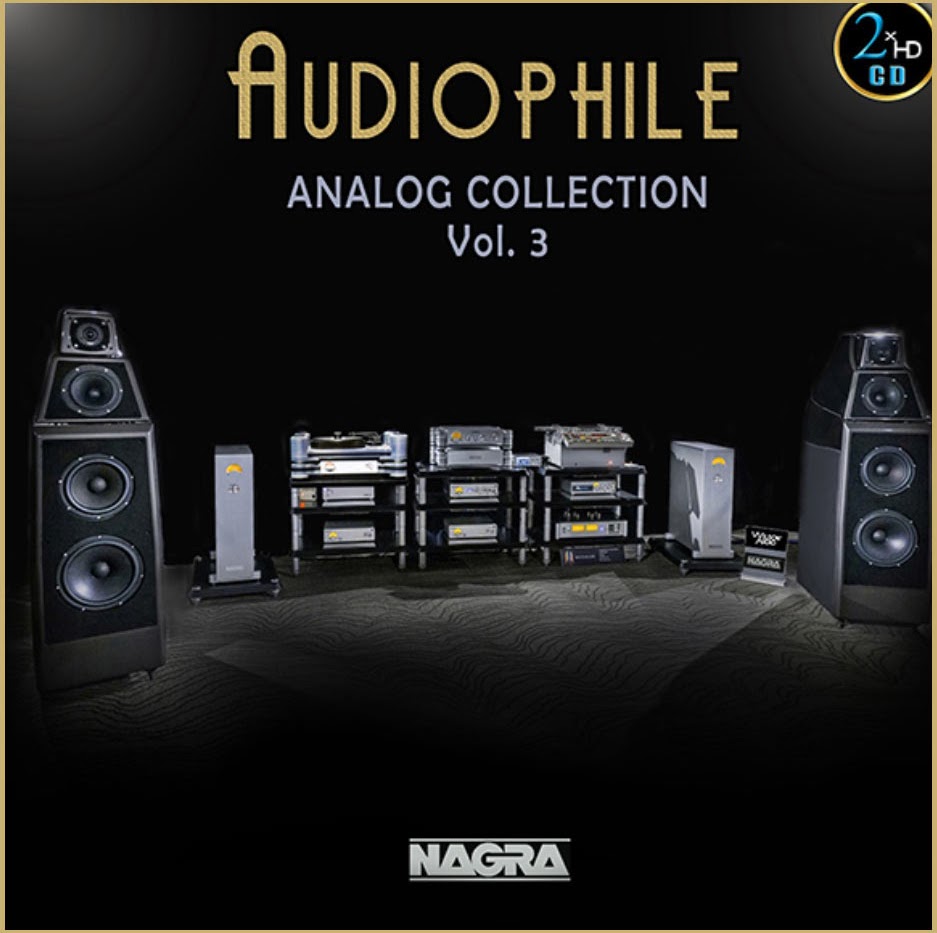
Audiophile Analog Collection Vol. 3
2xHD Fusion Audiophile Analog Collection Vol. 3 – The Timeless Sound of Analog Tape
There is something about analog tape that continues to fascinate audiophiles long after digital audio has become the dominant way of listening to music. Perhaps it is the warmth, perhaps the sense of space surrounding instruments, or perhaps it is simply the effortless way in which a great analog recording can combine detail with musical flow. 2xHD Fusion Audiophile Analog Collection Vol. 3 explores exactly that fascination, bringing together recordings from the analog archives and carefully remastering them for listeners who value natural timbre, dynamics and the unmistakable character of music preserved on tape.
Curated and remastered by renowned recording engineer René Laflamme, Audiophile Analog Collection Vol. 3 continues the philosophy established by the first two volumes while expanding the musical journey through jazz, blues, classical music, improvisation and acoustic performance. The collection includes legendary musicians such as Ben Webster, Jaco Pastorius and Bucky Pizzarelli, alongside Brian Torff, Didier Dumoutier, Marie Saintonge, Robert Len, Frédéric Alarie, June in the Fields and other beautifully recorded performers. What connects these very different recordings is not genre but sound: the organic texture and spatial realism that have become signatures of 2xHD audiophile recordings.
The journey opens with Ben Webster performing “For Heaven’s Sake,” and it is difficult to imagine a more appropriate introduction to an analog collection. Webster’s tenor saxophone possessed one of the most recognizable sounds in jazz, combining extraordinary warmth with the breathy texture that made even a quiet phrase feel intensely personal. Through a transparent high-end audio system, the attraction isn’t simply the amount of detail that can be heard; it is the physical character of the instrument. The saxophone has body, the air moving through it becomes part of the sound and the recording retains a sense of acoustic space that allows Webster to exist beyond the loudspeakers rather than being confined to them.
Brian Torff follows with “Our Love Is Here to Stay,” continuing the intimate jazz atmosphere before Bucky Pizzarelli’s “Green Guitar Blues” brings the guitar into sharper focus. Pizzarelli’s playing provides a wonderful example of why analog recordings remain so appealing to listeners interested in natural instrumental timbre. A guitar is more than the initial attack of a string. There is resonance from the instrument’s body, harmonic information surrounding each note and a gradual decay that determines whether the sound feels convincingly physical or merely reproduced. When those elements remain intact, the recording becomes less about hearing additional detail and more about hearing the instrument as a complete object.
The character changes with Didier Dumoutier’s “Soledad” and Marie Saintonge’s “Travesia,” demonstrating that Audiophile Analog Collection Vol. 3 is not intended as a conventional jazz compilation. The musical styles shift naturally throughout the album, and this variety makes the collection particularly interesting as audiophile reference music. A system that sounds beautifully warm with Ben Webster must still preserve the lighter textures of another recording, while percussion, strings and acoustic instruments require different combinations of speed, tonal accuracy and dynamic control.
Behind these performances lies a mastering process that is every bit as interesting to audiophiles as the music itself. For this collection, original quarter-inch analog master tapes recorded at 15 ips were reproduced using a Nagra-T tape recorder with specially modified tube playback electronics. The signal path included OCC silver wiring directly from the playback head to a Nick Doshi tube head preamplifier, while modifications to the tape transport were designed to improve resolution and three-dimensional imaging. It is a wonderfully elaborate approach to a deceptively simple objective: extract as much musical information as possible from the original analog tapes without destroying the qualities that made them special.
That philosophy becomes particularly relevant when Robert Len’s “Improvisation” gives way to Jaco Pastorius performing “Fannie Mae.” Pastorius hardly needs an introduction to anyone interested in electric bass. His playing changed perceptions of what the instrument could do, and hearing him within a collection dedicated to analog sound provides an excellent opportunity to listen beyond low-frequency extension. Bass reproduction isn’t simply a question of how deep a system can play; texture, timing and the ability to distinguish individual notes are equally important. On a well-balanced system, the bass has physical presence without becoming an anonymous low-frequency weight underneath the rest of the music.
Frédéric Alarie’s interpretation of Thelonious Monk’s “Ruby, My Dear” shifts the atmosphere again, followed by June in the Fields with “Summer Road.” These transitions reveal one of the strengths of a carefully curated audiophile compilation. Instead of hearing the same recording technique repeated from track to track, the listener encounters different acoustic environments and instrumental textures, making it easier to hear whether a system is reproducing the character of each recording or imposing a character of its own.
The collection then moves into classical territory with Rachel Laurin performing Léon Boëllmann’s “Toccata” and Josée Aidans playing the Adagio from Bach’s Sonata No. 1 in G Minor. The change from jazz and contemporary acoustic music to organ and violin is substantial, but it makes perfect sense in a collection concerned with the possibilities of analog recording. Classical instruments place very different demands on reproduction. The harmonic complexity of a violin can quickly reveal an aggressive upper midrange, while organ music challenges low-frequency extension, scale and the ability of a system to reproduce the acoustic environment surrounding the instrument.
This variety also illustrates why Audiophile Analog Collection Vol. 3 can be such useful material for evaluating high-end speakers, headphones, amplifiers and DACs. Ben Webster’s saxophone reveals midrange texture and tonal richness, Bucky Pizzarelli provides information about transient response and natural decay, Jaco Pastorius challenges bass definition and timing, while the classical recordings explore scale, harmonic complexity and soundstage depth. The later short pieces from Frédéric Alarie and the percussion selection add still more opportunities to listen to dynamics, speed and spatial information.
Yet the most interesting aspect of the collection may be what it doesn’t do. There is no attempt to create a uniform, artificially polished audiophile sound in which every recording has enormous width, exaggerated detail and spectacular bass. Instead, the differences between the original recordings are allowed to remain. Some performances feel intimate, others more spacious; some are warm and immediate, while others reveal more of the surrounding acoustic environment. That variation is precisely what a transparent audio system should preserve.
Audiophiles sometimes use the word analog warmth as though it simply means softer treble or a richer midrange, but the finest analog recordings offer something more complex. Warmth without resolution can become dull, while excessive detail can make music technically impressive but emotionally distant. The attraction of a carefully restored analog master lies in balancing those qualities, preserving texture and dynamics while maintaining the ease and continuity that make music feel natural.
That is where René Laflamme and 2xHD Fusion have built such a distinctive reputation. The objective isn’t to make an old recording sound artificially modern, but to recover as much information as possible from the master tape and present it with minimal compromise. In an age when almost unlimited music can be accessed instantly through digital streaming, there is something wonderfully deliberate about returning to a physical analog master and treating every stage of its reproduction as important.
By the time the collection reaches its final tracks, the journey has moved from the smoky warmth of Ben Webster through guitar, bass, jazz improvisation and acoustic music into classical repertoire and percussion. The genres may be different, but the album remains remarkably coherent because the real subject has never been jazz, blues or classical music. The subject is recording itself and the extraordinary amount of musical information that can survive on analog tape when it is treated with care.
For listeners searching for audiophile analog recordings, high-resolution reference music, natural sound, analog tape warmth and exceptional stereo imaging, Audiophile Analog Collection Vol. 3 offers plenty to investigate. It can reveal differences in loudspeaker positioning, expose bass control and midrange coloration, and demonstrate just how much depth a two-channel system can create from a carefully mastered recording.
But after a while, those technical considerations should begin to disappear. Ben Webster becomes more interesting than the midrange response, Bucky Pizzarelli becomes more important than transient accuracy and Jaco Pastorius quickly makes frequency-response graphs feel rather irrelevant. That is when an audiophile recording has achieved what it was supposed to achieve.
2xHD Fusion Audiophile Analog Collection Vol. 3 may celebrate the technology and craftsmanship behind analog recording, but ultimately it celebrates something much simpler: musicians captured at a particular moment and preserved well enough that, decades later, we can still feel remarkably close to the performance.
The tape may be analog and the playback system may be thoroughly modern, but when everything comes together, neither really matters.
What remains is the music.
Hi-Fi(ve),
Ronald – Your EarFluencer 🎧


