
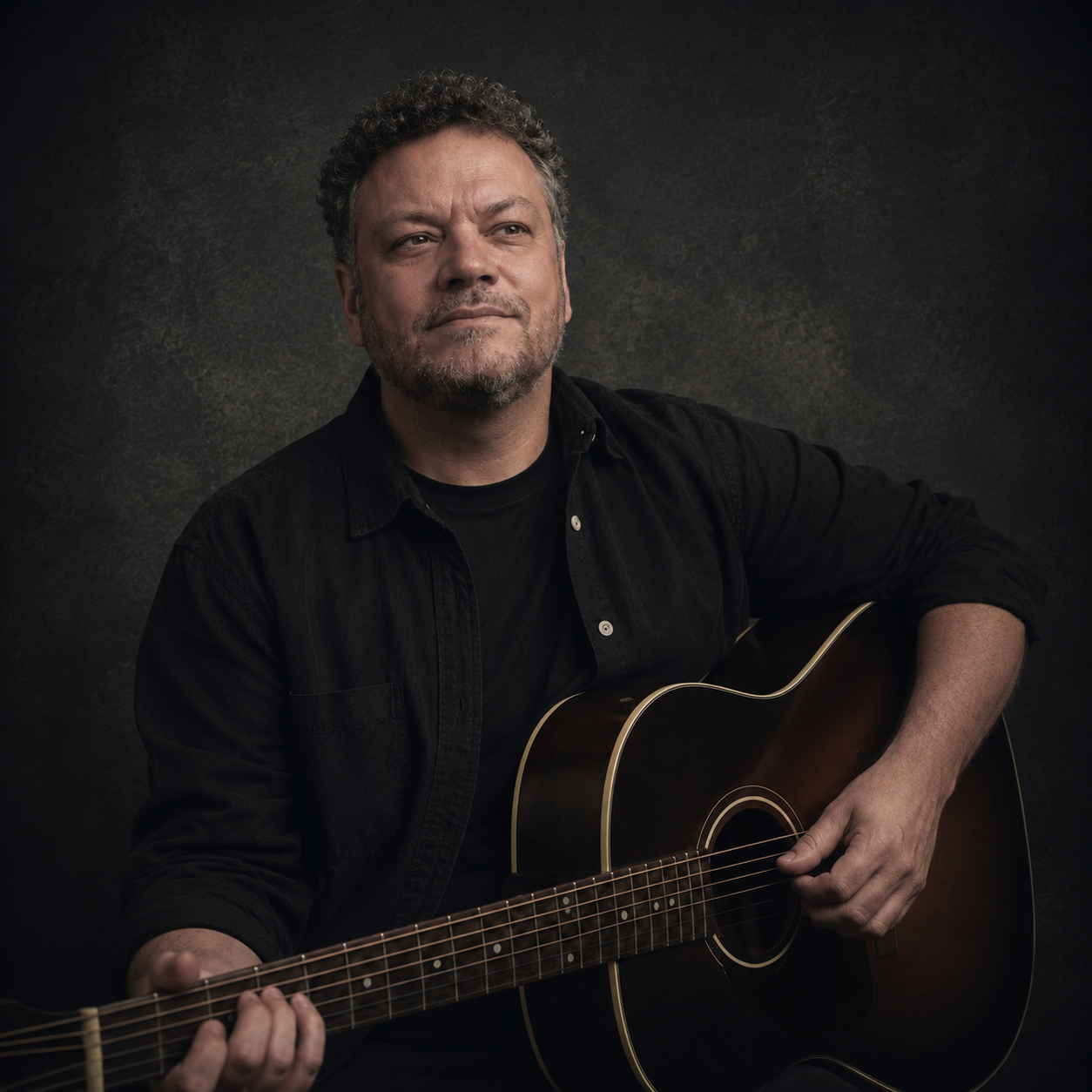
Alon Rotringer
GREAT CHOICE: Alon Rotringer!
Great music deserves to be discovered, enjoyed and shared.
CAN YOU SPARE A CUP OF COFFEE?
Audiophile-Streaming is a personal passion project, built with countless hours of discovering, selecting and sharing exceptional music.
I personally cover, without sponsors, the ongoing costs of hosting, software and subscriptions to keep the music discoveries coming. If you enjoy my work, your support is always appreciated.
A LITTLE THANK YOU IN RETURN
Just one coffee gives you lifetime access to the Coffee Club and all its playlists.
No subscriptions. No recurring fees.
Alon Lotringer is one of those rare artists whose work quietly demands attention the moment you hear it on a revealing system. In an era dominated by compressed, over-processed streaming production, his music feels almost oppositional: open, dynamic, and carefully constructed with a strong sense of space and emotional restraint. Nothing in his sound is exaggerated for effect, yet everything carries weight. It is precisely this balance that makes his work especially compelling for listeners who care about fidelity, imaging, and natural tone.
Emerging from Israel’s contemporary singer-songwriter and art-pop landscape, Lotringer is a composer, vocalist, and multi-instrumentalist who developed his voice through a blend of literary songwriting traditions and modern atmospheric production. His early breakthrough came with his 2012 debut album ביער של טורקיז אפור (In a Forest of Grey Turquoise), a work that already revealed his core identity: poetic, introspective, and willing to blur the line between structured song and cinematic sound design. Rather than chasing conventional pop immediacy, he built mood and texture first, allowing melodies and lyrics to unfold gradually inside dense, expressive arrangements.
Over time, his artistry evolved into a more refined and minimal language, particularly evident in later works such as Ground (2019), which is often considered his most complete artistic statement. Here, his writing becomes more focused and intentional, with tracks like “The Maze” and “Alone in a Room” showcasing a strong command of emotional pacing and sonic depth. The production is clean yet organic, with instruments occupying clearly defined space and vocals positioned with almost documentary realism. His 2021 release Excerpts from In Light continues this trajectory, stripping arrangements even further and emphasizing atmosphere, silence, and tonal nuance.
What makes Lotringer especially interesting from an audiophile perspective is not just the composition itself, but the way his music behaves on a high-resolution system. The recordings tend to preserve dynamic range instead of flattening it, allowing transients to breathe and decay naturally. Stereo placement is deliberate but not artificial, giving a sense of physical space around each element. Reverb is used not as decoration but as architecture, shaping depth rather than masking detail. On a resolving setup—whether high-end headphones or properly tuned speakers—his music reveals layers that are easy to miss on casual playback.
Stylistically, Lotringer moves between indie, art-pop, folk-influenced songwriting, and experimental ambient textures without forcing himself into a fixed genre identity. The continuity comes instead from his emotional language: introspective, often restrained, and always focused on atmosphere over spectacle. Even at its most melodic, his work resists easy consumption, rewarding listeners who return to it multiple times and allow the arrangements to unfold slowly.
There is no fully centralized official artist website for Alon Lotringer, as his catalogue is primarily distributed through major streaming platforms and digital music services. His official artist page can be found on Apple Music at https://music.apple.com/us/artist/alon-lotringer/210862658.
Ultimately, Alon Lotringer is not an artist built for background listening. His music sits in that rare category where production quality and artistic intent align, creating a listening experience that feels closer to a recorded performance than a commercial product. For those who value nuance, space, and emotional depth, his work is not just worth hearing—it is worth sitting with.
