
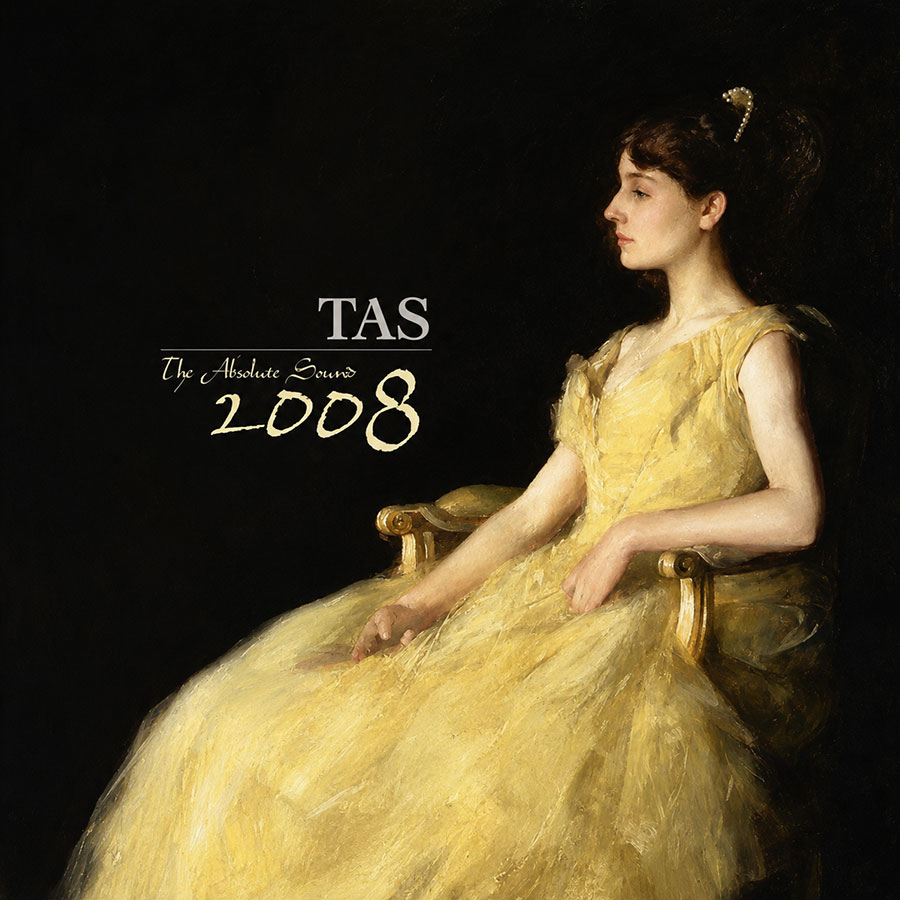
The Absolute Sound
2008
GREAT CHOICE: The Absolute Sound 2008!
Great music deserves to be discovered, enjoyed and shared.
CAN YOU SPARE A CUP OF COFFEE?
Audiophile-Streaming is a personal passion project, built with countless hours of discovering, selecting and sharing exceptional music.
I personally cover, without sponsors, the ongoing costs of hosting, software and subscriptions to keep the music discoveries coming. If you enjoy my work, your support is always appreciated.
A LITTLE THANK YOU IN RETURN
Just one coffee gives you lifetime access to the Coffee Club and all its playlists.
No subscriptions. No recurring fees.
The Absolute Sound 2008, A Breathtaking Audiophile Journey Through Music, Emotion and High-End Sound
Some albums are remembered for one unforgettable melody, while others earn their reputation by creating an entire world around the listener. The Absolute Sound 2008 belongs proudly to the latter category. From its opening classical flourish to its final intimate vocal performance, this remarkable TAS audiophile album unfolds like a beautifully written novel, introducing new voices, changing landscapes and unexpected emotions while maintaining a strong sense of musical unity. It is a collection created for listeners who appreciate exceptional sound quality, but its lasting appeal reaches far beyond the technical world of high-end audio.
Released as part of the celebrated The Absolute Sound series, TAS 2008 brings together fourteen carefully selected recordings drawn from classical music, jazz, folk, acoustic songwriting and sophisticated vocal performance. The programme moves confidently between Paganini, Lynn Hilary, David Munyon, Malene Mortensen, Paul Banks, Veronica Mortensen, the Eddie Higgins Quintet, Salvatore Accardo, Allan Taylor, Chris Jones and Sara K, giving the album an impressive range without ever making it feel like a random compilation. Every track appears to have been chosen not only for its recording quality, but also for its ability to contribute another meaningful chapter to the journey.
This balance between musical substance and audiophile sound quality is the foundation of the album’s success. The Absolute Sound 2008 can be used as reference music for testing speakers, headphones, amplifiers, DACs and complete high-end audio systems, yet it never behaves like a sterile demonstration disc. The recordings reveal bass definition, vocal realism, soundstage depth, stereo imaging and treble refinement, but those qualities always remain connected to rhythm, melody and emotion. The listener may begin by analysing the performance of the equipment, but before long the equipment seems to disappear and the music takes control.
A Classical Opening Filled with Fire and Elegance
The journey begins with an excerpt from Paganini’s Violin Concerto No 4 in D Minor, and the choice immediately announces the ambition of The Absolute Sound 2008. The violin enters with brilliance, speed and dramatic authority, supported by a musical background that gives the soloist enough space to move freely. It is an exhilarating opening, but also an unforgiving test of any stereo system.
The violin is one of the most difficult instruments to reproduce naturally because its upper harmonics can quickly expose an aggressive tweeter, an unbalanced amplifier or a digital source lacking refinement. A lesser system may make the instrument sound thin and metallic, while a carefully matched high-end audio system preserves both the energy of the bow and the warmth of the wooden body. The sound should possess brilliance without hardness, allowing the solo line to rise above the accompaniment while remaining part of a believable acoustic environment.
As classical reference music, the Paganini recording examines transient response, instrumental separation and dynamic freedom, yet its real importance lies in the atmosphere it creates. The track opens the album with a sense of anticipation, as though a curtain has been lifted and an expansive musical stage has appeared beyond the loudspeakers. When the speaker placement and room acoustics are correctly adjusted, the stereo soundstage extends in width and depth, allowing the performance to develop with impressive scale.
Salvatore Accardo later returns the album to the world of classical virtuosity with Rossini’s Un Mot à Paganini. The performance feels like a natural continuation of the opening chapter, but its placement deeper within the programme gives it a different emotional effect. By then, the listener has travelled through voices, folk music and jazz, making the renewed appearance of the violin feel even more brilliant and dramatic. Accardo’s control and expressive precision create one of the finest classical speaker test tracks on TAS 2008, revealing whether an audio system can reproduce speed and detail without sacrificing musical flow.
Lynn Hilary and the Luminous Melody of Life
After the intensity of Paganini, Lynn Hilary’s Melody of Life opens a gentler and more luminous landscape. Her voice appears with clarity and grace, surrounded by an arrangement that gives the performance a broad and atmospheric character. The contrast is beautifully judged, allowing the listener to move from classical fire into a more intimate world without disrupting the continuity of the album.
Melody of Life is an outstanding example of audiophile female vocals because the recording asks the system to preserve delicacy without making the presentation sound fragile. Hilary’s voice should remain focused between the speakers, yet it must also retain enough air and natural reverberation to feel part of a larger acoustic space. An excessively forward system can make the singer appear unnaturally close, while an overly warm system may soften the details that give the performance its character.
Through reference headphones, the track reveals subtle breathing, phrasing and background ambience, while a carefully positioned pair of speakers creates a more expansive and physical presentation. The best reproduction combines both qualities, offering intimate vocal detail within a convincing stereo soundstage. The result is not simply beautiful sound, but a performance that seems to glow from within.
David Munyon Transforms Purple Rain
David Munyon’s interpretation of Purple Rain is one of the album’s most courageous and memorable choices. The song is so closely associated with its original creator that any new version risks becoming either imitation or novelty, yet Munyon follows a more personal path. His weathered voice and acoustic approach strip away the familiar scale of the composition, revealing its emotional foundation with remarkable honesty.
This performance demonstrates why acoustic audiophile recordings can be more revealing than heavily produced music. With fewer layers available to conceal tonal imbalance, every aspect of the playback system becomes important. The voice must possess texture and weight without becoming rough or oversized, while the guitar requires both a precise string attack and the natural resonance of its wooden body. The silence surrounding the performance is equally significant because it gives the voice and instrument room to breathe.
Purple Rain becomes excellent music for testing midrange transparency, acoustic guitar reproduction and centre-image stability, but reducing the track to those technical qualities would miss its greatest achievement. Munyon makes the song feel newly discovered. His version replaces spectacle with vulnerability, inviting the listener into a quiet and deeply personal space. On a transparent high-end stereo system, the performance gains an almost physical presence, as though the artist has taken a seat only a few metres away.
Munyon returns at the end of The Absolute Sound 2008 with 500 Miles, creating a satisfying sense of completion. The closing track shares the intimacy of Purple Rain but carries a different emotional colour, bringing the album to rest with simplicity and warmth. Its familiar melody makes the performance immediately accessible, while Munyon’s unmistakable vocal character prevents it from becoming predictable. As the final notes fade, the journey feels complete rather than abruptly ended.
Malene Mortensen Brings Sophistication and Emotional Power
Malene Mortensen contributes two important performances to TAS 2008, beginning with Desperado and returning later with All I Want. Her interpretations give the album a sophisticated vocal centre, combining jazz sensitivity with emotional directness. Desperado is a familiar composition, yet Mortensen approaches it with enough individuality to make the listener reconsider the song.
Her voice is captured with impressive warmth and focus, making the track ideal for evaluating vocal realism and midrange accuracy. Every phrase should remain clear without becoming overexposed, and the stronger passages must expand naturally rather than hardening as the volume rises. A capable amplifier gives the performance the necessary headroom, while transparent loudspeakers preserve the texture and individuality of her voice.
All I Want presents another side of Mortensen’s artistry, with a relaxed musical flow that rewards systems capable of preserving timing and tonal balance. The accompaniment needs enough clarity to remain expressive, but the vocal must continue to hold the emotional centre. The best audiophile speakers achieve this balance without drawing attention toward any single frequency range. Bass, midrange and treble work together, allowing the performance to sound coherent and natural.
These tracks are among the strongest female vocal reference recordings on The Absolute Sound 2008. They are revealing enough for comparing DACs, amplifiers and headphones, but their musical quality ensures that they remain enjoyable long after the comparison has ended.
Folk Storytelling and the White Hotel
Paul Banks introduces a darker and more narrative atmosphere with The White Hotel. The song feels like a story unfolding beside a fire, with the voice and acoustic arrangement creating a strong sense of mystery and place. Rather than displaying sound quality through obvious studio effects, the recording draws its power from texture, phrasing and carefully preserved space.
The White Hotel is particularly effective for testing lower-midrange clarity. Banks’s voice requires enough body to sound convincing, but too much warmth can make the performance heavy and indistinct. The instruments need definition, yet they must remain integrated with the vocal rather than appearing as separate technical objects within the soundstage.
On a balanced stereo system, the recording develops gradually, revealing small details without breaking the spell of the story. The listener can follow the instruments, hear the acoustic environment and recognise the texture of the voice, but all those qualities contribute to a single emotional picture. This is precisely what the best audiophile music should achieve. Detail becomes valuable because it strengthens the narrative rather than distracting from it.
A Sad Little Waltz by Ab Und Zu later introduces a similarly reflective mood, although its instrumental character gives the album another change of perspective. The track is concise, elegant and emotionally suggestive, creating the impression of a half-remembered dance. Its rhythm must remain light and controlled, while the instruments need enough space to preserve the gentle movement of the performance. It is a subtle but important chapter that demonstrates the thoughtful sequencing of TAS 2008.
Jazz Elegance and a Spacious Midnight Atmosphere
The jazz recordings on The Absolute Sound 2008 provide some of the album’s most refined moments. My Foolish Heart, performed by Renato Sellani and Danilo Rea, brings two pianistic personalities into an intimate musical conversation. Piano recordings can reveal the quality of an audio system with exceptional clarity because every note contains an immediate strike, a harmonic body and a gradual decay. All three elements need to remain connected if the instrument is to sound natural.
Through ordinary equipment, My Foolish Heart may offer a pleasant melody, but through a transparent audiophile system, the performance gains physical scale and depth. The pianos should possess weight without heaviness, brilliance without sharpness and enough separation for the listener to follow each musical voice. The acoustic space between the instruments becomes part of the composition, adding tension and intimacy to their dialogue.
The Eddie Higgins Quintet then enters with Softly as in a Morning Sunrise, bringing elegance, swing and polished ensemble playing. Higgins has long been admired by collectors of audiophile jazz recordings, and this performance demonstrates why his music works so well in a high-end listening environment. The piano moves with effortless grace, while the supporting musicians create a rhythmic foundation that is precise without sounding rigid.
This track is excellent jazz music for testing speakers because it examines timing, bass definition, instrumental separation and soundstage organisation at the same time. The bass must remain tuneful and clearly articulated, the percussion needs speed and texture, and the piano should retain its harmonic richness. A poorly integrated system may present the musicians as disconnected sources, but a well-matched setup allows the ensemble to swing as a single living unit.
The finest reproduction does not merely make the instruments easier to locate. It reveals the communication between the players. Small changes in timing and emphasis begin to carry meaning, transforming the performance from a series of sounds into a musical conversation.
Veronica Mortensen and the Emotional Familiarity of In My Life
Veronica Mortensen’s interpretation of In My Life brings another familiar melody into the distinctive world of TAS 2008. The song’s emotional strength lies in memory and reflection, and her performance respects that character without becoming overly sentimental. The arrangement provides warmth and space, allowing the vocal to remain central while the instruments create a gentle background.
As a female vocal test track, In My Life reveals whether a system can reproduce softness without losing clarity. Mortensen’s voice should retain its natural texture, while the accompaniment remains visible within the stereo image even at lower listening levels. A refined DAC can uncover subtle ambience and tonal shading, but the improvement should never make the recording sound analytical. The goal is greater intimacy and realism.
This performance also works beautifully through audiophile headphones, where the smallest vocal details become easier to hear. Good headphones should preserve those details without pushing the singer too close or exaggerating sibilance. When the tonal balance is correct, the track becomes deeply involving, turning a familiar composition into a private reflection.
The Tennessee Waltz and Acoustic Perfection
The Tennessee Waltz by Allan Taylor and Chris Jones is one of the undeniable highlights of The Absolute Sound 2008. Both musicians are associated with beautifully recorded acoustic music, and their collaboration combines Taylor’s deep, expressive voice with Jones’s exceptional guitar playing. The result is a performance of remarkable warmth, presence and musical ease.
Taylor’s voice provides a demanding test of lower-midrange reproduction. It must sound full and authoritative without becoming thick, while Jones’s guitar requires precision, speed and realistic wooden resonance. Every plucked string should have a clearly defined beginning, followed by the natural vibration of the instrument’s body. The two performers must occupy distinct positions within the stereo soundstage, but the recording should continue to feel intimate and unified.
For listeners searching for the best acoustic music to test speakers, The Tennessee Waltz is almost ideal. It reveals tonal balance, vocal realism, transient response and soundstage depth without relying on spectacular production. The track sounds impressive because the performance feels real.
On a well-configured high-end audio system, Taylor and Jones appear with startling physical presence. The speakers seem to disappear, leaving a voice, a guitar and the quiet atmosphere surrounding them. It is the kind of recording that can make listeners forget every technical reason they originally pressed play.
Sara K and the Intimacy of Recognition
Sara K’s Don’t I Know You from Somewhere continues the album’s acoustic excellence. Her distinctive voice is instantly recognisable, carrying warmth, texture and a slightly unconventional character that prevents the performance from sounding generic. The guitar accompaniment is equally important, giving the track rhythmic structure and tonal richness.
Sara K has long been appreciated by audiophiles because her recordings place strong demands on both midrange accuracy and bass control. Her voice must retain its individuality without becoming excessively prominent, while the guitar needs speed, definition and body. A system with poor timing can make the performance sound heavy, but a capable amplifier and pair of speakers allow the rhythm to move naturally.
The recording also creates a convincing sense of intimacy. Sara K appears close to the listener, yet enough acoustic space remains around her to prevent the presentation from feeling artificial. This balance makes Don’t I Know You from Somewhere an excellent reference track for evaluating stereo imaging, vocal focus and the ability of a system to reproduce acoustic instruments with natural scale.
A Reference Album That Never Forgets the Music
The Absolute Sound 2008 can challenge nearly every component in an audio system. Its classical performances test transient speed, treble smoothness and dynamic range, while its female vocals reveal midrange transparency and sibilance control. The folk and singer-songwriter recordings examine acoustic texture and centre-image stability, and the jazz selections reveal timing, piano resonance, bass definition and instrumental separation.
Listeners comparing loudspeakers can use TAS 2008 to evaluate soundstage width, vocal focus and tonal accuracy. Those testing amplifiers may hear differences in bass control, headroom and rhythmic flow. A refined DAC, SACD player or network streamer can uncover additional ambience, smoother instrumental decay and more natural textures. Reference headphones may reveal low-level details that remain less obvious through speakers.
Yet none of these technical abilities would matter if the music failed to hold the listener’s attention. The greatness of The Absolute Sound 2008 lies in its ability to combine reference-quality sound with performances that invite repeated listening. The album never feels assembled merely to demonstrate equipment. It feels curated to create a complete emotional and musical journey.
Final Verdict
The Absolute Sound 2008 is a magnificent audiophile compilation and one of the most satisfying chapters in the TAS series. Its mixture of classical virtuosity, female vocal beauty, atmospheric folk, acoustic storytelling and refined jazz creates a varied programme that nevertheless flows with the confidence of a single complete work.
It is enthusiastically recommended for listeners searching for the best audiophile album for testing speakers, high-quality SACD music, lossless audio reference tracks, female vocal recordings, acoustic guitar test music and beautifully recorded jazz. The album provides enough detail, depth and dynamic range to reveal the abilities of a world-class high-end audio system, but its appeal is not limited to audiophiles.
The performances possess character, warmth and emotional honesty. David Munyon transforms Purple Rain into an intimate confession, Malene Mortensen brings elegance to Desperado, Allan Taylor and Chris Jones create acoustic magic with The Tennessee Waltz, Sara K offers unmistakable vocal personality, and the classical selections provide brilliance and scale. Each artist contributes a different chapter, but together they form a coherent story about the beauty of recorded music.
When The Absolute Sound 2008 is reproduced through a carefully balanced hi-fi system, the soundstage opens, the loudspeakers disappear and the distance between performer and listener seems to dissolve. At that moment, TAS 2008 stops being a collection of audiophile reference tracks and becomes something far more important, a living musical experience that deserves to be heard slowly, repeatedly and with complete attention
