
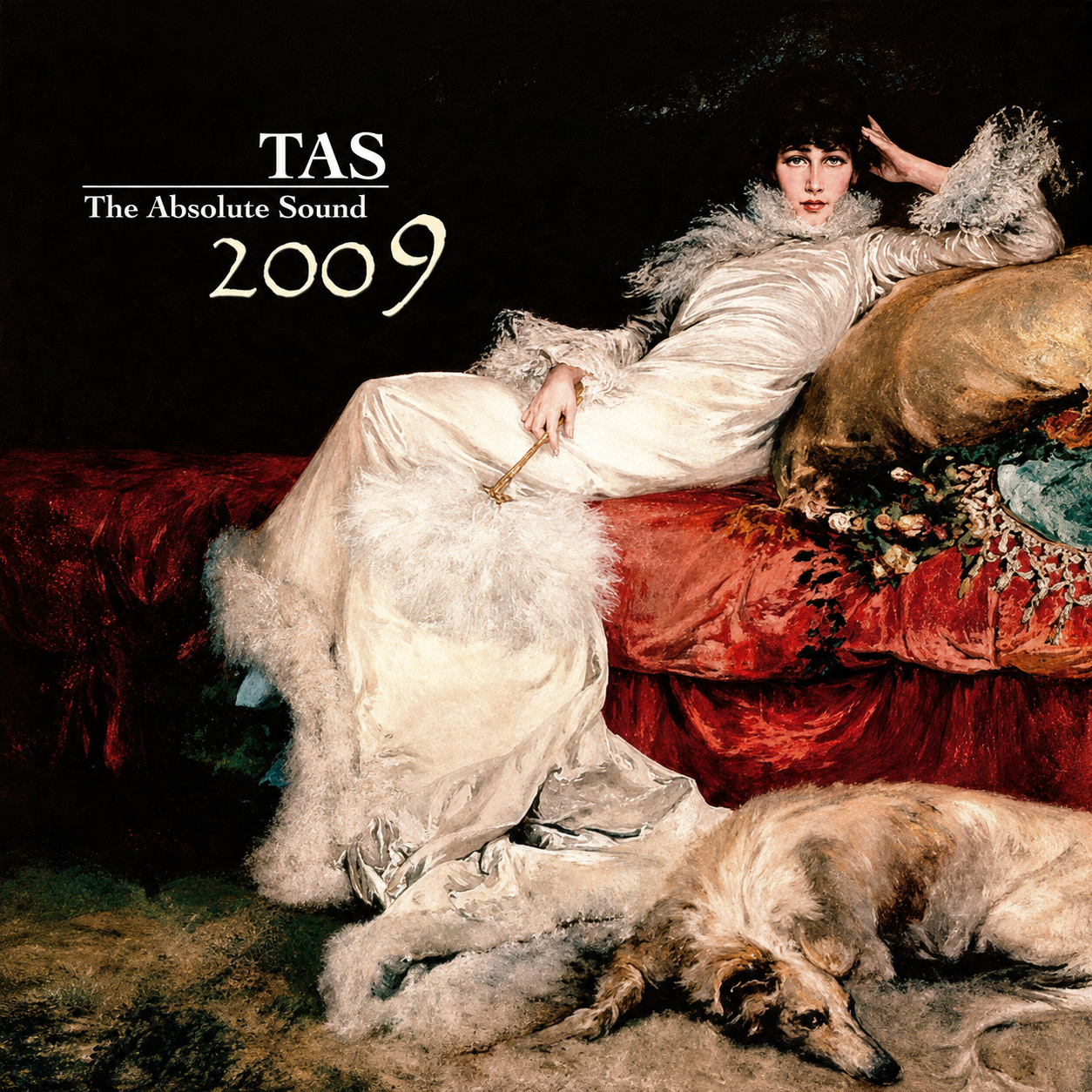
The Absolute Sound
2009
GREAT CHOICE: The Absolute Sound 2009!
Great music deserves to be discovered, enjoyed and shared.
CAN YOU SPARE A CUP OF COFFEE?
Audiophile-Streaming is a personal passion project, built with countless hours of discovering, selecting and sharing exceptional music.
I personally cover, without sponsors, the ongoing costs of hosting, software and subscriptions to keep the music discoveries coming. If you enjoy my work, your support is always appreciated.
A LITTLE THANK YOU IN RETURN
Just one coffee gives you lifetime access to the Coffee Club and all its playlists.
No subscriptions. No recurring fees.
The Absolute Sound 2009, A Magnificent Audiophile Journey Through Music, Emotion and High-End Sound
There are albums that reveal themselves in a single spectacular moment, and there are albums that ask the listener to remain seated, lower the lights and follow a carefully chosen musical path from beginning to end. The Absolute Sound 2009 belongs unmistakably to the second category. This remarkable TAS audiophile compilation does not behave like a random collection of technically impressive recordings, but unfolds with the confidence and rhythm of a beautifully written book. Every performance introduces another atmosphere, another voice and another cultural landscape, while the album’s exceptional sound quality gives each chapter the space it needs to breathe.
Released as part of Aurora Music International’s celebrated The Absolute Sound series, TAS 2009 brings together fourteen recordings drawn from Norwegian folk, vocal jazz, acoustic songwriting, Argentine tango, piano jazz, Irish music, classical chamber works and opera. Such diversity might have produced a disjointed compilation, yet the sequencing creates an engaging sense of movement. The music travels from the raw energy of traditional strings to the quiet intimacy of a singer and guitar, from the elegant pulse of a rumba to the grandeur of Puccini, making the album feel less like a demonstration disc and more like a journey across continents and emotions.
For listeners searching for the best audiophile album for testing speakers, headphones, amplifiers, DACs, SACD players and complete high-end audio systems, The Absolute Sound 2009 offers an unusually complete programme. Its recordings can reveal bass definition, midrange transparency, vocal realism, stereo imaging, soundstage depth, treble smoothness and dynamic range, but the album never allows those technical qualities to overpower the music. The better the system becomes, the less the listener thinks about the equipment. The loudspeakers seem to disappear, the room grows larger and the performers begin to occupy a believable musical space of their own.
Majorstuen Opens the Journey with Hjartespel
The album begins with Hjartespel by the Norwegian ensemble Majorstuen, and the choice immediately establishes an adventurous character. The traditional string instruments arrive with energy, texture and rhythmic life, creating an opening that feels both ancient and remarkably fresh. It is music rooted in folk tradition, yet the recording possesses enough clarity and scale to challenge a modern high-end stereo system from the first moments.
String instruments can be unforgiving tests of audio equipment because their upper harmonics quickly reveal excessive brightness, digital hardness or poor tonal balance. Through an aggressive system, the violins may sound thin and metallic, but a carefully matched amplifier and pair of audiophile speakers allow the instruments to retain their brilliance while preserving the warmth and resonance of their wooden bodies. The bows should possess speed and attack, yet the music must continue to flow as a unified performance rather than becoming a collection of sharp technical details.
Hjartespel is also an excellent test of stereo imaging and instrumental separation. The players should occupy clear positions within the soundstage, but they must never appear isolated from one another. The finest playback systems reveal the physical movement and energy of the ensemble while preserving the strong rhythmic connection between the musicians. As an opening chapter, it is exhilarating, atmospheric and perfectly judged.
Summertime Reborn Through Duo Balance
The familiar melody of Summertime follows, performed by Duo Balance with an intimacy that contrasts beautifully with the energy of the opening track. A song recorded so many times can easily become predictable, yet this interpretation finds new life through restraint, atmosphere and the natural interaction between voice and accompaniment.
Because the arrangement is exposed, the recording becomes highly revealing. The voice must appear focused and human, with enough body to sound physically present but without the artificial enlargement that some systems impose on audiophile female vocals. The accompanying instrument needs definition, tonal richness and natural decay, while the silence surrounding both performers becomes an important part of the experience.
On a transparent high-end audio system, Summertime seems to emerge from a deep and quiet background. Small changes in phrasing become meaningful, and the distance between performer and listener appears to shorten. The performance demonstrates that audiophile sound quality does not always require dramatic dynamics or enormous bass. Sometimes the most convincing test is a simple melody reproduced with honesty, balance and emotional concentration.
Allan Taylor and the Art of Musical Dedication
Allan Taylor’s Dedicated To brings the album into the world of acoustic storytelling. Taylor’s deep, recognisable voice possesses warmth, experience and quiet authority, while the instrumental arrangement gives his words enough room to develop naturally. His finest recordings have always appealed to serious audiophiles because they combine poetic songwriting with exceptional vocal and acoustic sound, and this performance continues that tradition.
A voice of this character is an excellent test of lower-midrange accuracy. The playback system must reproduce weight without thickness and warmth without muddiness. An unbalanced loudspeaker may give the singer an exaggerated chest tone, while a lean system can remove the physical presence that makes the performance so persuasive. Through a properly configured stereo system, Taylor’s voice occupies a stable position between the speakers, surrounded by subtle ambience that gives the recording depth and scale.
The acoustic instruments provide an equally revealing challenge. Every string should begin with a clean attack, followed by the natural resonance of the instrument’s wooden body. A system that concentrates only on detail may reproduce the initial pluck but lose the harmonic richness that follows. Dedicated To rewards equipment that combines precision with musical warmth, allowing the performance to sound detailed without becoming analytical.
More importantly, the song illustrates why The Absolute Sound 2009 works so well as a complete album. The recording quality is undoubtedly impressive, but the emotional content remains central. The technical qualities become valuable because they allow the listener to understand the song more deeply.
Siri Gjære Enters the Loveless Cafe
Loveless Cafe by Siri Gjære changes the atmosphere once again, bringing sophisticated vocal jazz and a slightly mysterious late-night mood into the programme. Her voice carries individuality and control, while the arrangement creates an intimate space that feels closer to a small club than a studio.
This kind of recording is ideal for testing vocal focus and soundstage depth. The singer should remain clearly centred without becoming disconnected from the musicians, and the accompaniment should extend behind and around her in believable layers. On lesser equipment, the performance may collapse into a narrow line between the speakers, but a refined audiophile system allows the room around the musicians to become audible.
Gjære’s phrasing also provides an excellent test of midrange transparency. Subtle changes in tone and volume must remain clear, yet they should never be exaggerated by an overly forward presentation. The best speakers and headphones reveal these details naturally, preserving the personality of the voice instead of turning every breath into a technical effect.
Loveless Cafe demonstrates the seductive side of TAS 2009. It is sophisticated without becoming distant, intimate without sounding small and detailed without losing its relaxed musical character. It is the kind of track that encourages listeners to stop comparing components and simply remain inside the atmosphere.
Argentine Fire with Otros Aires
Rotos en el Raval by Otros Aires brings a dramatic change of scenery. The combination of tango tradition and contemporary energy creates a performance filled with rhythm, colour and urban intensity. It is an inspired choice because it challenges the audio system in completely different ways from the quieter vocal recordings surrounding it.
The rhythm must possess speed, control and impact. Bass notes should provide a firm foundation without becoming slow or excessive, while percussion and instrumental accents need enough definition to preserve the excitement of the arrangement. A system with poor timing can make the performance sound crowded, but a capable amplifier and pair of responsive loudspeakers allow the music to move with irresistible momentum.
Tango also depends upon tension and contrast. The arrangement can shift between restraint and sudden energy, requiring an audio system with enough dynamic freedom to follow those changes without compression. Through the finest high-end equipment, Rotos en el Raval becomes physical and cinematic. The soundstage expands, individual instruments retain their identities and the rhythm seems to move beyond the boundaries of the speakers.
This is outstanding music for testing bass response, transient speed and dynamic range, but it is also one of the album’s most exciting performances. It gives The Absolute Sound 2009 a sense of danger and movement, preventing the programme from becoming too polite or predictable.
Miami Beach Rumba and the Elegance of the Romantic Jazz Trio
The journey continues with Miami Beach Rumba by John Di Martino and the Romantic Jazz Trio, where rhythmic energy is transformed into elegance and effortless swing. The piano leads with brightness and precision, while bass and drums create a foundation that is both relaxed and perfectly controlled.
Piano recordings remain among the most demanding tests of a hi-fi system because every note combines a sharp initial strike, a complex harmonic body and a gradual decay. If the system lacks resolution, the instrument can sound small and mechanical. If the treble is too prominent, the attack may become hard and tiring. A balanced system allows the piano to possess brilliance, weight and natural scale.
The rhythm section is equally important. The bass needs definition and pitch rather than simple low-frequency power, while the percussion must sound fast and textured. The musicians should occupy individual positions within the stereo soundstage, yet the performance must remain a unified conversation. The best audiophile jazz recordings make the interaction between players as audible as the instruments themselves, and Miami Beach Rumba achieves exactly that.
Through well-positioned loudspeakers, the track becomes open, lively and three-dimensional. It is a superb jazz reference recording for testing timing, piano tone, bass articulation and stereo imaging, but its easy musical charm ensures that the listening experience never feels like an examination.
Solveig Slettahjell Slows Down Time
Time by Solveig Slettahjell is one of the emotional centres of The Absolute Sound 2009. Her voice enters with remarkable calm and presence, while the arrangement develops at a pace that gives every phrase and every silence genuine importance. The performance refuses to hurry, asking the listener to become attentive to the smallest changes in tone and atmosphere.
This restraint makes Time especially revealing. A noisy or poorly resolved system may lose the quiet details that give the recording its intensity, while an overly analytical setup can destroy the natural stillness by pushing every sound forward. The finest reproduction allows the voice to emerge from a dark background with clarity and warmth, surrounded by enough air to create a convincing sense of space.
Slettahjell’s vocal character must remain individual and textured. Her quieter phrases need intimacy, while stronger moments should expand without becoming hard. This requires excellent amplifier control and a loudspeaker capable of preserving subtle dynamics. Through reference headphones, the breathing and phrasing become especially clear, but a well-configured stereo system provides a larger and more physical acoustic environment.
Time is an outstanding female vocal reference track, yet describing it only in technical terms would diminish its power. It is a performance that appears to stop the movement of the album for a few minutes, creating a quiet space in which voice, silence and emotion become inseparable.
Paul O’Brien Paints Berlin at Five
Berlin at 5 by Paul O’Brien returns the listener to acoustic songwriting, but the atmosphere is different from the warmth of Allan Taylor. O’Brien creates the impression of a city observed at a particular hour, using voice and instruments to suggest streets, light and memory.
The recording has a natural balance that makes it excellent acoustic music for testing speakers. The vocal should remain focused without becoming overly prominent, while the guitar and surrounding instruments need texture and body. The low frequencies must support the performance without clouding the lyric, and the treble should reveal string detail without adding hardness.
A strong audio system allows Berlin at 5 to develop as a complete scene. The voice occupies a believable space, the instruments appear around it with natural proportions and the background ambience gives the performance depth. The listener is not simply hearing a well-recorded song but entering a particular place created through sound.
This ability to suggest location is one of the defining pleasures of high-fidelity audio. A convincing stereo soundstage is not merely wide; it contains relationships, distance and atmosphere. Berlin at 5 demonstrates those qualities with subtlety, making it a quietly memorable chapter of TAS 2009.
Vonda Shepard and Another January
Another January by Vonda Shepard brings polished songwriting and expressive female vocals into the collection. Shepard’s voice carries emotional directness, while the arrangement possesses enough scale and detail to examine the performance of a complete audio chain.
The track tests whether a system can maintain clarity when several musical layers are present. The vocal must remain central, but the surrounding instruments should not collapse into a blurred background. A transparent DAC or SACD player can reveal greater separation and ambience, while a capable amplifier preserves control during the fuller passages.
Another January is also useful for evaluating tonal balance. The voice should sound open without excessive brightness, and the bass must provide weight without overwhelming the midrange. Through high-quality headphones, the recording offers detailed insight into the production, while audiophile loudspeakers create a broader and more immersive presentation.
The performance fits naturally into the album’s sequence because it combines accessibility with depth. It is immediately melodic, but repeated listening reveals additional textures and emotional details. This is exactly the kind of recording that belongs on a successful audiophile compilation, because it can impress during a first audition and remain rewarding long afterward.
Two Pianos Speak in You Never Told Me
Renato Sellani and Danilo Rea’s You Never Told Me introduces an elegant piano dialogue. Two musicians share the musical space, responding to one another with sensitivity and restraint. The performance is not built around technical competition but around listening, conversation and mutual understanding.
Reproducing two pianos convincingly is a serious challenge for any high-end audio system. The instruments must remain individually recognisable without becoming artificially separated, and their tones need both attack and resonance. A narrow or confused soundstage can make the performance difficult to follow, while a transparent system allows the listener to hear the relationship between the players.
Each piano should possess realistic scale, with notes that develop naturally and fade into the surrounding acoustic. The quiet spaces between phrases become essential, giving the music tension and shape. A refined source component reveals the subtle differences in touch and tone, but the final result must remain coherent.
You Never Told Me is one of the most beautiful instrumental moments on The Absolute Sound 2009. It demonstrates that outstanding audiophile music does not need dramatic volume or spectacular effects. Two instruments, recorded with care and played with imagination, can create an entire emotional world.
Liz Madden Brings the Green Landscape of Shanagolden
Shanagolden by Liz Madden introduces Irish warmth and lyrical beauty. Her voice rises with clarity and grace, while the arrangement creates a broad, open atmosphere that suggests landscape and distance. The cultural character of the performance gives the album another distinctive colour, adding to its sense of international travel.
As female vocal audiophile music, Shanagolden demands balance and refinement. Madden’s voice should possess openness without sharpness, and the higher notes need freedom without losing natural body. The accompaniment must remain detailed but gentle, supporting the vocal rather than competing with it.
The soundstage is especially important. A well-positioned pair of speakers allows the recording to extend beyond the cabinets, while the voice remains stable in the centre. Reverberation should fade gradually into the background, creating depth and atmosphere. When the room acoustics and speaker placement are correct, the performance takes on an almost visual quality.
Shanagolden is not only a beautiful song but also an excellent track for testing treble smoothness, vocal presence and soundstage width. Its combination of technical quality and emotional sincerity makes it one of the album’s most immediately appealing selections.
Chopin and the Poetry of the Piano
Gergely Bogányi’s performance of Chopin’s Nocturne in E-flat Major brings The Absolute Sound 2009 into the world of classical piano with one of the repertoire’s most beloved compositions. The melody is instantly familiar, but a fine performance can still make it feel personal and newly discovered.
The piano requires an audio system capable of reproducing both strength and delicacy. The right hand should sing without becoming brittle, while the lower notes need weight and resonance. Pedal effects and instrumental decay must remain audible, allowing the sound to bloom and then disappear naturally into the acoustic space.
A lesser system may reduce the performance to a beautiful melody, but a transparent high-end setup reveals the physical and emotional structure of the playing. Small changes in touch become clear, and the relationship between melody, harmony and silence gains greater meaning.
This Chopin recording is superb classical reference music for evaluating piano tone, dynamic shading and low-level resolution. Yet its placement near the end of the album gives it an additional role. After the voices, rhythms and stories of the preceding tracks, the nocturne creates a moment of reflection, as though the journey has paused before its final ascent.
Paganini’s Conversation Between Violin and Guitar
The Sonata for Violin and Guitar, performed by Luigi Alberto Bianchi and Maurizio Preda, introduces a fascinating contrast between bowed and plucked strings. The violin brings brilliance, movement and sustained tone, while the guitar adds precise attacks and warm wooden resonance.
A well-balanced system must reproduce these contrasting instruments without favouring one over the other. The violin should remain energetic without sounding metallic, and the guitar needs definition without becoming dry. Stereo imaging should place the musicians clearly within the acoustic space, while the natural reverberation connects them into a unified performance.
This track is excellent for testing transient response, treble quality and instrumental texture. Rapid violin passages reveal whether the system can follow speed without hardness, while the guitar exposes problems with timing and tonal body. Through the finest equipment, the performance feels lively and elegant, with each instrument responding naturally to the other.
The recording also reinforces the album’s literary flow. The Absolute Sound 2009 has travelled through folk traditions, jazz clubs, modern cities and intimate vocal spaces, and the chamber music now brings a sense of classical refinement before the final dramatic conclusion.
Amarilli Nizza and the Grandeur of O Mio Babbino Caro
The album closes with Amarilli Nizza performing O Mio Babbino Caro from Puccini’s Gianni Schicchi, and the choice gives TAS 2009 a finale of emotional scale and operatic beauty. The aria is one of the most recognisable melodies in classical music, but its effect depends entirely upon the singer’s ability to combine control, vulnerability and power.
Nizza’s voice must rise freely above the accompaniment while remaining natural and focused. A high-end amplifier needs enough headroom to reproduce the stronger passages without strain, and the loudspeakers must preserve the vocal texture without adding sharpness. The orchestra should surround and support the singer, creating a layered soundstage with believable width and depth.
Opera is a demanding test of audio equipment because it combines complex orchestration, powerful vocals and large dynamic changes. A system that performs well with small acoustic recordings may lose control when the scale expands, but a capable setup allows the aria to grow naturally. The voice gains presence, the orchestra retains clarity and the emotional peak arrives without compression.
As the final note fades, O Mio Babbino Caro gives the album a sense of completion. The journey that began with the energetic strings of Majorstuen ends in the grandeur of Puccini, and the distance between those two musical worlds reveals the extraordinary range of The Absolute Sound 2009.
A Complete Audiophile Reference Album
The Absolute Sound 2009 is one of those rare compilations capable of testing almost every important element of a hi-fi system while remaining completely enjoyable as music. Its folk recordings reveal instrumental texture and timing, its jazz selections examine piano tone, bass definition and musical swing, and its vocal performances expose midrange coloration, sibilance and centre-image stability. The tango and rumba tracks test speed, rhythm and dynamic control, while the classical recordings challenge treble smoothness, instrumental separation and soundstage scale.
Listeners comparing audiophile speakers can evaluate imaging, tonal balance and depth. Those testing amplifiers may hear differences in bass control, headroom and rhythmic energy. A refined DAC or SACD player can uncover subtle ambience, more realistic textures and smoother decay. Reference headphones may reveal small production details, but a carefully configured stereo system creates the wider and more physical performance space that makes this album particularly immersive.
The greatest improvement, however, is not simply the appearance of more detail. It is the moment when fourteen different recordings begin to sound more coherent, more human and more emotionally persuasive. The best audio system allows every artist to retain an individual identity while giving the album a continuous sense of musical purpose.
Final Verdict
The Absolute Sound 2009 is a magnificent entry in the TAS audiophile series and an essential addition to a serious high-fidelity music collection. Its combination of Norwegian folk, vocal jazz, acoustic songwriting, Argentine tango, piano music, Irish song, classical chamber music and opera creates a programme of remarkable diversity, yet the album flows with the confidence of a single complete work.
It is enthusiastically recommended for listeners searching for the best audiophile album for testing speakers, high-quality SACD music, female vocal reference recordings, acoustic guitar test tracks, jazz piano recordings and classical music with an expansive stereo soundstage. Its sound quality is detailed, warm and spacious, but its musical value reaches far beyond technical demonstration.
Majorstuen provides an electrifying beginning, Duo Balance brings intimacy to Summertime, Allan Taylor offers the wisdom of a master storyteller, Siri Gjære creates a seductive jazz atmosphere and Otros Aires fills the room with tango energy. Solveig Slettahjell slows time with an extraordinary vocal performance, Renato Sellani and Danilo Rea create a poetic piano conversation, Liz Madden brings Irish beauty and Amarilli Nizza closes the journey with the emotional grandeur of Puccini.
When reproduced through a carefully balanced high-end audio system, The Absolute Sound 2009 becomes more than a collection of reference tracks. The loudspeakers disappear, the listening room falls away and every recording opens another door into a different musical world. For audiophiles, collectors and music lovers who believe that exceptional sound quality should always lead to a deeper emotional experience, TAS 2009 is not merely recommended. It is an album to hear slowly, repeatedly and with complete attention.
