
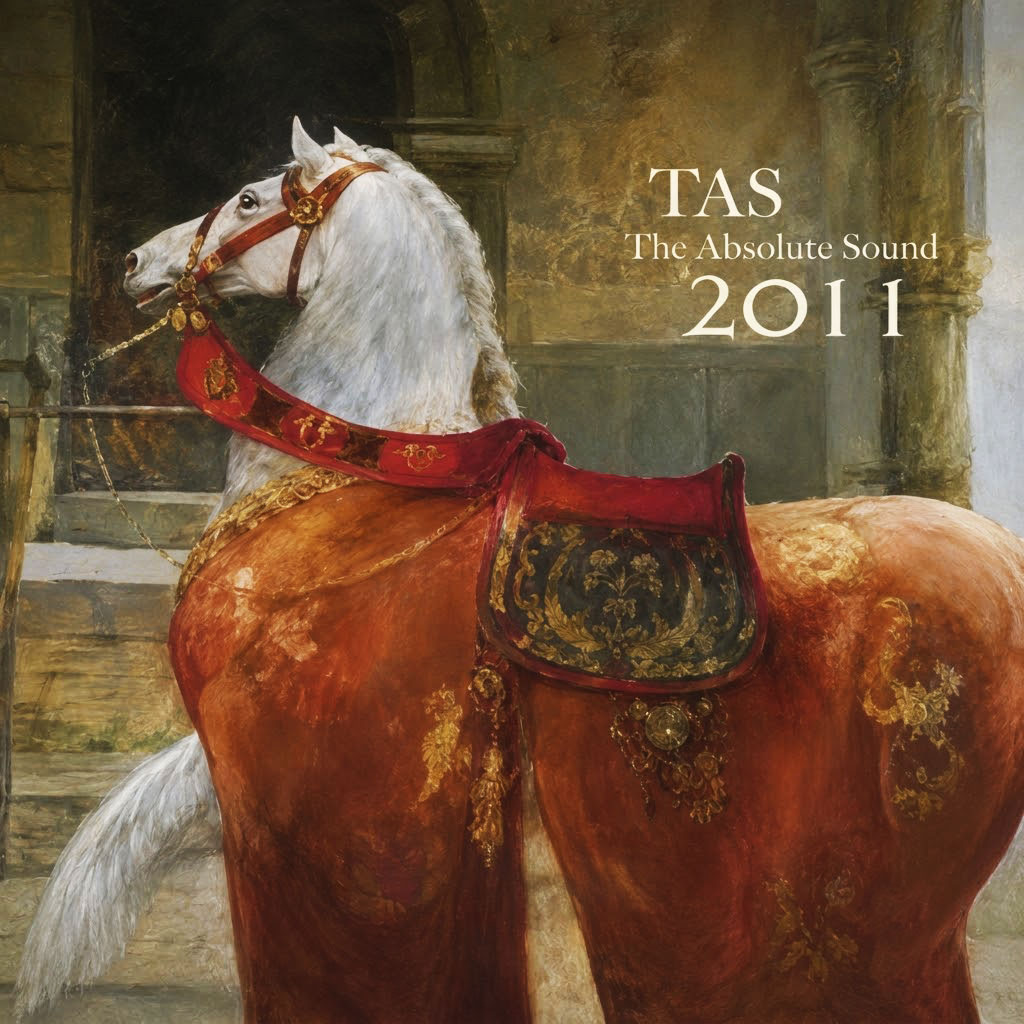
The Absolute Sound
2011
GREAT CHOICE: The Absolute Sound 2011!
Great music deserves to be discovered, enjoyed and shared.
CAN YOU SPARE A CUP OF COFFEE?
Audiophile-Streaming is a personal passion project, built with countless hours of discovering, selecting and sharing exceptional music.
I personally cover, without sponsors, the ongoing costs of hosting, software and subscriptions to keep the music discoveries coming. If you enjoy my work, your support is always appreciated.
A LITTLE THANK YOU IN RETURN
Just one coffee gives you lifetime access to the Coffee Club and all its playlists.
No subscriptions. No recurring fees.
The Absolute Sound 2011, A Spellbinding Audiophile Journey Through Voices, Jazz and Classical Beauty
Some albums are assembled as collections, while others are shaped with such care that they begin to resemble complete musical stories. The Absolute Sound 2011 belongs firmly to the second category, because this remarkable TAS audiophile compilation does not merely place fourteen technically impressive recordings beside one another. It moves from classical elegance to intimate female vocals, from acoustic storytelling to Irish folk energy and from sophisticated jazz to cinematic choral beauty, creating a journey that feels coherent, generous and deeply rewarding from its opening notes to its final breathtaking conclusion.
Released as part of Aurora Music International’s celebrated The Absolute Sound series, TAS 2011 represents the qualities that have made these annual audiophile albums so admired among collectors and high-end audio enthusiasts. The recordings are spacious, transparent and rich in natural detail, yet the music never feels selected only to demonstrate expensive equipment. Every track possesses its own emotional identity, allowing the collection to function both as an exceptional audiophile reference album and as an absorbing listening experience that can be enjoyed without any interest in technical analysis.
Listeners searching for the best audiophile music for testing speakers, headphones, amplifiers, DACs, SACD players and complete high-end stereo systems will find an extraordinary variety of material here. Voices reveal the honesty of the midrange, piano recordings expose tonal colour and natural decay, string performances challenge treble smoothness and transient response, while folk and jazz selections test rhythm, instrumental separation and bass control. The album can reveal almost every important quality of a hi-fi system, yet its greatest achievement arrives when the system performs so convincingly that the equipment disappears and only the music remains.
A Classical Dawn with Budapest Strings
The Absolute Sound 2011 begins with Budapest Strings performing the Siciliana from Respighi’s Antiche Danze ed Arie per Liuto, and the choice immediately creates an atmosphere of grace and refinement. The melody unfolds gently, carried by strings that need warmth, texture and air if they are to sound natural. There is no exaggerated drama and no spectacular low-frequency effect designed to demand attention. Instead, the recording invites the listener into a beautifully proportioned acoustic space where every movement of the ensemble feels calm, elegant and purposeful.
String music remains one of the most demanding tests for any audio system because a bright loudspeaker or aggressive digital source can quickly turn violins into thin, metallic sounds. A system lacking resolution may avoid that harshness, but it can also remove the fine texture of the bows and the resonance of the instruments. The ideal reproduction lies between those extremes, preserving brilliance without sharpness and warmth without softness.
Through carefully positioned audiophile speakers, the Budapest Strings should appear as an ensemble occupying a believable stage rather than as a flat image stretched between two cabinets. The individual sections remain clear, yet their sound combines naturally within the hall. Quiet reverberation develops behind the players, giving the music a sense of depth that makes the listening room appear larger.
As an opening chapter, the Respighi selection establishes the album’s philosophy perfectly. The Absolute Sound 2011 is not interested in sound quality as empty spectacle. It celebrates the way excellent recording and playback can reveal the atmosphere, humanity and emotional meaning within a performance.
Radka Toneff and the Haunting Beauty of The Moon Is a Harsh Mistress
The transition into The Moon Is a Harsh Mistress by Radka Toneff and Steve Dobrogosz is one of the album’s most magical moments. The scale suddenly becomes smaller and more intimate, yet the emotional intensity grows. Toneff’s voice appears fragile, focused and almost weightless, while Dobrogosz’s piano provides a delicate harmonic world around her.
This legendary performance is an exceptional female vocal reference recording because it demands honesty from the entire playback system. Toneff’s voice should possess presence without artificial enlargement, and her breathing and phrasing must remain audible without being pushed unnaturally forward. The piano must sound complete, combining the initial impact of each key with harmonic richness and a long, graceful decay.
A transparent high-end audio system allows silence to become part of the performance. The spaces between the vocal lines create tension, while the fading piano notes seem to remain suspended in the room. Equipment with a high noise floor or insufficient low-level resolution may reproduce the melody but lose this atmosphere. A refined DAC, SACD player or amplifier reveals a deeper background from which the voice and piano can emerge with remarkable clarity.
The emotional power of the recording makes technical analysis difficult to sustain for long. The listener may begin by examining vocal focus, stereo imaging or piano tone, but the performance gradually takes control. This is precisely what the finest audiophile music should achieve. Better sound does not merely provide additional detail; it makes the emotional message more immediate.
Fiona Mackenzie and the Open Landscape of When the Sunny Sky Has Gone
Fiona Mackenzie’s When the Sunny Sky Has Gone brings another vocal colour into the journey. Her performance carries a natural folk character, with an openness that suggests landscape, distance and memory. The arrangement remains spacious enough to give every instrument its own identity, yet it never feels artificially separated or designed solely for demonstration.
The voice requires a smooth and transparent midrange. It should remain clear as the melody rises, while the upper frequencies need enough refinement to preserve openness without introducing sibilance. The accompaniment must provide body and movement, but it should never obscure the singer or narrow the stereo image.
This recording becomes especially convincing when the loudspeakers are correctly placed within the listening room. Mackenzie’s voice should remain stable in the centre, while ambience and instruments extend naturally around her. Small adjustments to speaker angle or distance from the rear wall may improve the focus and reveal additional depth, making the track valuable for anyone optimising a high-end stereo system.
Yet When the Sunny Sky Has Gone is more than useful speaker setup music. Its atmosphere creates a sense of emotional space, allowing the listener to imagine the environment surrounding the performance. The finest hi-fi systems reproduce not only notes and voices, but the suggestion of a place beyond the loudspeakers.
Hanne Boel and Mario Biondi Bring Soulful Warmth
Funny How Time Slips Away, performed by Hanne Boel and Mario Biondi, introduces a rich and deeply satisfying vocal partnership. The contrast between their voices gives the song an immediate dramatic character, while the relaxed rhythm allows both performers to communicate with warmth and personality.
Duet recordings are revealing because an audio system must preserve the individuality of two voices while presenting them within the same musical environment. Boel and Biondi should never sound as though they have been processed into a single tonal character. Their different textures, weights and expressive styles need to remain clearly recognisable.
The recording is therefore an excellent test of midrange differentiation, vocal imaging and tonal balance. Biondi’s deeper voice requires natural lower-midrange weight without boom or artificial chestiness, while Boel’s voice needs clarity and openness without hardness. A balanced pair of high-end speakers allows both singers to appear physical and human, giving each enough space while preserving the intimacy of the duet.
The track also demonstrates the importance of rhythm in audiophile playback. A system may reveal enormous detail, but if the timing feels slow or disconnected, the performance loses its natural flow. Funny How Time Slips Away should move effortlessly, with bass and percussion supporting the voices rather than calling attention to themselves. When everything is correctly balanced, the song feels relaxed, soulful and irresistibly alive.
Franco Trabucco and the Colour of Tchaikovsky
The Capriccioso from Tchaikovsky’s Six Morceaux, performed by Franco Trabucco, brings the piano back into focus with greater energy and classical brilliance. Where Steve Dobrogosz created stillness and intimacy, Trabucco introduces movement, colour and contrast, demonstrating how a single instrument can produce an orchestral range of expression.
Piano recordings are among the finest tools for testing a hi-fi system because the instrument covers a broad frequency range and combines percussive attack with sustained resonance. The lower register must possess authority without sounding heavy, the middle range needs body and coherence, and the upper notes should remain brilliant without becoming brittle.
A lesser audio system may reproduce the keyboard accurately while failing to create the physical impression of a complete instrument. Through transparent audiophile speakers, the listener should sense the piano’s dimensions, the weight behind the notes and the acoustic space into which they decay. Dynamic changes must appear naturally, without compression or sudden hardness.
Trabucco’s performance rewards equipment with speed and control, but its appeal is not limited to testing piano reproduction. The music has charm, imagination and elegance, providing a classical interlude that strengthens the album’s narrative flow.
Allan Taylor Remembers Scotty
Allan Taylor’s Scotty brings the listener back into the close and deeply personal world of acoustic storytelling. Taylor’s unmistakable voice carries experience, warmth and quiet authority, while the arrangement supports his words without unnecessary ornament. He does not simply sing the story but seems to remember it while performing, giving every phrase emotional weight.
His deep voice is an excellent test of lower-midrange accuracy. A system with too much warmth may make Taylor sound thick and unnaturally large, while a lean system can remove the physical presence that gives his recordings their power. The ideal reproduction preserves richness and texture while keeping the words clear and the central image stable.
The acoustic guitar provides another important challenge. Each string should begin with a precise attack, but the wooden body of the instrument must contribute resonance and warmth. Audiophile equipment that focuses only on detail can make the guitar sound thin, while a slower system may blur the notes and weaken the rhythm.
On a carefully matched high-end stereo system, Scotty creates the impression of a private performance. Taylor occupies a believable position within the room, the guitar sounds tangible and the quiet atmosphere surrounding him becomes audible. It is one of those tracks that reminds the listener why acoustic music remains so popular for testing speakers and amplifiers. The arrangement may be simple, but there is nowhere for coloration or poor timing to hide.
Inger Marie Gundersen and the Late-Night Elegance of I Go
I Go by Inger Marie Gundersen introduces the sophisticated intimacy of Scandinavian vocal jazz. Her voice is restrained, smooth and beautifully controlled, creating the atmosphere of a late-night performance in a small and elegant club. The arrangement gives her enough space to communicate every subtle shift in feeling, while the musicians remain present without disturbing the song’s quiet concentration.
This is outstanding audiophile female vocal music for evaluating treble smoothness and centre-image stability. Gundersen’s voice should remain open and detailed, but never sharp or excessively close. The upper frequencies need enough air to reveal breath and ambience, while the midrange preserves the warmth and individuality of her tone.
The recording also tests instrumental separation. The musicians should occupy clear positions within the stereo soundstage, but the system must avoid pulling the performance apart. A transparent DAC can reveal subtle details and studio ambience, yet the best playback remains coherent and relaxed.
I Go demonstrates that high-resolution audio is not about making every sound larger or brighter. It is about preserving the proportions of the performance. When reproduced correctly, the vocal remains intimate, the instruments retain natural scale and the entire recording flows with effortless grace.
Beoga Brings Irish Energy with Factory Girl
Factory Girl by Beoga changes the atmosphere dramatically, filling the album with Irish folk energy, rhythmic drive and vibrant instrumental colour. After the restraint of Inger Marie Gundersen, the track feels like a door opening onto a lively room where musicians play with speed, humour and complete confidence.
This performance is ideal for testing transient response and musical timing. The instruments must sound fast and clearly defined, but they should never become thin or aggressive. Each rhythmic accent contributes to the momentum, and even a small loss of timing can make the arrangement sound crowded.
A capable amplifier provides the control necessary to keep the bass firm and articulate, while responsive loudspeakers allow the melody to move freely. The individual instruments remain easy to follow, yet the performance should feel like a unified ensemble rather than a technical display of separation.
Factory Girl is one of the album’s most joyful chapters. It demonstrates that audiophile reference music does not always need to be slow, serious or introspective. Excellent sound quality can also increase excitement, revealing the energy between musicians and making rhythm feel physical without relying on exaggerated bass.
A Warm Winter Duet
Baby It’s Cold Outside, performed by Eugene Ruffolo and Margaret Fiellin, brings charm and warmth into the sequence. The familiar song gains freshness through the natural interaction between the singers, whose contrasting voices create a playful and intimate atmosphere.
Like Funny How Time Slips Away, the track provides an excellent test of vocal differentiation. Each singer must retain an individual tonal identity, while their positions within the stereo image remain stable. The arrangement should surround the voices without crowding them, creating enough depth to make the performance believable.
The recording is also useful for evaluating low-level detail. Small changes in phrasing and timing create much of the song’s personality, and a transparent system allows those nuances to emerge without exaggeration. Through high-quality headphones, the listener may notice additional vocal details, while a well-positioned pair of speakers produces a more physical and spacious presentation.
The track succeeds because its technical quality never removes its lightness. It remains warm, inviting and full of human interaction, adding another emotional colour to The Absolute Sound 2011.
Piano Emotion with I’ll Be There
I’ll Be There provides a more contemporary piano-centred moment, combining a familiar melodic character with a polished and spacious presentation. The arrangement requires the piano to remain clear and expressive while the surrounding musical layers retain separation and balance.
The recording can reveal whether a system handles dynamic growth naturally. Quiet passages should retain detail and tonal richness, while stronger sections need to expand without hardness or compression. The bass must support the performance without becoming dominant, and the upper register should remain smooth.
Through a high-end audio system with good resolution, the piano acquires scale and presence, while the stereo image extends beyond the physical speakers. The track demonstrates how an accessible melody can still provide valuable information about amplifier headroom, digital refinement and loudspeaker control.
Kira and the Emotional Weight of God Bless the Child
God Bless the Child by Kira stands among the most powerful vocal performances on The Absolute Sound 2011. The song has been interpreted by many great artists, yet Kira brings her own combination of vulnerability, strength and controlled intensity. The extended performance gives the emotional development enough time to unfold naturally.
This track places serious demands on the midrange. The voice must retain body and texture throughout the changing dynamics, while the system avoids harshness during stronger passages. An amplifier lacking headroom may compress the emotional peaks, whereas a refined system allows the voice to rise freely without losing focus.
The surrounding instruments need depth and definition, but they must remain subordinate to the vocal narrative. The best audiophile speakers create a wide and layered soundstage while keeping Kira firmly at the emotional centre.
God Bless the Child is the kind of reference recording that reveals whether a system is merely detailed or genuinely musical. Technical clarity matters, but the true test is whether the performance becomes more moving. When the audio chain is properly balanced, Kira’s interpretation carries remarkable emotional force.
Barb Jungr and the Dramatic Power of Sara
Barb Jungr’s Sara continues the album’s sequence of commanding vocal performances. Jungr approaches every lyric as an actor might approach a carefully written scene, using timing, tone and dynamic control to shape the emotional meaning of each line. Her performance is never casual, yet it remains natural enough to avoid theatrical exaggeration.
The recording is excellent for testing vocal texture, sibilance control and dynamic range. Jungr’s quieter moments demand low-level resolution, while her stronger phrases require amplifier headroom and loudspeaker stability. The central image should remain firm even as the vocal intensity grows.
A high-quality DAC or SACD player may reveal more ambience and tonal shading, but the greatest improvement is a stronger sense of continuity. The performance should feel like one complete emotional arc rather than a collection of impressive vocal details.
Sara demonstrates why Barb Jungr has become so valued among listeners interested in audiophile vocal albums. Her voice offers technical challenges, but her interpretive intelligence ensures that those challenges remain inseparable from the music.
Paganini with Violin and Bassoon
The Paganini duet performed by Salvatore Accardo, Claudio Gonella and Bruno Canino brings unusual instrumental colour into the final part of the album. The combination of violin and bassoon creates a fascinating contrast, with the violin offering brilliance and agility while the bassoon contributes warmth, depth and a distinctive woody tone.
A balanced audio system must preserve these very different instrumental characters without favouring one over the other. The violin should remain energetic without sounding metallic, while the bassoon requires enough lower-midrange definition to retain texture without becoming heavy.
Instrumental placement is equally important. The performers should occupy distinct positions within a believable acoustic environment, while natural reverberation connects them into a complete musical conversation. This makes the track excellent classical music for testing stereo imaging, transient response and tonal accuracy.
The performance is playful, elegant and technically brilliant, giving The Absolute Sound 2011 a final burst of chamber-music sophistication before its extraordinary conclusion.
Christopher Tin Opens a Cinematic World
The album closes with Christopher Tin’s Mado Kara Mieru, a choral and orchestral performance of breathtaking atmosphere and scale. After the intimate voices, acoustic guitars, piano recordings and chamber music that precede it, the final track opens the soundstage dramatically, creating a vast cinematic world beyond the loudspeakers.
The recording challenges every part of a high-end audio system. The choir must remain clear and layered, individual voices combining into a unified whole without becoming blurred. The orchestral elements require dynamic range and bass control, while the surrounding acoustic space needs width, depth and height.
A capable amplifier allows the music to grow without strain, while transparent loudspeakers preserve detail as the arrangement becomes more complex. The finest systems reproduce both scale and focus, allowing the listener to hear the choir as a complete body while sensing the different layers within it.
Mado Kara Mieru is an inspired final chapter because it transforms the listening room. The sound expands beyond the physical boundaries of the stereo system, and the album ends not with intimacy but with wonder. The journey that began with the gentle elegance of Respighi arrives at a destination of cinematic grandeur.
Final Verdict
The Absolute Sound 2011 is an exceptional audiophile compilation and one of the most varied and emotionally satisfying entries in the TAS series. Its fourteen carefully chosen tracks move naturally between classical strings, female vocal jazz, acoustic singer-songwriter music, Irish folk, piano performances and cinematic choral music, creating a programme that feels thoughtfully composed rather than randomly assembled.
It is enthusiastically recommended for anyone searching for the best audiophile album for testing speakers, high-quality SACD music, female vocal reference recordings, acoustic guitar test tracks, jazz vocals, piano recordings and classical music with an expansive stereo soundstage. The album can expose weaknesses in loudspeakers, headphones, amplifiers and digital sources, but it rewards excellent equipment by making every performance feel more natural, coherent and emotionally convincing.
Radka Toneff creates a moment of haunting intimacy, Hanne Boel and Mario Biondi bring soulful warmth, Allan Taylor offers masterful storytelling and Inger Marie Gundersen surrounds the listener with late-night elegance. Beoga fills the room with folk energy, Kira and Barb Jungr provide dramatic vocal depth, Salvatore Accardo brings classical brilliance and Christopher Tin closes the album with extraordinary cinematic scale.
When The Absolute Sound 2011 is reproduced through a carefully balanced high-end audio system, its purpose becomes completely clear. The finest equipment does not make the listener think more about technology. It removes the technology from attention. The soundstage opens, the speakers disappear and fourteen individual recordings become one flowing journey through musical cultures, voices and emotions.
For audiophiles, collectors of the Aurora Music International TAS series and music lovers who believe that exceptional recording quality should always strengthen the connection with the performance, The Absolute Sound 2011 is not merely another reference album. It is an essential listening experience, a beautifully curated musical story and a release that deserves to be heard slowly, repeatedly and with complete attention.
