
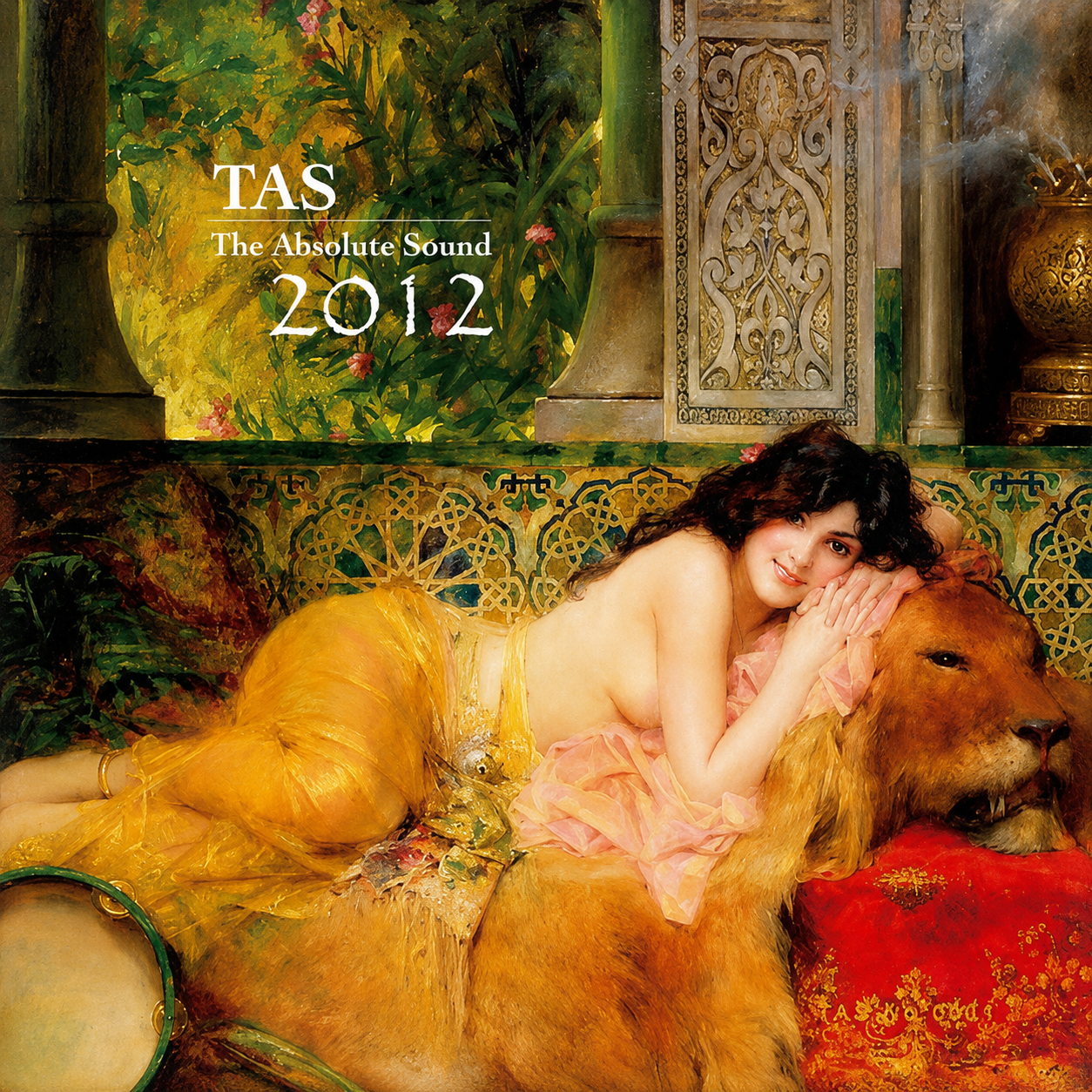
The Absolute Sound
2012
GREAT CHOICE: The Absolute Sound 2012!
Great music deserves to be discovered, enjoyed and shared.
CAN YOU SPARE A CUP OF COFFEE?
Audiophile-Streaming is a personal passion project, built with countless hours of discovering, selecting and sharing exceptional music.
I personally cover, without sponsors, the ongoing costs of hosting, software and subscriptions to keep the music discoveries coming. If you enjoy my work, your support is always appreciated.
A LITTLE THANK YOU IN RETURN
Just one coffee gives you lifetime access to the Coffee Club and all its playlists.
No subscriptions. No recurring fees.
The Absolute Sound 2012, An Enchanting Audiophile Journey Through Voices, Folk, Jazz and Classical Music
Some audiophile compilations reveal their intentions within the first few seconds, using enormous drums, spectacular bass or exaggerated stereo effects to impress the listener before the music has been given a chance to speak. The Absolute Sound 2012 chooses a more elegant and enduring path. This beautifully curated chapter in the celebrated TAS series unfolds like a carefully written novel, beginning in mystery, travelling through delicate jazz, intimate acoustic storytelling and atmospheric European folk music, and finally arriving at the graceful world of classical strings. Every track introduces another setting and another emotional character, yet the album retains a remarkable sense of continuity from beginning to end.
Released by Aurora Music International, The Absolute Sound 2012 is an audiophile reference album made for listeners who expect exceptional recording quality without sacrificing musical substance. Its programme brings together artists such as Garmarna, Nicki Parrott, Allan Taylor, Brooke Miller, Jimmy Jørgensen, Liz Madden, Katja Maria Werker, Maeve O’Boyle, Derek Smith, Paul Banks, Sarah Moule, Majorstuen and the Budapest Strings. The result is an unusually rich collection of audiophile female vocals, acoustic guitar recordings, jazz interpretations, folk traditions and classical reference music.
TAS 2012 can certainly be used as high-quality speaker test music, because its recordings reveal stereo imaging, vocal realism, soundstage depth, bass control, treble smoothness and instrumental texture with impressive clarity. It is equally useful for comparing headphones, amplifiers, DACs, SACD players and complete high-end audio systems. Yet describing the album only as a hi-fi test disc would ignore its greatest achievement. The Absolute Sound 2012 does not simply reveal what audio equipment can reproduce. It shows why the pursuit of better sound remains so deeply connected to the pleasure of music.
A Mysterious Entrance into the World of TAS 2012
The journey begins with Njaalkeme by Garmarna, a performance that opens the album in a landscape of Scandinavian mystery. The recording seems to emerge from darkness, introducing voices, rhythms and ancient musical colours that feel both timeless and immediate. Rather than offering the listener an easy or predictable beginning, Garmarna creates an atmosphere that demands attention and prepares the ears for the wide musical world that follows.
Traditional folk instruments are particularly revealing through a high-end audio system because their complex textures can quickly expose weaknesses in tonal balance. An excessively bright loudspeaker may turn strings and percussion into hard, aggressive sounds, while an overly warm system can remove their rhythmic definition and natural character. Through a transparent pair of audiophile speakers, Njaalkeme retains both its raw energy and its atmospheric depth. Individual instruments remain clearly recognisable, yet they combine into a performance that feels physical, organic and completely unified.
The track is also an outstanding stereo imaging test. Sounds appear at different distances within the recording, creating a layered soundstage rather than a flat image between two speakers. When the room acoustics and speaker placement are correctly adjusted, the performance seems to extend far beyond the physical boundaries of the cabinets. The listener is not merely observing the music from outside, but entering a mysterious space created by rhythm, voice and reverberation.
Nicki Parrott and the Delicate Beauty of Sakura Sakura
After the intensity of Garmarna, Nicki Parrott’s Sakura Sakura arrives like the first warm light of spring. The familiar Japanese melody is treated with restraint and grace, allowing Parrott’s voice and bass playing to communicate without unnecessary decoration. The change of atmosphere is beautifully judged, demonstrating the confidence with which The Absolute Sound 2012 moves between contrasting musical worlds.
Sakura Sakura is an exceptional example of audiophile vocal jazz because the recording combines intimacy with spaciousness. Parrott’s voice should appear stable and naturally proportioned in the centre of the stereo image, while the surrounding instruments retain enough air to create a believable acoustic environment. An aggressive system may exaggerate breath and sibilance, but a well-balanced high-end audio setup preserves the softness and elegance of the performance.
The double bass provides an equally important test. Its notes must possess depth and resonance, yet every pitch should remain easy to follow. Poorly controlled low frequencies can turn the instrument into an indistinct rumble, while a capable amplifier and pair of speakers reproduce the texture of the strings and the wooden body behind them. Sakura Sakura demonstrates that the best bass test music does not need to shake the room. True low-frequency quality is heard in control, timing and tonal detail.
Nicki Parrott returns later with Downtown, bringing a brighter and more playful personality to the album. Her transformation of the familiar pop song is filled with jazz charm, rhythmic ease and warmth. The two performances reveal different sides of the same artist, with Sakura Sakura offering delicacy and reflection while Downtown introduces movement and optimism. Together they give TAS 2012 a vocal jazz centre that is both technically revealing and thoroughly enjoyable.
Allan Taylor and the Poetry of a Life in Motion
Down the Years I Travelled by Allan Taylor is one of the emotional pillars of The Absolute Sound 2012. Taylor’s deep and unmistakable voice carries the weight of memory, distance and experience, while the acoustic arrangement gives every phrase enough space to develop. He does not sound as though he is simply performing a song. He appears to be opening an old suitcase of memories and inviting the listener to travel through them.
Allan Taylor’s recordings have long been admired by audiophiles because his voice is an excellent test of lower-midrange realism. A loudspeaker with too much warmth may make him sound unnaturally heavy, while a lean system can remove the physical presence and authority that define his style. Through a properly balanced hi-fi system, the voice possesses body, texture and natural scale without losing clarity.
The acoustic guitar is captured with equal care. Each plucked string begins with a precise attack, followed by the resonance of the wooden instrument and a gentle decay into the surrounding silence. A system that focuses only on detail may reproduce the attack but miss the harmonic richness, while slower equipment can blur the rhythm and soften the emotional impact. Down the Years I Travelled rewards audio components that combine transparency with musical warmth.
This track illustrates the essential difference between ordinary speaker test music and a genuine audiophile reference recording. The technical quality is easy to hear, but it never becomes the subject of the experience. Better sound allows Taylor’s story to feel more intimate, his guitar more physical and the space around him more believable. The equipment succeeds by making itself less noticeable.
Brooke Miller Finds the Soul of Acoustic Music
There You Are by Brooke Miller brings one of the album’s most intimate and beautifully balanced performances. Her voice possesses warmth and individuality, while the unplugged arrangement creates the sensation of a private musical moment preserved without unnecessary studio decoration. The simplicity of the recording makes it highly revealing, because every small weakness in the playback system becomes more obvious when there are fewer instruments available to hide it.
Miller’s voice should remain focused without appearing artificially large. The finest audiophile speakers place her firmly within the soundstage while preserving the natural acoustic space around the performance. Through reference headphones, the listener can hear subtle changes in breath and phrasing, but a carefully positioned stereo system creates a more physical impression of the artist occupying the room.
The guitar requires speed, body and tonal accuracy. Its strings should sound crisp but never sharp, and the wooden resonance must provide warmth without clouding individual notes. There You Are is therefore excellent acoustic guitar test music, yet the track never feels designed for technical demonstration. Its recording quality serves a performance that is calm, sincere and emotionally direct.
The beauty of this selection lies in its apparent simplicity. There are no oversized effects and no dramatic orchestral peaks, but the realism can be breathtaking when the audio system is working correctly. The silence surrounding Miller becomes part of the song, giving the voice and guitar room to breathe.
Jimmy Jørgensen and the Dark Humour of Love
Love Is an Ugly Dog by Jimmy Jørgensen introduces a rougher, more characterful voice into the journey. The title suggests humour and disappointment in equal measure, and the performance carries both qualities through its distinctive vocal delivery and rhythmic arrangement. After the reflective warmth of Allan Taylor and Brooke Miller, Jørgensen adds a sharper edge that prevents the album from becoming overly gentle.
His textured voice provides a valuable test of midrange transparency. A smooth but overly polite audio system may remove the natural grain that gives the singer his identity, while an aggressive system can exaggerate that texture until the performance sounds harsh. The ideal reproduction preserves the roughness without losing warmth, allowing the personality behind the voice to remain fully intact.
The arrangement also challenges the timing of the hi-fi system. Every rhythmic element must move together, and the bass needs enough control to support the song without slowing it down. A capable amplifier gives the performance momentum, while responsive loudspeakers preserve the attack and release of each musical accent. Love Is an Ugly Dog proves that audiophile music does not always need to sound polished or beautiful in a conventional way. Realism also means preserving character, imperfection and emotional bite.
Liz Madden Recreates the Chelsea Hotel
Chelsea Hotel by Liz Madden brings the listener into one of popular music’s most famous locations, a place associated with artists, poets, love affairs and creative mythology. Madden’s performance approaches the song with sensitivity, allowing the story to remain central while her voice adds its own warmth and personality.
As a female vocal reference track, Chelsea Hotel reveals the quality of the midrange with remarkable clarity. Madden’s voice should feel intimate but not excessively close, and her phrasing must remain natural rather than highlighted as an audiophile effect. The accompaniment needs enough separation to create depth, yet every instrument should continue to serve the lyric.
On a transparent high-end audio system, the recording gains an almost visual character. The singer appears within a clearly defined space, and the listener begins to imagine the room and the memories described in the song. This is where stereo soundstage reproduction becomes more than a technical measurement. Width and depth help create a setting in which the story can live.
The track also demonstrates the importance of long-term listening comfort. A system may initially appear impressive by presenting strong treble detail, but an overly bright balance can make an intimate vocal recording tiring. Chelsea Hotel rewards smooth, natural equipment that allows the listener to follow the entire performance without distraction.
Katja Maria Werker and the Strength to Rise from Concrete
Aus Dem Beton by Katja Maria Werker changes the language and atmosphere of the album while preserving its emotional continuity. Her voice combines vulnerability and determination, and the German lyric gives the performance a direct, earthy quality. The arrangement remains focused enough to maintain intimacy but carries enough energy to prevent the song from becoming static.
Werker’s voice is captured with presence and texture, making the recording useful for testing vocal focus and tonal balance. The central image should remain stable, while instruments spread naturally around her. A high-quality DAC can reveal additional ambience and subtle layers within the arrangement, but the improvement should never make the presentation clinical.
The song’s title, which suggests emerging from concrete, is reflected in the musical character. There is a sense of growth and determination, with the performance gradually gaining emotional strength. Through a dynamic high-end stereo system, that development feels natural. Quiet moments remain detailed, while stronger passages expand without compression or hardness.
Aus Dem Beton is one of the tracks that gives The Absolute Sound 2012 its international identity. The album does not remain within the safety of familiar English-language audiophile songs. It moves through different cultures and musical traditions, trusting recording quality and emotional honesty to create unity.
Maeve O’Boyle and the Confessional Beauty of All My Sins
All My Sins by Maeve O’Boyle returns the listener to the world of intimate acoustic songwriting. Her voice is clear, youthful and emotionally exposed, while the arrangement provides a gentle foundation that allows the lyric to remain in focus. The recording feels personal rather than theatrical, and that honesty makes it one of the album’s most engaging vocal moments.
The track is ideal for testing treble smoothness and vocal realism. O’Boyle’s higher notes should sound open and expressive without becoming sharp, while quieter phrases require enough resolution to preserve breath and texture. A system that is too dark may remove the delicacy from the performance, but an overly bright setup can destroy its warmth and intimacy.
Acoustic instruments appear with natural proportions, and their notes fade gradually into the recording space. This decay becomes easier to hear through a refined SACD player, DAC or network streamer, especially when the amplifier and listening room have a low noise floor. Yet the finest reproduction does not call attention to extra information. It simply makes the performance feel more complete.
All My Sins demonstrates why female vocal audiophile recordings remain so effective for comparing audio equipment. The human voice is immediately recognisable, and even small tonal colourations can change its emotional character. When the system is balanced, O’Boyle sounds natural, vulnerable and convincingly present.
Derek Smith and the Refined Art of the Piano
Too Late Now by Derek Smith brings elegant piano jazz into the collection. His playing has clarity, rhythm and confidence, while the recording captures the instrument with enough harmonic richness to challenge serious high-end audio equipment. Piano remains one of the most difficult instruments to reproduce convincingly because each note contains a percussive beginning, a complex tonal body and a gradual acoustic decay.
A lesser system may reproduce the melody but reduce the piano to a small image between the speakers. Through transparent audiophile speakers, the instrument gains believable size and weight. The lower notes possess authority without boom, while the upper register remains brilliant without hardness. The listener should sense the instrument’s physical body rather than hear only the mechanical action of the keys.
Too Late Now is excellent jazz piano test music because it reveals transient response, tonal balance and timing. The performance needs enough speed to retain its rhythmic elegance, but it should never sound rushed. The best audio system allows every note to arrive naturally, creating movement without sacrificing warmth.
Paul Banks and the Natural Warmth of Crazy Love
Paul Banks brings a relaxed, affectionate atmosphere with Crazy Love. His voice and acoustic accompaniment create an easy musical flow, allowing the familiar emotion of the song to feel sincere rather than sentimental. The performance is understated, but its recording quality provides a revealing test of tonal coherence.
Banks’s voice should retain its natural texture, and the guitar must combine a clean string attack with believable wooden resonance. Bass notes need control and pitch, supporting the song without overwhelming its gentle character. A well-matched amplifier and pair of speakers allow these elements to remain connected, making the performance sound effortless.
Crazy Love is a reminder that audiophile reference music does not need to be dramatic. A system’s true quality is often revealed by whether it can preserve the natural proportions of a simple performance. When reproduced correctly, the song feels warm, immediate and inviting, encouraging the listener to remain with the music rather than analyse the equipment.
Sarah Moule and the Graceful Movement of Love Go Round
Love Go Round by Sarah Moule adds sophisticated vocal jazz to the CD and SACD programme. Her voice moves confidently through the melody, supported by an arrangement that balances clarity with elegance. The performance possesses the late-night atmosphere that works especially well in a high-quality listening room, where subtle details can emerge without the need for excessive volume.
Moule’s phrasing provides an excellent test of low-level resolution. Small shifts in timing and emphasis give the performance its personality, and a transparent audio system allows these nuances to remain audible without exaggeration. The central vocal image should be precise, while the instruments occupy a broad but believable stereo soundstage.
The track is equally rewarding through headphones, where the listener can examine fine vocal details, and through speakers, where the recording gains more physical scale. In both cases, tonal balance remains essential. Love Go Round should sound refined and open, but never cold.
Majorstuen Paints in Shades of Bleu
Bleu by Majorstuen returns the album to Scandinavian string music, but its atmosphere differs from the mystery of Garmarna. The performance is elegant, lyrical and filled with subtle movement. The strings create colour through texture and rhythm, allowing the track to function as both a beautiful folk-inspired instrumental and a demanding treble test.
The finest loudspeakers reproduce the energy of the bows without introducing metallic hardness. Individual instruments should remain easy to follow, but the ensemble must retain unity. A well-controlled system allows the soundstage to open naturally, revealing space between the musicians and the acoustic environment surrounding them.
Bleu also demonstrates the importance of microdynamics. Small changes in pressure, speed and phrasing give the performance life, and equipment lacking sensitivity can make the music sound flat. Through a responsive high-end audio system, the ensemble breathes, moves and communicates with remarkable immediacy.
Budapest Strings Bring the Journey to an Elegant Conclusion
The album closes with the Budapest Strings performing the Italiana from Respighi’s Antiche Arie e Danze, Suite No 3. It is a graceful and inspired conclusion, bringing the journey into the refined world of Italian classical music. After the voices, jazz, guitars and folk instruments that precede it, the string ensemble expands the scale of the soundstage and gives TAS 2012 a sense of arrival.
The recording requires treble refinement, instrumental separation and realistic acoustic depth. The strings should possess brilliance without harshness, while the ensemble needs enough body to avoid sounding thin. A capable amplifier allows dynamic changes to develop freely, and carefully positioned speakers reproduce the width and depth of the performance space.
When the hi-fi system is correctly balanced, the Budapest Strings do not appear as a flat group confined between two cabinets. The ensemble occupies a believable stage, with the hall’s natural reverberation extending behind the players. The sound becomes smooth, dimensional and emotionally uplifting, ending the album with elegance rather than spectacle.
Final Verdict
The Absolute Sound 2012 is a magnificent audiophile compilation and one of the most varied, intimate and musically rewarding entries in the TAS series. Its combination of Scandinavian folk, female vocal jazz, acoustic singer-songwriter music, piano performances and classical strings creates an international journey that feels carefully composed rather than randomly assembled.
It is enthusiastically recommended for listeners searching for the best audiophile album for testing speakers, high-quality SACD music, natural female vocal recordings, acoustic guitar reference tracks, jazz piano test music and classical performances with an expansive stereo soundstage. TAS 2012 can reveal tonal colouration, weak bass control, aggressive treble and poor imaging, but it rewards a well-balanced high-end audio system by making every voice and instrument feel more physical, natural and emotionally convincing.
Garmarna opens the album with mystery, Nicki Parrott brings delicacy and jazz charm, Allan Taylor transforms memory into music and Brooke Miller creates intimate acoustic beauty. Jimmy Jørgensen adds personality and bite, Liz Madden recreates the mythology of the Chelsea Hotel, Maeve O’Boyle brings vulnerability and Derek Smith supplies elegant piano jazz. Majorstuen introduces Scandinavian colour, while the Budapest Strings close the journey with classical grace.
When The Absolute Sound 2012 is played through a carefully assembled hi-fi system, its real purpose becomes clear. The loudspeakers gradually disappear, the soundstage extends beyond the listening room and fourteen individual recordings become one flowing musical story. The technology withdraws from attention, leaving only voices, instruments, atmosphere and emotion.
For audiophiles, collectors of the Aurora Music International TAS series and music lovers who believe that better sound should always lead to a deeper connection with the performance, The Absolute Sound 2012 is not simply recommended. It is an essential audiophile reference album and a beautifully curated musical journey that deserves to be heard slowly, repeatedly and with complete attention.
Album details and track information were checked against Aurora Music International’s official TAS 2012 vinyl page and the published CD/SACD programme. (極光音樂 Aurora Music)
