
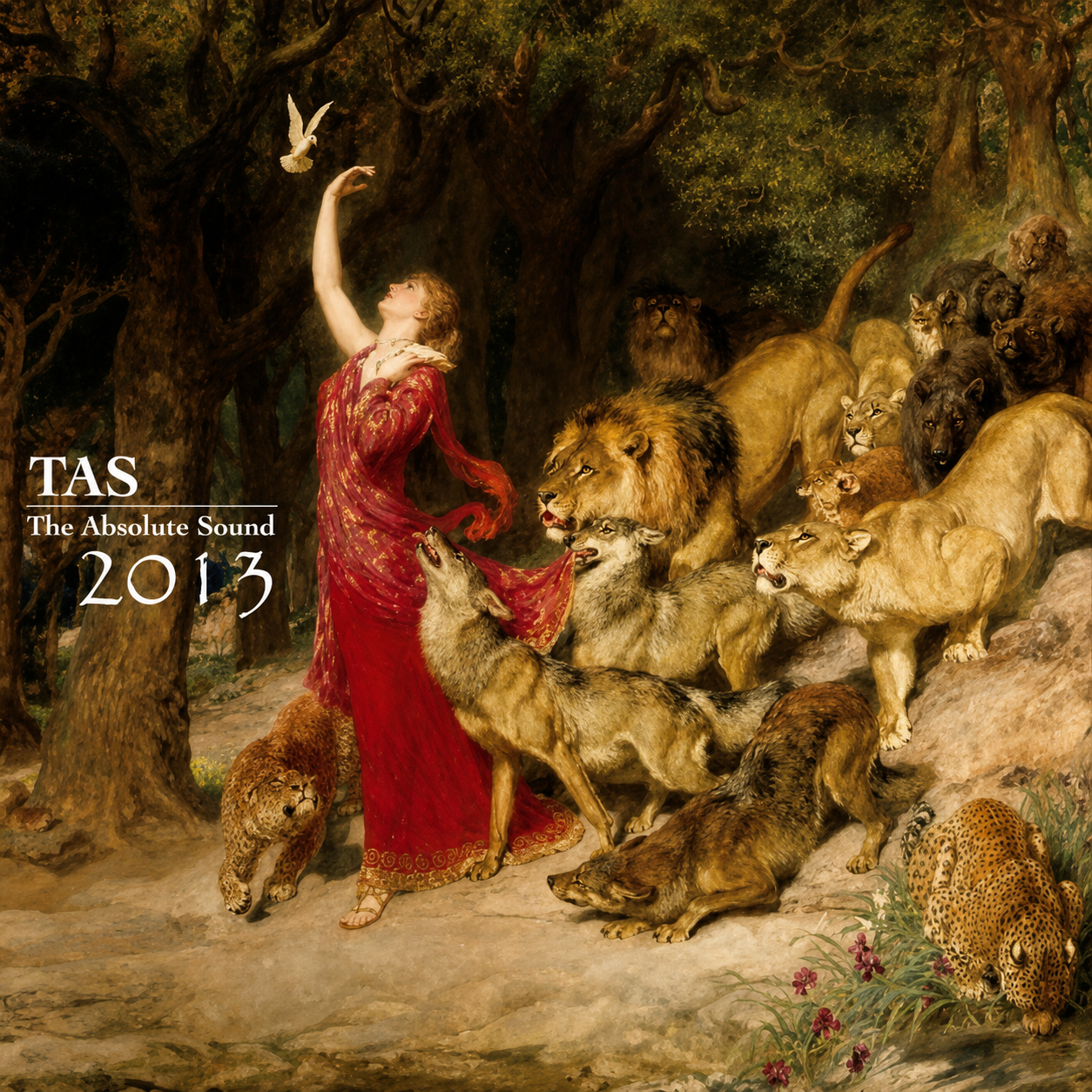
The Absolute Sound
2013
The Absolute Sound 2013, A Radiant Audiophile Journey Through Jazz, Folk, Tango and Classical Beauty
There are albums that demonstrate an audio system, and there are albums that make the system disappear. The Absolute Sound 2013 belongs triumphantly to the second category. This beautifully curated entry in the celebrated TAS audiophile series does not present itself as a collection of disconnected demonstration tracks, but as a complete musical voyage in which every performance opens another door. Ancient instruments lead toward modern acoustic storytelling, intimate jazz gives way to the passion of tango, and reflective voices gradually prepare the listener for a finale filled with warmth and seasonal light.
The result is one of those rare audiophile compilation albums that can satisfy two very different kinds of listeners at the same time. For the hi-fi enthusiast, TAS 2013 offers outstanding reference music for testing speakers, amplifiers, headphones, DACs, CD players and SACD systems. Its fourteen carefully chosen recordings reveal stereo imaging, soundstage depth, vocal realism, bass definition, instrumental texture and dynamic control with impressive clarity. For the music lover, however, the technical qualities soon become secondary, because the album develops with the emotional continuity of a finely written book.
The Absolute Sound 2013 begins as an adventure, travels through memory and longing, and ends with a quiet feeling of peace. Nothing feels placed here by accident. The music has been sequenced to change the atmosphere of the listening room gradually, allowing each artist to introduce a distinct personality while remaining part of a coherent larger story. It is this union of exceptional recording quality and thoughtful musical selection that makes TAS 2013 such a valuable addition to any serious audiophile music collection.
A Magnificent Voyage Begins with Propinan De Melyor
The opening track, Propinan De Melyor by the New London Consort, immediately carries the listener into another age. The performance has movement, ceremony and an unmistakable spirit of exploration, as though the album is preparing to leave a familiar harbour and travel toward unknown musical territories. Its historical character gives the opening a sense of theatre, yet the recording remains vivid and immediate rather than distant or academic.
Traditional instruments are particularly revealing through a high-end audio system because their complex harmonics quickly expose an unnatural tonal balance. An excessively bright loudspeaker can make the performance sound thin and aggressive, while an overly warm system may remove the texture and rhythmic detail that give the music its vitality. Through a carefully matched amplifier and pair of audiophile speakers, Propinan De Melyor possesses body, colour and energy, with every instrument retaining its individuality while contributing to the movement of the ensemble.
The recording also provides an excellent stereo soundstage test. The musicians should not appear as a flat line between two loudspeakers, but as performers occupying a believable acoustic space. Individual instrumental voices emerge at different positions and distances, while natural reverberation extends behind them. When speaker placement and room acoustics are correctly adjusted, the cabinets begin to vanish and the listening room seems to open onto a much larger performance space.
As an introduction to The Absolute Sound 2013, the track is perfectly chosen. It announces that the album will not remain safely within one genre or one musical period. Instead, it invites the listener to begin a journey in which every new selection offers a different culture, atmosphere and sonic challenge.
Emily Barker Enters the Mystery of The Blackwood
The Blackwood by Emily Barker and the Red Clay Halo changes the scene completely. The historical energy of the opening gives way to a darker and more intimate folk atmosphere, filled with longing, mystery and the quiet emotional tension of a story that has not yet revealed its ending.
Emily Barker’s voice is captured with enough clarity to feel close, yet the recording preserves sufficient space around her to prevent the presentation from becoming artificially intimate. This balance is one of the defining pleasures of the best audiophile female vocal recordings. The singer should remain focused in the centre of the stereo image, but she must also belong naturally to the instruments and ambience surrounding her.
The acoustic arrangement is equally important. Strings need a precise initial attack, followed by natural warmth and resonance. A system that emphasises detail without body may make the instruments sound dry, while excessive lower-midrange energy can blur their texture and weaken the rhythm. The Blackwood rewards high-end audio equipment capable of combining transparency with tonal richness.
Yet the recording never feels like a technical exercise. Barker’s storytelling draws the listener into the shadows of the song, and the carefully preserved atmosphere allows the imagination to complete the picture. This is where TAS 2013 proves that superior recording quality has a purpose beyond impressive sound. A deeper soundstage and more natural vocal presence strengthen the emotional world created by the performance.
Allan Taylor Searches with Quiet Authority
Looking for You by Allan Taylor brings one of the most recognisable voices in audiophile music into the programme. Taylor has long been admired by serious listeners for his ability to combine thoughtful songwriting with warm, naturally recorded vocals and acoustic instruments. His performances often feel less like conventional songs and more like personal recollections shared in a quiet room, and Looking for You continues that tradition beautifully.
Taylor’s voice is an outstanding test of lower-midrange accuracy. It should possess weight and authority without becoming heavy or unnaturally enlarged. A lean audio system can remove the physical presence that gives his delivery its character, while a system with excessive warmth may obscure the words and make the central image sound thick. Through a balanced pair of high-end speakers, the voice becomes tangible, textured and calmly expressive.
The acoustic instruments surrounding him require the same degree of control. Guitar strings should have definition, but their wooden resonance must remain audible. Bass notes should support the song with pitch and stability rather than simple low-frequency power. The best amplifier and loudspeaker combinations allow all these elements to remain connected, preserving the unhurried rhythm of the performance.
Looking for You is exceptional music for testing speakers, but its emotional quality quickly makes such analysis feel unimportant. Taylor’s delivery creates the impression of a man following a memory across years and distance. The equipment succeeds when it allows that story to become more believable, not when it draws attention to itself.
Ancient Air and the Elegance of Romantic Jazz
John Di Martino’s Romantic Jazz Trio introduces the refined instrumental beauty of Ancient Air. The performance moves with grace, combining a lyrical melody with the sophisticated timing and tonal colour associated with the finest audiophile jazz recordings. After the acoustic storytelling of Allan Taylor, the track feels like a change of light, opening the album toward a more elegant and reflective atmosphere.
Piano is among the most demanding instruments for any high-end audio system because every note contains several distinct stages. There is the immediate mechanical strike, the rich harmonic body that follows and the gradual decay into the acoustic space. A lesser system may reproduce the melody clearly enough while reducing the instrument to a small and mechanical image. A transparent system allows the piano to acquire realistic weight, scale and resonance.
The bass and percussion provide an equally valuable test. The bass should be tuneful and clearly articulated, while the drums need speed and texture without becoming unnaturally prominent. The trio must remain a unified musical conversation rather than three isolated sources placed across the stereo soundstage.
Ancient Air demonstrates why jazz is such rewarding speaker test music. Timing, tonal balance and instrumental interaction are inseparable. When the system is performing correctly, the listener does not merely hear where the musicians are positioned, but begins to understand how they are responding to one another. The performance breathes, swings and develops with effortless refinement.
Nicki Parrott and Ken Peplowski Rediscover For No One
For No One, performed by Nicki Parrott and Ken Peplowski, transforms a familiar composition into an intimate jazz conversation. Parrott’s voice brings warmth and delicacy, while Peplowski’s instrumental presence adds lyrical colour and a graceful sense of movement. The interpretation respects the emotional centre of the song while giving it an entirely new acoustic identity.
This is excellent female vocal audiophile music because the recording places strong demands on tonal balance. Parrott’s voice should sound clear and natural, with sufficient body to avoid thinness and enough openness to preserve breath and phrasing. Sibilants must remain controlled, while the accompaniment needs enough detail to stay expressive without competing against her.
Peplowski’s tone provides another revealing test. Wind instruments contain breath, reed texture and complex harmonics that can sound hard through an aggressive system. The best audiophile speakers reproduce the instrument with warmth, body and air, allowing it to remain expressive without becoming oversized.
For No One also illustrates the importance of space. Parrott and Peplowski should occupy distinct but related positions within the recording. Their musical lines need separation, yet the performance must continue to feel intimate and unified. Through a refined DAC, SACD player or network streamer, the quiet ambience around them becomes easier to hear, adding depth without making the recording sound artificially processed.
The result is one of TAS 2013’s most elegant moments. A familiar melody is reborn through interpretation, tone and exceptional sound quality, reminding the listener that a great reference recording should always remain first and foremost a compelling musical performance.
Poema Ignites the Album with Tango Passion
Poema by Otros Aires brings a dramatic change of temperature. The restrained elegance of the previous tracks gives way to the pulse, tension and seduction of tango, creating one of the album’s most exciting contrasts. The performance seems to carry the atmosphere of a dimly lit dance hall, where rhythm, fashion, desire and danger exist within the same musical heartbeat.
Tango is superb music for testing bass response and transient speed. The rhythm must possess impact, but the low frequencies should remain controlled and tuneful. Percussive accents need definition, while melodic lines must retain clarity as the arrangement becomes more energetic. A slow or poorly controlled system can make the performance sound crowded, but a capable amplifier and responsive loudspeakers allow the music to move with irresistible momentum.
Dynamic contrast is equally important. Poema can shift from restraint to sudden intensity, and the audio system must follow those changes without compression. The best high-end stereo systems preserve the tension within the quieter passages and allow the stronger moments to expand freely.
The track also produces a broad and cinematic stereo image. Instruments appear across a layered stage, while rhythmic details seem to emerge from different points within the acoustic picture. Through a well-configured hi-fi system, Poema does not simply play in front of the listener. It surrounds the room with movement and atmosphere.
This is audiophile tango at its most persuasive, technically revealing but emotionally immediate. It adds fire to the centre of The Absolute Sound 2013 and prevents the journey from becoming too gentle or predictable.
Claire Martin and John Martyn Meet at the Station
Man in the Station by Claire Martin and John Martyn introduces a smoky, late-night atmosphere that feels entirely different from the intensity of Poema. Martin’s voice carries sophistication and control, while Martyn contributes the weathered character and emotional gravity of an artist whose tone is instantly recognisable.
Their contrasting voices create a compelling duet and a demanding test of midrange differentiation. A high-quality audio system should preserve the individuality of both singers rather than imposing one tonal character upon them. Martin’s clarity and Martyn’s rougher texture need to remain distinct, yet their voices must inhabit the same believable musical environment.
The accompaniment moves with an easy jazz pulse, creating the sensation of a performance unfolding after midnight, when the room has grown quieter and every detail seems more vivid. Bass should remain controlled and understated, while the instruments surrounding the singers require enough space to retain their identities.
Man in the Station is particularly effective for testing centre-image stability and soundstage depth. The voices must remain firmly placed, while the accompaniment extends behind and around them. A flat or confused presentation weakens the atmosphere, but a transparent stereo system creates an almost visual scene.
The recording is sophisticated without becoming remote. Its misty vocal character and relaxed rhythm draw the listener into a world of railway platforms, half-finished conversations and thoughts carried into the night. It is one of the album’s most cinematic chapters.
Kira Skov Remembers When We Were Gentle
When We Were Gentle by Kira Skov brings a quiet emotional intensity to TAS 2013. Her voice possesses strength and vulnerability in equal measure, and the arrangement gives every phrase enough space to develop naturally. There is no need for exaggerated drama because the performance communicates through tone, restraint and carefully controlled dynamics.
The recording is highly revealing through both speakers and headphones. Skov’s voice should remain rich and dimensional, with subtle changes in breath and texture clearly preserved. An overly bright system can make the vocal hard and tiring, while insufficient resolution may remove the details that give the interpretation its emotional depth.
The arrangement also tests low-level transparency. Quiet instrumental lines should remain audible without being pushed forward, and the background must feel dark enough for the voice to emerge naturally. A refined DAC or SACD player can improve this sense of contrast, revealing ambience and instrumental decay while preserving the intimate proportions of the recording.
When We Were Gentle is an excellent audiophile vocal reference track, but its real achievement lies in its emotional honesty. The song feels like a reflection on something beautiful that can no longer be recovered. Better sound allows that feeling to become more immediate, shortening the distance between performer and listener.
David Munyon and the Prayers of Elvis Presley
Prayers of Elvis Presley by David Munyon brings one of the album’s most distinctive and deeply personal performances. Munyon’s weathered voice carries history, faith, uncertainty and compassion, while the acoustic setting allows every imperfection and emotional detail to remain visible.
This is precisely the kind of recording that exposes whether a hi-fi system values realism or artificial polish. Munyon should not sound smooth in a conventional sense, because the grain and age within his voice are essential parts of the performance. An overly analytical system may exaggerate those textures until they become uncomfortable, while equipment that is too soft can remove his individuality.
The guitar requires equally careful reproduction. Each string should have a defined attack, followed by natural wooden resonance and a gradual decay. The central image must remain stable, and the quiet space around Munyon should contribute to the feeling of a private musical confession.
Prayers of Elvis Presley demonstrates the deeper purpose of audiophile recording quality. Transparency is not valuable because it makes every performer sound perfect. It is valuable because it allows every performer to sound human. Through a balanced high-end audio system, Munyon appears vulnerable, sincere and physically present, creating one of the most unforgettable moments on The Absolute Sound 2013.
Liz Madden and the Fragile Beauty of If I Die Young
Liz Madden’s If I Die Young continues the reflective mood, but her clear and graceful voice gives the album another emotional colour. The performance develops with tenderness, allowing the familiar theme of youth, love and mortality to unfold without excessive sentimentality.
Madden’s voice is captured with openness and natural presence, making the track ideal for evaluating female vocal realism and treble smoothness. Higher notes should rise freely without becoming sharp, while quieter phrases require enough resolution to preserve breath and intimacy. The accompaniment must remain detailed but gentle, supporting the singer without narrowing the soundstage.
On a carefully configured stereo system, the vocal image appears focused while the surrounding ambience extends naturally into the room. Reverberation should fade gradually rather than ending abruptly, creating a sense of depth and atmosphere.
If I Die Young is one of those recordings that can reveal differences between good and exceptional audio equipment within seconds, yet the emotional pull of Madden’s interpretation soon becomes more important than the comparison. Her voice seems to spread through the listening space with effortless grace, making the song feel personal and immediate.
Luigi Gerosa Awakens the Romantic Piano
Luigi Gerosa’s performance of Kalkbrenner’s Piano Sonata No 3 in G Major introduces classical piano with romance, elegance and technical brilliance. After the album’s sequence of voices and acoustic stories, the instrumental scale suddenly expands, allowing the piano to become an entire world of rhythm, melody and harmonic colour.
The recording challenges every frequency range of the playback system. Lower notes need weight and authority without boom, the middle register requires natural body, and the upper notes must remain brilliant without hardness. Rapid passages test transient speed, while quieter moments reveal the quality of instrumental decay and background silence.
A capable amplifier gives the piano freedom to move between delicate phrasing and stronger dynamic peaks. Transparent loudspeakers create the physical impression of a full-sized instrument rather than a miniature image confined between two cabinets. The acoustic surrounding the piano must also remain audible, giving the performance depth and proportion.
This is outstanding classical reference music for testing speakers, headphones and digital sources, but Gerosa’s playing ensures that the track remains more than a technical challenge. The sonata feels romantic and dreamlike, as though a forgotten memory has suddenly returned with unexpected clarity.
Paul O’Brien Dreams of Home
Sonny’s Dream by Paul O’Brien brings the journey back toward the human voice. The song’s narrative quality and gentle acoustic arrangement create a feeling of distance, home and the powerful ties that connect people to the places they have left behind.
O’Brien sings with natural warmth and restraint. His voice should possess realistic scale without becoming overly forward, while the instruments surrounding him need clarity and body. The bass must remain controlled, and acoustic strings should sound textured rather than artificially bright.
The recording is particularly valuable for testing musical coherence. Every part of the arrangement may be easy to hear separately, but the system succeeds only when the performance feels unified. O’Brien’s voice, the instruments and the acoustic environment must belong to the same emotional world.
Sonny’s Dream is one of the album’s most accessible moments, but its simplicity should not be mistaken for a lack of depth. The performance has the timeless quality of a song passed between generations, and its emotional honesty fits naturally within the larger journey of The Absolute Sound 2013.
A Warm and Graceful Christmas Farewell
The final two tracks bring the album toward a peaceful seasonal conclusion. Away in a Manger, performed by Bin Huang, introduces lyrical instrumental beauty, while Liz Madden returns with Noël Nouvelet to close the programme in warmth and gentle celebration.
Bin Huang’s performance requires smooth treble, natural instrumental tone and a stable stereo image. The melody should feel luminous without becoming sharp, and the surrounding acoustic space must provide enough depth to allow the instrument to breathe. A well-balanced high-end audio system gives the performance purity and calm, creating a moment of stillness after the album’s long musical journey.
Noël Nouvelet then provides a soft final chapter. Liz Madden’s voice brings familiarity and comfort, but the arrangement retains enough detail and atmosphere to remain valuable as an audiophile reference recording. Her vocal should appear open and focused, while the accompanying instruments spread naturally across a spacious soundstage.
The ending is beautifully judged because it avoids unnecessary grandeur. TAS 2013 does not conclude with an oversized orchestral explosion or a spectacular demonstration of bass. Instead, it leaves the listener with warmth, reflection and the sensation of winter sunlight entering a quiet room.
A Complete Audiophile Reference Album
The Absolute Sound 2013 is an exceptionally versatile album for evaluating a complete high-end audio system. Its historical instruments reveal tonal colour and treble quality, while its acoustic singer-songwriter recordings test vocal realism, guitar texture and centre-image stability. The jazz performances examine piano tone, bass definition and timing, while Poema challenges transient speed, dynamic control and rhythmic energy. The classical piano recording brings scale and harmonic complexity, and the closing selections reveal delicacy, atmosphere and low-level resolution.
Listeners comparing audiophile speakers can use TAS 2013 to evaluate stereo imaging, soundstage depth and tonal balance. Those testing amplifiers may hear meaningful differences in bass control, dynamic headroom and musical flow. A more refined DAC, SACD player or network streamer can uncover additional ambience, smoother decay and more realistic instrumental textures. Reference headphones may reveal tiny details within the recordings, although loudspeakers provide the larger and more physical acoustic presentation that makes the album especially immersive.
The greatest improvement, however, is not simply the appearance of more detail. It is the moment when the album begins to sound more coherent and human. Voices become individual personalities, instruments gain physical shape and the acoustic spaces begin to feel believable. The technology gradually withdraws from attention, allowing fourteen recordings to become one continuous musical story.
Final Verdict
The Absolute Sound 2013 is a magnificent audiophile compilation and one of the most atmospheric, varied and emotionally engaging chapters in the TAS series. Its combination of early music, acoustic folk, audiophile female vocals, romantic jazz, tango, classical piano and seasonal recordings creates a journey that feels adventurous without losing its unity.
It is enthusiastically recommended for listeners searching for the best audiophile album for testing speakers, high-quality SACD music, acoustic guitar reference tracks, jazz recordings with a deep stereo soundstage, natural vocal music and classical performances capable of revealing the full quality of a high-end audio system.
New London Consort begins the voyage with historical colour, Emily Barker enters the mystery of The Blackwood and Allan Taylor brings the authority of a master storyteller. Nicki Parrott and Ken Peplowski transform a familiar melody with elegance, Otros Aires fills the room with tango fire and Claire Martin joins John Martyn in a smoky late-night scene. Kira Skov introduces emotional reflection, David Munyon brings extraordinary humanity and Liz Madden adds tenderness before the classical piano and seasonal finale lead the journey gently home.
When The Absolute Sound 2013 is reproduced through a carefully balanced hi-fi system, the album achieves something far more important than impressive sound. The loudspeakers disappear, the listening room expands and every artist seems to enter an individual but connected musical world. Detail becomes emotion, stereo imaging becomes atmosphere and high fidelity becomes a doorway into the performances.
For audiophiles, collectors of Aurora Music International’s legendary TAS series and music lovers who believe that superior recording quality should always deepen the emotional experience, The Absolute Sound 2013 is not simply recommended. It is an essential reference album, a beautifully composed musical journey and a release that deserves to be heard slowly, repeatedly and with complete attention.
