
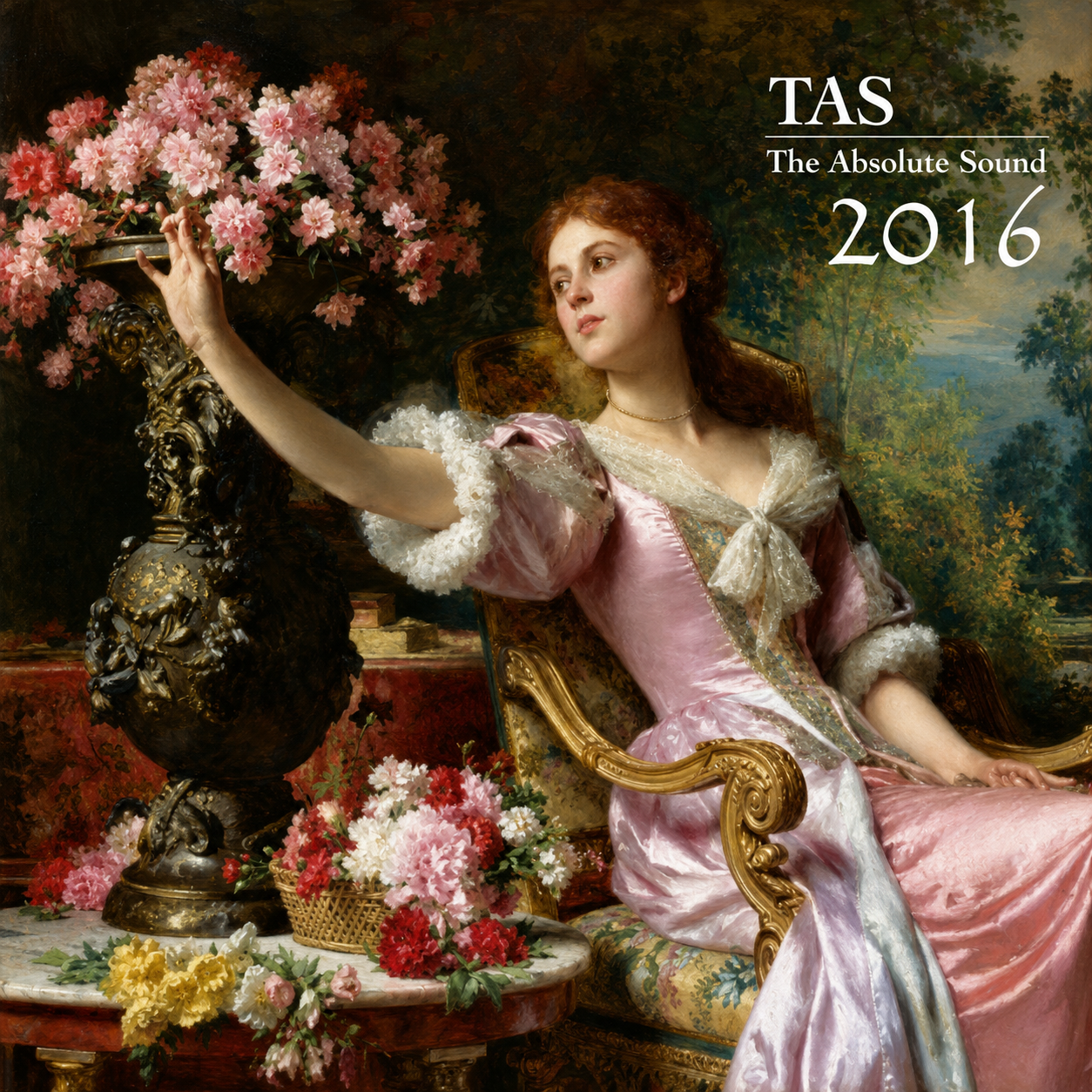
The Absolute Sound
2016
GREAT CHOICE: The Absolute Sound 2016!
Great music deserves to be discovered, enjoyed and shared.
CAN YOU SPARE A CUP OF COFFEE?
Audiophile-Streaming is a personal passion project, built with countless hours of discovering, selecting and sharing exceptional music.
I personally cover, without sponsors, the ongoing costs of hosting, software and subscriptions to keep the music discoveries coming. If you enjoy my work, your support is always appreciated.
A LITTLE THANK YOU IN RETURN
Just one coffee gives you lifetime access to the Coffee Club and all its playlists.
No subscriptions. No recurring fees.
The Absolute Sound 2016, A Magnificent Audiophile Celebration of Beauty, Emotion and High-End Sound
There are audiophile albums that immediately demand attention with thunderous percussion, spectacular bass and oversized stereo effects, and then there are albums that reveal their greatness more gracefully, inviting the listener to enter a musical world in which every voice, instrument and acoustic detail contributes to a larger emotional story. The Absolute Sound 2016 belongs proudly to this more refined category. It is a beautifully curated audiophile compilation that combines world music, folk, vocal jazz, acoustic performances and classical recordings within a programme that feels less like a collection of separate test tracks and more like a complete musical journey.
Released by Aurora Music International as another chapter in the highly regarded TAS series, The Absolute Sound 2016 offers fourteen carefully selected performances that demonstrate what high-fidelity sound can achieve when outstanding recording quality is placed entirely at the service of music. The album is highly recommended for listeners searching for the best audiophile music, high-quality SACD recordings, female vocal reference tracks, acoustic guitar test music, classical speaker test recordings and beautifully mastered songs for evaluating a complete high-end audio system.
The sound is open, warm and richly dimensional, but the greatest pleasure lies in the way the album avoids becoming a cold technical demonstration. Every track has its own atmosphere and emotional identity, while the sequencing allows the music to flow naturally from romantic poetry and Irish melancholy toward jazz elegance, orchestral scale and classical virtuosity. A listener may begin by studying stereo imaging, bass definition or vocal presence, but the analysis soon gives way to something more important, because the performances gradually take command of the room.
She Walks in Beauty Opens the Door
The journey begins with Saby O’ singing She Walks in Beauty, a musical interpretation inspired by the famous poem by Lord Byron. It is an inspired opening because the performance introduces the central theme of The Absolute Sound 2016 before the album has fully revealed its range. This is a collection concerned not merely with technical perfection, but with beauty itself, including the beauty of a human voice, the beauty of poetry, the beauty of instrumental tone and the beauty of silence surrounding a carefully preserved performance.
Saby O’s voice appears with exceptional purity and calm, floating within a broad acoustic space without ever becoming distant. Through a transparent pair of audiophile speakers, the vocal should remain stable and naturally proportioned at the centre of the stereo soundstage, while the accompaniment develops gently around it. The finest reproduction allows every breath and subtle change in phrasing to remain audible without making those details feel exaggerated.
As female vocal test music, She Walks in Beauty is immediately revealing. A system with an aggressive upper midrange may make the performance sound sharp or unnaturally exposed, while excessive warmth can reduce the clarity and delicate character of the voice. A carefully balanced high-end audio system preserves both softness and definition, allowing the singer to appear present, expressive and completely human.
The opening does not try to overwhelm the listener, yet its quiet confidence makes a powerful first impression. It establishes The Absolute Sound 2016 as an album that rewards patience, attention and equipment capable of reproducing subtle tonal colour.
Gary Karr Makes the Double Bass Sing
The Last Rose of Summer by Gary Karr follows with one of the most distinctive instrumental sounds in the audiophile world. Karr transforms the double bass from a supporting instrument into a deeply expressive solo voice, drawing warmth, sadness and lyrical beauty from its lowest register.
The recording is an exceptional test of bass extension and amplifier control. The double bass must possess depth and physical weight, but those qualities should never become slow, exaggerated or indistinct. Every note needs a clearly defined pitch, and the listener should be able to hear the movement of the strings together with the resonance of the instrument’s wooden body.
A less capable audio system may reproduce only a broad area of low-frequency energy, but a refined amplifier and pair of high-end speakers reveal texture, shape and natural decay. The result is bass that communicates melody rather than merely producing power.
The Last Rose of Summer also demonstrates how strongly audiophile sound quality can support emotion. Karr’s interpretation carries a quiet sense of loss, and the richness of the instrument seems to deepen that melancholy. The notes rise from silence, expand into the room and slowly fade, leaving behind the impression of memories that cannot be recovered.
Gary Karr returns later with Autumn in a Small Village, another performance filled with nostalgia and remarkable low-frequency beauty. The two recordings create an emotional connection across the album, using the voice of the double bass to suggest changing seasons, distant places and the gentle passage of time.
RUNA Brings Rhythm, Colour and Folk Energy
Black River by RUNA changes the landscape dramatically. After the lyrical calm of the opening tracks, the album enters the world of Celtic and world music with a performance filled with rhythm, instrumental colour and natural movement.
Traditional folk instruments can be extremely revealing through a high-end stereo system because their textures are complex and their rhythms depend upon precise timing. Strings must retain energy without becoming metallic, percussion needs speed without sounding thin, and every instrument should remain recognisable even when the arrangement grows more active.
Black River is excellent music for testing speakers because it exposes systems that produce plenty of detail but fail to reproduce musical momentum. A technically impressive setup may allow the listener to identify every instrument, yet the performance will still feel lifeless when the timing is slow or disconnected. A responsive amplifier and pair of well-controlled loudspeakers allow RUNA to move as one complete ensemble.
The soundstage should extend beyond the speakers, while the rhythmic centre remains firm and focused. When everything is working correctly, Black River feels physical and immediate, filling the room with folk energy without sacrificing instrumental separation or tonal balance.
This performance proves that The Absolute Sound 2016 is not limited to gentle audiophile vocals or quiet acoustic music. The album has movement, cultural variety and genuine excitement, making it useful both as a serious reference recording and as an enjoyable musical experience.
Three Great Voices Meet in Single Girl
Single Girl brings together Mari Wilson, Barb Jungr and Claire Martin, three highly individual British vocalists whose contrasting voices create one of the album’s most fascinating performances. Rather than presenting a single singer against a carefully arranged background, the track becomes a meeting of personalities, with each artist contributing a distinct tonal colour and interpretive character.
This makes Single Girl a demanding test of midrange transparency. A good audio system should allow the listener to recognise each singer immediately, preserving differences in texture, weight and phrasing. Equipment that strongly colours the midrange can make the voices sound too similar, weakening the individuality that gives the performance its charm.
Stereo imaging is equally important. The singers need clear positions within the recording, but the presentation should never feel artificially divided. Their voices must remain part of the same musical setting, supported by an arrangement that provides rhythm and atmosphere without becoming crowded.
Barb Jungr brings dramatic intelligence, Claire Martin contributes jazz sophistication and Mari Wilson adds unmistakable warmth and personality. Together they create a performance that is witty, stylish and emotionally observant. It is an outstanding audiophile vocal track, but its value extends well beyond testing equipment because the interplay between the singers remains captivating after the technical comparison has ended.
Diego Figueiredo and the Fire of the Guitar
Fadinho by Diego Figueiredo introduces Brazilian guitar virtuosity shaped by the emotional world of Portuguese fado. The result is a performance filled with speed, elegance and expressive contrast, combining technical brilliance with melodic warmth.
Acoustic guitar is one of the most effective instruments for testing transient response. Every plucked string begins with a rapid attack, but that initial moment must be followed by the resonance of the guitar body and the natural decay of the note. A system that emphasises only the attack can sound detailed but dry, while excessive warmth may blur the individual strings.
Fadinho requires both speed and tonal completeness. Through transparent audiophile speakers, Figueiredo’s fingers seem to move directly in front of the listener, with each note clearly defined but still connected to the larger musical phrase. The performance should feel agile rather than nervous, precise rather than mechanical.
The track also provides an excellent test of dynamics on a smaller scale. Tiny changes in touch and intensity give the performance character, and equipment lacking sensitivity may flatten those differences. A responsive system allows the guitar to breathe, dance and communicate, revealing why Diego Figueiredo is such a thrilling presence within this compilation.
Nicki Parrott Gives Ticket to Ride New Life
Nicki Parrott’s interpretation of Ticket to Ride takes a famous Beatles composition and places it within a relaxed, elegant jazz setting. The melody remains immediately recognisable, but the arrangement reveals another emotional side of the song, replacing its familiar pop energy with warmth, intimacy and subtle swing.
Parrott’s voice is naturally engaging, while her command of the double bass gives the recording a strong rhythmic foundation. The vocal should appear close and clearly focused, but it must retain enough acoustic space to avoid sounding artificially enlarged. Her bass needs depth and definition, allowing individual notes to remain tuneful rather than disappearing into a general low-frequency warmth.
This makes Ticket to Ride an excellent test of vocal clarity, bass articulation and musical timing. The performance should move with ease, and any heaviness in the audio system can reduce its light, graceful character.
The track is also a fine example of why familiar songs work so effectively on audiophile albums. Because the listener already knows the melody, differences in interpretation, arrangement and sound quality become immediately apparent. Parrott does not simply reproduce Ticket to Ride. She invites the listener to hear it again from a more intimate and sophisticated perspective.
Dalida Brings Romance and Vintage Glamour
Buenas Noches Mi Amor introduces the unmistakable voice of Dalida, surrounding the album with romance, nostalgia and vintage glamour. Her performance has the richness of another musical era, yet careful mastering allows its warmth and character to remain vivid.
Older recordings can be difficult for highly revealing audio systems. Equipment that overemphasises treble may expose limitations in the source and make the presentation sound hard, while an excessively soft system may remove life and clarity. The finest high-end systems preserve the age and atmosphere of the recording without treating them as weaknesses.
Dalida’s voice should sound full, expressive and naturally centred, while the accompaniment maintains its period charm. Buenas Noches Mi Amor is not impressive because it resembles a modern studio production. It is impressive because it retains personality, romance and emotional presence across time.
The track demonstrates that the best audiophile music collection does not need to consist entirely of new recordings. Careful selection and sensitive mastering can give classic performances renewed life, allowing their emotional qualities to shine through modern high-fidelity equipment.
Allan Taylor Finds Orchestral Scale
For What It’s Worth by Allan Taylor introduces one of the album’s most expansive arrangements. Taylor’s deep, expressive voice has long made him a favourite among audiophiles, but the orchestral accompaniment gives this performance additional scale and dramatic weight.
His voice remains the emotional centre, requiring accurate lower-midrange reproduction. It should possess body and authority without becoming thick, while the orchestra needs enough space to develop behind him. A system with poor depth may force every element into the same plane, but a carefully configured stereo setup creates distinct front-to-back layers.
The orchestral arrangement also tests amplifier headroom. As the music grows, the sound should expand naturally without becoming compressed or aggressive. Strings and other instrumental groups must retain clarity, while Taylor’s voice remains stable and recognisable.
For What It’s Worth demonstrates how The Absolute Sound 2016 moves beyond intimate acoustic recordings toward larger musical landscapes. The performance still feels personal because Taylor’s storytelling remains central, yet the orchestral setting gives his voice a cinematic horizon.
From Quiet Souls to Jazz Barcarolles
Rainbow’s Gold by The Greater Good and Your Very Soul by Amy Duncan return the collection to reflective songwriting and intimate vocal expression. These performances give the listener a chance to focus on natural voices, acoustic textures and the way quieter music emerges from silence.
A strong high-end audio system should preserve low-level detail even at modest listening volume. Instruments must retain tonal character, and the vocals need enough presence to communicate without being artificially pushed forward. These tracks reward systems with a quiet background, transparent midrange and smooth treble.
The Vladimir Shafranov Trio then transforms Tchaikovsky’s Barcarolle into an elegant jazz performance. The piano moves with lyrical grace, while the rhythm section adds warmth and subtle swing. It is an inspired meeting between classical melody and jazz language.
Piano reproduction becomes central here. Each note requires a clear strike, harmonic body and realistic decay. The bass should remain tuneful, the percussion refined and the trio connected by natural timing. Barcarolle is superb jazz piano test music, yet its melodic beauty makes it equally rewarding when heard simply for pleasure.
A Classical Finale of Scale and Virtuosity
The final part of The Absolute Sound 2016 moves confidently into classical territory with Tchaikovsky’s Serenade for Strings, performed by Jonathan Morton and the Scottish Ensemble. The Valse requires smooth string tone, instrumental separation and enough soundstage depth to reproduce the scale of the ensemble.
Strings should possess texture and brilliance without becoming sharp. The musicians must occupy a broad and convincing performance space, while natural reverberation extends behind them. A capable amplifier allows the music to grow freely, and carefully positioned loudspeakers create the impression of an ensemble performing beyond the boundaries of the listening room.
The album concludes with Katherine Bryan’s extraordinary interpretation of Sarasate’s Zigeunerweisen. The familiar virtuoso showpiece is presented through the flute, creating a finale that feels both recognisable and surprising. Bryan brings speed, breath control, precision and emotional fire to a work usually associated with the violin.
The flute must sound open and brilliant without becoming piercing. Rapid passages reveal transient speed and articulation, while the larger arrangement tests dynamic control and instrumental separation. Through an exceptional high-end audio system, the performance expands with breathtaking freedom, bringing the journey to an exhilarating conclusion.
It is a bold final choice because it captures the entire spirit of TAS 2016. A familiar musical work is transformed through interpretation, recording quality and artistic imagination, allowing the listener to discover something unexpected within a known composition.
Final Verdict
The Absolute Sound 2016 is a magnificent audiophile compilation and one of the most varied, colourful and emotionally rewarding entries in the TAS series. Its fourteen tracks travel naturally through poetry, Irish melody, Celtic folk, female vocal jazz, Brazilian guitar, vintage romance, orchestral songwriting and classical virtuosity.
It is enthusiastically recommended for listeners searching for the best audiophile album for testing speakers, high-quality SACD music, female vocal reference recordings, acoustic guitar test tracks, jazz piano music, deep bass recordings and classical performances with an expansive stereo soundstage. Pauler Acoustics’ master post-production gives the programme clarity, warmth and excellent spatial definition, but the lasting appeal lies in the quality of the performances.
Saby O’ opens the journey with luminous vocal beauty, Gary Karr makes the double bass sing, RUNA brings folk energy and three great British singers create vocal magic on Single Girl. Diego Figueiredo adds breathtaking guitar work, Nicki Parrott reinvents a Beatles classic, Dalida brings romance and Allan Taylor expands into orchestral grandeur. Vladimir Shafranov transforms Tchaikovsky through jazz, while the Scottish Ensemble and Katherine Bryan give the album a brilliant classical finale.
When The Absolute Sound 2016 is played through a carefully balanced high-end audio system, the recording does more than sound detailed and spacious. The voices acquire humanity, the instruments gain physical shape and every track creates its own believable environment. The speakers gradually disappear, the listening room seems to expand and fourteen individual performances become one continuous musical story.
For audiophiles, collectors of the Aurora Music International TAS series and music lovers who believe that better sound should always create a stronger emotional connection, The Absolute Sound 2016 is not simply recommended. It is an essential audiophile reference album, a captivating musical journey and a recording that deserves to be heard slowly, repeatedly and with complete attention.
