
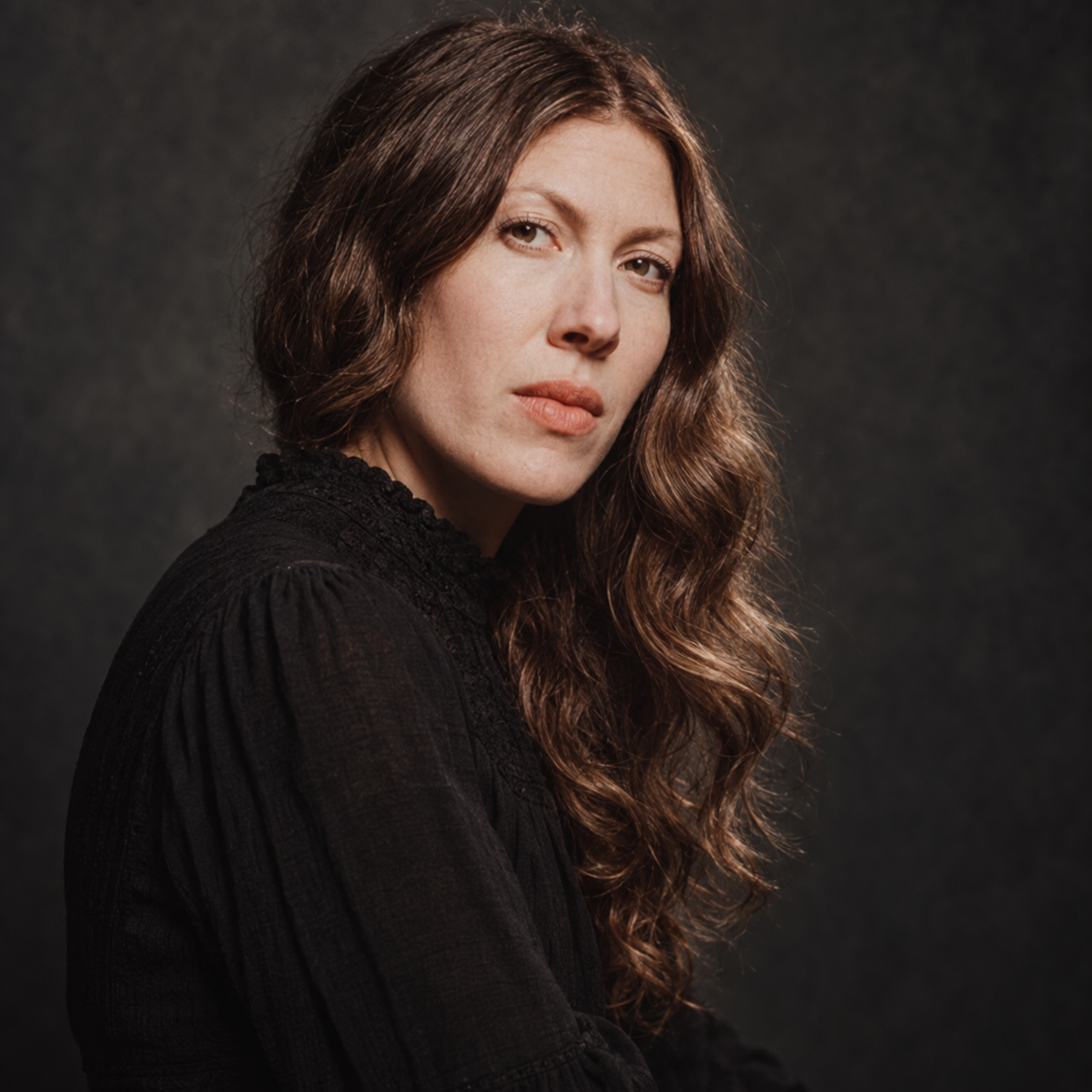
Alela Diane
GREAT CHOICE: Alela Diane!
Great music deserves to be discovered, enjoyed and shared.
CAN YOU SPARE A CUP OF COFFEE?
Audiophile-Streaming is a personal passion project, built with countless hours of discovering, selecting and sharing exceptional music.
I personally cover, without sponsors, the ongoing costs of hosting, software and subscriptions to keep the music discoveries coming. If you enjoy my work, your support is always appreciated.
A LITTLE THANK YOU IN RETURN
Just one coffee gives you lifetime access to the Coffee Club and all its playlists.
No subscriptions. No recurring fees.
The first thing I notice with Alela Diane is the voice. It is clear and immediately recognisable, but she rarely uses it to overpower a song. Instead, she lets the words, acoustic instruments and small shifts in phrasing do the work, which makes her music especially rewarding on a transparent hi-fi system. Born Alela Diane Menig on April 20, 1983, in Nevada City, California, she grew up in a musical family and sang with her parents as well as in school choir before teaching herself guitar. Nevada City also placed her in the same creative community as Joanna Newsom and Mariee Sioux, but Diane gradually developed a musical identity that feels much more grounded in traditional American folk, country and singer-songwriter music.
Her first self-released album, Forest Parade, appeared in 2003, but it was The Pirate’s Gospel that established her much more widely. Diane recorded the album in Nevada City in 2004 and initially released it herself before Holocene Music issued a revised version in 2006. At the time she was sometimes grouped with the so-called freak-folk movement, partly because of her Nevada City connection and the unusual character of those early songs, but I think that description only explains a small part of her music. The important thing for me is how little she needs to make a song convincing. An acoustic guitar, her voice and a room with enough space around them can already create a complete performance.
Finding a wider sound
Moving away from Nevada City was an important step. Diane has explained that she felt she needed to leave her hometown if she wanted music to become more than a local pursuit, and Portland, Oregon eventually became her base. Her second widely available album, To Be Still, released through Rough Trade in 2009, expanded the sound without losing the intimacy of her earlier work. Some of its songs were written in a cabin in Nevada City, but the album was recorded in both Nevada City and Portland, and the arrangements gave her voice more room to interact with other instruments.
To Be Still is one of the albums I would recommend to someone discovering Alela Diane for the first time. Listen to “White as Diamonds” and the attraction becomes easy to understand. Her voice has a slightly dry, natural quality, with enough texture to hear the movement between softer and stronger phrases without the performance becoming exaggerated. On good speakers or headphones, the acoustic instruments occupy believable positions rather than forming one dense block behind the vocal. This is the kind of audiophile music where midrange transparency matters more to me than spectacular bass or huge dynamics. When a DAC, amplifier and pair of speakers reproduce the human voice convincingly, Diane’s recordings can sound remarkably immediate.
She deliberately widened the musical picture further with Alela Diane & Wild Divine in 2011. The fuller band arrangements brought keyboards, percussion and electric guitar into music that had previously relied heavily on acoustic space, and Diane herself said she was not particularly interested in following contemporary trends while making it. I enjoy parts of that larger sound, especially because it shows that her songwriting can survive outside a minimal folk setting, although personally I find her most convincing when there is still plenty of air around the voice. The contrast became important in understanding what happened next.
Songs that became more personal
About Farewell, released in 2013, is one of the major turning points in Diane’s career. The songs were written around the end of her marriage to Wild Divine guitarist Tom Bevitori, and the album moved away from the broader band sound toward quieter, more exposed arrangements. Diane has said that she wrote the songs within a relatively short period toward the end of 2011, while the relationship was breaking down. What impresses me is that the record does not depend on dramatic production to communicate that situation. Her singing is calmer and deeper than on some of the early material, and the spaces between guitar, piano, strings and voice become part of the emotional weight.
The song “About Farewell” itself is a particularly good example of what she does well. She does not attack every line or force emotion into every syllable. The phrasing is controlled, sometimes almost conversational, and that restraint gives the words more credibility. On a revealing system I notice how naturally her voice sits within the recording instead of being pushed artificially forward, and how the relatively sparse accompaniment leaves small changes in tone clearly audible. For me, that combination of vocal realism and restraint is much more powerful than a heavily produced singer-songwriter recording designed to sound impressive in the first thirty seconds.
Her collaboration with guitarist and composer Ryan Francesconi on Cold Moon in 2015 showed another side of that preference for space. Francesconi’s intricate acoustic playing surrounds rather than competes with Diane’s voice, making the record an interesting choice for listeners who enjoy hearing the physical character of strings and the separation between two performers. Diane has also worked outside her own albums, including singing with the project Headless Heroes on the 2008 covers album The Silence of Love. These collaborations make sense because she is a singer who does not need to dominate an arrangement. She can become part of its texture while remaining instantly identifiable.
Motherhood, time and maturity
For me, Cusp from 2018 is another essential Alela Diane album because it shows how much her songwriting had developed without abandoning the simplicity that made the early records special. Written after becoming a mother and completed during another pregnancy, it deals directly with motherhood, childbirth, mortality and the passage of time. The title also had a very personal origin, connected with Diane’s serious complications during childbirth. Musically the album often places her voice against piano and carefully controlled arrangements, producing recordings that can sound beautiful on high-end audio without ever feeling designed as demonstration material.
Songs such as “Emigré” show why I regard Cusp as more than simply another intimate folk record. Diane connects personal experience of motherhood with the wider subject of displaced families and children, while the music remains deliberately measured. The vocal is central, but I also listen to the quiet information around it, the decay of piano notes, the depth behind the voice and the way additional instruments enter without destroying the sense of space. That makes the album useful as reference music, particularly for judging midrange balance and stereo imaging, but the recording quality never becomes more important than the song. That balance is exactly what I want from an audiophile recording.
Diane continued developing that mature, reflective approach with Looking Glass in 2022, recorded with producer Tucker Martine at Flora Recording & Playback, before releasing the collaborative Christmas album It’s Always Christmas Somewhere with The Hackles in 2023. In 2026 she entered another phase with her seventh solo album, Who’s Keeping Time?, released through Fluff & Gravy Records. The record was co-produced with Sam Weber and recorded largely live in the attic of Diane’s Portland home, with Sebastian Owens on bass and contributions from musicians including Anna Tivel, Kati Claborn and Luke Ydstie. Recording fifteen songs in less than five days without click tracks fits surprisingly well with what I have always liked about her music: human timing, interaction and performances that are allowed to breathe.
Across more than two decades of recordings, Alela Diane has moved from the very spare folk of The Pirate’s Gospel through the wider arrangements of Wild Divine, the personal directness of About Farewell, the perspective of motherhood on Cusp and the live, communal character of Who’s Keeping Time?. I would probably begin with To Be Still or Cusp if I were introducing her to a new listener, then move backward and forward through the catalogue to hear how the same musical personality survives very different periods of her life. Not every arrangement interests me equally, and I generally prefer the recordings where the instrumentation remains open enough to let her voice breathe, but the consistency of her songwriting is impressive. She belongs comfortably in an audiophile music collection because her better recordings reveal plenty about vocal realism, acoustic texture, soundstage and midrange transparency, yet none of that is the real reason I listen. What finally defines Alela Diane for me is her restraint: the ability to sing something deeply personal without ever sounding as though she is trying to prove how deeply she feels it.
HiFi’ve, Ronald – Your EarFluencer
