
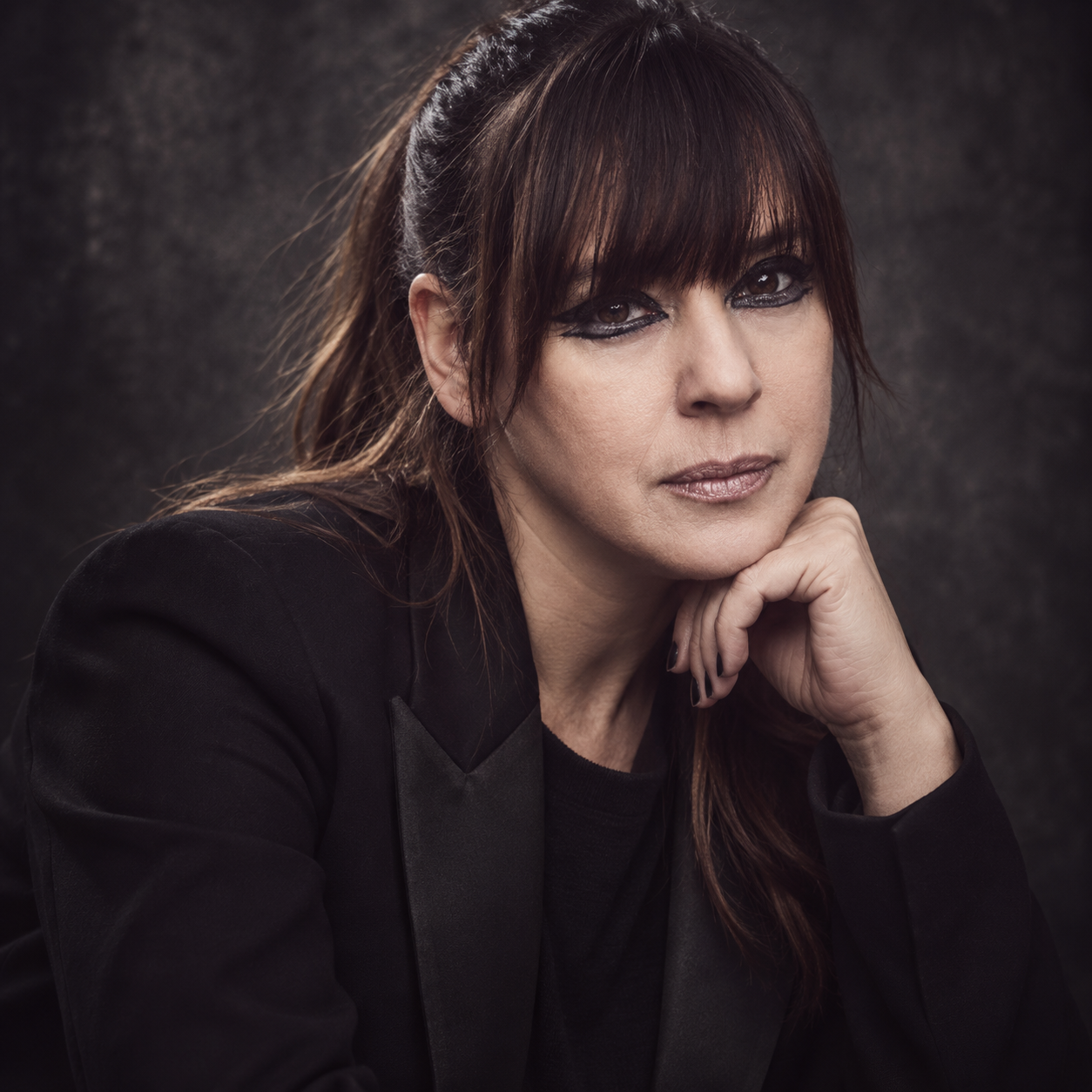
Cat Power
GREAT CHOICE: Cat Power!
Great music deserves to be discovered, enjoyed and shared.
CAN YOU SPARE A CUP OF COFFEE?
Audiophile-Streaming is a personal passion project, built with countless hours of discovering, selecting and sharing exceptional music.
I personally cover, without sponsors, the ongoing costs of hosting, software and subscriptions to keep the music discoveries coming. If you enjoy my work, your support is always appreciated.
A LITTLE THANK YOU IN RETURN
Just one coffee gives you lifetime access to the Coffee Club and all its playlists.
No subscriptions. No recurring fees.
A Cat Power song rarely needs much before it has my full attention. Chan Marshall can sing quietly, leave unexpected gaps between words and hold back where another singer might push harder, yet the result often feels more intense because of that restraint. Cat Power is the stage name of Charlyn Marie Marshall, born on January 21, 1972, in Atlanta, Georgia. Across indie rock, folk, blues, soul and more experimental music, that instantly recognisable voice has remained the constant. I never listen to her because I expect conventional vocal perfection or dramatic displays of technique. What keeps me interested is the way she can make a small shift in timing or emphasis change the whole emotional character of a song.
Marshall became part of Atlanta’s independent music scene before moving to New York in 1992, where she encountered the city’s experimental rock community. Her early performances were loose and often improvised, and an important connection came through guitarist Tim Foljahn and Sonic Youth drummer Steve Shelley. They helped her record material that appeared on Dear Sir in 1995 and Myra Lee in 1996. The recordings were raw, sometimes abrasive and already very personal, but the songwriting became more focused on What Would the Community Think, released by Matador Records on September 10, 1996. Shelley played on the record, and songs such as “Nude as the News” showed that Marshall could preserve the unease of her early work while giving the music a clearer structure.
From raw indie rock to Moon Pix
The major turning point for me is Moon Pix, released by Matador on September 22, 1998. Marshall recorded the album with Mick Turner and Jim White of Dirty Three, and their playing gives her songs room rather than filling every empty space. That difference matters. On a revealing system, I hear guitar notes decay naturally, drums appear with weight but without unnecessary force, and Marshall’s voice sits inside the recording rather than being polished into something artificially large.
“Metal Heart” is one of the tracks that explains Cat Power particularly well. The arrangement is restrained and repetitive, but Marshall changes the emotional weight through timing, dynamics and small variations in her voice. I like the fact that the recording does not need exaggerated stereo imaging or spectacular low bass to hold my attention. Good speakers or headphones reveal the texture of the vocal and the relationship between the instruments, but the real test is whether a system can preserve the quiet tension without making the presentation sound flat. This is the sort of audiophile music where midrange transparency matters far more to me than hi-fi fireworks.
Moon Pix also contains “Cross Bones Style” and “Colors and the Kids”, and together they show how comfortable Marshall had become with repetition and space. Her voice can sound fragile for one phrase and unexpectedly firm in the next. I find that contrast more interesting with repeated listening because the songs are not built around obvious climaxes. There are moments when the deliberately sparse approach may feel almost too static for listeners who prefer stronger rhythmic development, but I would not want these recordings made more conventionally attractive. The restraint is part of their identity.
Marshall then made The Covers Record, released in 2000, interpreting material associated with artists including Bob Dylan, the Rolling Stones, the Velvet Underground and Moby Grape. Covers became an important part of Cat Power’s musical identity because she rarely treats a familiar song as something that must be preserved exactly. She strips songs down, alters emphasis and sometimes makes the original melody feel secondary to the words. That ability to inhabit somebody else’s material without simply imitating it became one of her strongest qualities.
A fuller sound without losing the voice
You Are Free, released on February 17, 2003, was her first album of original material since Moon Pix. Recorded by Adam Kasper, it feels broader and more varied while remaining recognisably Cat Power. “Good Woman” is the track I would use to demonstrate how much emotional information Marshall can place inside a relatively simple melody. Her singing is restrained rather than demonstrative, and that restraint makes the small changes in intensity more noticeable.
I also rate “I Don’t Blame You” very highly because it shows how effective she can be when the arrangement refuses to compete with the vocal. There is space around the notes, and on a transparent system that space becomes part of the performance. I listen for the physical character of the voice, the slight roughness around certain phrases and the way piano notes are allowed to breathe. It is excellent reference music for vocal realism, not because the recording is clinically clean, but because it exposes whether a system can reproduce intimacy without pushing the singer unnaturally forward.
Another transformation arrived with The Greatest, released on January 23, 2006. Marshall recorded with Memphis musicians including guitarist Mabon “Teenie” Hodges and drummer Steve Potts, connecting her songwriting with the feel of Southern soul and the Hi Records tradition. This could easily have sounded like a singer-songwriter borrowing an old style, but I think it works because she does not suddenly try to become a conventional soul singer. The musicians provide warmth, movement and rhythmic confidence while her phrasing remains unmistakably her own.
The title track, “The Greatest”, is one of my favourite introductions to Cat Power for someone who has never heard her before. The arrangement is fuller and more immediately welcoming than much of Moon Pix, yet the vocal still carries that slightly withdrawn quality that makes Marshall recognisable within seconds. Bass, piano, drums, guitar and voice occupy their own spaces without destroying the intimacy of the song. On high-end audio equipment, I especially enjoy the sense of musicians playing around the vocal rather than being stacked behind it as separate studio elements. The recording demonstrates that warmth and detail do not have to be opposites.
An artist who keeps changing the frame
Marshall did not remain inside that Memphis sound. Sun, released by Matador on September 3, 2012, was her first album of original material in more than six years, and she performed and produced it herself. Electronics, stronger rhythmic elements and a more direct production style changed the surface of the music considerably. I admire that decision because repeating The Greatest would probably have been easier, but Cat Power has never been especially useful as a fixed genre label. Her voice remains the identifying element even when the instruments around it change.
With Wanderer, released by Domino on October 5, 2018, Marshall moved toward a more stripped-back sound again. She produced the album herself, and Lana Del Rey appears on “Woman”. What I hear across these later records is not a straight line from raw beginnings toward increasing sophistication. Instead, Marshall keeps changing how much arrangement she places around the same essential strengths: voice, timing, repetition and a very particular sense of emotional distance.
Her relationship with other people’s songs also continued. Covers appeared in 2022, followed in 2023 by Cat Power Sings Dylan: The 1966 Royal Albert Hall Concert. The latter recreates the famous 1966 Bob Dylan concert that was actually recorded at Manchester’s Free Trade Hall despite its long-standing “Royal Albert Hall” title. Dylan’s importance to Marshall is well documented, but what interests me most is how naturally this project fits her career. She has always listened deeply to other writers, and interpretation has never been a side activity for her. It is one of the ways she has developed her own musical language.
For a new listener, I would begin with Moon Pix if you want Cat Power in her most exposed and hypnotic form, or The Greatest if you prefer a warmer band sound with more rhythmic movement. You Are Free sits beautifully between those two worlds and may actually be the best overview of her strengths as a songwriter. Across all three, I hear an artist who understands that volume, complexity and vocal range are not the same things as expression. Charlyn Marie Marshall has built a long career by changing arrangements and influences without losing the unusual timing of her voice. That phrasing, slightly delayed, understated and completely recognisable, is the musical quality that best explains why I value Cat Power.
HiFi’ve, Ronald – Your EarFluencer
