
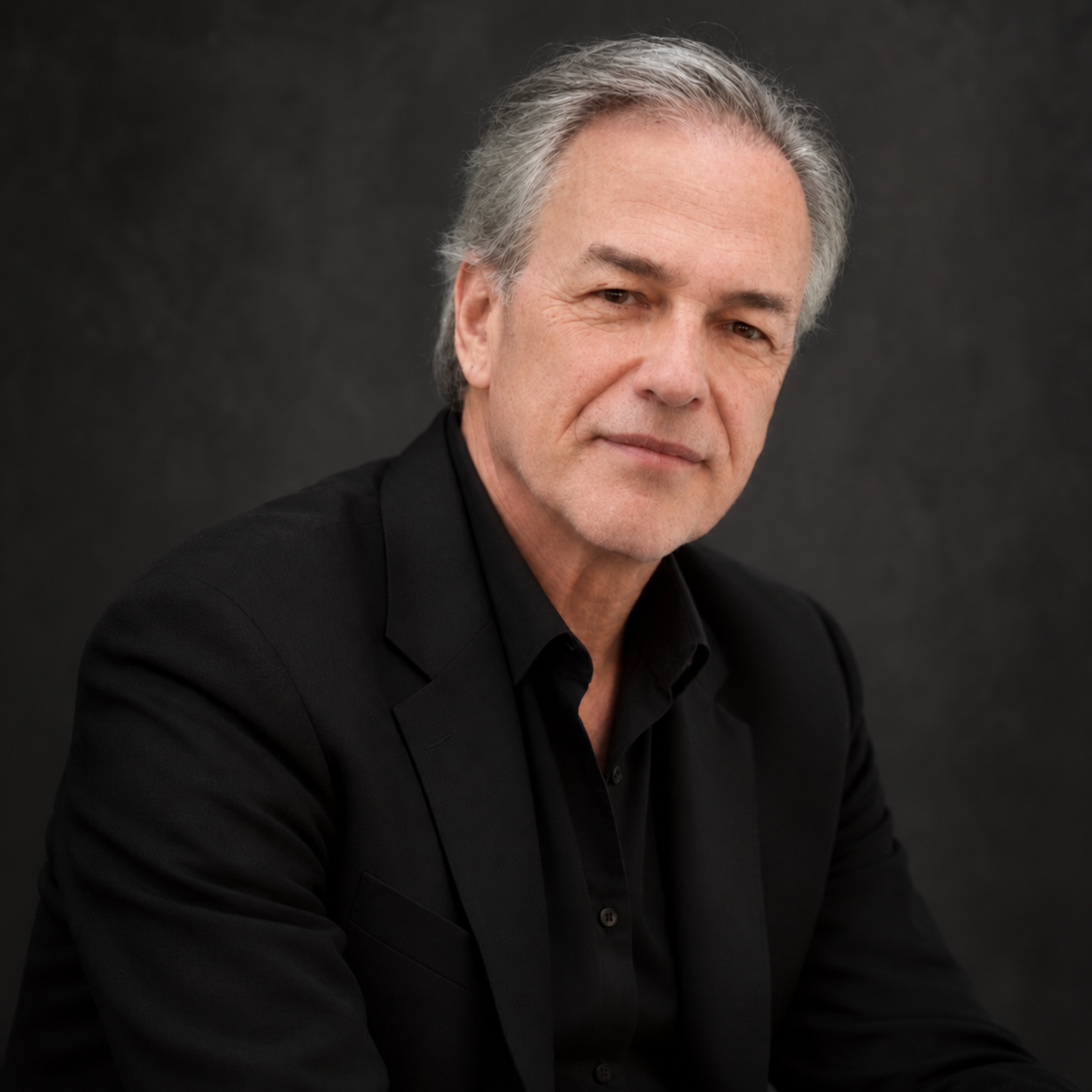
David Hazeltine
GREAT CHOICE: David Hazeltine!
Great music deserves to be discovered, enjoyed and shared.
CAN YOU SPARE A CUP OF COFFEE?
Audiophile-Streaming is a personal passion project, built with countless hours of discovering, selecting and sharing exceptional music.
I personally cover, without sponsors, the ongoing costs of hosting, software and subscriptions to keep the music discoveries coming. If you enjoy my work, your support is always appreciated.
A LITTLE THANK YOU IN RETURN
Just one coffee gives you lifetime access to the Coffee Club and all its playlists.
No subscriptions. No recurring fees.
Put on David Hazeltine’s 2018 version of “The Odd Couple” and you quickly understand what I like about him. He takes music that many listeners already know, changes the perspective completely, yet never makes the arrangement sound clever just for the sake of being clever. Hazeltine turns the familiar theme into a relaxed jazz waltz, leaving enough room for bassist Ron Carter and drummer Al Foster to become part of the conversation rather than simply support the piano. That combination of respect for tradition and a willingness to reshape it is central to his playing. David Perry Hazeltine, born October 27, 1958, in Milwaukee, Wisconsin, is a pianist, composer, arranger and educator whose career has been built on exactly that balance.
From Milwaukee to New York
Hazeltine started playing professionally remarkably early, making his professional debut at thirteen. His development in Milwaukee was especially important because he became house pianist at the Milwaukee Jazz Gallery, where he had the opportunity to work with musicians including Charles McPherson, Eddie Harris, Sonny Stitt, Pepper Adams and Chet Baker. Baker encouraged him to pursue his career in New York, and after an earlier period there, Hazeltine eventually settled in New York permanently in 1992. His influences tell you plenty about the pianist he became: Art Tatum, Bud Powell, Barry Harris, Buddy Montgomery and especially Cedar Walton are all part of his musical background. Interestingly, Hazeltine has also spoken about the importance of saxophonists such as Charlie Parker, and I think that helps explain why his piano lines often have such a clear forward movement instead of sounding like a sequence of chordal exercises.
Once established in New York, he became one of those musicians other musicians wanted around. He worked with Louis Hayes and Peter Washington in his trio, played with the Carnegie Hall Jazz Band and Slide Hampton, and became an important member of One for All alongside players including Eric Alexander, Jim Rotondi, Steve Davis, Peter Washington and Joe Farnsworth. His first album as a leader, 4 Flights Up, was recorded at Rudy Van Gelder’s studio in July 1995 for Sharp Nine, with Slide Hampton on trombone, Peter Washington on bass and Ray Appleton on drums. From there his discography expanded through labels including Sharp Nine, Criss Cross Jazz, Venus, Chesky and Smoke Sessions. What impresses me is the consistency. Hazeltine does not need to change musical identity every few years to remain interesting because the detail is in the arrangements, the harmony and the interaction with the musicians around him.
Three recordings that explain his appeal
For All We Know, released by Smoke Sessions Records in 2014, is one of the recordings I would use to introduce Hazeltine. It was recorded at Smoke Jazz Club in New York on September 20 and 21, 2013, with Seamus Blake on tenor saxophone, David Williams on bass and Joe Farnsworth on drums. Although it was not conceived simply as a tribute album, Cedar Walton had died shortly before the recording and his influence became an important part of the music. Hazeltine’s originals “Et Cedra,” “Pooh” and “Lord Walton” acknowledge that connection without turning the session into a museum piece. I particularly like “Et Cedra” because the rhythm section gives it real momentum while Hazeltine’s chords remain carefully controlled, and Seamus Blake adds a stronger, more muscular voice that changes the character of the group. Charlie Parker’s “Cheryl” is another highlight for me because it shows how naturally Hazeltine works with a horn player while still keeping his own piano voice clearly identifiable.
The recording itself also helps For All We Know. Because it comes from Smoke, I hear more of the space around the musicians than on a tightly controlled studio production. Blake’s tenor has body and occupies a clear position in front of the rhythm section, while Farnsworth’s drums retain the small changes in intensity that make the music feel alive. The piano does not become unnaturally huge between the speakers, which I appreciate. On a transparent system, Hazeltine’s touch is easy to follow, especially the difference between the firmer attack of his right-hand lines and the way he places chords underneath them. This is the kind of audiophile recording where better equipment gives me more information, but the musical interaction remains the reason to listen.
The Time Is Now from 2018 presents a very different situation. Hazeltine recorded the album at Sear Sound Studio C in New York on May 23, 2018 with Ron Carter and Al Foster, with Christopher Allen handling the recording, mixing and mastering. Smoke Sessions also made the album available as a 24-bit/96 kHz download, but the resolution number is less interesting to me than what was captured. Carter’s bass has real weight without becoming loose, Foster’s cymbals and drums occupy their own space, and Hazeltine’s piano has a clean attack that lets me follow his phrasing even when the trio becomes busy. There is plenty of stereo information, but nothing distracts me from the fact that these are three experienced musicians listening closely to each other.
“The Odd Couple” is the track that immediately grabs me, but “Smoke Gets in Your Eyes” may tell me even more about Hazeltine as an arranger. Instead of treating the Jerome Kern standard as another slow, sentimental ballad, he introduces a Latin character that gives the melody a completely different movement. Then there is “Blues for Eddie,” written for Eddie Harris, one of the musicians Hazeltine had worked with in Milwaukee. Carter’s walking bass gives the piece a wonderfully secure foundation, while Foster never needs to hit hard to make the rhythm move. I also like the fact that Hazeltine included James Taylor’s “Don’t Let Me Be Lonely Tonight” as a solo piano performance. It breaks up the trio format and reminds me that beneath all the sophisticated harmony there is always a strong sense of melody.
Tradition without playing it safe
A later recording, Blues for Gerry, released by Criss Cross Jazz in 2023, shows why I do not regard Hazeltine simply as a pianist preserving an older hard-bop style. The album reunited him with bassist Peter Washington and drummer Joe Farnsworth, musicians with whom he had already recorded extensively, and the entire session was recorded on December 1, 2022 in Astoria, New York. The title refers to Criss Cross founder Gerry Teekens, who died in 2019. Hazeltine remembered that Teekens had one recurring request when they worked together: there had to be a blues. So Hazeltine wrote “Blues for Gerry,” which is exactly the sort of personal connection I prefer in a tribute. It is not sentimental decoration added after the fact. It grows directly out of their working relationship.
On Blues for Gerry, “Body and Soul” demonstrates another Hazeltine strength. This is one of the most frequently played standards in jazz, yet he does not avoid it simply because thousands of versions already exist. He trusts the trio to find something worthwhile inside familiar material. I hear that same confidence in “Skylark,” where Washington and Farnsworth give him enough space to work with the melody without the performance losing direction. The title track has more bite, with the blues structure providing a strong framework for Hazeltine’s harmonic ideas. What I like most is that I never get the feeling he is trying to prove how advanced his playing is. The technique is obviously there, but it serves the music.
David Hazeltine is therefore much more interesting to me than the simple description “straight-ahead jazz pianist” might suggest. He is deeply connected to Bud Powell, Barry Harris, Cedar Walton and Buddy Montgomery, but he also has the arranging intelligence to transform standards, pop songs and familiar themes into material that belongs naturally inside his own musical world. Across recordings such as For All We Know, The Time Is Now and Blues for Gerry, I hear the same priorities: swing, strong melodies, sophisticated harmony and musicians who genuinely interact. His recordings are also rewarding on a revealing pair of speakers or headphones because piano tone, bass articulation and rhythmic detail are captured clearly, but that is a bonus rather than the main attraction. What I value most about David Hazeltine is his ability to respect the language of classic jazz without sounding trapped inside it.
HiFi’ve, Ronald – Your EarFluencer
