
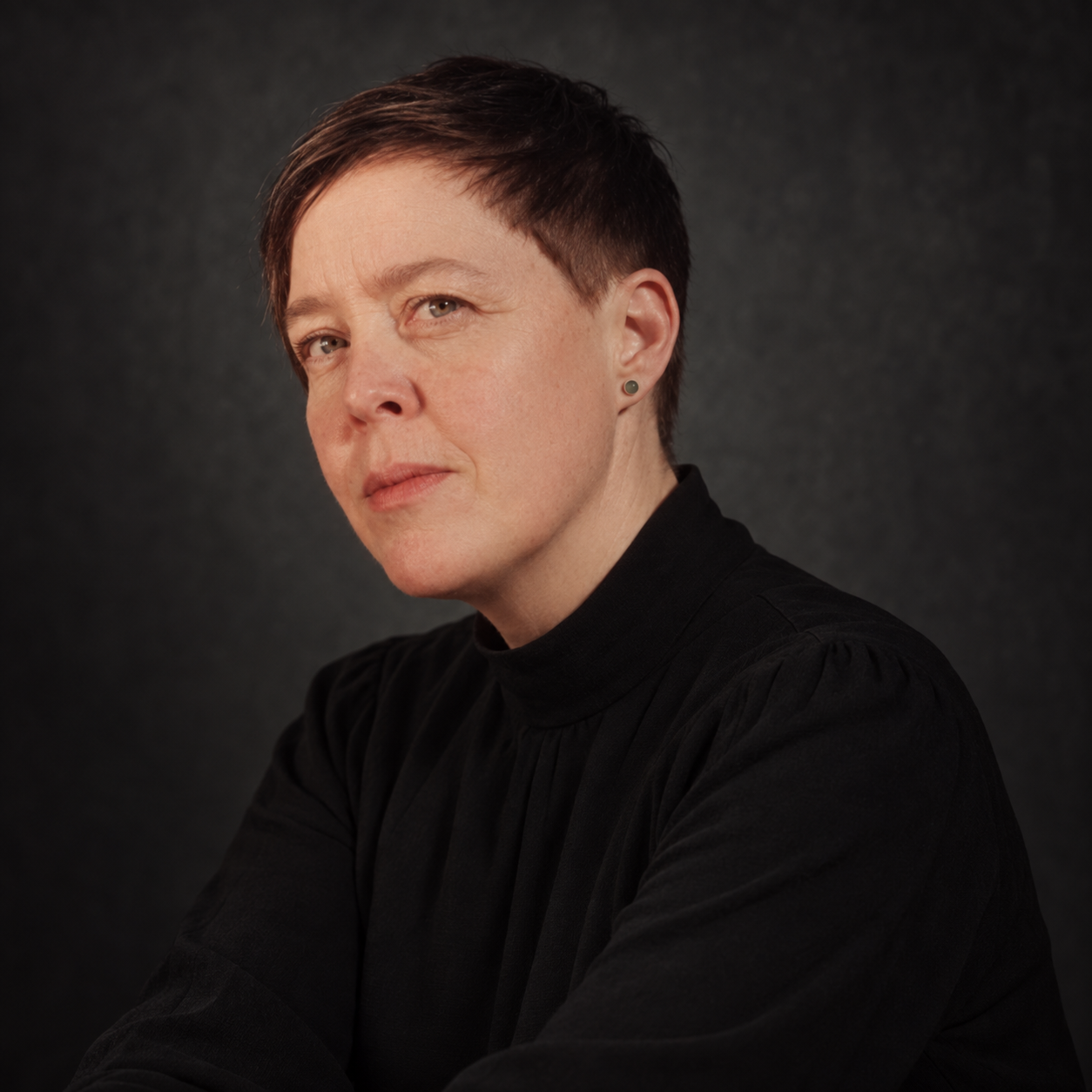
Lianne Hall
GREAT CHOICE: Lianne Hall!
Great music deserves to be discovered, enjoyed and shared.
CAN YOU SPARE A CUP OF COFFEE?
Audiophile-Streaming is a personal passion project, built with countless hours of discovering, selecting and sharing exceptional music.
I personally cover, without sponsors, the ongoing costs of hosting, software and subscriptions to keep the music discoveries coming. If you enjoy my work, your support is always appreciated.
A LITTLE THANK YOU IN RETURN
Just one coffee gives you lifetime access to the Coffee Club and all its playlists.
No subscriptions. No recurring fees.
A Roland 303 and 909 are not the instruments I would normally expect to lead me into the work of a singer-songwriter with roots in folk and punk, but that is exactly where Lianne Hall takes me on the title track of Energy Flashback. She sings about acid house, cassette culture, teenage fear and finding friends in the park, turning electronic music history into something personal rather than nostalgic decoration. It immediately tells me something important about Hall: categories do not hold her for very long. Punk, folk, electronic music, lo-fi pop and experimental sound have all passed through her work without completely defining it. What holds everything together for me is her voice, understated and slightly fragile on the surface, but unusually direct in the way it delivers a lyric.
Hall was born in 1973 and grew up in Peterborough, England. After moving to Bradford in 1993, she became involved in the Leeds and Bradford riot grrrl scene and formed the feminist punk band Witchknot with Sarah Bag. Witchknot spent much of the 1990s touring the UK and Europe, giving Hall an important grounding in DIY music culture that remained part of her approach long after she moved beyond punk. While living in Bradford she was featured by John Peel, who subsequently supported her solo work and invited her to record several sessions for BBC Radio 1. Peel famously described her as “one of the great English voices”, and although that is a large compliment, I understand why he responded so strongly. Hall does not sing as though she is presenting a vocal performance to the listener. She often sounds as though the words have simply reached the point where they need to be said.
From Punk to Quiet Electronics
Hall moved to Brighton in 2000, and her solo music increasingly allowed acoustic songwriting and electronics to occupy the same space. Abandon Ship, released in 2006, is an important record in that development. Songs such as “Want You Alive” show how effective she can be when very little stands between the composition and her voice. I like the lack of unnecessary polish because her phrasing becomes the centre of the recording: she can sound tentative for a moment and then suddenly very certain about a line without dramatically changing volume. That restraint is one of her strongest qualities, although listeners looking for big choruses or technically showy singing may initially underestimate what she is doing.
A particularly productive connection began in Brighton with Paul Hartnoll of Orbital. Hall co-wrote and sang “For Silence” on Hartnoll’s 2007 solo album The Ideal Condition, a collaboration that placed her voice inside a much more carefully constructed electronic and orchestral environment. The combination makes sense because Hall does not compete with an arrangement for attention. Her voice can remain intimate while synthesizers and larger textures develop around it, which gives “For Silence” a tension I find more interesting than a conventional electronic-pop vocal. Their collaboration continued as Haunted House, eventually resulting in Brave the Woods in 2014, with additional production work developed in Berlin. Around the same period Hall also worked with Newcastle electronic group d_rradio, and their 2010 album Making Spaces further demonstrated how naturally her songwriting could sit inside beats, electronics and atmospheric instrumental arrangements.
Her own Crossing Wires, also released in 2010 through Malinki Records, is another useful point in the story. “Fair Enough”, co-written with Andy Wills, has the kind of writing I associate strongly with Hall: small observations and incomplete emotional signals are allowed to remain small instead of being inflated into a grand statement. That can make her songs appear simple on a first listen. With repetition, however, I start noticing how carefully the words sit against the rhythm and how much personality is contained in the spaces between phrases. She rarely pushes a song harder than it needs to go.
The Caretaker and the Sound of a Room
For an audiophile music website, The Caretaker is the Lianne Hall album I would point to first. Hall began developing the record in 2015 with Alexander Paulick of Kreidler, who helped arrange the material and assemble musicians in Berlin. Guy Sternberg recorded and co-produced the sessions at LowSwing Studio, and the entire album was recorded directly to analogue tape in just three days, with the musicians playing live. It was released on March 10, 2017 and became the first release in the LowSwing Records catalogue.
“The Crow’s Nest” is a particularly good introduction. What appeals to me is not analogue recording as a badge of audiophile respectability, but what the method preserves here. The instruments feel connected to one another rather than assembled piece by piece, and Hall’s vocal occupies a believable physical space instead of appearing as a perfectly isolated object in the centre. On revealing speakers or headphones, the attraction lies in low-level detail: the body around the voice, the decay of instruments and the small changes in intensity as the musicians respond to one another. There is air in the recording, but it never feels artificially widened into a spectacular soundstage. That suits Hall perfectly because intimacy, not scale, is the point.
I also like that The Caretaker does not make its analogue production more important than the songs. Hall remains an economical singer, and the musicians leave enough room for that approach to work. “Always Late to the Party”, “The Crow’s Nest” and “The Ocean is Broken” all benefit from arrangements that breathe rather than constantly announce themselves. This is one of those records where better midrange transparency can genuinely increase my connection with the performance because Hall’s vocal contains so many small changes of emphasis. The recording lets me hear those details without turning them into clinical information.
Looking Back Without Getting Stuck There
Energy Flashback, released in 2022, changes the perspective again. Hall described it as an autobiographical collection covering teenage life in Britain in the 1980s, coming of age in the 1990s and the years that followed. She wrote and recorded the material between 2017 and 2022 in Athens, Budapest, Berlin and Radbruch, with final production, mixing and mastering by Arnold de Boer. The record deliberately connects her personal history with rave culture, DIY communities, travelling, friendship and political tension. Double bassist Seth Bennett, violinist Bernard Wright, de Boer and Alexandre Decoupigny are among the contributors, while the final track even incorporates a field recording made inside Berghain in 2013.
The title song “Energy Flashback” is the track I would use to introduce this later period. References to the Roland 303 and 909 sit beside memories of Ecstasy, fear, school friends and coming down in a park, but Hall never turns those details into a history lesson about rave culture. They remain memories belonging to a person. “Lifelines” reaches further back into cassette messages, photocopies and DIY communication, while “They Wanna Fight We Wanna Dance” connects Bradford, Brighton, sound-system culture and protest. I find the album especially convincing because Hall looks back without smoothing the past into a comfortable version of youth. Excitement, anxiety, friendship and confusion remain mixed together, which makes the songs feel far more believable.
Across her work, Lianne Hall has moved from the DIY punk environment of Witchknot through acoustic songwriting, electronic collaboration and analogue studio recording without losing the independent thinking that connects those different stages. Her collaborations with Paul Hartnoll, d_rradio and the musicians around The Caretaker expanded the sound around her, but they never replaced the central character of her writing. For someone discovering her today, I would probably begin with The Caretaker for its unusually natural combination of performance and recording quality, then move to Energy Flashback to hear how much wider her musical world really is. What finally convinces me about Hall is not simply the distinctive tone of her voice or the quality of particular recordings. It is her ability to sing very personal material with understatement, giving the listener enough room to hear the uncertainty, humour, memory and conviction inside the words.
HiFi’ve, Ronald – Your EarFluencer
