
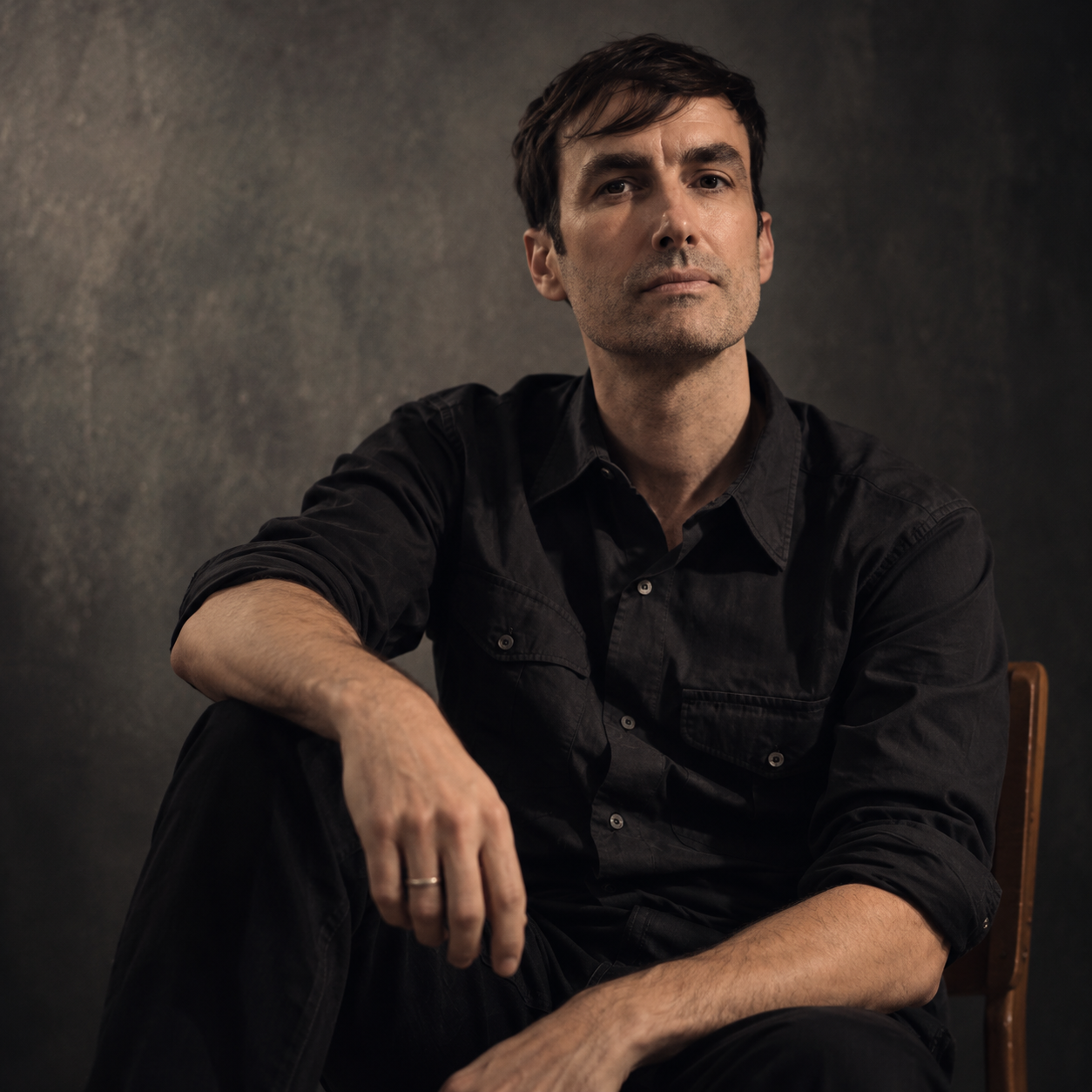
Andrew Bird
GREAT CHOICE: Andrew Bird!
Great music deserves to be discovered, enjoyed and shared.
CAN YOU SPARE A CUP OF COFFEE?
Audiophile-Streaming is a personal passion project, built with countless hours of discovering, selecting and sharing exceptional music.
I personally cover, without sponsors, the ongoing costs of hosting, software and subscriptions to keep the music discoveries coming. If you enjoy my work, your support is always appreciated.
A LITTLE THANK YOU IN RETURN
Just one coffee gives you lifetime access to the Coffee Club and all its playlists.
No subscriptions. No recurring fees.
The first thing I listen for with Andrew Bird is not actually the violin. It is the way several different musical instincts seem to operate at the same time. His voice can sound relaxed and conversational, his violin may move from a simple supporting line into something far more restless, and then that unmistakable whistle appears as naturally as another instrument in the arrangement. Andrew Wegman Bird was born on July 11, 1973, in Lake Forest, Illinois, and studied violin performance at Northwestern University, graduating in 1996. Classical training gave him formidable technique, but what interests me much more is how thoroughly he escaped the limitations of being simply “a violinist.” Over the years he has turned violin, guitar, voice, whistling and live looping into a musical language that is immediately recognisable as Andrew Bird.
His early career makes that development easier to understand. Bird released his first solo album, Music of Hair, in 1996, drawing on folk traditions, swing and other styles far removed from a conventional classical career. During the same period he worked with Squirrel Nut Zippers, appearing on recordings including Hot and Perennial Favorites, before leading Andrew Bird’s Bowl of Fire. Albums such as Thrills from 1998 and Oh! The Grandeur from 1999 mixed pre-war jazz, swing, folk and blues with Bird’s already very individual violin playing. The third Bowl of Fire album, The Swimming Hour from 2001, showed him moving toward a broader songwriting style, and that transition would eventually matter more than the retro elements of his earlier work. To my ears, this is where the real Andrew Bird story begins: he stopped allowing a musical style to define him and instead started using styles as raw material.
Finding his own musical language
After Bowl of Fire, Bird’s music became more spacious and personal. Weather Systems in 2003 helped establish the direction, but The Mysterious Production of Eggs, released in 2005 by Righteous Babe Records, is the album where I hear the pieces locking together. Bird recorded parts of it at his home studio in rural Illinois as well as in Chicago and Los Angeles, working with producer David Boucher and playing much of the instrumentation himself. Songs including “A Nervous Tic Motion of the Head to the Left,” “Fake Palindromes” and “Tables and Chairs” combine unusual language with arrangements that can change direction without becoming cluttered. That balance is important because Bird has plenty of technique, yet the best moments never feel like demonstrations of technique.
“Fake Palindromes” is a particularly good introduction. The rhythm pushes forward, the violin has bite rather than classical sweetness, and Bird delivers the words with an almost detached urgency that makes the track slightly uncomfortable in a good way. On revealing speakers or headphones, I enjoy following the separate textures rather than concentrating only on the vocal. Small instrumental movements keep appearing around it, giving the recording plenty of detail without turning it into audiophile show material. This is one of the qualities I value most in Andrew Bird: good equipment reveals more information, but the music does not exist merely to make a soundstage impressive.
That development became even clearer on Armchair Apocrypha, released by Fat Possum Records on March 20, 2007. Bird worked with drummer and electronic musician Martin Dosh and built an album from violin, guitar, piano, glockenspiel, layered voices and, of course, whistling. “Imitosis” is one of my favourite examples of how well his ideas can work when he keeps the arrangement disciplined. The pulse is firm, the violin and vocal lines occupy their own space, and his phrasing is precise without sounding stiff. On a transparent system the layers are easy to separate, yet I never feel that the recording has been assembled simply to impress. It has movement, tension and enough dynamic variation to keep my attention even after repeated listening.
More direct songs, without losing the detail
Bird continued changing rather than repeating those albums. Are You Serious, released through Loma Vista Recordings in 2016 and produced by Tony Berg, was noticeably more direct in its writing. Fiona Apple and Blake Mills were among the important contributors, with Apple joining Bird on “Left Handed Kisses.” That duet works especially well because the two voices do not politely decorate one another. They challenge each other. Bird’s controlled delivery and Apple’s sharper responses create an actual conversation, and I like the fact that the arrangement leaves enough room for that friction to remain audible.
His 2019 album My Finest Work Yet pushed the writing toward subjects outside his immediate personal world while retaining the melodic fingerprints that make him easy to recognise. “Sisyphus” is an excellent starting point for listeners who want to hear the mature Bird in a fairly compact form. The opening feels measured rather than hurried, then the arrangement gradually develops around the melody and his violin. His whistling can sometimes sound almost impossibly clean, but here, as elsewhere in his best work, it functions as part of the composition rather than as a novelty. I particularly like listening to how his voice, violin and whistle occupy related tonal territory while remaining clearly distinguishable through a good DAC and revealing midrange.
One aspect of Bird’s work that becomes more interesting with time is his refusal to make the violin behave in only one way. Sometimes it carries a melody, sometimes it scratches rhythmically against the beat, and elsewhere he uses sustained notes and loops to create an entire background environment. His classical technique is obvious, but his timing often comes from folk, jazz and pop rather than the concert hall. The same applies to his singing. He is not a big, dramatic vocalist, and anyone looking for sheer vocal power may find him understated, but I think that restraint is one of his strengths. He shapes words carefully, occasionally delays a phrase just enough to loosen the rhythm, and allows the instruments to complete thoughts that the voice has started.
Bird made the connection with jazz especially explicit on Sunday Morning Put-On in 2024. Recorded completely live at Valentine Studios in Southern California, the Andrew Bird Trio album features Ted Poor on drums and Alan Hampton on bass, with contributions from guitarist Jeff Parker and pianist Larry Goldings. Bird revisits standards associated with composers including Rodgers and Hart, Duke Ellington and Cole Porter, music connected to jazz and blues broadcasts he listened to while living in Chicago in his twenties. For me, the attraction is the lack of unnecessary polish. You can hear musicians responding to one another, with natural space around the instruments and enough vocal realism to make the performance feel close without becoming artificially intimate. It is also a reminder that the jazz and swing elements of Bird’s early career were never abandoned. They simply became part of a much larger vocabulary.
That is ultimately why I rate Andrew Bird so highly as an artist. His path from a classically trained violinist through Squirrel Nut Zippers, Bowl of Fire, independent solo work, Fat Possum and Loma Vista does not feel like a sequence of disconnected reinventions. Albums such as The Mysterious Production of Eggs, Armchair Apocrypha and My Finest Work Yet show the same curious musician gradually learning how much he can remove, combine and reshape without losing his identity. New listeners can start with “Fake Palindromes” or Armchair Apocrypha, while Sunday Morning Put-On offers a particularly satisfying choice for anyone interested in natural recording quality and small-ensemble playing. What convinces me most is not the virtuosity, the looping or even that famous whistle. It is Andrew Bird’s sense of phrasing, the ability to make voice, violin and silence feel like parts of the same musical thought.
HiFi’ve, Ronald – Your EarFluencer
