
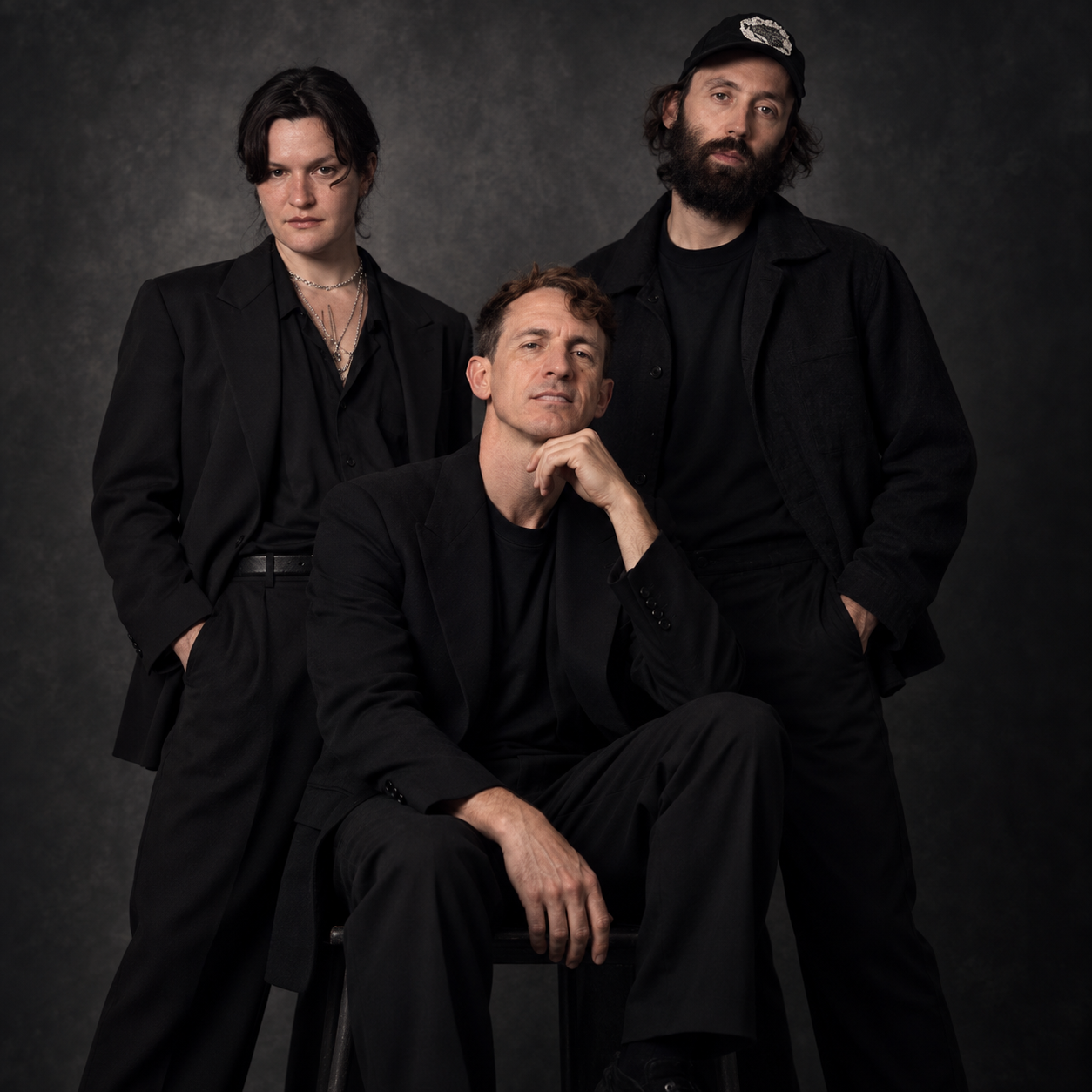
Big Thief
GREAT CHOICE: Big Thief!
Great music deserves to be discovered, enjoyed and shared.
CAN YOU SPARE A CUP OF COFFEE?
Audiophile-Streaming is a personal passion project, built with countless hours of discovering, selecting and sharing exceptional music.
I personally cover, without sponsors, the ongoing costs of hosting, software and subscriptions to keep the music discoveries coming. If you enjoy my work, your support is always appreciated.
A LITTLE THANK YOU IN RETURN
Just one coffee gives you lifetime access to the Coffee Club and all its playlists.
No subscriptions. No recurring fees.
Big Thief can sound almost fragile for a few seconds and then suddenly become one of the most physical guitar bands I know. That contrast is one of the reasons I find them so interesting. At the centre is singer, guitarist and principal songwriter Adrianne Elizabeth Lenker, born on July 9, 1991, in Indianapolis, Indiana, alongside guitarist Buck Meek and drummer James Krivchenia. Lenker and Meek began playing together before Big Thief formed in Brooklyn in 2015, with bassist Max Oleartchik joining the early lineup and Krivchenia becoming the permanent drummer in 2016 after initially working with them as an engineer and producer. Oleartchik left the group in 2024, leaving Lenker, Meek and Krivchenia as the core trio. What interests me is that these changes have never made Big Thief sound like a fixed formula with different personnel plugged into it. The band has always behaved more like a conversation in which everybody listens closely enough to change direction without warning.
Lenker’s voice is immediately recognisable, but not because she relies on one vocal trick. She can sing quietly enough that I hear the movement of breath around the words, then let the tone roughen or tighten when the song needs more pressure. Her guitar playing is just as important. She frequently uses open tunings, unusual rhythmic shapes and fingerpicked patterns that make apparently simple songs much harder to predict, while Meek tends to work around her rather than compete with her, adding longer lines, drones, bent notes and small responses between phrases. Meek grew up in Texas with country, western swing, jazz and blues in his musical background, and that experience gives Big Thief another vocabulary without turning them into a traditional roots band. Krivchenia, born in Minneapolis in 1988 and later raised in Illinois, brings an equally important quality: his drumming often feels responsive rather than imposed, leaving enough space for a song to breathe.
From close-up songs to a much larger sound
The first two Big Thief albums, Masterpiece from 2016 and Capacity from 2017, already established the basic tension that still defines them. The songs could be intimate and uncomfortable, but the band behind Lenker was capable of making them suddenly wide, loud and almost unstable. Capacity, recorded at Outlier Studio in upstate New York with producer Andrew Sarlo, is particularly important to me because so much of its character comes from musicians reacting in the moment rather than polishing every edge away. Many of the songs were played by the group for the first time in the studio and recorded that same day. On a revealing system, I like the way this approach allows small imperfections, guitar textures and changes in intensity to remain part of the performance instead of being cleaned out. It is a good example of why audiophile music does not have to mean spectacular production or glossy sound. Sometimes realism comes from hearing people make decisions together.
The major turning point was U.F.O.F., released on May 3, 2019, their first album for 4AD. It was recorded at Bear Creek Studios in rural Washington with Andrew Sarlo producing and Dom Monks engineering, with the musicians playing together in a large room. This is one of the Big Thief albums I would use to introduce someone to their quieter side because the sound has air around it without becoming soft-focus background music. Guitars can appear almost weightless and then become strangely abrasive, while Lenker’s voice remains close and human in the centre of the recording. Through good headphones, I notice how much information exists at low volume: small changes in picking pressure, the decay around notes and the distance between the instruments. The stereo image is not impressive because everything is sharply separated, but because the musicians still feel connected inside one acoustic space.
Only five months later came Two Hands, recorded at Sonic Ranch near the Texas-Mexico border and released on October 11, 2019. Where U.F.O.F. often floats, Two Hands feels dry, immediate and physical, with most of the performances recorded live and very few overdubs. The song that explains the album best for me is “Not.” It builds patiently before Lenker’s vocal intensity and electric guitar turn the second half into something much less controlled, yet the band never loses its internal timing. On a good pair of speakers I find myself listening less to frequency extension or spectacular soundstage width and more to the dynamics between the musicians, especially the way tension accumulates without being forced by an oversized production. This is reference music for me in a different sense: it tests whether a system can preserve emotional scale, guitar texture and vocal realism without smoothing the performance into something more comfortable than it really is.
Refusing to settle into one version of Big Thief
Dragon New Warm Mountain I Believe in You, released on February 11, 2022, made the band’s range impossible to ignore. Krivchenia proposed recording in four different locations, and the group eventually completed 45 songs across sessions in upstate New York, Topanga Canyon, Colorado and Tucson before selecting 20 for the double album. That method allowed folk, country, electric rock, loose improvisation and more unusual studio ideas to sit beside each other without sounding like somebody had forced them into a single genre. For me, this is where the chemistry between Lenker and Meek becomes especially rewarding. One can be playing a dense acoustic figure while the other adds a drone, a small electric melody or an unexpected texture, and Krivchenia can make the pulse feel secure without making it rigid. The album is long, and I do not think every track has the same impact, but its willingness to follow a musical idea simply because the musicians find it interesting is one of Big Thief’s strongest qualities.
Their next major change came after Oleartchik’s departure in 2024. Instead of trying to replace the exact four-piece chemistry, Lenker, Meek and Krivchenia opened the doors for Double Infinity, released by 4AD on September 5, 2025. They recorded at New York’s Power Station with a much larger group of musicians playing together, including bassist Joshua Crumbly, Laraaji on zither and electronics, additional percussion, keyboards, guitar and several backing vocalists. The result is clearly Big Thief, but the room now feels more populated and the arrangements breathe in a different way. I especially like hearing how a band known for intense communication between four people managed to preserve that sense of listening while letting many more sounds enter the picture. Through a transparent DAC and amplifier, the pleasure is in following those overlapping layers without losing Lenker’s voice or the rhythmic centre underneath them.
Big Thief’s importance is difficult to separate from the way they approach being a band. Their records show that technically accomplished musicians do not have to advertise that ability constantly, and that complicated playing can still sound spontaneous when everybody serves the song. Lenker’s solo career and Meek’s own records make it obvious that both have strong identities outside the group, while Krivchenia has developed his own work as a producer and experimental musician. Yet when they play together, I hear something different from three individual talents sharing a track. There is a willingness to leave empty space, follow an awkward rhythm, let a guitar tone become ugly when it needs to, or allow a vocal to sound exposed instead of perfect. That is also why Big Thief can be useful audiophile listening: a revealing system shows more of the interaction, but the music never exists merely to demonstrate the equipment.
For a new listener I would probably begin with U.F.O.F. if the attraction is atmosphere, space and intimate sound, then move to Two Hands for something more direct and physical before exploring the wider landscape of Dragon New Warm Mountain I Believe in You. Double Infinity then makes sense as the next chapter, because it shows how the group responded to losing an original member without simply repeating its earlier sound. Across all of these records I hear the same essential character: Lenker writes songs that leave room for uncertainty, Meek answers rather than decorates, and Krivchenia understands when rhythm should lead and when it should almost disappear. Big Thief are not always tidy, and I would not want them to be, because much of their appeal comes from hearing musicians take risks while the recording is happening. The quality that finally defines them for me is that constant sense of active listening between the players.
HiFi’ve, Ronald – Your EarFluencer
