
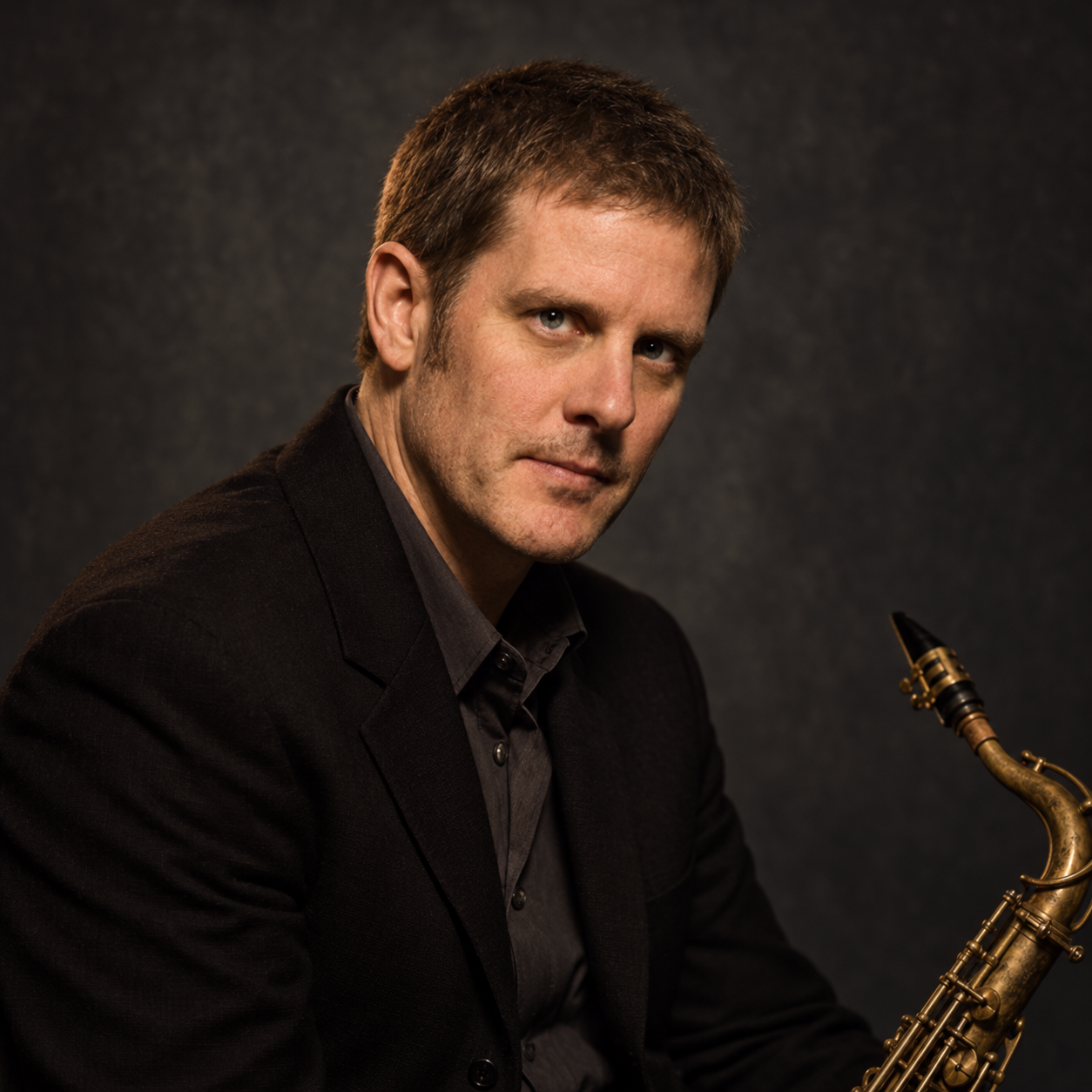
Eric Alexander
GREAT CHOICE: Eric Alexander!
Great music deserves to be discovered, enjoyed and shared.
CAN YOU SPARE A CUP OF COFFEE?
Audiophile-Streaming is a personal passion project, built with countless hours of discovering, selecting and sharing exceptional music.
I personally cover, without sponsors, the ongoing costs of hosting, software and subscriptions to keep the music discoveries coming. If you enjoy my work, your support is always appreciated.
A LITTLE THANK YOU IN RETURN
Just one coffee gives you lifetime access to the Coffee Club and all its playlists.
No subscriptions. No recurring fees.
The first thing I notice with Eddie Higgins is how little he seems interested in proving anything. His piano playing is technically assured, but the technique is always serving the song rather than calling attention to itself. Edward Haydn Higgins was born on February 21, 1932, in Cambridge, Massachusetts, and learned piano from his mother before studying at Northwestern University and beginning his professional career in Chicago. That city became central to his development, particularly his long period leading the house trio at the London House from 1957 to 1969. Listening to Higgins today, I hear exactly the qualities you would expect from a pianist who spent years playing night after night in front of demanding audiences and alongside visiting musicians: excellent timing, flexibility and an instinctive understanding of how much space a piece of music needs.
From Chicago clubs to a personal style
Higgins worked across a remarkably broad section of jazz during his Chicago years. His credits included musicians ranging from Coleman Hawkins to Wayne Shorter, Freddie Hubbard and Al Grey, while his London House position put him in direct musical contact with major artists including Oscar Peterson, Stan Getz, Dizzy Gillespie, Cannonball Adderley, George Shearing, Erroll Garner and Bill Evans. He also recorded as a leader for Replica and Vee-Jay before making Soulero for Atlantic Records in 1965 with bassist Richard Evans and drummer Marshall Thompson. That album is an excellent early demonstration of what makes Higgins distinctive because the playing swings strongly without becoming aggressive, and his melodic ideas remain clear even when the trio increases the pace.
On Soulero, I particularly like the balance between sophistication and accessibility. Higgins can move through a chord sequence with considerable harmonic detail, yet I never feel that the music has become an intellectual exercise. The title track has rhythmic character and momentum, while pieces such as “Love Letters” and “Beautiful Dreamer” reveal his ability to take familiar melodic material seriously without making it overly sentimental. On a transparent system, the attraction is not spectacular audiophile effects but the physical relationship between piano, bass and drums. The instruments communicate as a working trio, and that sense of musical conversation tells me more about Higgins than any display of speed could.
After leaving Chicago around 1970, Higgins continued working as a freelance pianist and increasingly appeared at jazz festivals in the United States, Europe and Japan. His musical life also became closely connected with singer and pianist Meredith d’Ambrosio, whom he married in 1988. Higgins subsequently worked as her pianist and arranger on recordings including South to a Warmer Place, Love Is Not a Game and Shadowland. I find that accompanying work revealing because Higgins had the rare ability to support a singer without constantly filling every opening. His phrasing leaves room for another musician to breathe, something that also became one of the strongest characteristics of his later trio recordings.
The later recordings show Higgins at his best
For me, Portrait in Black and White from 1996 is one of the strongest places to understand the mature Eddie Higgins. Recorded in Fort Lauderdale with Don Wilner on bass and James Martin on drums, it brings together jazz standards, Brazilian compositions and adaptations of classical material including music by Bach, Fauré, Kreisler and Rachmaninoff. That could easily have become an unfocused programme, but Higgins makes the variety feel completely natural. His version of “Danny Boy” is a good example: the melody remains immediately recognisable while small changes in timing, harmony and touch keep it from becoming predictable.
This is also an album I enjoy from an audiophile perspective because the piano can be listened to as an instrument rather than simply as a carrier of notes. Higgins does not hammer the keyboard. His touch allows individual notes and chords to retain their shape, and the decay of the piano becomes part of the performance. With good midrange transparency, the separation between Higgins, Wilner and Martin is easy to follow without the trio sounding artificially divided. “Retrato Em Branco E Preto” is particularly revealing because Higgins understands that Brazilian music needs movement without unnecessary weight. There is precision here, but also relaxation.
Haunted Heart, recorded in New York in June 1997 with Ray Drummond on bass and Ben Riley on drums, goes even further in showing Higgins as an interpreter of standards. The programme includes “My Funny Valentine,” “Lush Life,” “Someone to Watch Over Me,” “I Should Care” and the title track. These are dangerous pieces for any pianist because they have been played so many times, yet Higgins rarely sounds as though he is simply repeating an established arrangement. What interests me is the patience in his phrasing. He will let a melody settle before adding harmonic colour, and the rhythm section responds with the same restraint.
“Lush Life” is especially useful for understanding him. Higgins does not try to turn the song into something radically new, but his control of timing changes its emotional weight from phrase to phrase. On revealing speakers or headphones, I listen to the beginnings and endings of his notes as much as the notes themselves. There is enough space around the piano to hear the touch clearly, while bass and drums remain active partners instead of being pushed into the background. This kind of recording is good reference music for judging tonal balance, piano realism and small-scale dynamics because nothing needs to shout to reveal differences in a system.
Higgins also developed a particularly strong following in Japan, where his later work for Venus Records found an enthusiastic audience. Albums including Again, Bewitched and his recordings devoted to standards helped introduce another generation of listeners to his refined mainstream jazz style. He never needed to reinvent jazz to make a contribution. His importance lies more in maintaining a high level of musicianship across more than five decades, connecting bop-based piano playing with the songbook tradition and treating melody as something worth protecting rather than something that had to be escaped from.
Eddie Higgins died in Fort Lauderdale, Florida, on August 31, 2009, at the age of 77. For somebody discovering him for the first time, I would probably begin with Portrait in Black and White because it shows his range, then move to Haunted Heart for the quieter and more intimate side of his playing, before going back to Soulero to hear the confidence of the Chicago years. Across those recordings I hear the same basic personality: controlled swing, clear harmony, respect for melody and an ability to make sophisticated playing sound completely natural. Higgins may not be the pianist I choose when I want confrontation or radical experimentation, but when I want to hear how much expression can come from timing, touch and intelligent restraint, he is extremely convincing. That restraint, more than anything else, is what defines Eddie Higgins for me.
HiFi’ve, Ronald – Your EarFluencer
