
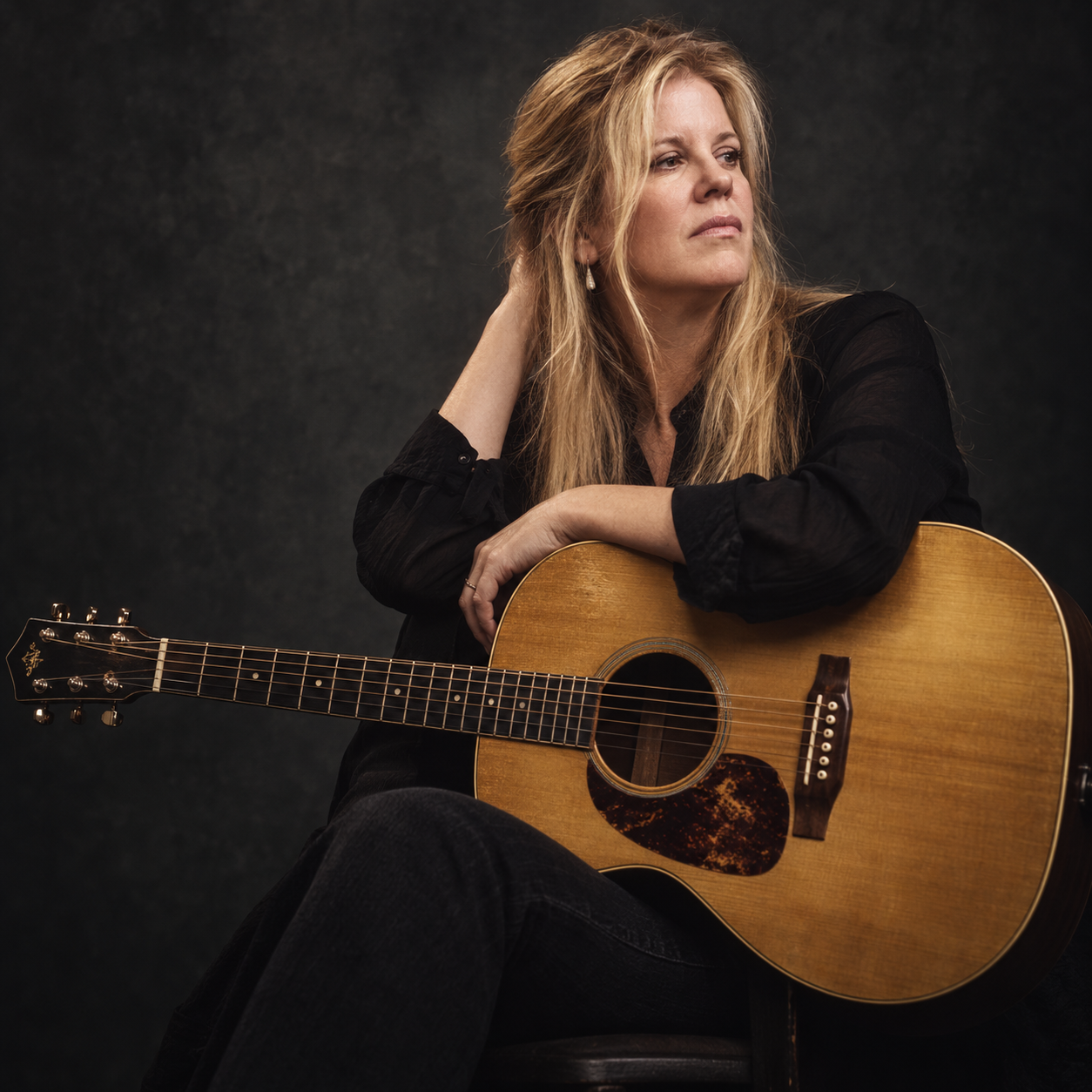
Mary-Chapin-Carpenter
GREAT CHOICE: Mary-Chapin-Carpenter!
Great music deserves to be discovered, enjoyed and shared.
CAN YOU SPARE A CUP OF COFFEE?
Audiophile-Streaming is a personal passion project, built with countless hours of discovering, selecting and sharing exceptional music.
I personally cover, without sponsors, the ongoing costs of hosting, software and subscriptions to keep the music discoveries coming. If you enjoy my work, your support is always appreciated.
A LITTLE THANK YOU IN RETURN
Just one coffee gives you lifetime access to the Coffee Club and all its playlists.
No subscriptions. No recurring fees.
“He Thinks He’ll Keep Her” tells me a great deal about Mary Chapin Carpenter in just over four minutes. The music moves with the confidence of mainstream early-1990s country, but the woman at the centre of the song is quietly questioning the life that was supposed to make her happy. That contrast between an accessible tune and a much less comfortable idea is one of the reasons my Mary-Chapin-Carpenter listening rarely feels like straightforward country music. Carpenter has always been unusually good at placing complicated adult thoughts inside songs that remain easy to follow. Her voice helps enormously: warm, slightly smoky, restrained and conversational, with very little need to push a line harder than the words require.
Mary Chapin Carpenter was born on February 21, 1958, in Princeton, New Jersey. Her childhood included time in Japan before her family eventually settled in the Washington, D.C. area, and the records around her ranged from the Beatles, the Mamas & the Papas and Judy Collins to Bob Dylan, the Band, Johnny Cash, Merle Haggard and Dolly Parton. That mixture explains more about her music than trying to put a single genre label on her. She studied at Brown University, then returned to the Washington area and developed as a performer in the local club scene, increasingly concentrating on her own songs. Guitarist and producer John Jennings became an important musical partner, and in 1987 Carpenter signed with Columbia and released her debut album, Hometown Girl.
The first album did not turn her into a country star, and in retrospect I think that was useful. Carpenter had time to develop an identity instead of immediately being forced to repeat a hit. State of the Heart in 1989 and Shooting Straight in the Dark in 1990 brought her much wider attention, while “Down at the Twist and Shout” became an important breakthrough and won the 1992 Grammy for Best Country Vocal Performance, Female. The song shows another side of her personality. She can be thoughtful and introspective, but she can also sound loose, rhythmic and genuinely joyful without losing the intelligence in her writing.
Come On Come On and the breakthrough years
If someone wants to understand why Mary Chapin Carpenter became such an important artist in the 1990s, I would start with Come On Come On from 1992. It contains “I Feel Lucky,” “The Hard Way,” “He Thinks He’ll Keep Her,” “I Take My Chances,” the Joe Diffie duet “Not Too Much to Ask,” and her version of Lucinda Williams’ “Passionate Kisses.” That is an unusually strong group of songs, but what impresses me is how naturally the album moves between country, folk and singer-songwriter territory. Carpenter never sounds as though she is changing costume from one track to another. Her writing and phrasing hold the whole thing together.
“He Thinks He’ll Keep Her” is especially revealing. Carpenter takes an everyday domestic phrase and uses it to examine expectation, independence and the moment when somebody realises that a perfectly acceptable life is not necessarily the right life. She does not oversing it. That matters because the emotional force comes from recognition rather than drama. I hear the same strength throughout much of her best work: she trusts the listener to understand what is happening without underlining every feeling.
“Passionate Kisses” is different because it was written by Lucinda Williams, yet Carpenter makes the song sit comfortably beside her own material. Her version won the 1994 Grammy for Best Country Vocal Performance, Female. What I like about it is the directness. The arrangement has enough drive to make it work on country radio, while Carpenter keeps the vocal grounded and almost matter-of-fact. She makes the desire in the song sound reasonable rather than extravagant, which suits both the lyric and her own musical character.
From an audiophile point of view, Come On Come On is interesting because the arrangements can become fairly full without completely hiding Carpenter’s voice. Acoustic and electric guitars, piano, organ, percussion and backing vocals often occupy the same space, yet the lead vocal remains the anchor. On a transparent pair of speakers or headphones, I especially enjoy hearing how little Carpenter depends on exaggerated vocal effects. Her tone sits naturally in the midrange, and small changes in phrasing are often more important than sheer vocal power.
Stones in the Road
Stones in the Road, released in 1994, is where I think the scale of Carpenter’s success and the seriousness of her songwriting meet most convincingly. The album reached number one on the country album chart, won the Grammy for Best Country Album, and produced “Shut Up and Kiss Me,” which earned Carpenter another Grammy for her vocal performance. Yet the album never feels to me like an artist simply trying to repeat the commercial formula of Come On Come On. It is more reflective, more mature and sometimes less immediately comfortable.
The title song is a good example. Joan Baez had already recorded “Stones in the Road” before Carpenter released her own version, which says something about the strength of Carpenter’s writing beyond her role as a performer. What holds my attention is the way memory is handled without turning the song into simple nostalgia. Carpenter looks at time, childhood expectations and adulthood with an awareness that things rarely become as uncomplicated as we once imagined. Her delivery allows those ideas to arrive gradually, and repeated listening reveals how carefully she controls the emotional temperature.
“Shut Up and Kiss Me” shows why reducing Carpenter to the role of thoughtful folk-country songwriter would also be wrong. The song moves, the band has bite, and her vocal has considerably more attitude. I enjoy that side of her because it prevents the catalogue from becoming too polite. Carpenter can write with considerable seriousness, but she understands that rhythm, humour and physical energy are part of good songwriting too.
Her four consecutive Grammy wins for female country vocal performance from 1992 through 1995 were remarkable, but I find another achievement more revealing: her 2012 induction into the Nashville Songwriters Hall of Fame. Other performers have recorded her songs, including Joan Baez, Wynonna, Cyndi Lauper and Trisha Yearwood. That places the emphasis where I think it belongs. Carpenter was a successful country performer, certainly, but the foundation underneath that success was always the writing.
Beyond country radio
Carpenter’s career became especially interesting once she was no longer working inside the commercial peak of 1990s country.
