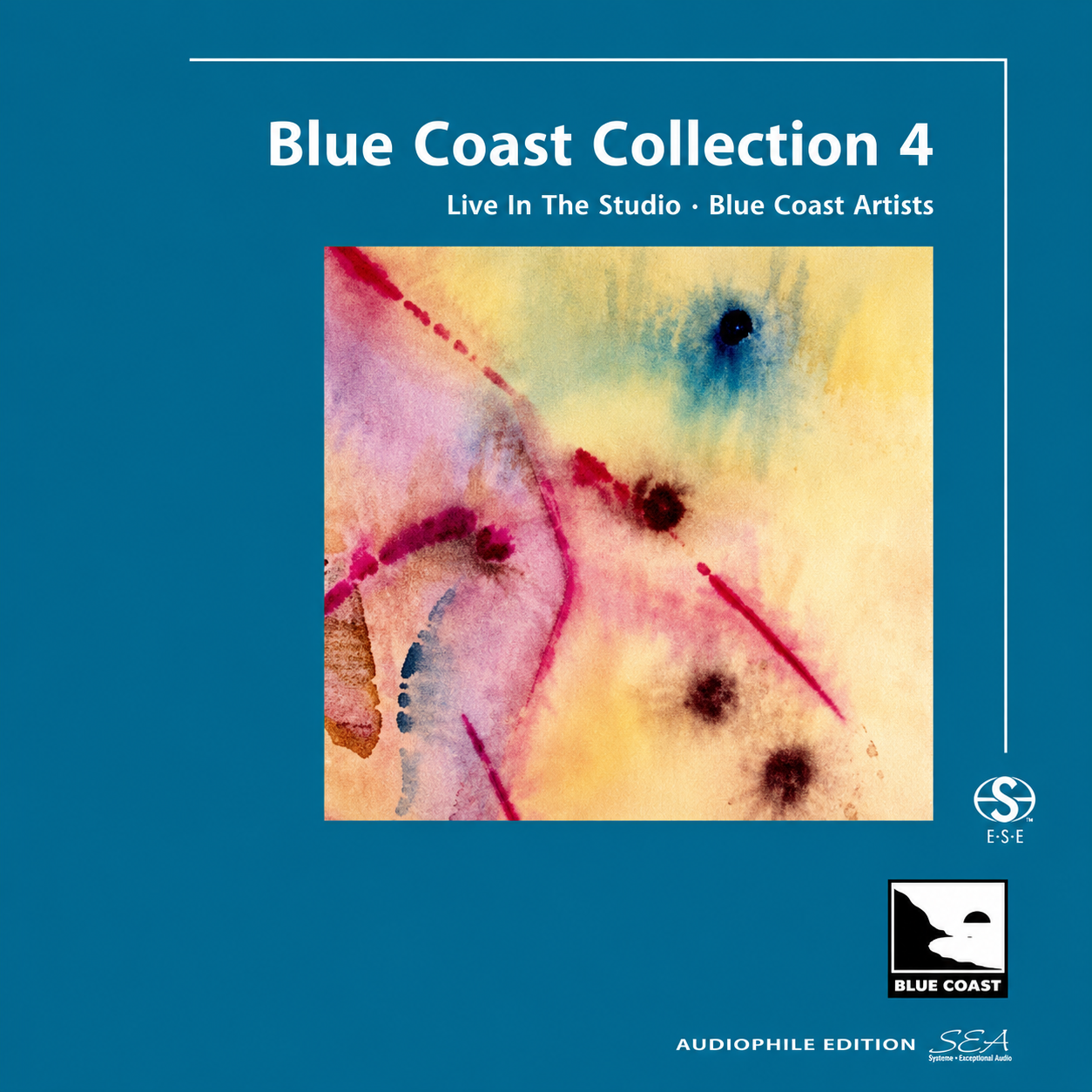
Blue Coast Collection 4

By the time Blue Coast Collection 4 – Live In The Studio arrived, Blue Coast Records had already secured its place among the elite names of modern audiophile recording. But this fourth volume feels different. There is a palpable confidence running through the entire album — a sense that the label no longer needs to prove anything technically. Instead, the focus shifts entirely toward capturing the emotional electricity of musicians performing together in real time.

And that decision makes this one of the most immersive entries in the entire Blue Coast Collection series.

From the opening moments, Live In The Studio radiates warmth, intimacy, and startling realism. The recording quality is magnificent, but never in a sterile “audiophile demonstration disc” kind of way. This is living, breathing music captured with extraordinary care and minimal interference. The engineering disappears almost immediately, leaving only the sensation of musicians existing physically in front of the listener.

That is the true magic of Blue Coast’s E.S.E. philosophy — Extended Sound Environment.

Producer and engineer Cookie Marenco has long championed a minimalist approach built around live ensemble interaction, careful microphone placement, and natural acoustic space. On Collection 4, that philosophy reaches remarkable maturity. The room itself becomes part of the performance. You hear air moving around instruments, subtle reflections blooming behind voices, the natural decay of strings dissolving into silence.

The soundstage is enormous yet utterly believable.

What immediately impresses seasoned hi-fi listeners is the album’s effortless dynamic behavior. Nothing feels compressed or forced. Acoustic guitars possess body, wood texture, and transient speed without artificial brightness. Vocals emerge with holographic presence and breathtaking tonal purity. Bass notes carry natural resonance instead of exaggerated weight. Every element exists within a coherent acoustic environment that sounds astonishingly real on capable equipment.

This is the kind of recording that rewards high-end systems not through flashy tricks, but through nuance. Electrostatic speakers, ribbon tweeters, planar headphones, SET tube amplifiers — all the qualities audiophiles chase become vividly apparent here: microdynamic subtlety, ambient retrieval, harmonic richness, and spatial layering.

The DSD mastering contributes enormously to the presentation. There is an unmistakable analog-like liquidity to the sound: smooth, relaxed, utterly fatigue-free. Even during extended listening sessions, the album never hardens or becomes aggressive. Instead, it invites the listener deeper into the performance.

Two tracks deserve special attention.

“Morning Sun” by Keith Greeninger is a masterclass in acoustic recording. The guitar tone alone is enough to stop serious audiophiles in their tracks — rich, resonant, and beautifully textured, with every harmonic bloom preserved naturally. Greeninger’s voice sits perfectly within the soundstage, intimate yet completely unforced. On a revealing system, the realism becomes almost uncanny, as though the walls of the listening room have dissolved into the studio itself.

Equally stunning is “A Thousand Shades of Blue” by Jenna Mammina. This performance captures exactly why Blue Coast recordings have become legendary among vocal enthusiasts. Mammina’s voice floats effortlessly in space with breathtaking delicacy and emotional vulnerability. The sense of air surrounding her phrasing is extraordinary. Tiny microdynamic inflections emerge naturally without ever sounding exaggerated or analytical. This is the type of vocal recording that immediately exposes harshness or tonal imbalance in lesser systems — and rewards truly transparent playback chains with spine-tingling realism.

What separates Blue Coast Collection 4 from many audiophile productions is its humanity. Too often, “high-end” recordings become sterile technical exercises designed to showcase detail rather than emotion. Blue Coast understands something fundamental that many labels forget: realism is meaningful only when it serves musical communication.

And here, it absolutely does.

The performances feel relaxed, connected, emotionally genuine. There is no sense of musicians isolated inside overproduced studio booths. Instead, you hear interaction, breathing space, subtle imperfections — the very things that make music feel alive.

Nearly two decades after release, Blue Coast Collection 4 – Live In The Studio remains a superb demonstration of what modern acoustic recording can achieve when engineering serves artistry rather than spectacle. It is not simply a test disc for expensive equipment.

It is an album to disappear into.

Late at night, lights dimmed, volume slightly elevated, this record creates the rare illusion every audiophile chases but few recordings truly deliver:

The sensation that the musicians are no longer being reproduced — they are simply there.