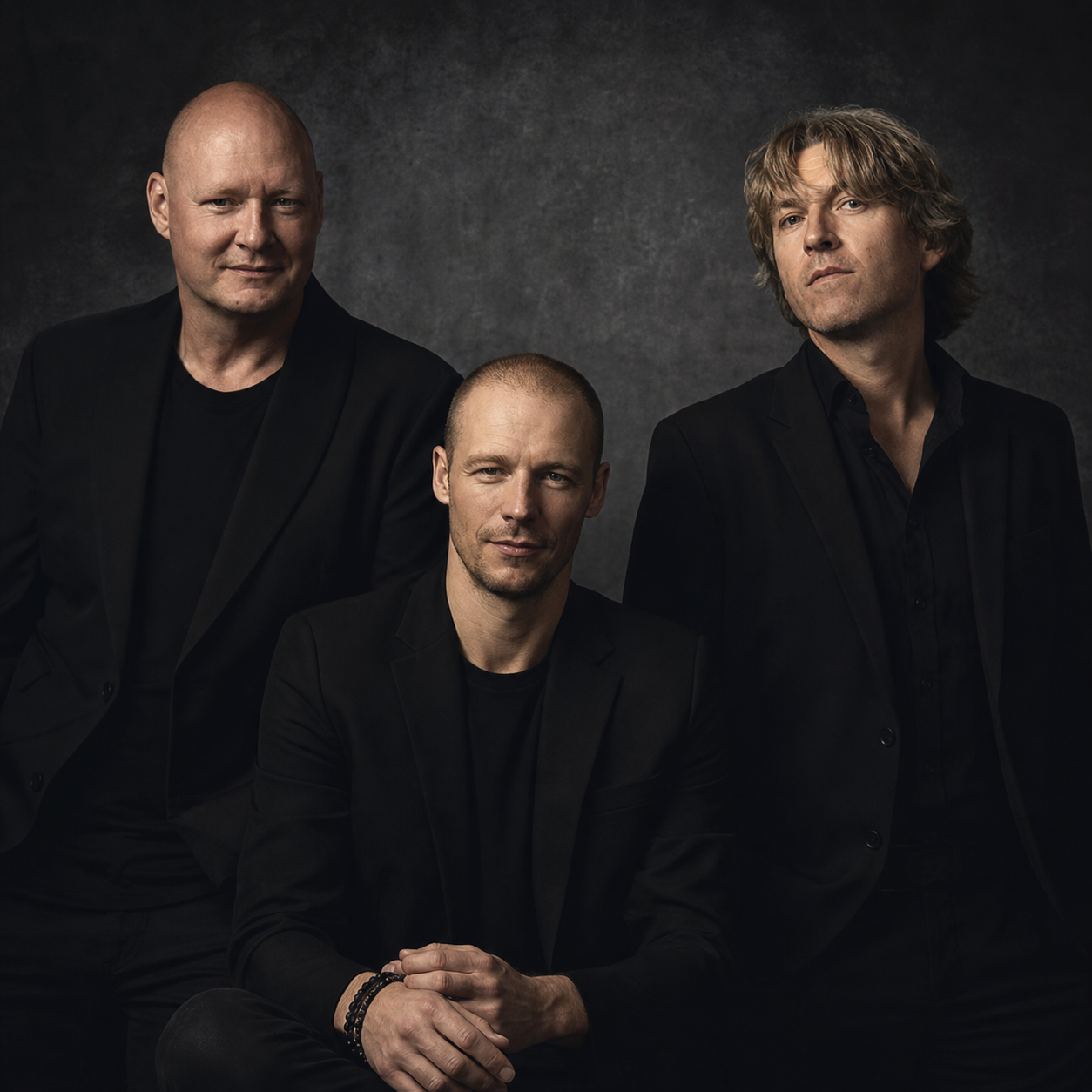
Esbjörn Svensson Trio

Esbjörn Svensson Trio – Scandinavian Jazz That Changed the Modern Piano Trio

Some jazz groups perfect an existing tradition, while others quietly change what listeners expect from it. Esbjörn Svensson Trio, better known as e.s.t., belonged unmistakably to the second category. The Swedish trio of pianist Esbjörn Svensson, bassist Dan Berglund and drummer Magnus Öström took the familiar format of piano, double bass and drums and transformed it into something that could be intimate and lyrical one moment, powerful and almost rock-like the next. Their music combined jazz improvisation with Scandinavian melancholy, classical influences, electronic textures and remarkable rhythmic energy, creating a distinctive sound that reached far beyond the traditional jazz audience.

For lovers of audiophile jazz, Scandinavian jazz and high-quality instrumental recordings, the Esbjörn Svensson Trio is particularly rewarding. Their best albums offer exceptional dynamics, beautifully reproduced piano, deep and textured double bass and percussion that can move from the smallest brush of a cymbal to an explosive drum attack. On a revealing hi-fi system, e.s.t. can demonstrate soundstage depth, transient response, bass definition and dynamic range, yet the recordings never feel as though they were created merely to impress audiophiles. The technical quality serves music that is emotional, adventurous and immediately recognizable.

Three Musicians Creating One Distinctive Sound

The Esbjörn Svensson Trio was formed in Sweden during the early 1990s and gradually developed an approach that was very different from the traditional image of a jazz piano trio. Esbjörn Svensson could play with great delicacy, allowing individual piano notes to hang almost weightlessly in the recording space, but he was equally capable of driving the instrument with tremendous rhythmic force. Dan Berglund refused to treat the double bass simply as accompaniment, frequently turning it into a melodic, percussive and occasionally distorted lead instrument, while Magnus Öström approached the drums with an unusually broad dynamic range and an energy that sometimes seemed closer to progressive rock than conventional jazz.

The interaction between these three musicians became the defining characteristic of e.s.t. Rather than presenting piano accompanied by bass and drums, each instrument had an equal role in shaping the music. A melody could begin quietly on piano before the bass introduced another direction and the drums gradually transformed the entire character of the piece. Electronic processing and studio effects were incorporated without abandoning the acoustic foundation of the trio, allowing e.s.t. to create a form of modern European jazz that felt contemporary without losing the improvisational freedom at the heart of the genre.

Strange Place for Snow – The Perfect Introduction to e.s.t.

For many listeners, Strange Place for Snow is the ideal introduction to the Esbjörn Svensson Trio. Released in 2002, the album captures the qualities that made e.s.t. so distinctive: memorable melodies, atmospheric production, rhythmic sophistication and a characteristic Scandinavian sense of space and melancholy. The music remains accessible enough to draw in listeners who may not normally choose jazz, while repeated listening reveals increasingly subtle interaction between the musicians.

From an audiophile perspective, Strange Place for Snow is equally fascinating. The quieter passages provide enough space around the instruments to hear the natural attack and decay of the piano, the resonance of the double bass and the fine metallic texture of cymbals. Instead of creating an artificially enormous stereo image, the recording allows the trio to occupy a believable acoustic environment. This makes the album an excellent choice for listeners searching for audiophile piano jazz, Scandinavian jazz recordings and reference-quality acoustic music.

A well-balanced audio system should reproduce the piano with both weight and clarity, while the double bass needs to retain the sound of strings and wood rather than becoming a collection of low frequencies. The drums provide another revealing test because the initial impact and subsequent decay need to remain distinct. When all three instruments are reproduced convincingly, the technical aspects quickly disappear and the interaction between the musicians becomes the focus.

Seven Days of Falling – Where Jazz Meets Rock Energy

With Seven Days of Falling, released in 2003, e.s.t. pushed its distinctive musical language further. The trio retained the melodic qualities of earlier recordings but increased the rhythmic intensity, making the relationship between acoustic jazz, contemporary production and rock increasingly apparent. It was this ability to move between genres without sounding forced that helped the Esbjörn Svensson Trio attract an unusually broad international audience.

Dan Berglund’s double bass is particularly interesting for audiophile listeners. Instead of remaining quietly behind the piano, the instrument frequently becomes a major part of the musical drama. On a full-range loudspeaker system or a carefully integrated subwoofer, the bass has considerable physical presence, but the real test is definition rather than sheer depth. A good system allows the listener to hear the movement of the strings, the initial attack of each note and the resonance of the instrument’s body simultaneously.

The album also demonstrates why e.s.t. recordings are excellent for testing dynamics and transient response. Quiet passages can suddenly expand into dense, energetic sections in which piano, bass and drums are playing with considerable intensity. A capable audio system should preserve the individuality of all three musicians even when the music becomes complicated, rather than collapsing everything into a congested wall of sound.

Viaticum – The Beauty of Dynamics and Space

Viaticum, released in 2005, provides another excellent example of the trio’s ability to use silence and dynamics as musical tools. The album contains moments of great intimacy, but there is always a sense that the music could expand dramatically at any moment. That contrast between restraint and power became one of the defining qualities of the Esbjörn Svensson Trio.

For critical listening, Viaticum can reveal both the small and large dynamic capabilities of an audio system. Microdynamics allow subtle variations in Svensson’s piano touch, Berglund’s articulation and Öström’s percussion to remain audible, while larger dynamic shifts reveal whether the system can move from delicate passages to powerful crescendos without compression or harshness. This combination makes Viaticum an excellent audiophile jazz reference album, particularly for listeners interested in piano realism, acoustic bass reproduction and the natural decay of percussion.

The recording also illustrates an important principle of high-quality audio reproduction: dynamics are not simply about how loudly a system can play. The emotional impact often comes from the difference between quiet and loud, and e.s.t. understood how to exploit that contrast exceptionally well.

Tuesday Wonderland and a Trio Without Boundaries

By the time Tuesday Wonderland appeared in 2006, describing e.s.t. simply as a jazz trio had become increasingly difficult. The basic instrumentation remained piano, bass and drums, but electronic processing, unusual textures and contemporary studio techniques had become integral parts of the group’s musical vocabulary. These additions never completely replaced the acoustic character of the instruments; instead, they expanded the sonic environment surrounding them.

This makes Tuesday Wonderland particularly enjoyable through a carefully positioned pair of loudspeakers. Piano, percussion, bass and electronic textures can occupy different layers within the stereo image, creating a sense of depth that rewards attentive listening. Through high-quality headphones the individual details can be fascinating, but loudspeakers add another dimension by allowing the soundstage to develop physically in front of the listener.

For anyone exploring modern jazz, European jazz, audiophile instrumental music or contemporary piano trio recordings, Tuesday Wonderland demonstrates just how far e.s.t. had moved beyond conventional expectations while remaining unmistakably itself.

Leucocyte and the Final Chapter

The musical journey of the Esbjörn Svensson Trio carries an unavoidable sadness because its development ended while the group was still exploring new territory. Leucocyte emerged from improvisational sessions in which electronics, distortion and atmospheric textures became increasingly prominent, suggesting yet another direction for the trio. Before that evolution could continue, Esbjörn Svensson died in a diving accident near Stockholm in June 2008 at the age of only 44.

Released after his death, Leucocyte inevitably acquired a significance that had never been intended during its creation. The album now sounds not only experimental but strangely open-ended, documenting three musicians moving toward a musical future they would never have the opportunity to fully explore. For listeners who have followed the progression from Strange Place for Snow through Seven Days of Falling, Viaticum and Tuesday Wonderland, it becomes a particularly moving final chapter.

Why Esbjörn Svensson Trio Belongs in an Audiophile Collection

The music of e.s.t. is almost ideally suited to evaluating a high-quality audio system because the trio places very different demands on reproduction. Piano tests tonal accuracy, attack and harmonic complexity; double bass exposes problems with low-frequency definition and room interaction; cymbals reveal treble quality and decay; and drums demand speed, control and dynamic headroom. When the trio reaches full intensity, the recording also reveals whether a system can maintain instrument separation and stereo imaging during complex musical passages.

Yet reducing the Esbjörn Svensson Trio to audiophile demonstration material would miss the reason these albums remain so compelling. Their recordings are technically interesting because the music itself demands such a wide range of textures and dynamics. You can use an e.s.t. track to evaluate loudspeakers, headphones, amplifiers or a subwoofer, but there is a good chance that within a few minutes you will stop evaluating the equipment and simply continue listening to the album.

That combination makes the trio particularly valuable for anyone building a collection of the best audiophile jazz recordings, reference-quality instrumental music, Scandinavian jazz and modern piano jazz. These are recordings that can demonstrate what a system is capable of without ever sounding like conventional demonstration music.

Discovering Esbjörn Svensson Trio on YouTube Music

For listeners discovering the group today, YouTube Music and digital music streaming provide an excellent opportunity to explore the Esbjörn Svensson Trio chronologically. Strange Place for Snow is an accessible starting point, followed by Seven Days of Falling and Viaticum. From there, Tuesday Wonderland reveals the increasingly adventurous direction of the trio, while Leucocyte offers a darker and more experimental conclusion to their remarkable journey.

Listening to the albums in sequence makes it clear why the Esbjörn Svensson Trio became one of the most influential Scandinavian jazz groups of its generation. e.s.t. demonstrated that the traditional piano trio could absorb rock dynamics, electronic experimentation and contemporary production while retaining the improvisation and interaction that define jazz.

For audiophiles, their catalogue provides another compelling reason to return. Few groups combine piano, acoustic bass, percussion, dynamics, soundstage and musical atmosphere so effectively within the same recordings. Put on Strange Place for Snow through a good stereo system and listen not only to Svensson’s piano but to everything happening around it. The bass and drums are not accompanying the pianist; all three musicians are continuously shaping the music together.

That is the real attraction of the Esbjörn Svensson Trio. The equipment may allow you to hear deeper into the recording, but eventually the loudspeakers disappear, the technical analysis stops and three Swedish musicians take over the room.