
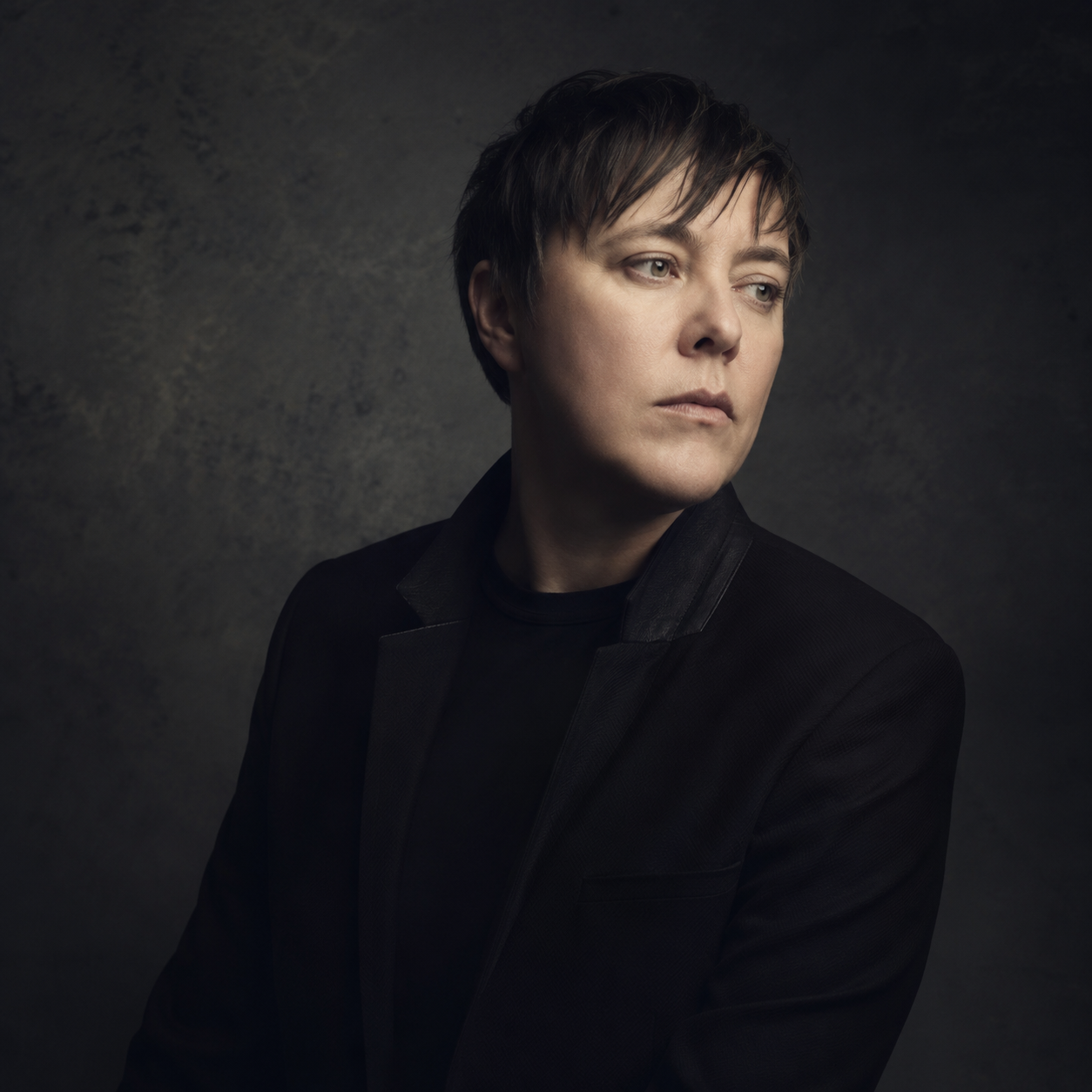
Lianne Hall
Lianne Hall is exactly the kind of artist a serious hi-fi listener should not overlook. She is not a mainstream showroom singer, not a polished pop product, and not an artist designed for glossy playlists. She is something much more interesting: a voice with history, texture, fragility, intelligence and emotional honesty. Her music lives somewhere between folk, electronic songwriting, indie, post-punk memory and intimate experimental pop. That combination makes her deeply rewarding on a good sound system, because her recordings are not about artificial spectacle. They are about presence, atmosphere, words, breath and the quiet tension between voice and space.
Hall is a British singer, songwriter and producer now associated with Berlin, with roots in the UK DIY and feminist punk scene. Before her solo career, she was part of the punk band Witchknot, and her later work moved into a more personal world of folk-electronic songwriting. Her official Bandcamp biography notes that the late John Peel described her as “one of the great English voices,” and that connection matters, because Peel’s support placed her in a lineage of artists valued for originality rather than commercial convenience. Her Bandcamp page also lists collaborations with d_rradio, Paul Hartnoll of Orbital, FITH, DJ Marcelle and Lavender Hex, showing how flexible her musical language is across folk, electronics and experimental scenes.
From an audiophile point of view, the first positive is her voice. It has a lived-in quality: warm, slightly weathered, close to the microphone, emotionally exposed without becoming theatrical. On a resolving system, you hear the small human details that make a recording feel alive: the softness at the edge of a phrase, the air around the vocal, the way instruments sit behind her rather than crowd her. The second positive is her restraint. Lianne Hall’s music does not crush the listener with overproduction. It leaves room for dynamics, for acoustic space, for the natural shape of a song. The third positive is her artistic honesty. She carries the spirit of punk into music that can sound gentle, even beautiful, but never passive. There is always an undercurrent of resistance, melancholy, intelligence and independence.
Her most important albums include Abandon Ship from 2006, Crossing Wires from 2010, The Caretaker from 2017 and Energy Flashback from 2022. Deezer’s artist profile confirms Energy Flashback and Crossing Wires as major album releases and lists key tracks from Energy Flashback, including “Energy Flashback,” “Anxiety Dreams,” “Lifelines,” “Hazard Lights,” “They Wanna Fight We Wanna Dance,” “The Sky and It’s Summer” and “You Dancing.” Apple Music also lists Energy Flashback, Crossing Wires and Abandon Ship among her album releases, with “They Wanna Fight We Wanna Dance,” “Hazard Lights,” “Lifelines,” “Anxiety Dreams” and “Energy Flashback” appearing among her visible top songs.
For newcomers, Crossing Wires is a beautiful entry point because it captures her gift for intimate songwriting and emotional atmosphere. The Quietus, reviewing Energy Flashback, specifically mentions Crossing Wires as a cherished album and describes Hall as an artist who has quietly made beautiful songs over many years. The Caretaker is also important because it reflects her Brighton period and her connection with a real artistic community. Musicboard Berlin notes that The Caretaker was produced in Berlin in 2017, where she has remained active as a singer, writer and producer. Energy Flashback is the later, mature statement: reflective, electronic, poetic and full of small sonic details that reward attentive listening.
In hi-fi terms, her recordings are not “audiophile” in the sterile demonstration-disc sense. They are better approached as emotionally truthful recordings that reveal timbre, texture and intimacy. Bandcamp confirms that Energy Flashback is available as high-quality downloads, with individual tracks such as “Late Nights Talking” and “You Dancing” listed at 16-bit/44.1 kHz. That means we should not falsely call these DSD or native hi-res recordings. The honest audiophile ranking would place Energy Flashback and Crossing Wires at the top for serious listening, because they offer the strongest combination of atmosphere, vocal intimacy and production depth. The Caretaker follows closely for emotional directness and songcraft, while Abandon Ship remains essential for understanding the earlier shape of her solo identity.
Why should we listen to Lianne Hall? Because she gives us what hi-fi is really meant to serve: not volume, not bass tricks, not artificial gloss, but connection. Her music sounds human. It has imperfections, shadows, warmth and intelligence. On a revealing system, those qualities become more powerful, not less. You hear an artist who has lived through punk, folk, electronics and independent culture, and who has kept her own voice intact. That is rare. Lianne Hall deserves to be heard not because she is famous, but because she is real, and real music is exactly what a great audio system was built to reveal.
