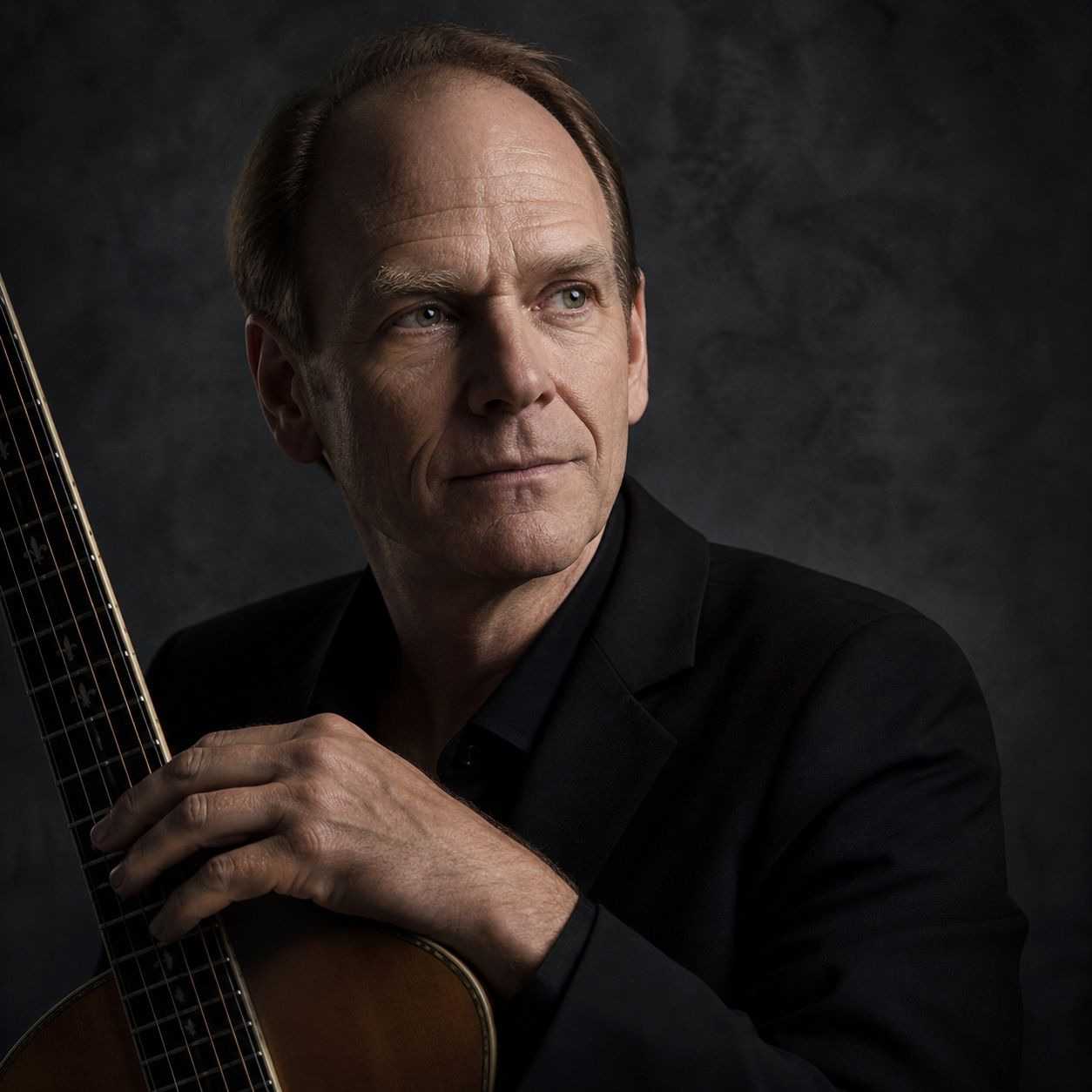
Livingston Taylor

Livingston Taylor – Intimate Vocals, Acoustic Guitar and Audiophile Recording Quality

Some artists are discovered through radio hits, others through recommendations from friends, and a select few become familiar because somebody wants to demonstrate just how convincing a great audio system can sound. Livingston Taylor belongs comfortably in all three worlds. The American singer-songwriter has built a career around warm vocals, acoustic guitar, carefully crafted songs and an unusually direct connection with his audience, but among audiophiles his name has acquired another significance. Recordings such as Good Friends, Ink and Bicycle have become favorites for listeners searching for natural male vocals, realistic acoustic instruments and the kind of spacious recording quality that allows a high-end stereo system to disappear from the room.

Taylor’s music rarely needs enormous arrangements or spectacular production to make an impression. Much of its strength comes from simplicity: a recognizable voice, an acoustic guitar, a carefully chosen melody and musicians who understand that leaving space can be as important as filling it. That makes his recordings particularly revealing for audiophile listening, because there are relatively few places for an audio system to hide its weaknesses. When reproduction is right, the guitar has strings, wood and resonance, the voice has physical presence and the recording space becomes audible around the musicians.

A Singer-Songwriter From a Remarkable Musical Family

Born in Boston in 1950, Livingston Taylor grew up in a family in which music would become an important part of several lives. His older brother James Taylor went on to become one of America’s most celebrated singer-songwriters, but Livingston developed a substantial career of his own, combining songwriting, performing and teaching over more than five decades.

Although comparisons between the brothers were inevitable, Livingston Taylor developed a distinctive musical personality. His performances combine folk, pop, jazz and traditional singer-songwriter influences, often with a lightness and humor that contrasts with more introspective material. His voice has a relaxed, conversational quality, while his guitar playing provides enough rhythmic and harmonic sophistication to make relatively simple arrangements continually interesting.

That combination also explains why Taylor works so well in an intimate recording environment. His music does not require layers of production to create atmosphere. The relationship between voice, instrument and room is often enough, making him particularly suitable for the natural recording approach associated with Chesky Records.

Livingston Taylor and Chesky Records

For audiophile listeners, the relationship between Livingston Taylor and Chesky Records is one of the most interesting parts of his discography. Chesky built its reputation by pursuing natural tonal balance, realistic spatial information and recordings designed to preserve the relationship between musicians and the acoustic environment in which they performed. Rather than assembling a performance from numerous isolated studio elements, the goal was often to create the impression that the listener had been transported into the recording space.

Livingston Taylor’s music is almost ideally suited to this philosophy. A naturally recorded acoustic guitar contains a surprising amount of information, from the initial contact with the string to the resonance of the wooden body and the gradual decay of each note. His voice adds another demanding reference because the human ear is extremely sensitive to unnatural coloration in vocals. When both elements are reproduced convincingly, there is very little need for spectacular production tricks.

This is why Livingston Taylor audiophile recordings regularly appeal to listeners evaluating loudspeakers, headphones, amplifiers and digital sources. The question is not whether the system can produce enormous bass or extreme volume, but whether it can make a relatively simple musical performance sound believable.

Good Friends – Natural Music in an Audiophile Setting

Good Friends is an excellent example of Taylor’s appeal to the audiophile listener. The album places his voice and musical personality within arrangements that remain spacious enough for individual instruments to retain their natural character. Instead of forcing everything forward in the mix, the recording allows the listener to explore the relationships between musicians.

On a revealing hi-fi system, pay particular attention to the position and scale of Taylor’s voice. It should appear stable and naturally sized rather than becoming an enormous vocal image suspended between the loudspeakers. Acoustic instruments should extend around him with sufficient separation to reveal individual textures while still sounding like musicians performing together.

This balance between detail and coherence is one of the most important qualities in a successful audiophile acoustic recording. More resolution should not make the performance fall apart into isolated sounds. Ideally, increased detail makes the musicians sound more connected because the listener can hear the subtle timing and interaction between them.

Ink – A Reference Recording for Voice and Acoustic Guitar

Among Livingston Taylor’s audiophile recordings, Ink is particularly interesting for listeners who value vocal realism and acoustic instrumental texture. Released by Chesky Records, the album provides exactly the kind of uncluttered musical environment in which small differences between audio systems become surprisingly easy to hear.

Taylor’s voice offers an excellent test of midrange reproduction. Too much upper-midrange energy can make vocals sound forward and unnaturally detailed, while excessive warmth can remove articulation and make the presentation heavy. A balanced system preserves both the body of the voice and the smaller details surrounding individual words without drawing unnecessary attention to either.

The acoustic instruments provide an equally useful reference. A guitar should never sound like strings floating independently in space; the wooden body of the instrument needs to be present underneath them. This combination of attack and resonance is one reason acoustic guitar recordings are so useful for testing hi-fi systems, and Taylor’s restrained arrangements make these qualities particularly easy to appreciate.

Isn’t She Lovely – When a Familiar Song Becomes an Audiophile Favorite

One of Livingston Taylor’s best-known audiophile performances is his interpretation of “Isn’t She Lovely,” the Stevie Wonder classic. Familiar music can be particularly useful when evaluating an audio system because the listener already knows the melody and can concentrate on the character of the performance and recording.

Taylor’s interpretation replaces the dense energy associated with the original with something more intimate. His vocal delivery and acoustic setting allow the song to breathe differently, revealing how dramatically arrangement and recording style can change the character of familiar material.

On a good system, the attraction comes from realism rather than scale. The voice should have texture without excessive emphasis on breath or sibilance, while the guitar needs enough transient speed to reproduce the strings clearly without becoming sharp. When the tonal balance is correct, the performance acquires the relaxed intimacy that makes Livingston Taylor’s “Isn’t She Lovely” such an enjoyable audiophile listening track.

Bicycle – Simplicity as a Test of High-End Audio

Bicycle provides another example of how Taylor’s understated musical style can become surprisingly revealing. Simple recordings can sometimes be more difficult for a stereo system than complex productions because every element is exposed. If the vocal sounds unnatural, there is little instrumentation available to disguise the problem; if the guitar lacks body, the missing information becomes immediately apparent.

This makes Livingston Taylor particularly useful for evaluating tonal balance, midrange realism, stereo imaging and acoustic detail. His recordings demonstrate that audiophile sound is not necessarily about hearing spectacular effects. Sometimes the most convincing demonstration is a singer appearing naturally in front of the listener with an instrument that sounds recognizably made of wood and strings.

A high-quality system should also reproduce the acoustic environment surrounding the performance. Small reflections and the decay of instruments help the brain interpret the dimensions of the recording space. These details should not jump forward as obvious effects but contribute quietly to the illusion that the walls of the listening room have been replaced by those of another space.

Why Livingston Taylor Belongs in an Audiophile Collection

Many traditional audiophile demonstration albums are selected because they contain extreme low frequencies, explosive percussion or enormous dynamic contrasts. Livingston Taylor represents the opposite approach. His recordings ask whether an audio system can reproduce the relatively familiar sounds of a male voice and acoustic instruments with enough tonal accuracy and spatial information to make them believable.

That can be a surprisingly demanding test. We know instinctively how voices sound, while most listeners have heard an acoustic guitar at relatively close range. Any unnatural coloration can therefore become obvious very quickly. Taylor’s Chesky recordings are particularly useful for evaluating vocal presence, acoustic guitar reproduction, soundstage depth and natural timbre without relying on artificial studio effects.

For anyone building a collection of audiophile male vocals, acoustic reference recordings, singer-songwriter music and Chesky Records albums, Livingston Taylor deserves a prominent place. His music also provides a useful contrast to spectacular demonstration recordings because it reminds the listener that high fidelity ultimately depends on reproducing ordinary sounds extraordinarily well.

Discovering Livingston Taylor on YouTube Music

Listeners exploring Livingston Taylor on YouTube Music and digital music streaming can begin with his Chesky Records catalogue, particularly Good Friends, Ink and Bicycle, before moving deeper into a career that stretches back to the beginning of the 1970s. His broader discography reveals a musician comfortable moving between folk, pop, jazz influences and traditional American songwriting while maintaining the relaxed vocal personality that makes his work immediately recognizable.

For audiophile listeners, however, the Chesky recordings remain particularly attractive because they combine Taylor’s intimate performance style with production designed to preserve natural instrumental character and spatial information. They are excellent choices for testing a new pair of loudspeakers or headphones, adjusting a stereo system or simply demonstrating to somebody why recording quality matters.

The best way to understand the appeal of Livingston Taylor as an audiophile artist is therefore remarkably simple. Choose one of his intimate Chesky recordings, sit in the center of the stereo image and listen at a natural volume. The guitar should have texture and body, the voice should occupy a believable position in the room and the space surrounding the performance should gradually become apparent. When everything is working correctly, there is no need for spectacular bass or enormous dynamics because the illusion itself becomes the demonstration: two loudspeakers disappear, and in their place there seems to be a singer, a guitar and a room.