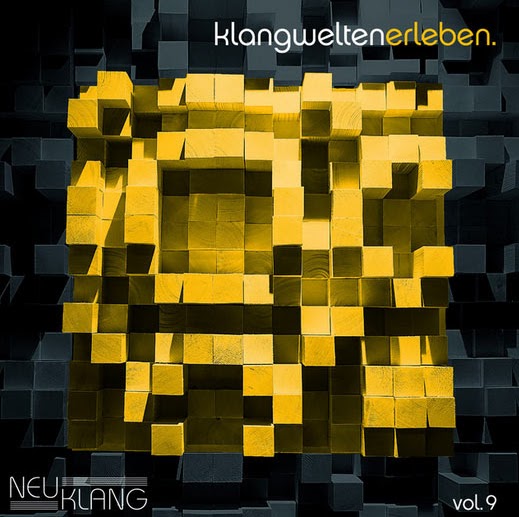
Neuklang Klangwelten
Vol. 9
Neuklang Klangwelten Vol. 9 – Exploring the Modern World of Audiophile Jazz
Some audiophile collections feel carefully designed to reassure the listener. A beautiful voice, a softly played acoustic guitar and perhaps a double bass placed perfectly between the loudspeakers provide familiar territory in which sound quality can be admired almost immediately. Neuklang Klangwelten Vol. 9 chooses a more adventurous path. This is an album that invites you to explore, moving through contemporary jazz, intimate ensembles, orchestral arrangements and bigband energy while demonstrating how exciting a naturally recorded performance can become through a revealing high-end audio system.
Released by the German Neuklang label in 2019, Klangwelten Vol. 9 offers approximately 72 minutes of music selected from a catalogue built around jazz and acoustic recording. The German word Klangwelten translates rather appropriately as “worlds of sound,” and that is exactly what the collection delivers. Instead of presenting one consistent musical atmosphere, it moves between very different ensembles and recording scales, giving every track its own acoustic identity. For listeners searching for audiophile jazz recordings, high-resolution music and natural acoustic sound, the result is both a musical journey and an unusually varied way to explore the capabilities of a serious audio system.
The album begins with Cuban pianist Marialy Pacheco performing “Metro” live with the WDR Funkhausorchester, and immediately the scale is larger than one might expect from an audiophile jazz sampler. Piano sits within a substantial orchestral arrangement involving strings, brass, woodwinds and percussion, creating a dense musical picture that requires an audio system to combine clarity with cohesion. Individual sections should remain identifiable, but the performance should never sound artificially dissected. When reproduction is convincing, the orchestra expands naturally around the piano and the recording develops depth as well as width, allowing the listener to sense layers of musicians rather than a flat collection of sounds stretched between two loudspeakers.
That opening track establishes one of the central pleasures of Neuklang Klangwelten Vol. 9: scale is constantly changing. After the orchestral dimensions of Metro, Gonam City offers a very different interpretation of Sidney Bechet’s “Petite Fleur.” Marc Benham and Quentin Ghomari strip the musical landscape back towards piano and trumpet, creating a more intimate performance where tone and acoustic space become easier to appreciate. The contrast is substantial, and a transparent system should preserve it. The smaller ensemble shouldn’t suddenly sound enormous simply because the loudspeakers are capable of producing a large soundstage; convincing reproduction means allowing each recording to retain its natural proportions.
The Joachim Caffonnette Trio’s “Perspectives” takes the journey into contemporary piano-trio territory, where piano, bass and drums provide three of the most useful instruments for evaluating high-fidelity reproduction. Piano combines percussive attack with harmonic complexity and natural decay, bass requires weight without losing pitch and texture, while drums demand speed and dynamics. When those qualities are reproduced properly, the trio develops an effortless rhythmic relationship in which each musician can be followed individually without losing the sense that everyone is playing together.
That balance between separation and musical unity is important. Audiophile systems are often praised for their ability to reveal individual details, but pulling every instrument apart isn’t necessarily realistic. Musicians interact with one another, and a great recording preserves those relationships. Klangwelten Vol. 9 repeatedly demonstrates that transparency should not mean dissection; it should simply remove enough of the barriers between listener and performance that the musical conversation becomes easier to follow.
Rémi Dumoulin, Bruno Ruder and Arnaud Biscay continue the journey with “Rainer Werner Fassbinder,” introducing tenor saxophone into a more spacious and exploratory setting. Saxophone is particularly revealing because so much of its character exists in the relationship between breath, reed and the resonating body of the instrument. An overly bright system can make the upper register aggressive, while excessive warmth can remove the texture that gives the instrument its personality. Reproduced naturally, the saxophone possesses both body and air, with enough harmonic complexity to make it feel physical rather than simply tonal.
The collection then expands again with Heiri Känzig’s “Tara,” featuring Jean-Christophe Cholet on piano, Matthieu Michel on trumpet, Didier Ithursarry on accordion and Ramon Lopez on drums. The unusual combination of instruments creates a particularly interesting tonal palette. Trumpet, accordion, piano, double bass and percussion each occupy different frequency ranges and have very different transient characteristics, making the recording useful for hearing how well a system preserves individual instrumental colors without losing the coherence of the ensemble.
This is where Neuklang audiophile recordings distinguish themselves from the more familiar style of demonstration music. The objective is not to produce one spectacular effect after another, but to capture musicians with enough honesty that differences in instrumentation, scale and acoustic environment remain intact. A good system shouldn’t make every recording sound impressive in exactly the same way. It should allow one track to feel intimate and another expansive, one warm and relaxed and another rhythmically urgent.
At nine minutes, Focusyear Band’s “After This” provides one of the longest journeys on the collection. Featuring Enrique Oliver on tenor saxophone alongside vocalist Yumi Ito, trumpet, trombone, guitar, piano, bass and drums, the performance creates a much denser ensemble. This is exactly the kind of recording where instrument separation becomes valuable, because several tonal textures occupy the musical space simultaneously. On a resolving system, Yumi Ito’s voice can remain naturally integrated with the ensemble while brass, guitar and rhythm section retain their own positions around her.
For audiophiles who use vocal recordings to judge equipment, this track also provides an interesting contrast with the conventional female vocal reference recording. Rather than placing the singer in an uncluttered arrangement designed to showcase every breath, the voice exists as part of a larger musical structure. Reproducing it convincingly requires the system to preserve vocal presence without artificially pushing the singer forward.
The journey becomes larger still with the Tobias Becker Bigband and Württembergische Philharmonie performing “Saint Kitts” live. Bigband and orchestra together present an entirely different challenge from a jazz trio. Brass needs energy without harshness, percussion requires speed and impact, bass must remain controlled and the entire ensemble needs enough dynamic freedom to expand naturally when the arrangement grows in intensity. When reproduced through capable speakers and amplification, the result can demonstrate why dynamic range matters so much more than simple loudness.
A system with limited control can make a large ensemble feel congested as the music becomes complex, with instruments merging into a dense wall of sound. A more transparent setup maintains enough space around individual sections that the arrangement remains understandable even during powerful passages. This ability to remain composed is one of the qualities that makes large-scale jazz and orchestral recordings such valuable audiophile reference music.
As Klangwelten Vol. 9 continues, the musical world keeps changing rather than settling into a predictable pattern. That variety is exactly what makes the collection so useful for evaluating speakers, headphones, amplifiers and DACs. Smaller ensembles reveal tonal accuracy and imaging, piano exposes transient response and harmonic balance, saxophone and trumpet test the naturalness of the midrange and treble, while orchestral and bigband recordings explore dynamics, soundstage depth and the ability of a system to maintain clarity during complex musical passages.
Yet approaching the album only as a collection of test tracks would miss much of its character. The word Klangwelten suggests something broader than sound quality alone. These really are different musical worlds, connected by the philosophy of a label interested in capturing contemporary musicians with enough space and transparency for their individual personalities to survive the recording process.
That becomes increasingly important during a complete listening session. At first, you may concentrate on how far the soundstage extends behind the loudspeakers or how precisely a trumpet occupies its position within an ensemble. Perhaps the bass response attracts attention or the dynamics of a live recording reveal something new about the system. After several tracks, however, those observations begin to merge into the musical experience itself. You stop listening for soundstage and simply perceive space; you stop evaluating instrumental separation and begin following the musicians.
This is ultimately where Neuklang Klangwelten Vol. 9 becomes more than another audiophile sampler. Its strength lies in refusing to define audiophile music too narrowly. Exceptional recording quality does not belong exclusively to delicate female vocals or sparse acoustic arrangements. A piano trio, contemporary European jazz ensemble, bigband or orchestra can be every bit as revealing, and sometimes considerably more challenging.
For listeners interested in modern audiophile jazz, high-resolution recordings, natural sound, dynamic range and realistic stereo imaging, this collection provides an excellent introduction to the Neuklang catalogue. It offers intimacy when the music demands it, scale when the ensemble expands and enough variety to prevent the listening experience from turning into a predictable sequence of hi-fi demonstrations.
Begin with Marialy Pacheco and allow the collection to unfold without deciding in advance what an audiophile recording should sound like. Let the scale shrink for Petite Fleur, follow the Joachim Caffonnette Trio into contemporary jazz, listen to the tonal colors surrounding Heiri Känzig and allow the larger ensembles to expand beyond the boundaries established by the smaller performances.
By the end of Neuklang Klangwelten Vol. 9, you may have learned quite a lot about your audio system, particularly its ability to reproduce dynamics, instrumental texture, soundstage depth and complex ensembles. More importantly, however, you may have discovered musicians and recordings you had never heard before.
And perhaps that is what a great audiophile sampler should really accomplish. It can show you what your system is capable of, but it should also remind you why you bought the system in the first place: to discover more music.
Hi-Fi(ve),
Ronald – Your EarFluencer 🎧


