Sony
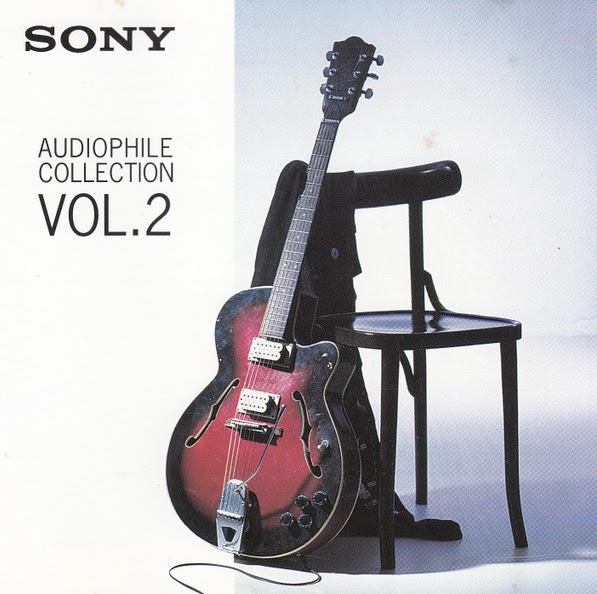
Audiophile Collection Vol. 2

Sony Audiophile Collection Vol. 2 – Music, Technology and the Search for Better Sound

Few names in the history of recorded music are as closely connected with both music and technology as Sony. For decades, the company has existed on both sides of the listening experience, developing equipment with which music is recorded and reproduced while simultaneously building one of the world’s most extensive music catalogues. Sony Audiophile Collection Vol. 2 sits naturally at the meeting point of those two worlds, presenting music not merely as entertainment but as something worth hearing with all of its texture, dynamics and atmosphere intact.

An audiophile collection can easily become predictable. There is a familiar formula involving an intimate voice, a carefully recorded acoustic guitar, perhaps a double bass and enough spacious percussion to demonstrate the width of a stereo system within the first few minutes. Sony Audiophile Collection Vol. 2 represents a broader idea. The attraction of an audiophile recording is not that it belongs to one particular genre, but that it contains enough musical and sonic information to reward careful listening.

That distinction matters because great sound has no single personality. A beautifully recorded voice asks something completely different from an audio system than a piano, an acoustic ensemble or a larger arrangement. One recording may depend on intimacy and subtle tonal changes, while another becomes convincing through dynamics, rhythmic energy or the scale of the soundstage. Moving between different kinds of music therefore provides a far more interesting test than listening repeatedly to recordings designed around the same sonic characteristics.

When Familiar Music Sounds Different

One of the pleasures of an audiophile compilation is discovering what happens when music you already know is reproduced through a system capable of revealing more of the recording. The melody hasn’t changed and the musicians are still playing exactly the same notes, yet the experience can feel surprisingly different.

A voice may suddenly have more physical presence. Instead of appearing as a flat image positioned somewhere between the loudspeakers, the singer begins to occupy a believable space, with subtle information surrounding the vocal helping to define distance and depth. Small changes in phrasing become easier to hear, but they don’t necessarily announce themselves as additional detail. They simply make the performer feel more human.

Acoustic instruments reveal something similar. A guitar isn’t only the sound of a vibrating string; the body of the instrument resonates around it, producing harmonics that continue after the initial note. A piano combines the immediate impact of hammer against string with the resonance of an enormous wooden instrument, while drums require both speed and physical weight. When these qualities are preserved in the recording and reproduced naturally, instruments gain dimension and character.

This is where Sony Audiophile Collection Vol. 2 becomes useful as more than background listening. It encourages the listener to explore the difference between hearing a recording and hearing into one.

Sony and the Evolution of Digital Audio

The Sony name also gives an audiophile collection an interesting historical context. Sony played a major role in the development of digital consumer audio, most famously through the Compact Disc developed together with Philips. Later, Sony and Philips again collaborated on Super Audio CD, using Direct Stream Digital technology in an attempt to push digital reproduction further.

That history matters because the evolution of digital audio has always involved a search for something surprisingly difficult to define. Greater technical resolution can be measured, but the qualities audiophiles ultimately want from their systems are often described in far less technical language: naturalness, openness, warmth, presence and musicality.

Those words can sound subjective, but they describe a recognizable experience. When reproduction becomes convincing, attention moves away from the equipment. Instead of hearing a tweeter reproducing the upper frequencies of a voice, we hear a singer. Instead of listening to a woofer reproduce an acoustic bass, we follow the musician playing it.

Technology has succeeded when we stop thinking about the technology.

The Human Voice Remains the Reference

No matter how sophisticated audio technology becomes, the human voice remains one of the most revealing tests of a high-end audio system. We have an enormous amount of experience with voices outside the listening room, which makes unnatural reproduction relatively easy to recognize.

A voice reproduced with too much upper-midrange energy can become unnaturally forward or emphasize sibilants that should remain part of the singer rather than becoming an audiophile effect. Too much warmth creates the opposite problem, giving a voice impressive body while removing some of its individuality. The ideal balance allows texture and detail to emerge naturally while preserving the weight and tonal character of the performer.

This is why vocal recordings remain so popular when evaluating speakers, headphones, amplifiers and DACs. They reveal tonal balance without requiring specialized listening experience. Close your eyes and ask a simple question: does the singer sound believable?

When the answer is yes, many of the more complicated audiophile descriptions become unnecessary.

Beyond Left and Right

Stereo itself remains one of audio’s most wonderful illusions. Two loudspeakers stand in front of the listener, yet a good recording can create an entire musical environment between and behind them. A singer appears in the centre even though there is no loudspeaker there, while instruments occupy positions extending towards the edges of the room. With exceptional recordings, some sounds may even appear to exist beyond the physical boundaries of the speakers.

Audiophiles often describe this as stereo imaging and soundstage, but width is only part of the story. Depth can be considerably more convincing. A flat recording may position instruments accurately from left to right while still sounding as though everything exists on the same imaginary line. A recording with good spatial information creates layers, with one musician appearing closer and another further behind.

The quiet information surrounding instruments contributes enormously to this illusion. Reverberation, decay and reflections help the brain reconstruct the acoustic environment in which a performance exists. These sounds are rarely spectacular, yet without them the recording can lose its sense of physical space.

A revealing system doesn’t necessarily make this information louder. It simply makes it easier to hear.

Dynamics Without Drama

Another important quality in audiophile reference music is dynamic range. Audiophiles sometimes associate dynamics with enormous orchestral crescendos or percussion capable of making the furniture move, but musical dynamics begin on a much smaller scale.

A singer moving slightly closer to the microphone, a pianist changing the weight of a phrase or a drummer shifting from delicate brushwork to a stronger accent are all dynamic events. Preserving these smaller variations helps give music expression and movement.

When a system compresses those differences, music may still sound detailed but somehow less alive. Conversely, a system with good dynamic freedom doesn’t need to sound aggressive. It simply allows quiet passages to remain quiet and louder moments to expand naturally.

That quality becomes particularly important at realistic listening levels. An excellent recording should not require excessive volume to become engaging. Lower the level slightly and listen to whether voices retain their presence, whether bass notes remain easy to follow and whether the stereo image still has depth. A capable system should continue communicating musical information even when the volume control isn’t being used to create excitement.

Listening to the System – Then Forgetting It

Collections such as Sony Audiophile Collection Vol. 2 naturally invite critical listening. They can be used when comparing loudspeakers, adjusting speaker placement, evaluating a new DAC or simply exploring how much information a familiar system can reproduce. Vocals can reveal midrange transparency, acoustic instruments can expose tonal coloration and transient response, while more complex arrangements challenge dynamics, separation and soundstage stability.

There is nothing wrong with listening this way. Part of the pleasure of high-end audio is discovering what a system can do, particularly when a recording reveals something that had previously gone unnoticed.

The danger comes when the equipment permanently becomes more interesting than the music.

A beautifully positioned singer can become nothing more than a test of centre imaging. An acoustic bass becomes a way of judging low-frequency extension, and a cymbal becomes an opportunity to evaluate treble response. Eventually, every recording risks turning into another piece of laboratory equipment.

The finest audiophile recordings offer a way out of that habit. They give us enough technical quality to satisfy curiosity and then provide enough music to make that curiosity disappear.

The Search for Better Sound

Perhaps that is the most appropriate way to approach Sony Audiophile Collection Vol. 2. Don’t begin with a checklist of frequencies and technical qualities. Allow the music to establish its own scale first and then notice what the system contributes—or, ideally, what it doesn’t contribute.

Listen to the weight and texture of voices rather than simply their detail. Follow bass notes instead of asking how deep they extend. Notice whether instruments seem to occupy believable positions and whether the acoustic space develops naturally behind them. Pay attention to dynamics, but also to the quieter moments between notes.

Then stop analysing.

The history of high-end audio is filled with remarkable technologies, from analog tape and vinyl to Compact Disc, SACD, high-resolution digital audio and modern lossless streaming. Sony has played an important role in several chapters of that history, but every technological development ultimately returns to the same objective: preserving enough of the original recording to make the distance between performer and listener feel smaller.

That is the real attraction of Sony Audiophile Collection Vol. 2. It isn’t simply music for demonstrating expensive equipment; it represents the idea that better reproduction can reveal more of what was already present in the performance.

A good audio system lets you hear the recording.

A great one eventually makes you forget that you are listening to one.

Hi-Fi(ve),

Ronald – Your EarFluencer 🎧