Stockfisch
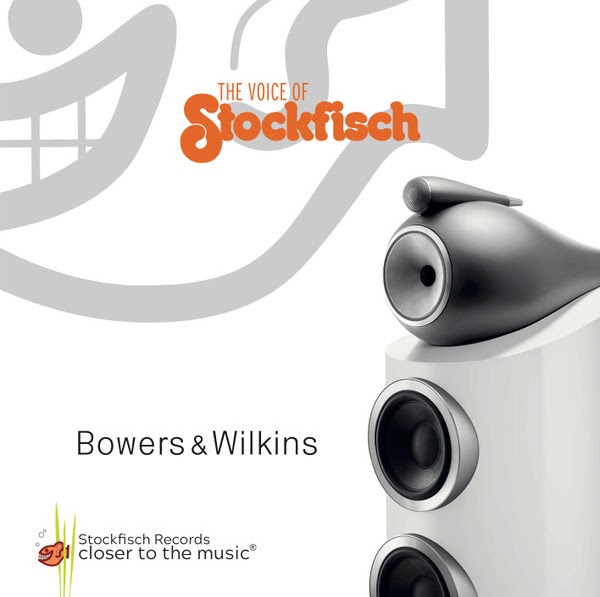
The Voice of Stockfisch
The Voice of Stockfisch – When the Human Voice Becomes the Ultimate Audiophile Instrument
For audiophiles, few things reveal the quality of a recording—or a high-end audio system—as convincingly as the human voice. Every breath, subtle inflection and change in dynamics can expose both the strengths and weaknesses of a recording chain. The Voice of Stockfisch celebrates precisely that intimacy, bringing together the distinctive vocal sound for which Stockfisch Records has become internationally renowned.
More than simply an audiophile compilation, The Voice of Stockfisch is a showcase for one of the German label’s greatest strengths: recording singers with extraordinary presence, warmth and realism.
The unmistakable Stockfisch sound
Stockfisch Records has built an enviable reputation among audiophiles for exceptionally natural recordings. Based in Germany and closely associated with producer and recording engineer Günter Pauler, the label has spent decades pursuing recordings that preserve the character of the original performance rather than overwhelming it with studio processing.
That philosophy is particularly effective with vocals.
On The Voice of Stockfisch, voices occupy a tangible position within the soundstage. Instead of sounding like a flat image between the loudspeakers, a good system can create the impression of an actual performer standing in the listening room.
The effect comes from more than vocal clarity alone. Listen closely and you can hear the space surrounding the singer: the decay of a guitar string, tiny breaths between phrases and subtle reverberation extending beyond the performers.
It is this combination of detail and naturalness that defines the classic Stockfisch Records sound.
An audiophile album built around the human voice
Many so-called audiophile recordings impress immediately with spectacular dynamics, enormous bass or exaggerated spatial effects. Stockfisch generally takes a different approach.
The attraction is realism.
The recordings allow acoustic instruments and vocals to breathe, giving performances a relaxed and organic character. Rather than forcing detail forward, The Voice of Stockfisch invites the listener to discover it.
That makes this collection especially rewarding on a revealing high-end audio system or a good pair of headphones. Improved equipment does not simply make the music louder or brighter; it reveals additional layers of texture, space and emotion.
A singer’s position becomes easier to pinpoint. Guitar strings gain body as well as attack. Low frequencies become more controlled, while reverberation reveals the dimensions of the recording space.
Most importantly, the voice remains human.
Why vocals are such a powerful test for hi-fi systems
There is a good reason why experienced audiophiles frequently use vocal reference recordings when evaluating loudspeakers, headphones, DACs and amplifiers.
We know instinctively what a human voice should sound like.
If the midrange is too aggressive, we hear it. If sibilants become unnaturally sharp, we notice. If a system adds too much warmth, voices can become heavy and congested. And when stereo imaging is poor, the illusion of a singer standing between the loudspeakers quickly disappears.
A carefully produced Stockfisch audiophile recording can therefore become an extremely useful reference.
Listen for the natural texture of the voice rather than simply treble detail. Pay attention to where the singer appears in the soundstage and whether that position remains stable when instruments enter. Listen to the silence around individual notes and to how naturally acoustic instruments decay.
On a well-balanced system, the experience should feel effortless.
Music first, audiophile recording second
There is always a danger with demonstration-quality recordings: listeners can become more interested in the sound of the recording than in the music itself.
Fortunately, Stockfisch’s finest releases rarely feel like technical demonstrations.
The engineering serves the performance.
That distinction is important. The Voice of Stockfisch succeeds because the emotional character of the singers remains at the centre of the experience. The resolution and transparency are there, but they support rather than replace the music.
Close your eyes and the technical vocabulary—bit depth, frequency response, imaging and dynamic range—quickly becomes less important.
There is simply a voice in front of you.
And perhaps that is the highest compliment an audiophile recording can receive.
A reference for lovers of exceptional sound quality
For listeners discovering Stockfisch Records for the first time, The Voice of Stockfisch provides an excellent introduction to the label’s distinctive approach to recording. For established audiophiles, it offers something equally valuable: familiar reference material capable of revealing surprisingly small changes in a hi-fi system.
Change a DAC, reposition your loudspeakers or experiment with room acoustics and recordings of this quality can make the differences remarkably easy to hear.
But The Voice of Stockfisch deserves to be heard for another reason.
It reminds us what high-end audio is ultimately supposed to achieve.
Not more impressive specifications. Not more expensive equipment. Not endless analysis.
Just less between the listener and the performer.
The Voice of Stockfisch is audiophile music at its most convincing: intimate voices, acoustic instruments, exceptional recording quality and the unmistakable natural sound that has made Stockfisch Records a reference name in high-end audio.


