
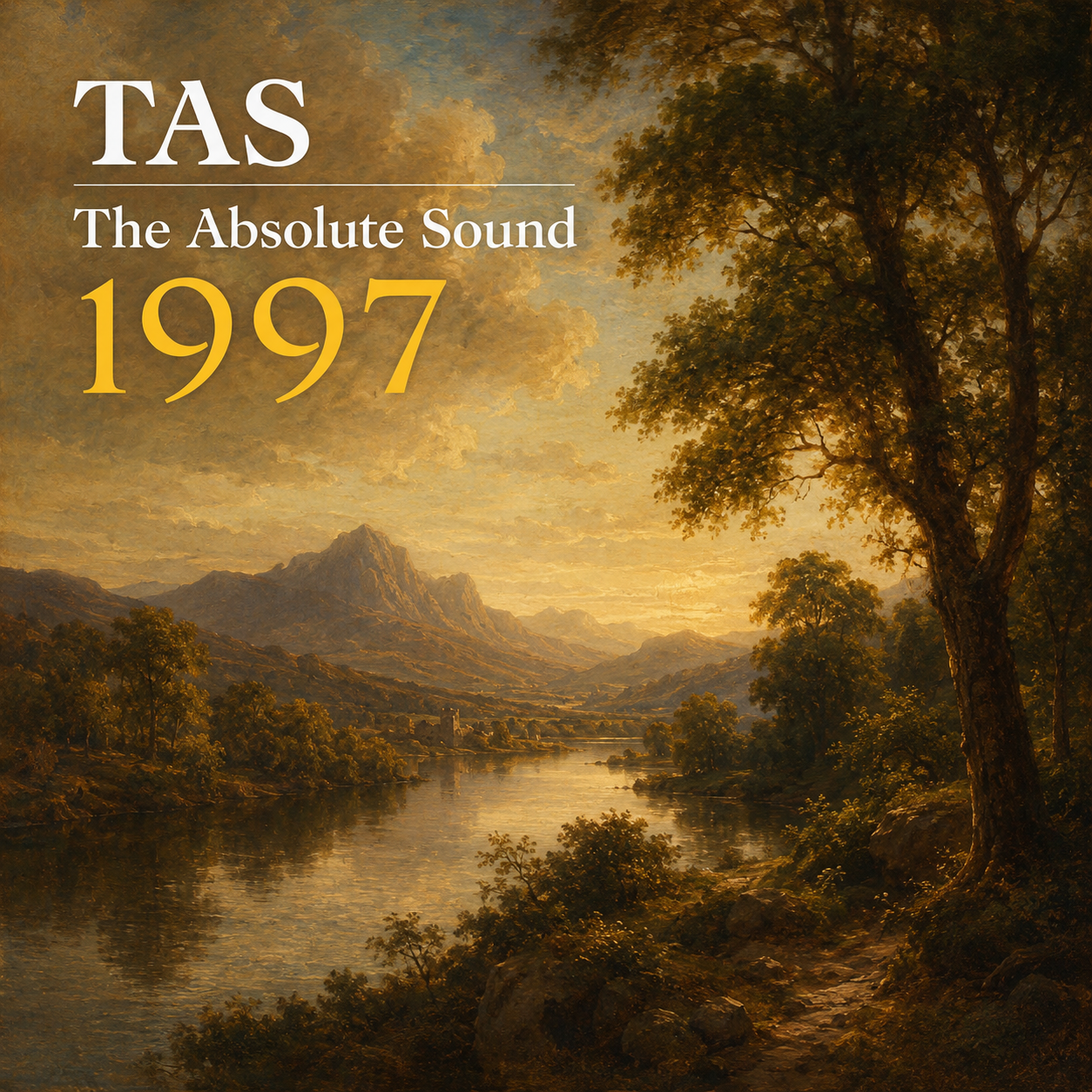
The Absolute Sound
1997
GREAT CHOICE: The Absolute Sound 1997!
Great music deserves to be discovered, enjoyed and shared.
CAN YOU SPARE A CUP OF COFFEE?
Audiophile-Streaming is a personal passion project, built with countless hours of discovering, selecting and sharing exceptional music.
I personally cover, without sponsors, the ongoing costs of hosting, software and subscriptions to keep the music discoveries coming. If you enjoy my work, your support is always appreciated.
A LITTLE THANK YOU IN RETURN
Just one coffee gives you lifetime access to the Coffee Club and all its playlists.
No subscriptions. No recurring fees.
The Absolute Sound 1997, A Timeless Audiophile Journey into High End Sound
There are albums that are remembered because of a single song, and there are albums that remain important because they change the way people listen. The Absolute Sound 1997 belongs to that second and far more exclusive category. As the second chapter in the celebrated TAS audiophile series, this remarkable compilation continued the promise of its predecessor while developing a richer, more adventurous identity of its own. It was created for listeners who wanted more than pleasant background music, because every recording invited close attention and every performance offered another opportunity to discover the depth, clarity and emotional power of high fidelity sound.
The Absolute Sound 1997 immediately presents itself as more than an ordinary compilation album. Its carefully chosen music creates the impression of a complete listening journey, moving naturally between intimate voices, expressive acoustic instruments and recordings with a larger, more spacious character. The album does not demand that the listener analyse every detail, yet it rewards anyone who chooses to listen closely. Through a carefully balanced hi fi system, the music begins to reveal the qualities that audiophiles value most, including a wide stereo soundstage, realistic vocal presence, detailed instrumental textures and an effortless sense of musical flow.
What makes this classic audiophile album so appealing is the way technical excellence and genuine emotion exist side by side. Many speaker test albums can sound impressive for a few minutes, but they often feel more like demonstrations than musical experiences. The Absolute Sound 1997 avoids that problem entirely. Its strength lies in its ability to test a high end audio system without ever losing sight of the music itself. The listener may begin by paying attention to bass response, treble detail or stereo imaging, but before long the analytical process disappears and the performances take control.
A Natural Evolution of the TAS Audiophile Series
Following the success of The Absolute Sound 1996, the 1997 edition carried the TAS name forward with confidence. It expanded the idea of an audiophile reference album by presenting recordings that could demonstrate both the precision and the emotional character of a stereo system. The result was a collection that felt sophisticated but never distant, detailed but never clinical, and technically impressive without becoming exhausting.
This balance is essential in high end audio. A system may reproduce every small detail in a recording, yet still fail to communicate the spirit of the music. The Absolute Sound 1997 exposes that difference with remarkable clarity. When played through a well matched amplifier, DAC and pair of loudspeakers, the album creates a sense of coherence in which every instrument belongs naturally within the recording space. Nothing appears artificially highlighted, and no part of the frequency range overwhelms the rest of the performance.
That makes The Absolute Sound 1997 an excellent audiophile reference recording for anyone comparing speakers, headphones, amplifiers, CD players or network streamers. It reveals differences between audio components, but it does so through musical expression rather than exaggerated studio effects. A stronger amplifier may produce greater control and dynamic freedom, while a more refined digital source may reveal additional texture and ambience. Better loudspeakers may create a deeper soundstage and more convincing instrumental placement, yet the final judgement always returns to one question, namely whether the music feels more natural and more involving.
A Beautiful Album for Testing Speakers
For listeners searching for the best music to test speakers, The Absolute Sound 1997 remains a highly rewarding choice. Its recordings contain the tonal variety and spatial information needed to evaluate a complete stereo system. A good loudspeaker should reproduce the album with a stable centre image, smooth tonal balance and believable scale. Voices should sound present without becoming forward, while acoustic instruments should retain their natural weight, texture and resonance.
The album is particularly revealing in the midrange, where much of the emotional character of music is found. An unbalanced speaker may make vocals sound thin, nasal or overly warm, but a transparent high end speaker allows the singer’s individuality to emerge. Breathing, phrasing and subtle changes in tone become part of the performance, creating the impression that the listener is hearing a real person rather than a recording.
At the same time, The Absolute Sound 1997 offers an excellent test of treble quality. Fine details should appear clearly without becoming sharp or aggressive. Cymbals, strings and upper harmonics must retain their brilliance while remaining smooth and natural. The best systems reproduce these details with air and delicacy, allowing the listener to hear more information without feeling that the equipment is forcing attention toward it.
Bass performance is equally important, although the album demonstrates that quality bass is about far more than power. A capable hi fi system should produce low frequencies with definition, timing and control. Bass notes should support the music rather than dominate it, and their texture should remain audible even during complex passages. The Absolute Sound 1997 rewards systems that can combine depth with speed, creating a solid musical foundation without sacrificing clarity.
An Expansive Stereo Soundstage
One of the most attractive qualities of The Absolute Sound 1997 is its ability to create a broad and immersive stereo soundstage. On a carefully positioned pair of speakers, the music can extend beyond the physical boundaries of the cabinets while maintaining a focused and convincing centre image. Instruments appear in individual positions, and the space around them becomes part of the listening experience.
This three dimensional presentation is one of the defining pleasures of audiophile music. The listener is no longer confronted by two boxes producing sound from the front of the room. Instead, the loudspeakers seem to disappear, leaving behind a believable performance space with width, depth and atmosphere. Some sounds appear close and intimate, while others recede naturally into the distance.
For anyone interested in speaker placement and room acoustics, The Absolute Sound 1997 can become an extremely useful reference album. Small adjustments to toe in, listening distance and distance from the rear wall may transform the presentation. The central image can become more stable, the bass can tighten and the soundstage can suddenly open. Because the music remains engaging throughout the process, these adjustments feel less like technical work and more like a gradual discovery of what the system is capable of achieving.
An Excellent Headphone Test Album
The Absolute Sound 1997 is just as impressive through high quality headphones. As a headphone test album, it can reveal differences in tonal balance, detail retrieval, imaging and comfort over long listening sessions. Open back audiophile headphones may emphasise the sense of space and air, while closed back headphones may offer greater intimacy and a stronger feeling of low frequency impact.
The album is especially useful for judging whether a headphone sounds naturally balanced. A bright design may exaggerate high frequency detail and eventually become tiring, while a bass heavy model may reduce the clarity of vocals and acoustic instruments. The best headphones allow The Absolute Sound 1997 to unfold with ease, preserving its warmth, detail and musical continuity.
A good headphone amplifier can also make a meaningful difference. Greater control may improve bass definition, while additional headroom can allow dynamic passages to expand more freely. The album’s varied recordings make these differences easy to recognise without turning the listening session into a cold technical comparison.
A Collector’s Album with Lasting Musical Value
The Absolute Sound 1997 has become an attractive title for collectors because it represents an early and important stage in the TAS audiophile collection. Its value, however, is not based only on rarity or nostalgia. The album continues to sound engaging because the performances and recordings were chosen with lasting quality in mind.
This is the reason The Absolute Sound 1997 remains relevant in an era of high resolution audio, lossless streaming and advanced digital playback. Technology may have changed dramatically, but a well recorded performance still possesses the same power to captivate. Whether played from an original compact disc, a carefully made digital rip or a modern music server, the album retains its ability to reveal the quality of a stereo system.
The greatest audiophile recordings do not belong to one format or one generation of equipment. They survive because they capture music with honesty, atmosphere and emotional depth. The Absolute Sound 1997 possesses those qualities in abundance, making it far more than a historical curiosity.
Final Verdict
The Absolute Sound 1997 is an essential audiophile album for listeners who appreciate beautifully recorded music, realistic stereo imaging and the expressive possibilities of high end audio. It works brilliantly as speaker test music, headphone test music and a reference recording for comparing amplifiers, DACs, CD players and complete hi fi systems, yet its true value lies in the pleasure it provides as a complete musical experience.
The album has enough detail to satisfy the most analytical listener, but it never loses its warmth or humanity. It can reveal a deeper soundstage, a more natural voice and a more controlled bass response, but it can also make the listener forget about equipment entirely. That is the highest compliment any audiophile compilation can receive.
The Absolute Sound 1997 is therefore not merely another volume in a famous audiophile series. It is a confident, elegant and deeply rewarding collection that continues to demonstrate why the pursuit of better sound remains so compelling. For collectors, music lovers and serious hi fi enthusiasts, this album is not simply recommended, because it deserves to be heard as one of the defining audiophile releases of its era

