
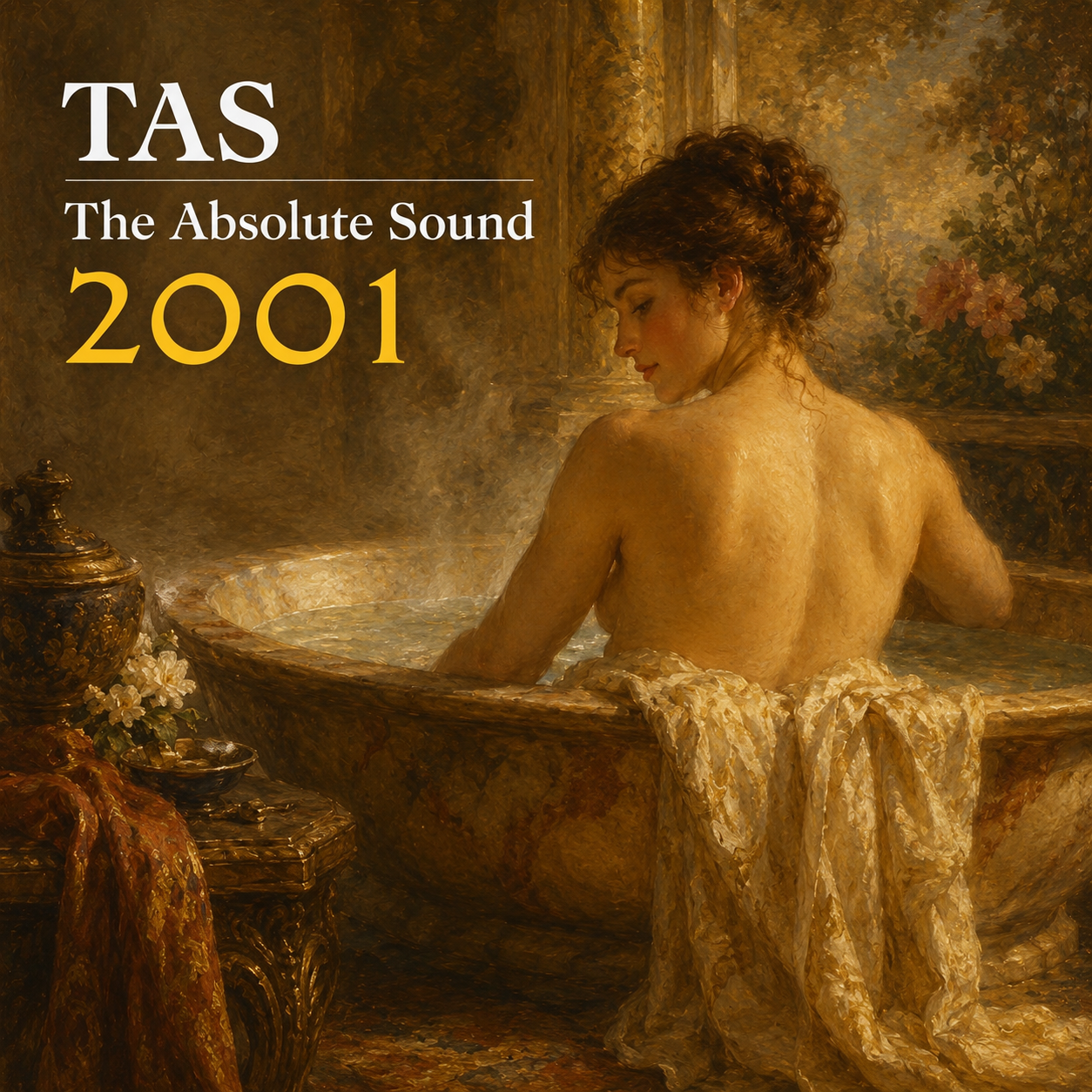
The Absolute Sound
2001
GREAT CHOICE: The Absolute Sound 2001!
Great music deserves to be discovered, enjoyed and shared.
CAN YOU SPARE A CUP OF COFFEE?
Audiophile-Streaming is a personal passion project, built with countless hours of discovering, selecting and sharing exceptional music.
I personally cover, without sponsors, the ongoing costs of hosting, software and subscriptions to keep the music discoveries coming. If you enjoy my work, your support is always appreciated.
A LITTLE THANK YOU IN RETURN
Just one coffee gives you lifetime access to the Coffee Club and all its playlists.
No subscriptions. No recurring fees.
The Absolute Sound 2001, A Magnificent Audiophile Journey Filled with Music, Emotion and Exceptional Sound Quality
There are albums that reveal their qualities immediately, surrounding the listener with spectacular bass or dazzling detail, and there are albums that take a more refined path, gradually drawing the listener into a world in which every voice, every instrument and every quiet moment seems to possess its own atmosphere. The Absolute Sound 2001 belongs proudly to the second category. It is an audiophile compilation with elegance, variety and genuine musical warmth, created not merely to demonstrate the abilities of a high end audio system, but to remind listeners why the search for better sound remains such a fascinating and rewarding passion.
From its opening moments, The Absolute Sound 2001 feels like a carefully planned musical voyage rather than a random collection of reference tracks. The album moves naturally between Latin rhythms, intimate vocals, classical elegance, jazz improvisation and atmospheric instrumental music, allowing each performance to become a new chapter in a larger story. This broad musical character makes it one of the most enjoyable audiophile albums for testing speakers, headphones, amplifiers, DACs and CD players, yet its greatest achievement is that the technical excellence never distracts from the emotional power of the music.
A listener may begin the album with the intention of examining stereo imaging, soundstage depth or bass definition, but those analytical thoughts soon begin to disappear. The performances possess enough charm and personality to take control of the experience, and before long the equipment seems to vanish from the room. That is one of the clearest signs of a successful high fidelity recording, because the finest audiophile music does not constantly remind the listener of cables, converters and loudspeaker drivers. It creates the illusion that only the artists and the music remain.
A Colourful Opening Filled with Rhythm and Life
The album begins with El Real de Hielo, a performance by Luis Conté that immediately fills the listening space with energy, movement and beautifully recorded percussion. It is an inspired opening choice because it introduces several qualities that make The Absolute Sound 2001 such impressive speaker test music. The rhythmic foundation has weight and speed, the percussion carries realistic texture, and the recording offers enough spatial information to reveal whether a stereo system can create a convincing sense of width and depth.
Through a well balanced pair of high end speakers, the performance feels alive rather than merely loud. Each percussive strike should have a clear beginning, a natural body and a believable decay, while the surrounding instruments should remain easy to follow without losing their connection to the rhythm. A system with poor timing may turn the music into a crowded collection of sounds, but a capable amplifier and loudspeaker combination allows the entire performance to move with effortless momentum.
This makes El Real de Hielo an excellent bass test track and percussion reference recording, although it never behaves like a cold technical demonstration. Its real power lies in the way it encourages the listener to become part of the rhythm, creating an opening that is both musically exciting and sonically revealing.
Familiar Melodies Heard with New Clarity
The Sound of Silence introduces a completely different atmosphere, replacing the energetic opening with a more reflective and spacious presentation. A familiar melody can be particularly valuable when evaluating audio equipment because the listener already carries an emotional and musical expectation. When the recording is reproduced through a transparent hi fi system, small changes in phrasing, ambience and instrumental colour become easier to recognise.
The performance offers a beautiful test of midrange clarity and tonal balance. Voices and instruments should emerge naturally from the background without sounding artificially highlighted, while the quieter details should remain present even at moderate listening levels. This is where The Absolute Sound 2001 begins to demonstrate its remarkable versatility. It can move from rhythmic intensity to intimate stillness without breaking the flow of the album, and every change in mood presents the audio system with a different challenge.
Be Thou My Vision continues this sense of calm while creating a generous and open soundstage. The recording allows notes to develop and fade naturally, making it valuable for testing instrumental decay, background silence and the ability of a system to reproduce space around the performers. Through refined audiophile headphones or carefully positioned loudspeakers, the music seems to breathe, with the silence between the notes becoming almost as meaningful as the notes themselves.
Carol Kidd and the Beauty of the Human Voice
One of the most memorable moments arrives with Carol Kidd’s Seven Daffodils, a performance that gives the album a warm and intimate human centre. Carol Kidd’s recordings have long been appreciated by listeners who value natural female vocals, expressive phrasing and smooth midrange reproduction, and this track demonstrates exactly why her voice works so beautifully as audiophile reference music.
On a transparent stereo system, the vocal should appear focused and stable between the loudspeakers without sounding trapped in a narrow central position. The voice needs warmth and body, yet it must also preserve the small details that reveal breath, emotion and personality. An overly bright system may exaggerate sibilance and remove the gentleness of the performance, while an excessively warm system may blur the phrasing and reduce the sense of presence.
When the tonal balance is correct, Seven Daffodils becomes something more than a useful female vocal test track. It becomes a moment of pure musical communication. The recording seems to shorten the distance between singer and listener, creating the intimate sensation of a private performance taking place within the room. This is high end audio at its most persuasive, not because it overwhelms with effects, but because it makes a human voice sound natural, vulnerable and emotionally believable.
Classical Elegance and Instrumental Precision
The appearance of Salvatore Accardo brings a different kind of brilliance to The Absolute Sound 2001. Tango combines classical refinement with rhythmic character, offering an outstanding test of speed, treble smoothness and instrumental texture. The violin is one of the most demanding instruments for any loudspeaker or headphone because its complex upper harmonics can easily become sharp, metallic or tiring when reproduced by an unbalanced system.
A capable audio system should preserve the energy of the bow and the brilliance of the instrument without adding artificial hardness. The listener should hear not only the melody, but also the physical action behind the performance, including the movement of the bow, the resonance of the instrument and the acoustic space surrounding it. The finest speakers reproduce these details naturally, allowing the violin to remain expressive rather than turning it into a spotlight for treble performance.
The classical selections elsewhere on the album continue this examination of precision and scale. La donna è mobile introduces operatic power and vocal projection, while the Paganini sonata demands speed, control and fine instrumental separation. These performances reveal whether an amplifier can respond quickly to musical changes and whether a loudspeaker can preserve clarity during complex passages.
The Absolute Sound 2001 therefore works brilliantly as classical reference music, but it never becomes formal or distant. The classical tracks are integrated into the wider journey of the album, adding elegance and drama without interrupting its inviting character.
Jazz with Grace, Warmth and Natural Swing
The Gypsy, performed by Stéphane Grappelli and Martin Taylor, is one of the album’s most naturally engaging jazz moments. The meeting of violin and guitar creates a performance filled with elegance, intimacy and effortless musical conversation. Each musician occupies a clear position within the stereo image, yet the performance never feels divided into separate technical elements.
This track is excellent jazz music for testing speakers because it reveals timing, tonal colour and the relationship between instruments. The guitar should possess warmth and body, with every plucked string carrying both attack and resonance, while the violin should float above it with freedom and expression. A good hi fi system will reproduce the notes accurately, but an exceptional system will reveal the communication between the musicians.
That distinction is important because true audiophile sound is not simply about producing more detail. It is about making musical relationships easier to understand. On The Gypsy, the smallest changes in timing and emphasis create the feeling of two artists responding to one another in real time. When the playback system preserves that interaction, the performance becomes irresistible.
Comes Love adds another layer of jazz atmosphere, bringing vocal expression and a relaxed sense of swing into the collection. The track is ideal for evaluating whether a system can sound detailed without becoming analytical, because the performance needs clarity while retaining softness, warmth and natural flow.
A Surprising and Rewarding Interpretation of Help
Claire Martin’s interpretation of Help is another outstanding moment, demonstrating how a familiar song can be transformed by arrangement, voice and recording style. Rather than depending on recognition alone, the performance invites the listener to hear the melody from a fresh perspective.
Claire Martin’s vocal presence makes the track an excellent test of midrange transparency and emotional nuance. A strong stereo system should reveal the texture of her voice while preserving the instruments around her, ensuring that nothing becomes exaggerated or disconnected. The arrangement also offers a convincing soundstage, with enough depth and separation to demonstrate the quality of speaker placement and room acoustics.
The success of this performance reflects the wider strength of The Absolute Sound 2001. The album does not simply collect impressive recordings. It chooses music with character, allowing well known melodies and less familiar pieces to exist naturally beside one another. The result is a compilation that feels coherent even when moving between very different genres.
An Audiophile Album That Tests the Entire System
For listeners searching for the best audiophile album to test a complete audio system, The Absolute Sound 2001 remains an exceptional choice. Its varied programme reveals bass control, vocal realism, treble refinement, transient speed, stereo imaging and soundstage depth without forcing the listener to change discs constantly.
The rhythmic tracks can expose a slow or poorly controlled low frequency response, while the vocal performances reveal midrange coloration and excessive sibilance. The classical selections test dynamic freedom and instrumental texture, and the jazz recordings demonstrate whether the system can preserve timing, intimacy and musical communication.
A high quality DAC may reveal additional ambience and more realistic tonal shading, while a capable amplifier can provide stronger control and a more effortless sense of scale. Better speakers may create a deeper soundstage and a more stable central image, and refined headphones can uncover subtle details hidden within the recordings. Yet the finest result is not simply hearing more information. It is hearing the album become more natural, more coherent and more emotionally involving.
A Timeless Addition to Every Audiophile Music Collection
Although The Absolute Sound 2001 emerged during the compact disc era, its musical and sonic qualities remain completely relevant in the age of lossless streaming and high resolution audio. Great recording quality does not become obsolete simply because playback technology changes. A natural voice, a well captured acoustic instrument and a convincing stereo image retain their power regardless of whether the music is played from an original CD, a digital music server or a carefully prepared lossless file.
This timelessness gives The Absolute Sound 2001 genuine collector appeal. It represents an important chapter in the TAS audiophile series while remaining enjoyable beyond its historical position. The album is not valuable only because it belongs to a respected collection. It is valuable because the music still sounds fresh, inviting and beautifully reproduced.
For experienced audiophiles, it offers a trusted selection of reference tracks for comparing components and optimising a listening room. For newcomers to high end audio, it provides an accessible introduction to the qualities that distinguish an exceptional recording from an ordinary one. In both cases, the album succeeds because it never sacrifices musical pleasure in pursuit of technical perfection.
Final Verdict
The Absolute Sound 2001 is a magnificent audiophile compilation and an essential addition to any serious high fidelity music collection. Its combination of Latin percussion, jazz, female vocals, classical music, acoustic performances and atmospheric instrumental recordings creates a listening journey filled with variety and emotional depth.
It is highly recommended as music for testing speakers, headphones, amplifiers, DACs and CD players, but describing it only as a hi fi test album would underestimate its true value. The Absolute Sound 2001 is first and foremost a beautifully assembled musical experience, one that invites careful listening while remaining warm, accessible and deeply enjoyable.
The finest moments reveal a wide stereo soundstage, natural vocal presence, precise bass, smooth treble and impressive instrumental realism, yet the album’s greatest achievement is the way those qualities disappear into the music. When reproduced through a well balanced high end audio system, the listener no longer thinks about specifications or equipment. The room grows quiet, the performers step forward and The Absolute Sound 2001 becomes exactly what every great audiophile album should be, a doorway into the music itself

