
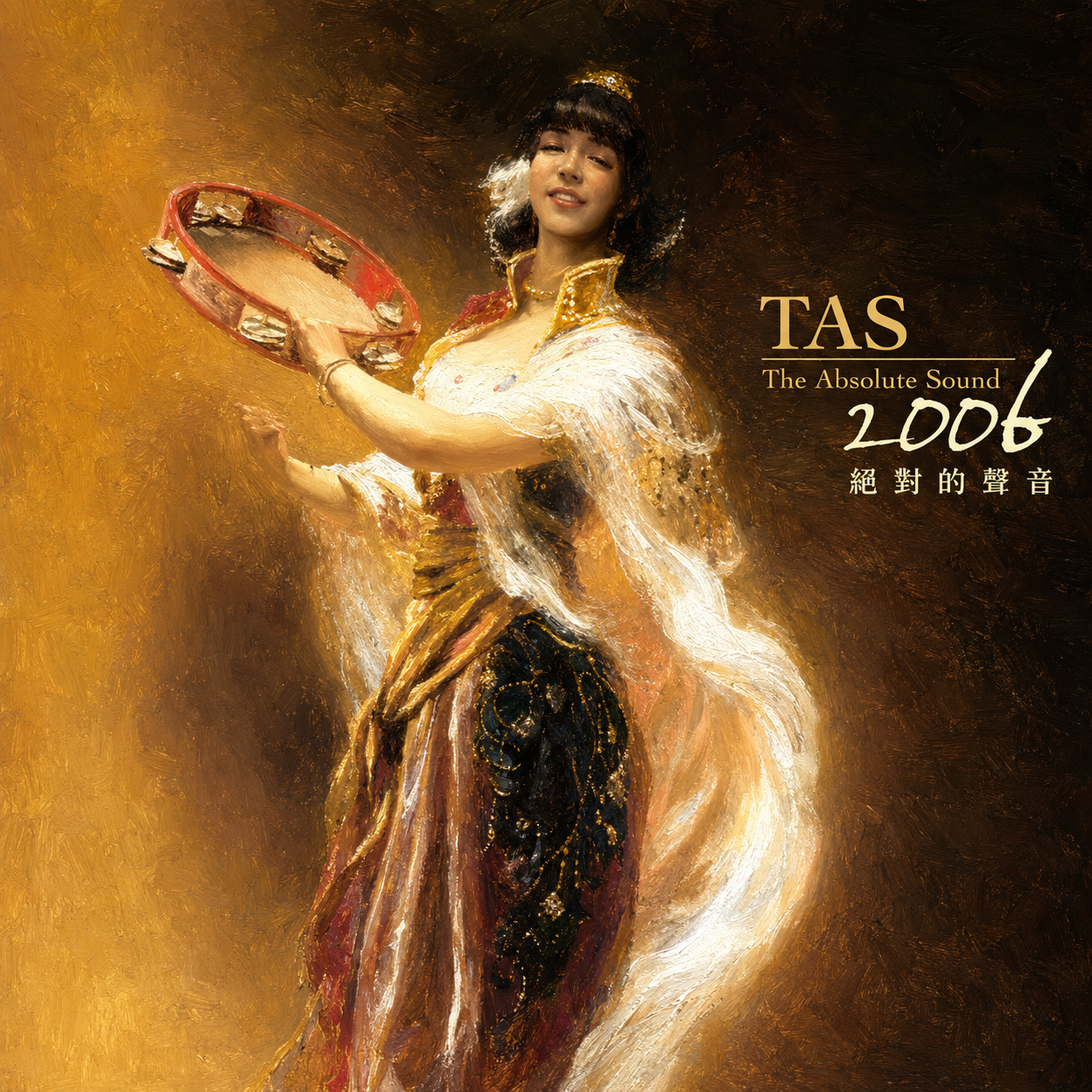
The Absolute Sound
2006
GREAT CHOICE: The Absolute Sound 2006!
Great music deserves to be discovered, enjoyed and shared.
CAN YOU SPARE A CUP OF COFFEE?
Audiophile-Streaming is a personal passion project, built with countless hours of discovering, selecting and sharing exceptional music.
I personally cover, without sponsors, the ongoing costs of hosting, software and subscriptions to keep the music discoveries coming. If you enjoy my work, your support is always appreciated.
A LITTLE THANK YOU IN RETURN
Just one coffee gives you lifetime access to the Coffee Club and all its playlists.
No subscriptions. No recurring fees.
The Absolute Sound 2006, A Captivating Audiophile Journey Through Voices, Jazz and Acoustic Beauty
Some albums are created to occupy an hour, while others seem capable of changing the atmosphere of an entire evening. The Absolute Sound 2006 belongs unmistakably to the latter category, because this beautifully assembled TAS audiophile compilation does not behave like a collection of unrelated demonstration tracks. It moves with the natural rhythm of a carefully written book, opening with curiosity, developing through intimacy and reflection, and arriving at a conclusion filled with classical elegance and emotional scale. Each performance introduces a different voice and musical landscape, yet the album remains coherent because every selection shares the same devotion to musical expression and exceptional sound quality.
Released by Aurora Music International as part of the acclaimed The Absolute Sound series, TAS 2006 brings together sixteen recordings that travel through vocal jazz, acoustic folk, sophisticated instrumental music, singer-songwriter storytelling and classical repertoire. It is an outstanding choice for listeners searching for the best audiophile music, high-quality speaker test tracks, natural vocal recordings and reference music for testing a complete high-end audio system. Its greatest strength, however, is that it never sounds like equipment-testing material assembled without emotion. The technical quality serves the performances so naturally that the listener soon forgets about loudspeakers, amplifiers and digital converters, becoming absorbed instead by the people, melodies and stories emerging from the recording.
The experience begins with Ian Shaw’s interpretation of Barangrill, a performance that immediately establishes the album’s confident and sophisticated character. Shaw’s voice carries personality, flexibility and a sense of lived experience, moving through the arrangement with the freedom of a performer who understands that a song is more than a sequence of notes. Through a transparent pair of audiophile speakers, the voice appears clearly within the stereo soundstage while retaining warmth and natural body. The accompaniment does not crowd the singer or retreat unnaturally into the background, but forms a believable musical setting in which every instrument contributes to the movement of the performance.
Barangrill is an excellent vocal reference track because it reveals whether an audio system can preserve individuality. A coloured midrange may make the singer sound too heavy or distant, while an aggressive treble response can exaggerate small vocal details until they become distracting. A well-balanced high-end stereo system allows the voice to remain expressive and human, with breath, phrasing and tonal character presented as part of the music rather than as isolated audiophile effects. The track therefore introduces one of the central pleasures of The Absolute Sound 2006, namely its ability to expose the quality of audio equipment while remaining completely enjoyable as a musical performance.
The atmosphere becomes more intimate with Ma Solitude by Duo Balance, where subtlety and space take the place of the opening track’s extroverted personality. The performance appears to unfold in a quiet room, and that impression becomes especially convincing when the recording is played through carefully positioned loudspeakers. Rather than filling every available space, the music allows silence to surround the notes, creating an emotional tension that depends upon delicacy, control and a low noise floor.
This kind of recording can be particularly revealing when comparing a DAC, CD player or network streamer. Less refined digital equipment may reproduce the melody clearly enough, yet reduce the atmosphere surrounding it. A superior source allows reverberation, instrumental decay and the quiet relationship between the performers to emerge with greater ease. The improvement is not simply a matter of hearing more detail, because the music begins to feel more coherent and more physically present. Ma Solitude demonstrates that the best audiophile recordings can create intensity without volume and intimacy without artificial closeness.
Ewen Carruthers continues this reflective mood with Rubenstein Remembers, one of the album’s most compelling examples of acoustic storytelling. Carruthers possesses the kind of voice that seems naturally connected to memory, experience and place, while the arrangement supports the lyric with restraint. The recording gives the voice enough space to breathe, allowing every phrase to arrive with purpose rather than being pushed forward by excessive production.
For listeners searching for the best music to test speakers, Rubenstein Remembers offers an excellent examination of midrange realism and acoustic guitar reproduction. The guitar strings require a clean initial attack, but the wooden body of the instrument must also contribute warmth and resonance. A system that emphasises only the leading edge of each note can make the guitar sound thin and artificial, while excessive warmth may blur its texture. When reproduced correctly, the instrument possesses both precision and body, supporting Carruthers without competing against the voice.
The sense of storytelling is so persuasive that the listener may initially overlook how technically revealing the track can be. That is exactly what distinguishes The Absolute Sound 2006 from a conventional hi-fi test album. The recording quality does not ask for applause on its own, because it quietly strengthens the emotional connection between artist and listener. The better the system becomes, the less the equipment appears to matter.
The Eddie Higgins Trio brings a completely different shade of beauty with Sunlight in Beijing, a graceful jazz performance that combines refinement, warmth and effortless musical flow. Higgins’s piano is presented with enough detail to reveal the impact of the keys and the harmonic richness that follows, while the rhythm section creates a relaxed foundation around it. The musicians do not appear as isolated points in a technical stereo demonstration, but as participants in a natural musical conversation.
Piano is among the most difficult instruments for any audio system to reproduce convincingly. Each note contains an immediate percussive strike, a resonant body and a gradual decay, and all three elements need to remain connected. An ordinary system may deliver the melody without conveying the physical presence of the instrument, but a fine audiophile system allows the piano to acquire realistic scale. The listener begins to sense not only the keys, but also the strings, the soundboard and the acoustic environment surrounding the performance.
Sunlight in Beijing is therefore outstanding jazz for testing speakers, amplifiers and source components, yet it remains too elegant to feel clinical. The track moves with calm assurance, revealing timing and instrumental texture while maintaining the relaxed atmosphere that makes the Eddie Higgins Trio so appealing. It is music for close listening, but it is also music that can make the listener lean back, lower the lights and allow the evening to slow down.
The Midnight Sun Will Never Set by the Eric Alexander Quartet extends the album’s jazz chapter with a deeper and more nocturnal character. Alexander’s saxophone carries warmth, breath and expressive power, while the ensemble provides an understated background that allows the melody to develop naturally. A saxophone can be an unforgiving test of audio equipment because its sound combines reed texture, strong midrange energy and complex upper harmonics. If a loudspeaker is too bright, the instrument may become aggressive, while an overly soft system can remove its personality and urgency.
The best high-end audio systems reproduce the saxophone with body and air, allowing the listener to hear both the physical movement of breath and the resonance of the instrument. On The Midnight Sun Will Never Set, the sound should appear substantial without becoming oversized, and it should remain connected to the musicians around it. The performance gains emotional depth when the stereo image is stable and the acoustic space extends naturally behind the ensemble.
Mike Silver’s Love Potion No. 9 brings humour, rhythm and a refreshing sense of ease into the sequence. After the sophistication of the jazz performances, Silver’s approach feels direct and inviting, yet the recording remains rich enough to reveal the timing and tonal balance of a serious hi-fi system. His voice carries character rather than polished perfection, and that individuality gives the track its charm.
Acoustic singer-songwriter recordings can reveal whether an audio system communicates rhythm naturally. A technically detailed setup may still sound uninvolving when notes appear disconnected or the bass response lacks speed. Love Potion No. 9 needs momentum, and a capable amplifier should maintain control while allowing the music to move freely. The result should feel playful rather than mechanical, with the performer’s personality emerging through every phrase.
Beautiful Day by Tiny Harvest continues this lighter atmosphere while bringing a polished, accessible character to The Absolute Sound 2006. The track introduces a broader modern sound, offering another useful challenge for speakers and headphones. The arrangement contains several layers, yet a transparent audio system should prevent them from becoming crowded. Vocals need focus, instruments need separation and the rhythm must retain enough energy to hold the entire performance together.
This makes Beautiful Day effective music for testing stereo imaging and instrumental separation. A lesser system may compress the presentation into a narrow space between the loudspeakers, but a carefully configured setup allows the track to expand across a broad soundstage. Individual elements remain easy to locate, though the performance continues to sound unified rather than dismantled into audiophile details.
David Roth’s I Will returns the album to the intimate world of voice and acoustic storytelling. Roth’s recordings have long appealed to audiophiles because of their natural vocal presence, clearly captured instruments and emotionally direct writing. Here the song unfolds with patience, giving each phrase enough time to settle before the next arrives. The simplicity of the arrangement places enormous responsibility on the playback system, because there is little studio decoration available to hide tonal colouration or an unstable central image.
Through high-quality audiophile speakers, Roth’s voice should possess realistic size and weight. It must remain focused without sounding artificially pinned to a point, while the acoustic accompaniment needs warmth and definition. When the balance is correct, the recording creates the impression of a performer sharing a personal song in a quiet room. The space between listener and artist seems to shorten, and the equipment gradually disappears from awareness.
Barb Jungr then arrives with Beautiful Life, bringing theatrical intelligence and emotional intensity to the album. Jungr has a rare ability to inhabit a lyric completely, using small changes in tone, timing and volume to alter the meaning of a phrase. Her performance is therefore exceptionally valuable as female vocal reference music, because an audio system must preserve those nuances without making them sound exaggerated.
The voice should remain rich and dimensional, while the accompaniment creates a broad but carefully organised background. Excessive treble can make the vocal sound hard and reduce its humanity, whereas a system with insufficient resolution may smooth away the expressive details that make Jungr so distinctive. A balanced setup allows the performance to develop naturally, revealing emotion and technique as parts of the same musical statement.
Beautiful Life is followed later by Wooden Heart, another Barb Jungr performance, but the emotional colour is different. Where Beautiful Life carries expansive warmth, Wooden Heart feels more intimate and reflective. The pairing demonstrates why The Absolute Sound 2006 succeeds as more than an audiophile compilation. It allows individual artists to reveal contrasting sides of their musical personality, creating continuity across the album rather than merely presenting a sequence of impressive sounds.
Between these vocal performances comes O Come, O Come, Emmanuel by the Eddie Higgins Trio with Scott Hamilton, one of the most atmospheric recordings in the collection. The familiar melody is transformed into a late-night jazz meditation, with Higgins’s piano and Hamilton’s saxophone moving through the piece with patience and dignity. The arrangement is spacious, giving each note enough time to develop and fade into the surrounding silence.
This track is superb for evaluating soundstage depth, instrumental tone and low-level resolution. The saxophone must possess warmth without becoming heavy, and the piano needs a natural balance between attack and resonance. The rhythm section should remain present but understated, supporting the melody without disturbing the contemplative atmosphere. A high-quality amplifier allows these quiet relationships to remain clear, while refined speakers reproduce the acoustic environment with believable scale.
The performance also demonstrates the emotional power of restraint. Nothing is rushed and nothing is overstated. The musicians trust the melody, and the recording trusts the listener. Through a truly transparent high-end audio system, O Come, O Come, Emmanuel seems to suspend time, becoming one of the album’s most memorable and moving chapters.
Ian Bruce’s Lassie Wi’ the Lintwhite Locks introduces traditional folk character and a strong sense of heritage. Bruce’s voice carries authority and warmth, while the Scottish material gives the album another cultural dimension. The recording feels grounded and direct, bringing the listener close to the narrative without sacrificing atmosphere.
Traditional folk music is particularly useful for testing natural tonal balance because the arrangements often rely on exposed voices and acoustic instruments. There are fewer studio effects to disguise an artificial midrange or harsh treble, and the success of the performance depends upon authenticity. A good system should preserve the roughness, warmth and individuality of the voice rather than polishing it into something generic.
Yvette Giraud’s Parlez-moi d’amour then surrounds the album with French romance and nostalgia. Her vocal presence carries elegance and history, and the familiar melody gains emotional depth through the character of the performance. The recording reminds the listener that audiophile quality is not limited to modern productions. An older voice, carefully preserved and respectfully presented, can create a more powerful connection than the most spectacular contemporary recording.
Through a balanced stereo system, Giraud should appear with natural focus while the accompaniment retains its softness and atmosphere. The track is an excellent test of whether equipment can reproduce vintage material without making it sound either excessively dull or artificially bright. The finest systems preserve the recording’s age while revealing its beauty, allowing nostalgia to remain part of the musical experience.
The album moves toward classical territory with Paganini’s Sonatas for Violin and Guitar, Opus 1. The combination of violin and guitar creates a fascinating contrast between bowed and plucked strings, challenging the playback system to reproduce speed, texture and tonal accuracy. The violin requires brilliance without sharpness, while the guitar needs precise attack together with natural wooden resonance.
A transparent high-end audio system should keep the instruments clearly separated while preserving the feeling of a musical dialogue. The listener must be able to follow each performer without losing the unity of the composition. This is one of the album’s finest classical reference tracks for testing transient response, treble smoothness and stereo focus.
Hallelujah by RUA returns to the expressive power of the human voice, presenting the famous composition with atmosphere and emotional restraint. Rather than depending entirely on the familiarity of the melody, the performance creates its own identity through phrasing and arrangement. The track is spacious enough to reveal the quality of the recording, yet intimate enough to maintain a strong connection with the listener.
The Absolute Sound 2006 closes with Lalo’s Fantasie Originale, Opus 1, bringing classical drama and instrumental fire to the final chapter. After an album dominated by voices, acoustic storytelling and jazz intimacy, this conclusion expands the scale of the listening experience. The performance requires dynamic freedom, treble refinement and enough amplifier headroom to allow the music to rise without strain.
The solo instrument should remain focused within the acoustic space, while the surrounding accompaniment develops with clarity and power. Rapid passages test transient speed, and the more lyrical moments reveal whether the system can preserve tonal beauty. A capable pair of speakers allows the music to grow beyond the physical dimensions of the cabinets, producing a finale filled with elegance and energy.
The Absolute Sound 2006 is therefore a remarkably complete audiophile reference album. Its sixteen tracks test vocal realism, acoustic guitar texture, jazz timing, saxophone warmth, piano resonance, classical dynamics, stereo imaging and soundstage depth. It can reveal meaningful differences between amplifiers, DACs, CD players, network streamers, headphones and loudspeakers, yet it never reduces music to a laboratory exercise.
That balance is what makes TAS 2006 such a rewarding addition to an audiophile music collection. The album offers enough technical information to challenge a world-class high-end audio system, but its performances remain warm, accessible and deeply human. Ian Shaw brings sophistication, Ewen Carruthers and David Roth offer intimate storytelling, Eddie Higgins supplies jazz elegance, Scott Hamilton fills the room with glowing saxophone tone, Barb Jungr brings emotional intelligence and the classical selections provide brilliance and scale.
The final verdict is overwhelmingly positive because The Absolute Sound 2006 succeeds at the point where many test albums fail. It does not merely show what an audio system can reproduce, but demonstrates why better sound matters. Greater clarity allows a voice to feel more human, a deeper soundstage makes a performance more believable and improved tonal accuracy brings instruments closer to their natural character.
For listeners searching for the best audiophile album for testing speakers, high-quality vocal music, jazz reference recordings and beautifully captured acoustic performances, The Absolute Sound 2006 is essential listening. It is an album to explore slowly, allowing each track to create its own atmosphere and every performer to tell a different part of the story. When played through a balanced hi-fi system, the equipment begins to disappear, the room falls away and sixteen individual recordings become one continuous journey into the heart of high-fidelity music
