
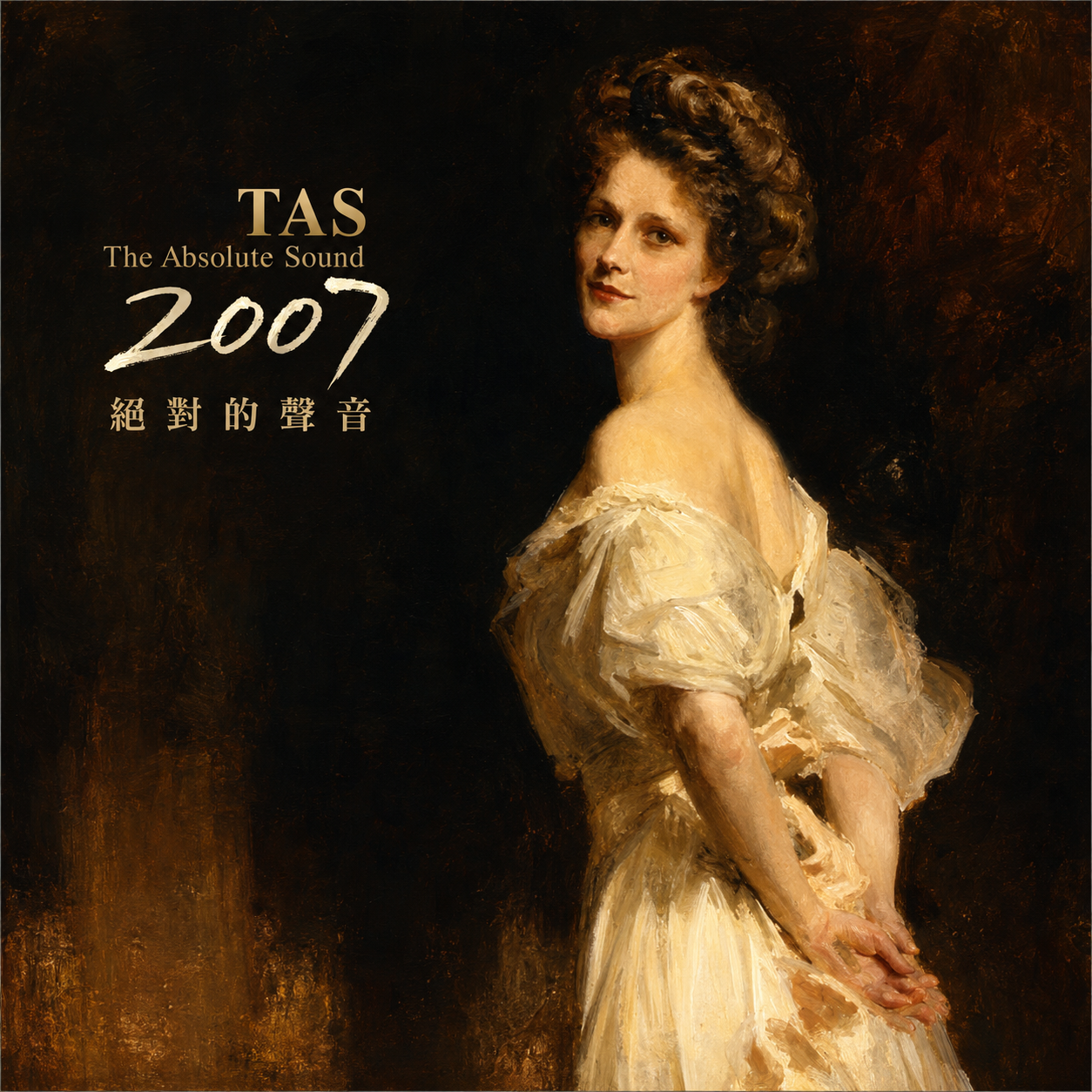
The Absolute Sound
2007
GREAT CHOICE: The Absolute Sound 2007!
Great music deserves to be discovered, enjoyed and shared.
CAN YOU SPARE A CUP OF COFFEE?
Audiophile-Streaming is a personal passion project, built with countless hours of discovering, selecting and sharing exceptional music.
I personally cover, without sponsors, the ongoing costs of hosting, software and subscriptions to keep the music discoveries coming. If you enjoy my work, your support is always appreciated.
A LITTLE THANK YOU IN RETURN
Just one coffee gives you lifetime access to the Coffee Club and all its playlists.
No subscriptions. No recurring fees.
The Absolute Sound 2007, A Luxurious Audiophile Journey Through Voices, Jazz and Acoustic Music
There are compilation albums that announce their intentions with spectacular effects, thunderous bass and recordings chosen mainly to impress during a brief hi-fi demonstration, but The Absolute Sound 2007 follows a more sophisticated path. This celebrated TAS audiophile album unfolds gradually, like a beautifully written novel whose characters reveal themselves chapter by chapter. Its fourteen carefully chosen performances move through intimate singer-songwriter music, expressive female vocals, elegant jazz and refined classical repertoire, creating a musical journey that rewards both serious listening and pure enjoyment.
Released as part of the acclaimed The Absolute Sound series from Aurora Music International, TAS 2007 represents everything collectors admire about a great audiophile reference album. The recording quality is spacious and revealing, the musical selection is varied without becoming disjointed, and the mastering allows voices and instruments to appear with warmth, clarity and convincing physical presence. Yet the album never behaves like a cold collection of speaker test tracks. Its sound quality serves the music so naturally that technical analysis soon gives way to atmosphere, emotion and storytelling.
For listeners searching for the best audiophile music for testing speakers, headphones, amplifiers, DACs and complete high-end audio systems, The Absolute Sound 2007 offers an exceptionally balanced programme. It can expose an aggressive treble response, an unfocused stereo image or a slow and uncontrolled bass performance, but it can also make a carefully assembled hi-fi system disappear entirely. When everything is correctly matched, the listener is no longer conscious of drivers, cables and digital converters. The room becomes quiet, the soundstage opens and the performers begin to appear.
Judith Owen Opens the Door to Conway Bay
The album begins with Judith Owen’s Conway Bay, an inspired opening that immediately establishes the intimate and reflective character of TAS 2007. Owen’s voice is presented with natural warmth, while the arrangement creates a spacious acoustic background that allows the performance to breathe. The recording does not force itself forward, but invites the listener to move closer and discover the subtle details hidden within the phrasing and instrumental texture.
Conway Bay is an outstanding female vocal reference track because it reveals whether a stereo system can reproduce intimacy without exaggeration. Owen’s voice should remain stable and clearly focused between the loudspeakers, but it should never sound artificially enlarged or detached from the accompaniment. A transparent midrange allows the listener to hear breath, texture and emotion, while a balanced treble response preserves clarity without adding harshness.
The track is equally revealing when played through high-quality audiophile headphones. A refined headphone system should reproduce the quiet ambience surrounding the voice, the small changes in volume and the natural decay of the instruments. Yet Conway Bay is far more than useful headphone test music. It is an elegant beginning to the album’s story, filled with atmosphere and quiet emotional weight.
Paris Through the Eyes of Ewen Carruthers
Ewen Carruthers continues the journey with Paris, a song that feels less like a conventional recording and more like a remembered scene. His voice carries the character of an experienced storyteller, while the acoustic setting allows every phrase to arrive with patience and purpose. The beauty of the performance lies in its restraint, because nothing appears exaggerated and nothing competes unnecessarily for attention.
Singer-songwriter recordings are especially valuable for testing midrange realism. The human voice and acoustic guitar occupy the frequency range where many loudspeakers reveal their strongest personality, and even a small coloration can change the emotional character of the performance. Through a balanced pair of high-end speakers, Carruthers should sound present and believable, with enough body to give the voice authority but enough openness to preserve its natural expression.
The guitar provides another demanding test. Each string needs a precise initial attack, followed by the warmth and resonance of the instrument’s wooden body. A system that emphasises only the leading edge may sound detailed but unnaturally thin, while excessive lower-midrange energy can make the guitar slow and indistinct. Paris rewards equipment that combines precision with tonal richness, making it one of the album’s finest acoustic reference recordings.
Barb Jungr Reimagines Kentucky Rain
Barb Jungr’s interpretation of Kentucky Rain introduces a deeper dramatic quality. Jungr has the rare ability to enter a familiar song and reshape it through phrasing, tone and emotional intelligence, allowing the listener to hear the lyrics from a different perspective. Her performance is powerful without becoming overstated, and the arrangement gives her enough space to communicate every subtle shift in feeling.
As audiophile female vocal music, Kentucky Rain can reveal the quality of an entire playback chain. The central image should be firm and dimensional, while the accompaniment must remain organised around the singer. Excessive brightness can make the vocal hard and expose sibilance unnaturally, but a system that is too warm may remove the expressive edge that gives the performance its character.
Through a transparent DAC and a well-controlled amplifier, Jungr’s voice gains texture and physical presence. The quiet moments remain clear, while stronger passages expand without strain. This combination of intimacy and dynamic freedom makes Kentucky Rain one of the most emotionally persuasive tracks on The Absolute Sound 2007.
The Moon Was Yellow and the Elegance of the Eddie Higgins Trio
The Moon Was Yellow brings the refined jazz language of the Eddie Higgins Trio into the collection. Higgins plays with elegance and control, allowing the melody to unfold naturally while the bass and drums provide a relaxed rhythmic foundation. The musicians sound completely comfortable with one another, and that effortless communication gives the recording its charm.
Piano is one of the most demanding instruments for any high-end audio system. Each note begins with a sharp mechanical strike, develops through a rich harmonic body and then fades slowly into the acoustic space. A lesser system may reproduce the melody but fail to convey the scale and resonance of the instrument. Through high-quality audiophile speakers, the piano should possess weight, brilliance and natural decay, with every part of the note remaining connected.
The recording is also excellent for testing jazz timing and bass definition. The rhythm section must remain clear without sounding separated from the piano, while the bass needs enough depth to support the performance without dominating it. The Moon Was Yellow demonstrates that the best audiophile jazz recordings do not need artificial drama. Their appeal lies in tonal accuracy, natural swing and the believable relationship between the musicians.
Eddie Higgins returns later with Vocalise, where the album enters a more lyrical and contemplative space. The performance allows the piano to sing, revealing the instrument’s ability to carry emotion without words. Vocalise is especially useful for evaluating low-level resolution, because the quiet decays and subtle dynamic changes can disappear when an audio system lacks transparency. On a refined setup, the notes seem to remain suspended in the room, fading into silence with remarkable grace.
Maucha Adnet and the Gentle Flow of Brazilian Music
Maucha Adnet’s These Foolish Things introduces a warm Brazilian atmosphere, combining vocal elegance with a relaxed rhythmic pulse. Her delivery is soft but expressive, while the accompaniment moves with the effortless grace associated with bossa nova and Brazilian jazz. The performance seems simple on the surface, but that apparent ease depends upon extremely precise musical timing.
A hi-fi system that sounds slow or heavy can remove the lightness from this kind of music. The rhythm must remain delicate but clearly defined, and the voice should float above the accompaniment without becoming disconnected from it. Through a well-balanced stereo system, These Foolish Things moves naturally, with every instrumental accent contributing to the gentle flow of the song.
This track is an excellent example of why audiophile sound quality should never be confused with exaggerated detail. The recording succeeds because everything is proportioned correctly. The vocal remains intimate, the instruments retain their individual textures and the soundstage creates space without appearing artificially wide. Better equipment does not make the performance more spectacular. It makes it more graceful.
Allan Taylor Returns Home
Allan Taylor’s Homestate is one of the central storytelling moments of The Absolute Sound 2007. Taylor’s deep and unmistakable voice carries experience, warmth and quiet authority, while the arrangement gives the song enough room to develop naturally. His recordings have long been appreciated by audiophiles because they combine excellent sound quality with lyrics that invite close attention, and Homestate continues that tradition.
The voice provides a particularly revealing test of lower-midrange accuracy. It must sound rich without becoming thick, and substantial without producing an artificial chestiness. A well-matched amplifier and pair of loudspeakers will reproduce Taylor with realistic scale, placing him clearly within the stereo image while preserving the subtle acoustic space around the performance.
The instrumental accompaniment is equally important. Acoustic strings should retain their individual texture, while the bass should provide weight and stability without slowing the song. When TAS 2007 is played through a transparent high-end audio system, Homestate becomes deeply immersive. Taylor no longer sounds like a voice emerging from two speakers, but like a performer standing within a real and believable environment.
A French Coastal Landscape in Au Large Du Gueveur
Louis Capart and Duo Balance bring French lyricism and maritime atmosphere to Au Large Du Gueveur. The performance has the feeling of a distant landscape remembered through music, with the voice and instrumentation combining to create a strong sense of place. Its emotional character differs from the British and American singer-songwriter recordings surrounding it, giving the album an international richness.
The recording is especially effective for testing soundstage depth and instrumental layering. The vocal should remain clearly positioned, while the surrounding instruments occupy their own spaces within the acoustic picture. A system with weak imaging may flatten these relationships, but a carefully configured stereo setup allows the performance to develop in front-to-back layers.
Room acoustics and speaker placement become particularly important with this kind of music. Small adjustments in toe-in or listening position may improve the focus of the voice and reveal more of the atmosphere behind the performers. Au Large Du Gueveur therefore works beautifully as speaker setup music, although its poetic character ensures that it never feels like a technical tool.
David Roth and a Timeless Question
David Roth’s extended interpretation of Where Have All the Flowers Gone is one of the album’s most substantial and reflective performances. Roth approaches the familiar song with respect, allowing its message to develop gradually rather than reducing it to a simple nostalgic reference. His voice is natural and direct, while the acoustic arrangement creates intimacy without sacrificing scale.
The extended playing time gives the recording enough space to reveal the continuity of a high-end audio system. Some equipment can sound impressive during a short demonstration but become tiring over a longer performance. This track exposes that weakness immediately. A bright or forward system may initially seem detailed, but its character can become intrusive as the song progresses. A balanced system allows the listener to remain immersed in the story from beginning to end.
Roth’s guitar also provides an excellent test of transient response and harmonic accuracy. The strings need clarity, but the body of the instrument must remain warm and resonant. When reproduced correctly, the guitar sounds physical rather than electronic, while Roth’s voice retains its humanity and natural scale.
Where Have All the Flowers Gone represents the deeper purpose of audiophile music. Improved resolution is not valuable merely because it reveals more studio information. It is valuable because it strengthens the meaning of the performance and brings the listener closer to the artist’s intention.
Carol Kidd Celebrates Judy Garland
Carol Kidd’s Judy Garland Medley stands among the most memorable highlights of The Absolute Sound 2007. Extending across several familiar melodies, the performance allows Kidd to display her remarkable control, warmth and emotional range. Her voice can move from intimacy to theatrical scale without losing its natural character, while the arrangement supports her with elegance.
Carol Kidd has long been a favourite among listeners searching for the best female vocal audiophile recordings, and this medley demonstrates why. Her phrasing is precise but never mechanical, her tone is rich without becoming heavy and her emotional expression remains convincing throughout the extended performance.
The track tests several aspects of a serious audio system. The voice must remain centred and stable, even when the arrangement grows larger. Dynamic passages should expand without compression, while quieter moments need enough low-level detail to preserve intimacy. A strong amplifier provides the necessary headroom, while transparent loudspeakers reproduce the unique texture of Kidd’s voice without adding harshness.
The Judy Garland Medley is also an ideal reference track for comparing digital sources. A refined DAC or SACD player may reveal additional ambience, smoother treble and more realistic vocal texture, but the best improvement is a greater sense of continuity. The medley begins to feel like a complete dramatic performance rather than a series of individual songs.
Traditional Scottish Beauty with Mick West
Mick West’s Ye Banks and Braes O’ Bonnie Doon returns the album to traditional folk music, where an exposed voice and simple melodic structure place enormous responsibility on the quality of the recording. There are few layers of production to disguise tonal imbalance, and the performance depends upon authenticity.
The voice should retain its natural character, including the small imperfections and textures that make it human. A system that is too analytical may emphasise these details unnaturally, while an overly smooth system can remove the individuality of the singer. The best audiophile system finds the balance, presenting the voice with honesty while preserving the emotional flow of the song.
The traditional material also gives TAS 2007 a timeless quality. The album may be associated with modern high-end audio and precision mastering, but its purpose is not to make every recording sound polished and contemporary. It allows each performance to retain its own history, cultural identity and atmosphere.
Simone and the Art of Keeping the Music Alive
Simone’s How Do You Keep the Music Playing introduces sophisticated vocal jazz near the end of the album. The song requires both technical control and emotional maturity, and Simone delivers it with warmth and elegance. Her voice moves naturally through the melody, while the arrangement provides a polished setting without overwhelming the performance.
This track is excellent for testing vocal dynamics and treble smoothness. The singer should remain clear as the intensity changes, and the upper register must retain openness without becoming sharp. The accompaniment should spread across a convincing stereo soundstage while leaving enough space for the vocal to remain the emotional centre.
Through reference headphones, the recording reveals subtle changes in breath and phrasing, while a pair of carefully positioned speakers creates a larger and more dimensional presentation. In either case, the success of the reproduction depends upon balance. The track should sound refined but alive, polished but never sterile.
Classical Refinement from Paganini and Beethoven
The classical selections bring another dimension to The Absolute Sound 2007. Paganini’s Terzetto in D Major for violin, cello and guitar creates a fascinating conversation between three instruments with very different tonal characters. The violin offers brilliance and speed, the cello provides warmth and depth, and the guitar contributes precise plucked attacks and wooden resonance.
A transparent high-end stereo system should keep all three instruments clearly identifiable while preserving the unity of the performance. Excessive treble energy can make the violin metallic, while uncontrolled lower frequencies may obscure the cello. The guitar needs enough definition to remain audible without sounding unnaturally forward. This makes the Paganini selection excellent classical music for testing speakers, headphones and amplifier control.
Beethoven’s Romance for Violin brings the album toward its conclusion with lyrical beauty and larger-scale classical expression. The solo violin must remain focused within the acoustic space, while the accompaniment develops around it with depth and stability. The best systems allow the instrument to sound brilliant without hardness, preserving both the energy of the bow and the warmth of the violin’s body.
These classical recordings demonstrate the versatility of TAS 2007. The album can move from intimate vocals and acoustic storytelling to chamber music and orchestral scale without losing its identity. The connection lies not in genre, but in recording quality and musical integrity.
An Essential Audiophile Reference Album
The Absolute Sound 2007 is an exceptionally complete album for testing a high-end audio system. Its vocal recordings reveal midrange transparency, sibilance control and centre-image stability. The acoustic performances test tonal accuracy, transient response and instrumental texture. The jazz selections examine timing, piano resonance and bass definition, while the classical works challenge treble smoothness, dynamic range and soundstage scale.
Listeners comparing loudspeakers will hear differences in imaging, tonal balance and depth. Those evaluating amplifiers may notice changes in bass control, headroom and musical flow. A better DAC or SACD player can reveal additional ambience, finer textures and more natural instrumental decay. Reference headphones may expose tiny recording details that remain less obvious through speakers.
Yet The Absolute Sound 2007 never allows these technical qualities to overshadow the music. Its greatest achievement is the way it transforms a collection of reference recordings into a continuous emotional journey. Each artist brings a different atmosphere, but the album maintains a sense of balance and purpose from Judith Owen’s opening notes to the classical finale.
Final Verdict
The Absolute Sound 2007 is a magnificent entry in the TAS audiophile series and a highly recommended addition to any serious music collection. It combines singer-songwriter intimacy, female vocal excellence, refined jazz and classical beauty within a programme that feels carefully composed rather than randomly assembled.
For listeners searching for the best audiophile album for testing speakers, high-quality vocal recordings, jazz reference music, acoustic guitar test tracks and beautifully recorded classical performances, TAS 2007 delivers everything expected from a premium release. Its mastering offers clarity, warmth and spacious stereo imaging, while its musical selection rewards repeated listening.
The album’s real success, however, lies in its ability to make excellent sound feel inseparable from excellent music. Judith Owen creates intimacy, Ewen Carruthers and Allan Taylor bring storytelling and experience, Barb Jungr transforms a familiar song, Eddie Higgins provides late-night jazz elegance, David Roth adds reflection, and Carol Kidd delivers a vocal performance of remarkable scale and emotion.
When reproduced through a carefully balanced hi-fi system, The Absolute Sound 2007 becomes more than a collection of audiophile test tracks. The loudspeakers seem to disappear, the boundaries of the room begin to fade and fourteen individual performances become one coherent journey through voices, instruments and human emotion.
For audiophiles, music lovers and collectors of the legendary TAS series, The Absolute Sound 2007 is not simply recommended. It is an essential reference album that deserves to be heard slowly, repeatedly and with complete attention
