
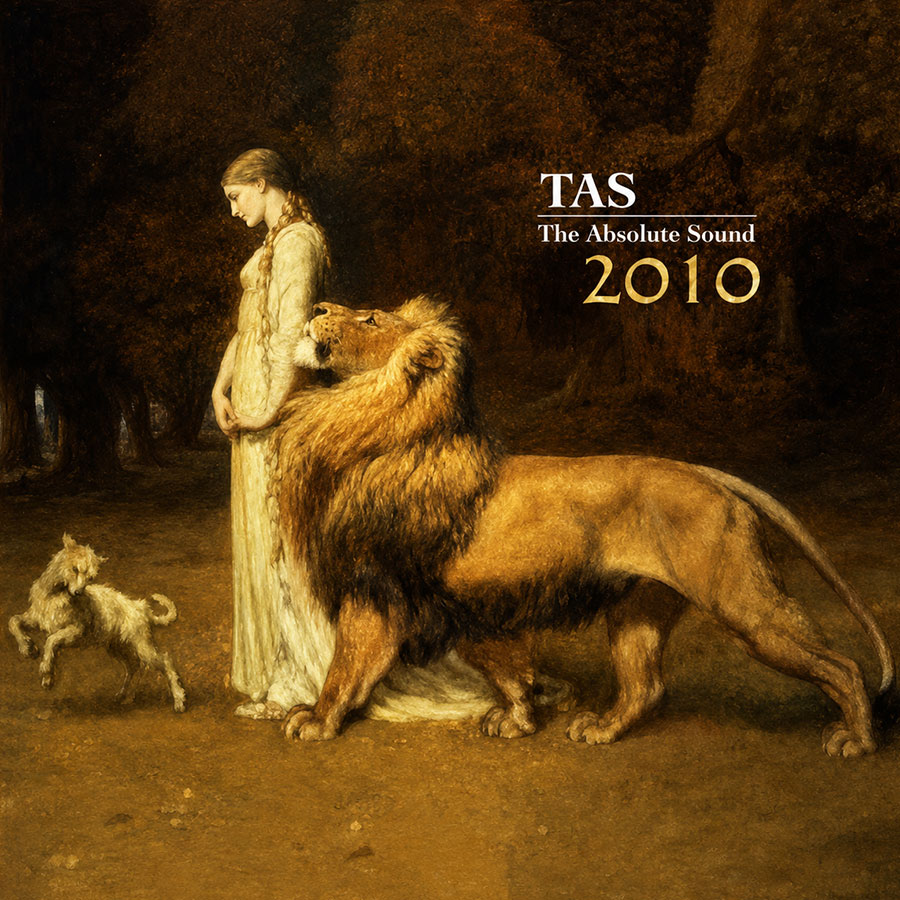
The Absolute Sound
2010
GREAT CHOICE: The Absolute Sound 2010!
Great music deserves to be discovered, enjoyed and shared.
CAN YOU SPARE A CUP OF COFFEE?
Audiophile-Streaming is a personal passion project, built with countless hours of discovering, selecting and sharing exceptional music.
I personally cover, without sponsors, the ongoing costs of hosting, software and subscriptions to keep the music discoveries coming. If you enjoy my work, your support is always appreciated.
A LITTLE THANK YOU IN RETURN
Just one coffee gives you lifetime access to the Coffee Club and all its playlists.
No subscriptions. No recurring fees.
The Absolute Sound 2010, A Magnificent Audiophile Voyage Through Voices, Jazz and Classical Beauty
There are compilation albums that exist merely to gather attractive recordings in one convenient place, and then there are collections that seem to have been planned with the patience of an author, the sensitivity of a musician and the demanding ears of a lifelong audiophile. The Absolute Sound 2010 belongs confidently to the second category. This elegant chapter in the celebrated TAS audiophile series does not present itself as a stack of unrelated speaker test tracks, but unfolds as a continuous musical journey in which every voice, instrument and acoustic space introduces another part of a larger story.
From the opening performance by Barb Jungr to the dramatic classical conclusion, The Absolute Sound 2010 moves with remarkable assurance through intimate vocals, acoustic storytelling, sophisticated jazz, atmospheric folk music and large-scale orchestral sound. Its fourteen carefully selected tracks offer enough tonal variety and dynamic contrast to challenge a serious high-end audio system, yet the album never allows technical performance to become more important than musical expression. It can reveal the strengths of audiophile speakers, headphones, amplifiers, DACs, SACD players and network streamers, but its real triumph arrives when those components begin to disappear and the listener is left alone with the performers.
That balance between reference-quality sound and genuine emotional content is what makes The Absolute Sound 2010 such an essential audiophile album. Many demonstration discs can create a spectacular first impression through exaggerated bass, brilliant percussion or unusually wide stereo effects, but they often become tiring once their technical purpose has been understood. TAS 2010 follows a more refined path. Its sound quality reveals itself gradually through the natural weight of a voice, the decay of a piano note, the breath within a saxophone phrase and the quiet ambience surrounding an acoustic guitar. The album does not shout about its recording quality. It allows the music to prove it.
Barb Jungr Opens the Album in Darkness and Reflection
The journey begins with Barb Jungr’s interpretation of Not Dark Yet, and the choice immediately gives The Absolute Sound 2010 an atmosphere of maturity and emotional depth. Jungr is not the kind of singer who merely reproduces a familiar melody. She enters a song, studies its emotional centre and reshapes it through phrasing, tone and dramatic control. Her performance feels reflective rather than defeated, carrying a quiet intensity that draws the listener closer instead of demanding attention through volume.
As an audiophile female vocal recording, Not Dark Yet is exceptionally revealing. Jungr’s voice should appear with realistic size and weight between the loudspeakers, surrounded by enough air to feel part of a genuine acoustic environment. A system with an aggressive upper midrange may make the performance sound hard or overly dramatic, while excessive warmth can hide the subtle details that give her interpretation its personality. Through a balanced high-end stereo system, every phrase remains intelligible and expressive without becoming artificially enlarged.
The arrangement also tests soundstage depth and low-level resolution. The instruments surrounding the singer are not simply placed beside her in a flat line, but appear to occupy layers within the recording. A refined DAC or SACD player can uncover the small reverberations and tonal shades that create this depth, while a capable amplifier preserves the difference between the quietest phrases and the stronger emotional peaks. Yet the technical qualities never distract from the meaning of the song. The better the system performs, the more human Jungr becomes.
Allan Taylor and the Silence of Midnight Call
Allan Taylor follows with Midnight Call, bringing the unmistakable authority of an experienced storyteller into the collection. His deep voice has long been valued by audiophiles because it combines warmth, texture and natural presence, but its importance reaches far beyond its usefulness as a test signal. Taylor sings as though every word has been considered before it is released, allowing the song to unfold with the deliberate pace of a memory revisited in the quietest hours of the night.
Midnight Call is outstanding acoustic music for testing speakers because the recording places the voice and guitar under an unforgiving light. The lower midrange must carry enough weight to make Taylor sound physically present, yet it must remain controlled so that his voice does not become thick or exaggerated. The guitar requires an equally careful balance. Every string should begin with a precise attack, followed by the resonance of the wooden body and a gradual decay into the surrounding silence.
A lesser system may reproduce the notes while losing the atmosphere between them. A more transparent audiophile system reveals that the pauses are part of the performance, giving the lyric space to settle and the guitar time to breathe. Speaker placement becomes especially important, because the voice should remain firmly focused while the acoustic environment extends naturally behind it. When the setup is correct, Midnight Call no longer appears to come from two loudspeakers. It feels as though a performer has entered the room and begun to tell a private story.
Carol Kidd and the Art of Vocal Intimacy
Carol Kidd’s He Won’t Send Roses continues the album’s exploration of the human voice, but her performance introduces a softer and more vulnerable emotional colour. Kidd’s ability to combine technical control with natural warmth has made her recordings favourites among listeners searching for the best female vocal audiophile music, and this track demonstrates why her voice remains such a powerful reference for testing midrange transparency.
The vocal image should appear stable and dimensional, with enough body to sound human but enough openness to reveal breath, phrasing and the subtle movement of emotion. An overly forward loudspeaker may push Kidd too close to the listening position, while a recessed midrange can weaken the intimacy of the performance. The ideal reproduction places her within a believable space, close enough to communicate directly but never disconnected from the musicians around her.
He Won’t Send Roses also reveals the importance of treble smoothness. Sibilants must remain clear without becoming exaggerated, and the fine harmonic details in the accompaniment should possess air without acquiring an artificial brightness. Through high-quality audiophile headphones, these details become especially apparent, but a carefully positioned pair of stereo speakers creates the more convincing sense of physical presence. Kidd does not merely occupy the centre of the soundstage. She appears to belong to it.
Quien Sera and the Seductive Pulse of the Romantic Jazz Trio
John Di Martino and the Romantic Jazz Trio change the direction of the album with Quien Sera, replacing vocal reflection with rhythm, elegance and sophisticated Latin jazz. The familiar melody moves with relaxed confidence, supported by piano, bass and percussion that communicate through timing rather than spectacle. The performance is polished but never cold, and its rhythmic grace provides a welcome contrast to the intimate opening sequence.
Quien Sera is ideal jazz music for testing speakers because it reveals whether an audio system can preserve swing and musical momentum. The piano should possess brilliance and weight, the bass must remain tuneful and controlled, and the percussion needs enough speed to sound crisp without becoming thin. When these elements are reproduced correctly, the trio moves as a single musical body. When timing is poor, the same recording can sound fragmented and strangely lifeless.
Piano reproduction is particularly important. Every note contains the mechanical strike of the key, the harmonic richness of the strings and the resonance of the instrument’s body. A system that emphasises only the attack may sound impressive for a few moments, but it fails to recreate the scale and warmth of a real piano. On The Absolute Sound 2010, Quien Sera rewards loudspeakers and amplifiers capable of connecting those elements into a complete tone.
The stereo image should feel open but natural, giving each musician a clearly defined position without pulling the ensemble apart. The result is an audiophile jazz recording that can test instrument separation, bass definition and transient response while remaining light, graceful and irresistibly enjoyable.
Everywhere and the Emotional Directness of Jimmy Jørgensen
Jimmy Jørgensen’s Everywhere introduces a more contemporary singer-songwriter atmosphere. His voice carries texture and character, avoiding the polished perfection that can sometimes make modern vocal recordings feel anonymous. The song communicates with directness, and the arrangement gives it enough scale to expand beyond the intimate acoustic setting of the earlier tracks.
This broader production provides another useful challenge for a complete hi-fi system. The vocal must remain clear within a denser musical background, while the instruments should retain separation and tonal identity. A system lacking resolution may compress the arrangement into a flat mass, but transparent audiophile speakers allow the layers to develop around the singer without weakening the unity of the song.
Bass performance also becomes more important. Low frequencies should give the track foundation and momentum without obscuring the midrange. An amplifier with good control will reproduce the bass with pitch and definition rather than simple weight, allowing the rhythm to support the vocal instead of competing against it. Everywhere demonstrates that high-quality reference music does not need to sound delicate or minimal. A fuller arrangement can be equally revealing when its elements are captured and reproduced with care.
French Elegance in Comment Te Dire Adieu
Alice Carreri and String Swing bring unmistakable French charm to Comment Te Dire Adieu. The performance has lightness, sophistication and rhythmic ease, creating the atmosphere of a stylish European café without descending into nostalgia or imitation. Carreri’s vocal delivery is elegant and controlled, while the string accompaniment moves with energy and precision.
The track is particularly effective for evaluating treble quality and instrumental texture. Strings must retain their brilliance without becoming sharp, while the voice needs enough warmth to remain natural. A bright system can turn the arrangement brittle, but excessive softness removes the rhythmic detail that gives the performance its sparkle. The best high-end audio system finds the point where clarity and refinement coexist.
Comment Te Dire Adieu also provides an excellent stereo imaging test. The singer should remain clearly placed within the centre of the recording, while the accompanying musicians spread around her in a coherent semicircle. The soundstage should feel open but not artificially oversized. When reproduced correctly, the track possesses a visual quality, allowing the listener to imagine the positions of the performers and the space in which they are playing.
Maeve O’Boyle and the Quiet Power of Pray It Never Happens
Pray It Never Happens by Maeve O’Boyle returns the album to acoustic intimacy, but the emotional tone is different from the nocturnal storytelling of Allan Taylor. O’Boyle’s voice has youth, clarity and vulnerability, and the arrangement gives those qualities room to develop without unnecessary decoration. The performance feels personal and immediate, as though the song is being shared rather than presented.
The recording is an excellent test of female vocal realism. O’Boyle’s voice should sound clear and open, but never thin. The higher frequencies require smoothness, while the midrange needs enough body to preserve the emotional weight of the lyric. Through a transparent system, small changes in breath and emphasis become audible, yet they remain integrated into the complete performance rather than appearing as isolated studio details.
The acoustic accompaniment also demonstrates the importance of natural instrumental decay. Notes should not end abruptly at the edge of the loudspeaker. They should fade into the recording space, creating a quiet atmosphere around the singer. A refined digital source can reveal this ambience, while a low-noise amplifier allows it to remain audible at modest listening levels. Pray It Never Happens shows how audiophile sound quality can deepen emotional involvement without turning the music into a laboratory exercise.
Steve Dobrogosz and the Piano Conversation of Two of Us
Steve Dobrogosz’s Two of Us gives the piano another central role, but the character of the music differs from the rhythmic jazz of Quien Sera. Here the instrument becomes more reflective and lyrical, carrying the melody with a sense of intimacy that invites close attention. The performance is spacious enough to reveal the acoustic around the piano, allowing every note to develop and disappear naturally.
A convincing piano recording requires exceptional tonal balance. The lower register must possess weight without becoming boomy, while the upper notes need clarity without hardness. The middle range should connect both extremes, preserving the physical scale of the instrument. Through a balanced high-end stereo system, Two of Us creates the impression of a real piano occupying a real acoustic space rather than a series of notes projected from two cabinets.
The track is also excellent for comparing DACs and digital sources. A more refined component may reveal smoother decay, greater harmonic complexity and a quieter background, but the improvement should never make the piano sound artificially detailed. The goal is not to hear the recording process. It is to hear more of the instrument and the musician’s touch.
Paul Banks and the Natural Humanity of Grace
Paul Banks contributes Grace, a song whose simplicity becomes one of its greatest strengths. His voice and acoustic accompaniment create an honest, unforced performance, and the recording avoids the excessive polish that can remove character from singer-songwriter music. The sound feels close enough to establish intimacy, yet spacious enough to allow the song to breathe.
Grace is superb acoustic guitar test music. The strings should possess speed and definition, but their sound must also include the warmth of the guitar’s body. An analytical system may emphasise the pluck while neglecting resonance, whereas an overly warm setup can blur individual notes. The best reproduction combines both qualities, creating an instrument that sounds physical and tonally complete.
Banks’s voice requires similar balance. Its natural texture should remain intact, including the small imperfections that give it individuality. A revealing high-end audio system should not polish away those characteristics or exaggerate them. It should present the performer honestly. This quality of honesty lies at the heart of The Absolute Sound 2010, whose recordings repeatedly demonstrate that realism is more compelling than artificial perfection.
Way Down in the Mines and a Descent into Folk Atmosphere
Carl Cleves and Parissa Bouas bring a darker folk atmosphere with Way Down in the Mines. The song possesses a strong sense of place, using voice, rhythm and acoustic texture to suggest physical labour, distance and underground space. It is one of the album’s most atmospheric selections, and its storytelling gives TAS 2010 another emotional dimension.
The combination of male and female voices provides a valuable test of tonal differentiation. Each singer should retain an individual character, and the audio system must preserve those differences without favouring one voice over the other. The arrangement should feel layered and spacious, with enough depth to support the atmosphere suggested by the title.
Low-frequency control is important, but the recording does not depend upon exaggerated bass. Instead, the lower register gives the music weight and seriousness. A well-controlled amplifier allows those frequencies to develop without clouding the voices, while transparent speakers reveal the instrumental textures surrounding them. Way Down in the Mines demonstrates how soundstage depth and tonal accuracy can serve narrative meaning, creating a place rather than merely a collection of sounds.
Winter Light with Maryse Letarte
Maryse Letarte’s Ô Traîneau Dans Le Ciel introduces delicacy, colour and a dreamlike quality. The French vocal and graceful arrangement bring a sense of winter light to the album, creating an atmosphere that feels suspended between intimacy and fantasy. Letarte’s voice is clear and expressive, requiring a system capable of preserving air without becoming bright.
The track is excellent for evaluating high-frequency refinement. Small instrumental details should sparkle gently, while the vocal remains smooth and centred. A harsh tweeter or aggressive digital source can quickly destroy the magic of the performance, but a balanced setup allows the upper frequencies to feel open and luminous.
Stereo width also plays an important role. The recording should extend beyond the loudspeakers while maintaining focus at the centre. The surrounding details create a broad, almost cinematic space, yet the performance never feels oversized. Ô Traîneau Dans Le Ciel is one of those recordings that can make a carefully configured listening room seem to disappear, replacing physical walls with atmosphere.
Josefine Cronholm and a New Shade of True Colors
Josefine Cronholm and IBIS approach True Colors with subtlety and restraint, allowing the famous melody to reveal a more intimate emotional character. Familiar songs are often useful for testing audio equipment because the listener already knows their general shape, making differences in interpretation and recording quality easier to recognise. Cronholm’s version rewards attention by avoiding unnecessary drama and allowing her individual vocal tone to guide the performance.
The voice should remain natural, detailed and stable within the soundstage. Background instruments need separation, but they must continue to support the singer as part of a unified arrangement. A transparent DAC can reveal quiet ambient information and finer tonal shading, while quality speakers preserve the balance between vocal intimacy and instrumental space.
True Colors is especially effective for testing headphones. Reference headphones should reveal breath, texture and low-level detail without pushing the singer unnaturally close. The best models allow the recording to retain air and scale, proving that headphone imaging can be intimate without becoming confined. Yet the emotional success of the track remains independent of equipment. Cronholm’s performance feels sincere, and that sincerity gives the recording lasting value.
Artur Pizarro and the Grand Architecture of Albéniz
After a long journey through voices, folk and jazz, The Absolute Sound 2010 expands into classical grandeur with Artur Pizarro’s performance from Albéniz’s Iberia. The piano becomes orchestral in scale, filled with rhythmic complexity, tonal colour and dramatic contrast. This is not merely a quiet instrument in a small room, but a complete musical landscape created through two hands and a keyboard.
The recording challenges every part of the audio system. Rapid passages test transient speed and clarity, powerful lower-register notes examine bass control, and delicate high notes reveal treble refinement. The instrument must remain coherent across its full range, with no single register detached from the others. A capable amplifier provides the dynamic headroom needed for the larger moments, while transparent loudspeakers preserve the complexity of the performance without turning it into hardness.
Soundstage depth is equally important. Although there is only one primary instrument, the piano should possess real physical dimensions. The listener should sense the body of the instrument, the acoustic environment around it and the distance between direct sound and reverberation. Pizarro’s performance transforms TAS 2010 from a collection of intimate reference tracks into an album capable of genuine scale and drama.
Mendelssohn Brings the Journey to a Majestic Conclusion
The album closes with the final movement from Mendelssohn’s Violin Concerto in E Minor, performed by Joseph Swensen and the Scottish Chamber Orchestra. It is an inspired conclusion, filled with speed, elegance and forward momentum. After the reflective voices and carefully observed acoustic performances of the preceding tracks, the classical finale opens the soundstage and allows the album to end with brilliance.
The violin requires a delicate balance between energy and beauty. It must cut through the orchestral texture without becoming sharp, while its rapid passages need clarity and control. The accompaniment must retain depth and organisation as the music grows more complex, and the amplifier must provide enough power for the dynamic peaks to expand without strain.
This recording is exceptional classical music for testing speakers because it combines instrumental texture, orchestral scale, dynamic range and stereo imaging. The soloist should appear clearly in front of the ensemble, yet remain acoustically connected to it. The orchestra should extend in width and depth, with individual sections remaining recognisable even during the fastest passages.
When reproduced through a world-class high-end audio system, the conclusion is exhilarating. The loudspeakers seem to vanish, the orchestra expands into the room and the violin moves with breathtaking freedom. The album does not simply stop. It arrives at a destination.
Final Verdict
The Absolute Sound 2010 is a magnificent audiophile compilation and one of the most balanced, varied and musically rewarding entries in the TAS series. Its fourteen recordings travel naturally through female vocals, acoustic storytelling, jazz piano, French song, atmospheric folk music and classical virtuosity, creating a programme that feels carefully composed rather than randomly assembled.
It is enthusiastically recommended for listeners searching for the best audiophile album for testing speakers, high-quality female vocal recordings, acoustic guitar reference tracks, jazz music with a spacious soundstage and classical performances capable of challenging serious hi-fi equipment. The album reveals midrange transparency, bass definition, stereo imaging, treble smoothness, dynamic control and instrumental realism, making it equally useful for evaluating loudspeakers, headphones, amplifiers, DACs and digital sources.
Its lasting importance, however, lies beyond technical performance. Barb Jungr brings emotional depth to Not Dark Yet, Allan Taylor transforms Midnight Call into a private story, Carol Kidd offers intimate vocal beauty and John Di Martino supplies elegant jazz rhythm. Maeve O’Boyle adds vulnerability, Paul Banks brings acoustic honesty, Josefine Cronholm reimagines a familiar song and the classical finale opens the soundstage with magnificent energy.
When The Absolute Sound 2010 is played through a carefully balanced high-end stereo system, the equipment gradually withdraws from attention. The voices become more human, the instruments gain physical shape and the recording spaces begin to feel real. Fourteen separate tracks then become a single flowing experience, guiding the listener from darkness and reflection toward colour, movement and orchestral light.
For audiophiles, collectors of the Aurora Music International TAS series and music lovers who believe that exceptional sound quality should always serve emotional communication, The Absolute Sound 2010 is not merely recommended. It is an essential reference album, a beautifully curated musical journey and a recording that deserves to be heard slowly, repeatedly and with complete attention.
