
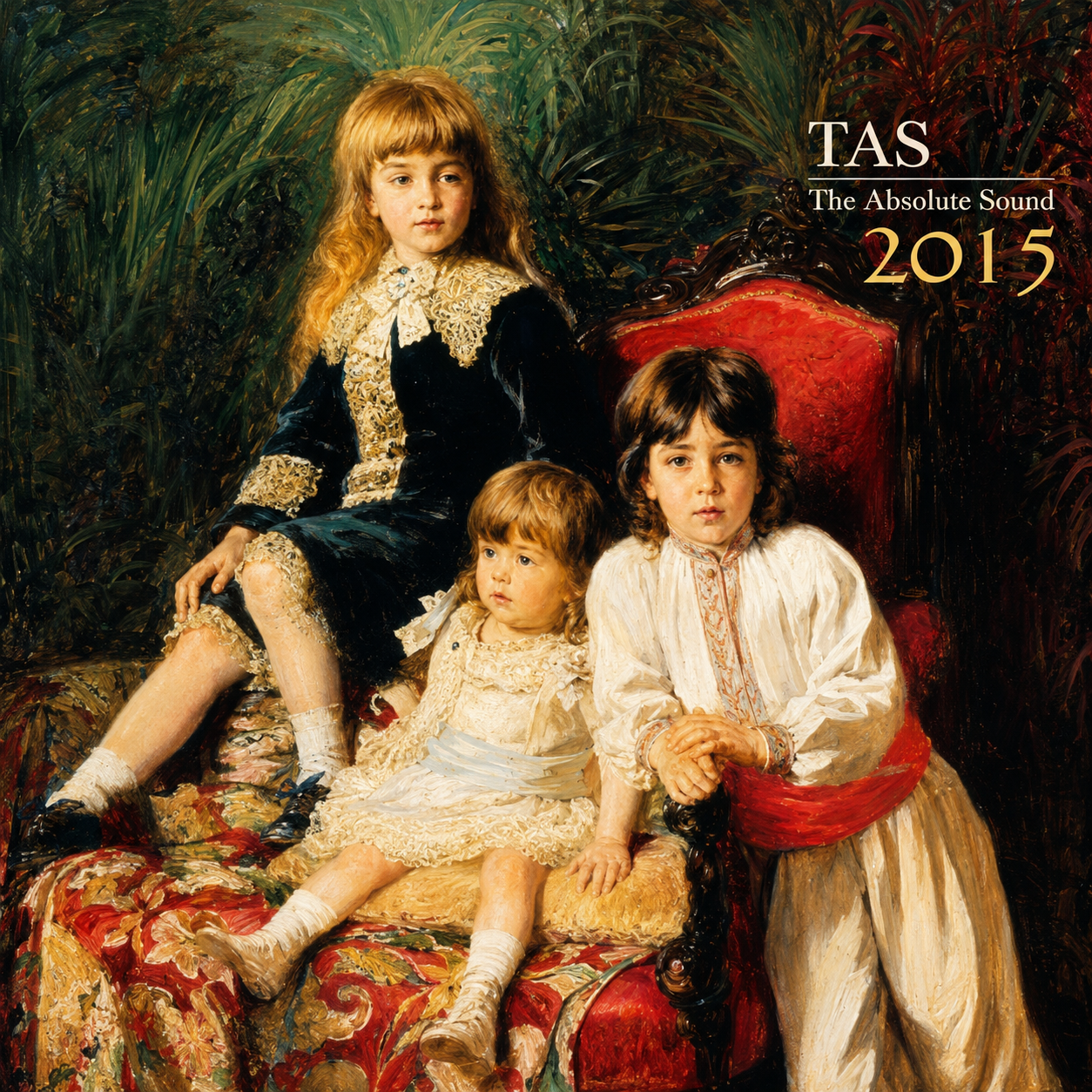
The Absolute Sound
2015
GREAT CHOICE: The Absolute Sound 2015!
Great music deserves to be discovered, enjoyed and shared.
CAN YOU SPARE A CUP OF COFFEE?
Audiophile-Streaming is a personal passion project, built with countless hours of discovering, selecting and sharing exceptional music.
I personally cover, without sponsors, the ongoing costs of hosting, software and subscriptions to keep the music discoveries coming. If you enjoy my work, your support is always appreciated.
A LITTLE THANK YOU IN RETURN
Just one coffee gives you lifetime access to the Coffee Club and all its playlists.
No subscriptions. No recurring fees.
The Absolute Sound 2015, A Beautiful Audiophile Journey Through Memory, Music and Exceptional Sound
There are audiophile albums that impress through sheer power, sending enormous drums and deep bass through the listening room in an obvious display of technical ability, and there are albums that take a more refined path, allowing their quality to reveal itself gradually through atmosphere, emotion and musical truth. The Absolute Sound 2015 belongs firmly to the latter category. This magnificent entry in the celebrated TAS audiophile series unfolds like a beautifully written book, beginning with memories of childhood, travelling through jazz, folk, acoustic storytelling and classical music, and finally arriving at a closing performance filled with warmth, longing and quiet dignity.
Released by Aurora Music International, The Absolute Sound 2015 presents fourteen carefully selected recordings that combine exceptional sound quality with genuine musical character. The album brings together artists from different cultures and traditions, including legendary double bassist Gary Karr, jazz singer and bassist Nicki Parrott, Danish vocalists Malene Mortensen and Veronica Mortensen, pianist Peter Rösel and mezzo-soprano Karen Cargill. Rather than sounding like a random collection of audiophile test tracks, the album develops naturally, with every performance adding another emotional colour to a continuous and deeply satisfying listening experience.
For anyone searching for the best audiophile album for testing speakers, headphones, amplifiers, DACs, CD players or SACD systems, The Absolute Sound 2015 is an outstanding choice. Its recordings reveal stereo imaging, soundstage depth, bass definition, midrange transparency, treble smoothness and dynamic range with remarkable clarity. Yet its greatest achievement lies beyond technical performance, because when the album is reproduced through a carefully balanced high-end audio system, the equipment gradually disappears and the listener becomes completely absorbed by the music.
Gary Karr Opens the Album with A Red Dragonfly
The journey begins with Gary Karr’s interpretation of A Red Dragonfly, a Japanese melody filled with memories of childhood, evening light and distant landscapes. Karr’s double bass possesses extraordinary richness and authority, while the organ gives the recording a majestic foundation. Together, the instruments create an atmosphere that is intimate in emotion but enormous in scale.
The double bass is reproduced with a depth that immediately tests the low-frequency performance of any hi-fi system. Its notes must possess weight, texture and natural resonance without becoming slow or overwhelming. A poorly controlled system may turn the instrument into a vague rumble, but a capable amplifier and pair of high-end speakers reveal the movement of the strings, the wooden body of the instrument and the air surrounding every sustained note.
A Red Dragonfly is therefore exceptional bass test music, although its emotional beauty quickly makes technical analysis feel secondary. Karr does not use the instrument merely to demonstrate its power. He makes it sing, transforming the low register into a voice filled with tenderness and nostalgia. The opening establishes the central character of TAS 2015 perfectly, because the recording is technically spectacular while remaining warm, lyrical and deeply human.
The Fragile Folk Beauty of Silver Dagger
Shannon Lambert-Ryan’s Silver Dagger changes the atmosphere from instrumental grandeur to intimate folk storytelling. Her voice appears with clarity and natural presence, while the arrangement leaves enough space around the performance for every phrase to breathe. The song carries sadness and emotional restraint, creating the sensation of an old story passed carefully from one generation to another.
As an audiophile female vocal recording, Silver Dagger is highly revealing. The voice should remain focused between the loudspeakers without appearing artificially enlarged, and subtle details of breath and phrasing must be audible without becoming exaggerated. A bright audio system may add unpleasant hardness, while excessive warmth can remove the openness and vulnerability that give the performance its character.
Through transparent speakers or reference headphones, Lambert-Ryan seems to stand within a believable acoustic environment. The instruments retain their natural textures, the central image remains stable and the surrounding silence becomes part of the music. This is high-fidelity sound at its most persuasive, not because it constantly announces its quality, but because it shortens the emotional distance between artist and listener.
Nicki Parrott Brings Sunshine into the Listening Room
Nicki Parrott’s version of Here Comes the Sun introduces warmth, optimism and rhythmic grace. The famous Beatles composition is immediately familiar, yet Parrott’s jazz interpretation gives it a fresh and elegant personality. Her soft vocal delivery combines beautifully with the relaxed accompaniment, making the track feel both comforting and newly discovered.
The recording provides an excellent test of tonal balance. Parrott’s voice should sound open and intimate without becoming thin, while the double bass needs definition and pitch rather than exaggerated low-frequency power. The rhythm must remain light and effortless, because a slow or heavy system can easily remove the joy from the performance.
On a properly configured stereo setup, Here Comes the Sun creates a wide but natural soundstage. Parrott remains clearly positioned in the centre, while the instruments extend around her without losing their musical connection. It is the kind of audiophile jazz recording that can reveal differences between DACs, amplifiers and speakers, yet its relaxed charm ensures that the listener never feels trapped inside a technical demonstration.
The performance is a moment of pure musical light, offering welcome relief after the melancholy of Silver Dagger. It also demonstrates the intelligence behind the album’s sequencing, as The Absolute Sound 2015 moves between emotions with the confidence of a carefully constructed story.
A Familiar Song Enters a New World
Joe Stilgoe and Liane Carroll bring wit, personality and vocal chemistry to I Just Wasn’t Made for These Times. Their interpretation possesses the spontaneity of musicians responding to one another in real time, giving the familiar composition a lively and distinctly human quality.
Duet recordings are demanding because the audio system must preserve two separate vocal identities within the same acoustic space. Stilgoe and Carroll should remain clearly distinguishable, yet they must never sound disconnected. Their voices need realistic size and tonal character, while the accompaniment maintains rhythm and depth around them.
This track is excellent for evaluating midrange transparency, stereo focus and dynamic expression. The singers move between quieter phrases and more energetic moments, and a capable amplifier allows those changes to develop without compression. Through a transparent high-end audio system, the performance feels immediate and spontaneous, as though the musicians are enjoying the song in the listening room rather than presenting a carefully manufactured studio product.
The New York Trio and the Sophistication of Begin the Beguine
Begin the Beguine by the New York Trio introduces polished jazz elegance. The familiar Cole Porter melody moves with refinement and natural swing, carried by a piano that possesses brightness, weight and rhythmic authority. The bass and drums provide a beautifully controlled foundation, allowing the performance to feel relaxed without losing momentum.
Piano is one of the most difficult instruments to reproduce convincingly because every note contains a sharp initial attack, a complex harmonic body and a gradual decay. A lesser system may produce the melody clearly but fail to recreate the physical scale of the instrument. Through high-quality audiophile speakers, the piano gains dimension, resonance and believable weight.
The track is equally useful for testing bass control and musical timing. The lower frequencies must remain tuneful and articulate, while the percussion needs speed and texture. When the system is performing correctly, the trio does not sound like three separate instruments arranged across a technical stereo image. It sounds like a group of musicians breathing and moving together.
Begin the Beguine is outstanding audiophile jazz for testing speakers, but it is also simply a graceful performance that invites repeated listening. Its sophistication never feels cold, and its technical precision remains inseparable from its musical charm.
Malene Mortensen and the Warmth of The Rest of Mine
Malene Mortensen brings emotional intimacy to The Rest of Mine, a vocal performance filled with warmth, tenderness and quiet control. Her voice occupies the centre of the recording with natural authority, while the surrounding instruments create a soft and carefully layered background.
Mortensen’s vocal tone is ideal for evaluating the midrange of a high-end audio system. Her voice should retain body and warmth without becoming overly dark, while the upper register needs clarity without sharpness. The finest systems preserve small variations in phrasing and volume, allowing the emotional meaning of the song to emerge without forcing attention toward recording details.
The Rest of Mine also demonstrates the importance of long-term listening comfort. Some audio systems initially sound impressive because they emphasise brightness and detail, but they become tiring during intimate vocal music. A well-balanced system allows Mortensen’s performance to remain smooth, open and emotionally convincing from beginning to end.
This is one of the album’s most inviting female vocal recordings, combining reference-quality sound with the intimacy of a private confession.
Into the Light with Carl Cleves and Parissa Bouas
Carl Cleves and Parissa Bouas bring a natural acoustic character to Into the Light. Their voices and instruments create an atmosphere of openness and human connection, providing another change of perspective within the album’s journey.
The recording is especially effective for testing acoustic guitar reproduction. Each string requires a precise attack, but the wooden body must add resonance and warmth. A system that emphasises only the initial pluck may sound detailed but unnatural, while excessive lower-midrange energy can blur the instrument and weaken its rhythm.
The voices should remain individual and clearly positioned, yet their relationship must feel natural. A transparent audio system reveals differences in tone and texture without separating the performers into isolated technical objects. Through carefully placed speakers, Into the Light develops a convincing sense of depth, with the musicians appearing inside a quiet and believable recording space.
The performance reminds the listener that the most successful audiophile recordings often rely on simplicity. When a voice, a guitar and a carefully preserved acoustic environment are presented honestly, the result can be more impressive than the largest orchestral production.
Ranagri Brings Mystery and Movement
Spooky International by Ranagri adds Celtic colour, rhythmic energy and instrumental imagination to The Absolute Sound 2015. Its combination of folk traditions and contemporary arrangement creates a performance that feels adventurous, textured and alive.
Traditional instruments quickly expose problems with treble quality and transient response. Strings and percussion must remain energetic without becoming aggressive, while the rhythmic foundation needs enough control to keep the arrangement moving. A slower system may make the track sound crowded, but responsive loudspeakers and a capable amplifier preserve its vitality.
The recording also creates a broad stereo image, with instrumental details appearing across different layers of the soundstage. When the listening room and speaker placement are correct, the music extends beyond the loudspeakers while retaining a focused centre. Spooky International becomes physical and immersive, making it one of the album’s most enjoyable tracks for testing stereo imaging and musical timing.
Veronica Mortensen and the Lies of Handsome Men
Veronica Mortensen’s performance of Lies of Handsome Men brings late-night sophistication and emotional intelligence into the collection. Her voice is rich, expressive and carefully controlled, transforming the song into a portrait of romance, disappointment and experience.
This is another superb female vocal test track. Mortensen’s voice should appear dimensional rather than flat, with enough lower-midrange body to sound human and enough upper-frequency openness to preserve subtle detail. Sibilants must remain natural, and the accompaniment should provide depth without distracting from the lyric.
The song also demonstrates the importance of interpretation. Mortensen does not merely sing the words accurately. She gives them personality, suggesting an entire history behind every phrase. A transparent audio system allows those interpretive details to remain audible, making the performance more emotionally convincing rather than simply more technically impressive.
Jimmy Jørgensen Keeps It Honest with Simple Man
Simple Man by Jimmy Jørgensen introduces a rougher and more direct vocal character. His voice carries grain, personality and lived experience, providing a useful contrast with the smoother female vocal recordings that surround it.
A revealing audio system should preserve this texture without exaggerating it. Equipment that is too soft can remove the individuality of the singer, while an aggressive system may make the vocal sound harsh. The ideal reproduction finds the balance, presenting Jørgensen honestly and naturally.
The arrangement also tests rhythmic control and instrumental separation. Bass, drums and accompanying instruments need enough definition to create momentum, but the recording must remain coherent. When reproduced through a balanced high-end stereo system, Simple Man feels grounded, powerful and emotionally direct.
Dave’s True Story Reimagines Just Like a Woman
Dave’s True Story offers a refined interpretation of Just Like a Woman, replacing the roughness associated with Bob Dylan’s original with elegance, subtlety and jazz-influenced atmosphere. The familiar composition becomes intimate and sophisticated, demonstrating how a great song can reveal new qualities in the hands of different performers.
The voice appears close and clearly focused, while the accompaniment creates a deep and carefully organised acoustic background. This makes the track ideal for testing centre-image stability, vocal clarity and soundstage depth. The finest systems allow the singer to remain intimate without appearing unnaturally large, while instruments occupy believable positions behind and around the vocal.
The recording has the late-night character that audiophiles often value, but its appeal is not based only on smooth sound. The interpretation possesses intelligence and emotional restraint, turning a famous song into one of TAS 2015’s most memorable moments.
Peter Rösel and the Poetry of Schubert
Peter Rösel’s performance of Schubert’s Impromptu in A-flat Major introduces classical piano of exceptional grace and authority. After the album’s sequence of voices, folk instruments and jazz, the solo piano expands the emotional and tonal range of the programme.
The recording challenges the entire audio chain. Lower piano notes require weight and control, the middle register needs natural body and the highest notes must remain brilliant without becoming hard. Every note should develop from its initial strike into a rich harmonic body before fading gradually into the acoustic space.
Through a transparent high-end audio system, the piano gains realistic dimensions. The listener begins to sense not only the keys, but the soundboard, the strings and the room surrounding the instrument. Rösel’s performance combines precision with poetic expression, making the Schubert selection excellent classical reference music for testing speakers, headphones and digital sources.
Karen Cargill and the Summer Nights of Berlioz
Karen Cargill’s performance of Villanelle from Berlioz’s Les Nuits d’été, accompanied by Robin Ticciati and the Scottish Chamber Orchestra, brings orchestral colour and magnificent vocal presence to the album’s final section.
Cargill’s voice must remain clear and naturally focused while the orchestra develops around her. A system lacking resolution may blur the instrumental layers, while insufficient amplifier headroom can compress the larger dynamic passages. Through a capable high-end setup, the singer remains at the emotional centre while the orchestra extends far behind her in width and depth.
The recording is an excellent test of orchestral soundstage, dynamic range and vocal projection. Strings, winds and other instrumental groups should remain organised within the acoustic picture, and the voice needs power without hardness. When reproduced correctly, the performance creates the impression of a real concert hall opening beyond the listening room.
Gary Karr Brings the Journey Home
The Absolute Sound 2015 closes with Gary Karr performing My Old Kentucky Home, Good Night. His return gives the album a beautiful sense of symmetry, connecting the finale with the childhood memories and deep instrumental voice of the opening track.
Once again, the double bass becomes a singer. Karr draws warmth, sadness and dignity from the instrument, transforming a familiar melody into a deeply personal farewell. The low frequencies possess enormous richness, but the performance never becomes a simple bass demonstration. Every note carries feeling, and the silence following each phrase becomes part of the story.
The closing track is a perfect test of bass extension, amplifier control and instrumental realism, yet its emotional impact is even more impressive. As the final note fades, TAS 2015 feels complete. The album has travelled from Japan to America, from folk and jazz to Schubert and Berlioz, before returning to the voice of Gary Karr for a gentle goodnight.
Final Verdict
The Absolute Sound 2015 is a magnificent audiophile compilation and one of the most warm, varied and emotionally satisfying entries in the TAS series. Its fourteen tracks combine female vocals, jazz, folk, acoustic music and classical performances within a programme that flows naturally from beginning to end.
It is highly recommended for listeners searching for the best audiophile album for testing speakers, high-quality SACD music, female vocal reference tracks, acoustic guitar recordings, deep bass test music and classical performances with an expansive stereo soundstage. The Pauler Acoustics master post-production gives the collection clarity, tonal richness and impressive spatial depth, but its enduring appeal comes from the quality of the music itself.
Gary Karr opens and closes the journey with extraordinary double-bass performances, Nicki Parrott brings jazz warmth to Here Comes the Sun, Malene Mortensen and Veronica Mortensen provide exceptional female vocals, the New York Trio supplies elegant jazz and Peter Rösel brings classical poetry through Schubert. Every artist contributes a different emotional chapter, yet the album remains beautifully coherent.
When played through a carefully assembled high-end audio system, The Absolute Sound 2015 does not simply sound detailed, spacious and powerful. It feels alive. The speakers begin to disappear, the recording spaces become believable and every voice and instrument gains physical presence.
For audiophiles, collectors of the Aurora Music International TAS series and music lovers who believe that superior sound quality should always deepen the emotional connection with a performance, The Absolute Sound 2015 is not merely recommended. It is an essential reference album, a moving musical journey and a recording that deserves to be heard slowly, repeatedly and with complete attention.
