
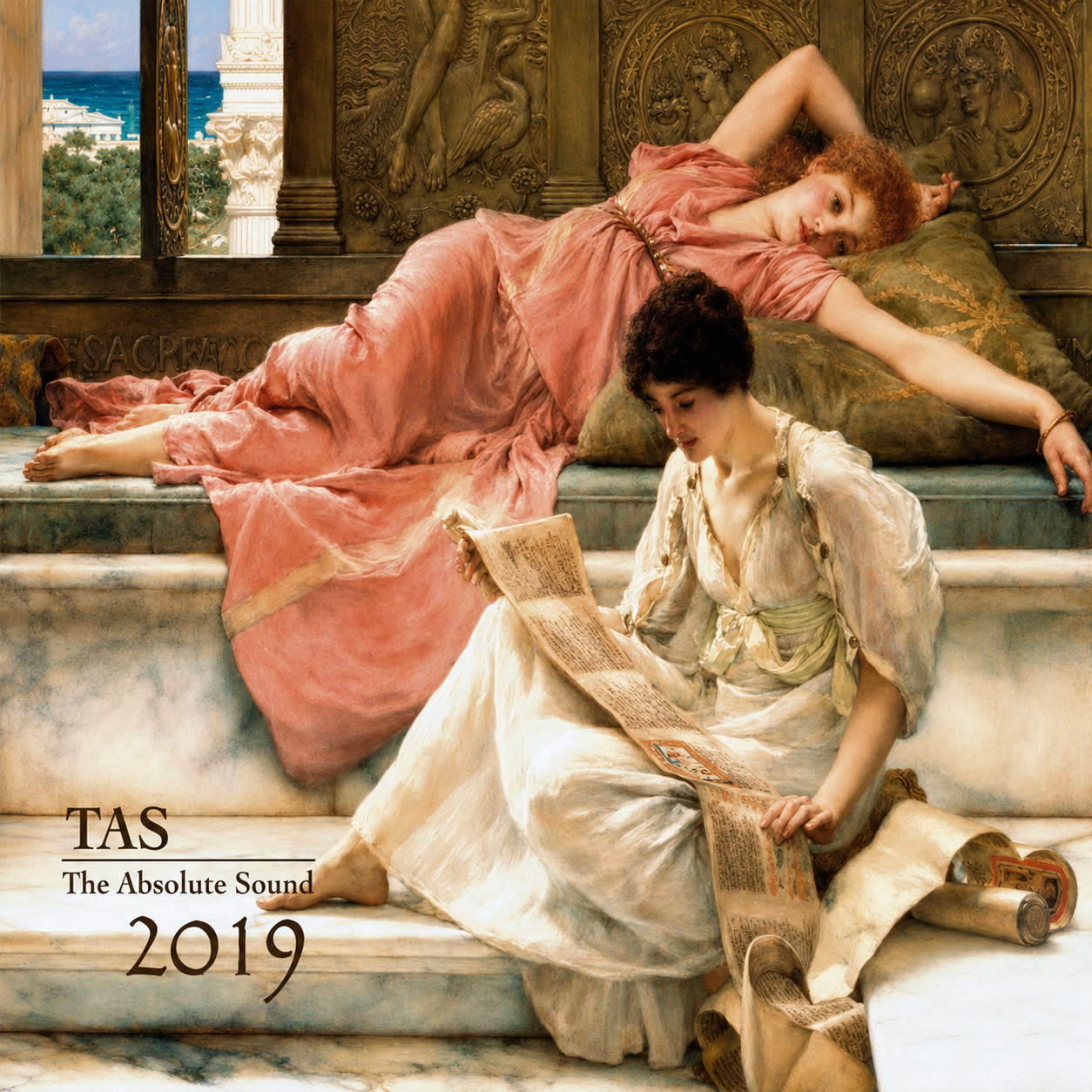
The Absolute Sound
2019
GREAT CHOICE: The Absolute Sound 2019!
Great music deserves to be discovered, enjoyed and shared.
CAN YOU SPARE A CUP OF COFFEE?
Audiophile-Streaming is a personal passion project, built with countless hours of discovering, selecting and sharing exceptional music.
I personally cover, without sponsors, the ongoing costs of hosting, software and subscriptions to keep the music discoveries coming. If you enjoy my work, your support is always appreciated.
A LITTLE THANK YOU IN RETURN
Just one coffee gives you lifetime access to the Coffee Club and all its playlists.
No subscriptions. No recurring fees.
The Absolute Sound 2019, A Dreamlike Audiophile Journey Through Jazz, Vocals and Classical Beauty
There are audiophile albums that announce their purpose with explosive percussion, enormous bass and spectacular stereo effects, and there are albums that achieve something far more lasting by drawing the listener slowly into their world. The Absolute Sound 2019 belongs decisively to the second category. This refined entry in the celebrated TAS audiophile series unfolds like an elegant novel, beginning in poetry and stillness before travelling through vocal jazz, acoustic storytelling, klezmer, piano music, chamber strings and grand orchestral drama.
The Absolute Sound 2019 is not simply a collection of high-quality speaker test tracks placed together for demonstration purposes. It is a carefully shaped musical experience in which fourteen distinctive recordings form a single emotional journey. The programme moves naturally from intimate voices to richly textured instruments, from the glow of a jazz club to the scale of a symphony orchestra, while every performance offers another opportunity to hear what a balanced high-end audio system can truly achieve.
For listeners searching for the best audiophile album for testing speakers, headphones, amplifiers, DACs, CD players and SACD systems, TAS 2019 is an exceptional reference recording. Its music reveals stereo imaging, soundstage depth, vocal realism, bass definition, treble smoothness and dynamic range with impressive clarity. Yet its greatest achievement is not the amount of detail it presents. Its real triumph is the way that detail becomes atmosphere, emotion and musical presence.
When The Absolute Sound 2019 is reproduced through a carefully assembled hi-fi system, the loudspeakers gradually seem to withdraw from the room. Voices gain natural size, instruments acquire physical shape and every track creates an acoustic world of its own. What begins as an audiophile listening session soon becomes something far more absorbing, because the equipment disappears and the music takes complete control.
Hår Eller Håp Opens a World of Poetry
The album begins with Hår Eller Håp, performed by Ketil Bjørnstad and Eva Bjerga Haugen, and the choice immediately establishes the dreamlike character of TAS 2019. Bjørnstad’s piano creates a spacious and reflective foundation, while Haugen’s voice seems to emerge from the silence with the delicacy of spoken poetry becoming song.
This is a recording that asks the listener to become quiet. The piano notes are not hurried, and the spaces between them carry as much emotional weight as the melody itself. Every note begins clearly, expands into the room and then fades gradually into the acoustic background. Through a transparent digital source and a quiet amplifier, those decays remain audible long enough to create a convincing sense of space.
Haugen’s voice requires the same degree of refinement. It should appear naturally centred without becoming artificially enlarged, while the small changes in phrasing and breath need to remain clear without being exaggerated. An aggressive audio system may make the performance sound too exposed, while an overly warm presentation can remove the openness that gives the track its poetic beauty.
As audiophile female vocal music, Hår Eller Håp is exceptionally revealing, but it never behaves like a technical demonstration. Its purpose is not to impress with volume or scale. Instead, it invites the listener into a world where poetry, piano and silence become inseparable. It is a graceful and highly atmospheric beginning to The Absolute Sound 2019.
Håkon Kornstad Gives A Vucchella a New Voice
A Vucchella by the Håkon Kornstad Trio introduces one of the album’s most unusual and captivating performances. Kornstad’s ability to move between jazz expression and operatic tenor singing gives the familiar Neapolitan song a completely fresh identity. The track feels intimate and theatrical at the same time, combining vocal warmth with the freedom and sophistication of a jazz trio.
The human voice remains one of the most reliable tools for testing a high-end audio system because listeners instinctively understand how a voice should sound. Kornstad’s tenor should possess body, warmth and natural projection without becoming heavy or oversized. The surrounding instruments need enough space to remain individually recognisable, but the performance must continue to feel like one musical conversation.
This recording is particularly effective for evaluating midrange transparency and soundstage focus. A capable pair of audiophile speakers allows the voice to stand clearly within the acoustic scene while the trio develops around it in believable layers. The presentation should feel dimensional rather than flat, with enough room behind the performers to suggest the original recording environment.
A Vucchella demonstrates the adventurous spirit of TAS 2019. The album is not content to repeat predictable audiophile formulas. Instead, it selects performances with personality, interpretation and a sense of discovery.
Nicki Parrott Brings Latin Romance to Perfidia
Nicki Parrott’s version of Perfidia brings warmth, rhythm and effortless jazz elegance into the programme. Her soft vocal style gives the song an intimate quality, while the Latin character of the melody introduces gentle movement after the reflective opening tracks.
Parrott’s voice should sound close and naturally focused, but never so large that the illusion of a real performer is lost. The double bass requires equally careful reproduction, because its notes must possess depth, pitch and texture rather than becoming an indistinct area of low-frequency warmth.
This makes Perfidia excellent music for testing bass response and female vocal clarity. A poorly controlled system may allow the bass to spread across the soundstage and obscure the vocal, while a balanced amplifier and loudspeaker combination keeps every note clean and tuneful. The rhythm should remain light and graceful, because excessive weight can remove the relaxed charm of the performance.
Perfidia is one of those recordings that makes audiophile sound feel easy. Nothing appears forced or exaggerated, yet the quality of the recording becomes obvious through the stability of the vocal image, the natural tone of the instruments and the comfortable openness of the stereo soundstage.
Allan Taylor Saves the Last Dance
Save the Last Dance for Me by Allan Taylor is one of the emotional centrepieces of The Absolute Sound 2019. Taylor approaches the familiar song with the authority of a seasoned storyteller, replacing the youthful brightness associated with many versions with something deeper, warmer and more reflective.
His voice carries age, experience and quiet dignity. Every phrase seems connected to a memory, and the measured tempo allows the meaning of the words to settle before the song moves forward. The performance does not simply revisit a classic. It transforms it into a personal reflection on love, time and loyalty.
Allan Taylor’s deep voice is an outstanding test of lower-midrange accuracy. It should possess weight without becoming thick, while the words must remain clear and naturally articulated. A system with excessive warmth may make the vocal sound heavy, while a lean system can remove the physical presence that gives Taylor’s recordings their emotional authority.
The acoustic instrumentation also provides excellent reference material for evaluating speaker performance. Guitar strings require a precise attack followed by natural wooden resonance, while the bass should support the song without slowing its movement. When reproduced through a well-balanced high-end audio system, Taylor appears to stand in a believable space, surrounded by instruments that support rather than distract from his storytelling.
Save the Last Dance for Me is a perfect example of what separates The Absolute Sound 2019 from an ordinary compilation. The technical quality is exceptional, but the emotional interpretation is what makes the recording unforgettable.
Reb Itzik’s Nign Brings Klezmer Fire and Humanity
Reb Itzik’s Nign by the Stahlhammer Klezmer Classic Trio introduces a completely different musical landscape. The performance begins with reflection and melancholy before gradually gathering energy, revealing the emotional contrasts at the heart of klezmer music.
The violin requires speed, tonal accuracy and smooth treble reproduction. Its upper harmonics should remain brilliant without becoming metallic, while the lower-register instruments need enough body to create warmth and stability. The rhythm must move naturally, because even a highly detailed audio system can sound uninvolving when its timing is slow or disconnected.
Through responsive audiophile speakers, the trio sounds alive and physically present. The instruments occupy clear positions within the stereo soundstage, but they remain bound together by phrasing and rhythm. The performance develops like a conversation in which sadness, resilience and celebration exist side by side.
Reb Itzik’s Nign is one of the finest tracks on TAS 2019 for testing transient response, instrumental texture and musical timing. More importantly, it brings humanity and cultural depth to the album, demonstrating that exceptional sound quality can preserve not only instruments but an entire musical tradition.
Grieg Paints a Wedding at Troldhaugen
Wedding Day at Troldhaugen from Grieg’s Lyric Pieces, performed by Sigurd Slåttebrekk, brings the album into the world of romantic piano music. The composition is filled with celebration, movement and lyrical tenderness, while Slåttebrekk’s performance captures both the public joy and private emotion suggested by the music.
Piano remains one of the most difficult instruments for any hi-fi system to reproduce convincingly. Every note combines an immediate mechanical strike, a complex harmonic body and a gradual decay. If the system emphasises only the attack, the piano can sound hard and artificial. If it lacks speed and resolution, the notes lose definition and the instrument becomes blurred.
Through a transparent amplifier and carefully positioned loudspeakers, the piano should acquire realistic size and weight. The lower register needs authority without boom, the middle range requires warmth and coherence, and the upper notes must remain brilliant without becoming brittle.
Wedding Day at Troldhaugen is superb classical music for testing speakers, headphones and digital sources, but its musical charm prevents it from feeling like an examination. The piece moves between celebration and intimacy, allowing the listener to imagine the scene that inspired it.
Ian Smith Salutes Courage with Lady Overlander
Lady Overlander by Ian Smith returns TAS 2019 to contemporary acoustic songwriting. Smith’s sincere vocal delivery and natural arrangement create a performance filled with admiration and emotional warmth.
The recording feels close without becoming confined. Smith’s voice should remain clearly focused, while the acoustic instruments develop around him with realistic proportions. This balance makes the track excellent for evaluating centre-image stability and instrumental separation.
The guitar requires both clarity and body, and the bass should provide a firm foundation without overwhelming the lyric. A refined audio system allows each element to remain easy to hear while preserving the sense that the musicians are performing together rather than being assembled from separate studio layers.
Lady Overlander succeeds because it feels honest. The recording quality strengthens that honesty, revealing the texture of Smith’s voice and the natural resonance of the instruments without polishing away their personality.
Peel Me a Grape Delivers Playful Vocal Chemistry
Peel Me a Grape by Benni Chawes and Malene Mortensen adds humour, style and vocal chemistry to the collection. The song has long been associated with sophisticated jazz playfulness, and this duet gives it a lively, contemporary character.
The contrasting voices create a valuable test of midrange differentiation. A strong audio system should preserve each singer’s unique tonal identity while placing them within the same acoustic environment. Their positions should remain clear, yet the presentation must never feel artificially divided.
Mortensen’s voice needs openness and smoothness, while Chawes requires enough weight and texture to sound natural. The accompaniment should retain rhythmic lightness, and the bass must remain tuneful rather than heavy.
Peel Me a Grape is an outstanding audiophile vocal duet, but its real pleasure lies in the interaction between the performers. Their timing, phrasing and playful exchange give the recording personality, proving that reference-quality sound can also be charming and entertaining.
Inger Marie Gundersen Makes the Last First Kiss Unforgettable
Last First Kiss by Inger Marie Gundersen is one of the most intimate and beautifully controlled performances on The Absolute Sound 2019. Her voice carries warmth, maturity and the unmistakable late-night character that has made her recordings favourites among audiophile listeners.
Gundersen never overstates the emotion. She allows the lyric to develop through small changes in tone, breath and timing, trusting the listener to understand what remains unspoken. The arrangement gives her enough space to remain the emotional centre without pushing the voice unnaturally forward.
This is exceptional female vocal reference music for testing midrange transparency, sibilance control and long-term listening comfort. A bright system can make the performance tiring, while excessive warmth may hide its subtle details. The finest audio systems preserve both intimacy and clarity, allowing the voice to remain soft, dimensional and completely believable.
Last First Kiss is the kind of recording that makes the equipment seem irrelevant. When everything is correctly balanced, the listener stops thinking about soundstage width or vocal focus and simply follows the performance.
Paal Flaata Illuminates Angel of the Morning
Paal Flaata’s interpretation of Angel of the Morning brings dramatic depth to a familiar song. His rich voice gives the melody a darker and more cinematic character, replacing its familiar pop brightness with gravity and emotional weight.
Flaata’s lower register is a demanding test of amplifier control and loudspeaker balance. His voice must possess body without becoming boomy, and the words should remain clearly articulated even when the arrangement grows larger. The stereo image needs enough depth to keep the singer separate from the background while preserving the unity of the performance.
A capable high-end audio system allows the music to expand naturally. The stronger passages gain scale without becoming compressed, while quieter moments retain texture and atmosphere. Flaata’s voice occupies the room with authority, but it never loses its vulnerability.
Angel of the Morning becomes one of TAS 2019’s most powerful examples of reinterpretation. A famous composition acquires a new emotional identity through the personality of the singer and the depth of the recording.
Bach’s Aria Creates a Moment of Perfect Stillness
Henning Kraggerud and the Arctic Philharmonic Chamber Orchestra perform the Aria from Bach’s Goldberg Variations, bringing serenity and classical refinement to the final part of the album.
The arrangement allows the familiar melody to unfold through the warmth and texture of strings. The ensemble should sound smooth but alive, with enough detail to reveal the movement of the bows without introducing metallic hardness. The soundstage needs width and depth, yet the musical lines must remain coherent and naturally connected.
This is excellent classical reference music for evaluating treble quality, instrumental separation and acoustic ambience. A transparent system reveals the quiet space surrounding the orchestra, allowing the final notes of each phrase to fade gently into silence.
The performance creates a necessary pause within the album. After the expressive vocals and varied musical colours of the preceding tracks, Bach brings calm, balance and timeless beauty.
Kimono Blends Poetry with Nordic Atmosphere
Kimono by Kjetil Saunes and Ketil Bjørnstad returns the listener to the poetic atmosphere that opened The Absolute Sound 2019. The track combines voice, piano and literary imagery, creating a recording that feels suspended between song and spoken reflection.
Bjørnstad’s piano gives the music a broad emotional foundation, while Saunes’s vocal delivery introduces intimacy and narrative character. The recording requires low-level resolution because much of its power lies in small details, quiet pauses and the natural decay of the piano.
A well-balanced high-end system allows the voice and instrument to occupy separate but connected positions within the stereo image. The piano should possess scale and resonance, while the vocal remains focused and intelligible.
Kimono is not a track designed for casual background listening. It asks for attention and rewards it with atmosphere, texture and a strong sense of place.
The Last Emperor Suite Becomes a Violin Drama
Anastasia Chebotareva’s performance of music from Ryuichi Sakamoto’s The Last Emperor introduces cinematic scale and emotional drama. The suite combines memorable themes with a violin performance of great precision and expression.
The violin needs brilliance without harshness, while the surrounding arrangement requires dynamic range and clear instrumental layering. A high-quality amplifier should allow the music to expand without strain, and the loudspeakers must retain focus as the texture becomes more complex.
The recording creates an expansive soundstage, moving beyond the intimacy of the earlier vocal tracks. The music feels visual, suggesting palaces, memories and the movement of history. Through a world-class stereo system, the listening room seems to open into a cinematic landscape.
This is outstanding audiophile film music for testing dynamics, soundstage scale and instrumental texture, but its melodic beauty ensures that the technical qualities remain secondary to the emotional impact.
Mahler Brings the Journey to a Monumental Conclusion
The Absolute Sound 2019 closes with the third movement of Mahler’s Symphony No. 1, performed by Mariss Jansons and the Oslo Philharmonic Orchestra. The movement’s funeral-march character gives the album a finale of enormous emotional depth.
The familiar melody of Frère Jacques appears in a minor key, transformed into something solemn, strange and haunting. The orchestra gradually builds around it, adding layers of colour, irony and darkness. Jansons controls the development with remarkable patience, allowing each instrumental voice to emerge before becoming part of the larger symphonic picture.
This recording challenges every aspect of a high-end audio system. The double bass opening requires pitch definition and low-frequency control, while the orchestral layers demand transparency and soundstage depth. Dynamic changes need enough amplifier headroom to grow without compression, and individual instrumental sections must remain identifiable as the performance becomes more complex.
Through carefully positioned speakers, the Oslo Philharmonic should extend far beyond the cabinets, creating a deep and organised orchestral stage. The quiet passages retain tension, while the larger moments arrive with authority and scale.
Mahler provides an inspired conclusion because the movement gathers melancholy, memory and strange beauty into one unforgettable performance. It also serves as a fitting tribute to the artistry of Mariss Jansons, whose presence gives the album’s closing chapter additional emotional significance.
Final Verdict
The Absolute Sound 2019 is a magnificent audiophile compilation and one of the most poetic, varied and emotionally rewarding entries in the TAS series. Its fourteen tracks move naturally through Nordic poetry, vocal jazz, acoustic storytelling, klezmer, romantic piano music, chamber strings, film music and symphonic grandeur.
It is enthusiastically recommended for listeners searching for the best audiophile album for testing speakers, high-quality SACD music, female vocal reference recordings, acoustic guitar test tracks, deep bass recordings, jazz vocals and classical music with an expansive stereo soundstage.
Ketil Bjørnstad and Eva Bjerga Haugen open the journey with poetry and stillness, Håkon Kornstad offers a fascinating meeting between jazz and opera, Nicki Parrott brings Latin warmth and Allan Taylor transforms a familiar song into a mature reflection. Inger Marie Gundersen delivers extraordinary vocal intimacy, Paal Flaata adds cinematic power, Henning Kraggerud brings classical serenity and Anastasia Chebotareva opens the world of film music before Mariss Jansons and the Oslo Philharmonic Orchestra close the album with Mahler’s monumental vision.
When The Absolute Sound 2019 is played through a carefully balanced high-end audio system, the experience moves far beyond detail and technical accuracy. The voices become human, the instruments acquire physical presence and each recording creates a believable space of its own.
The loudspeakers gradually disappear, the boundaries of the listening room begin to fade and fourteen separate performances become one continuous musical dream. For audiophiles, collectors of the Aurora Music International TAS series and music lovers who believe that superior sound quality should deepen the emotional connection with a performance, The Absolute Sound 2019 is not simply recommended. It is an essential audiophile reference album that deserves to be heard slowly, repeatedly and with complete attention.
