
Venus Records
30th Anniversary Box Set
GREAT CHOICE: Venus Records 30th Anniversary Box Set!
Great music deserves to be discovered, enjoyed and shared.
CAN YOU SPARE A CUP OF COFFEE?
Audiophile-Streaming is a personal passion project, built with countless hours of discovering, selecting and sharing exceptional music.
I personally cover, without sponsors, the ongoing costs of hosting, software and subscriptions to keep the music discoveries coming. If you enjoy my work, your support is always appreciated.
A LITTLE THANK YOU IN RETURN
Just one coffee gives you lifetime access to the Coffee Club and all its playlists.
No subscriptions. No recurring fees.
Venus Records 30th Anniversary Box Set: Thirty Years of Audiophile Jazz Preserved on Vinyl; FIRST TIME ON STREAMING!
There are anniversary collections that look backward with polite nostalgia, placing familiar recordings in new packaging and asking the listener to admire the passing of time. The Venus Records 30th Anniversary Box Set does something more ambitious. It opens the doors to three decades of Japanese audiophile jazz and allows ten experienced listeners to guide the journey, each choosing the recordings that best represent what Venus Records has meant to musicians, collectors and high-end audio enthusiasts.
The story begins in 1992, when producer Tetsuo Hara established Venus Records in Japan. During the following three decades, the label developed an unmistakable identity built around acoustic jazz, forceful instrumental presence, romantic repertoire and recordings designed to make musicians feel physically close to the listener. The catalogue grew to include American jazz veterans, European pianists, emerging vocalists, hard-bop ensembles, string arrangements and some of the most elegant piano-trio recordings of the modern era.
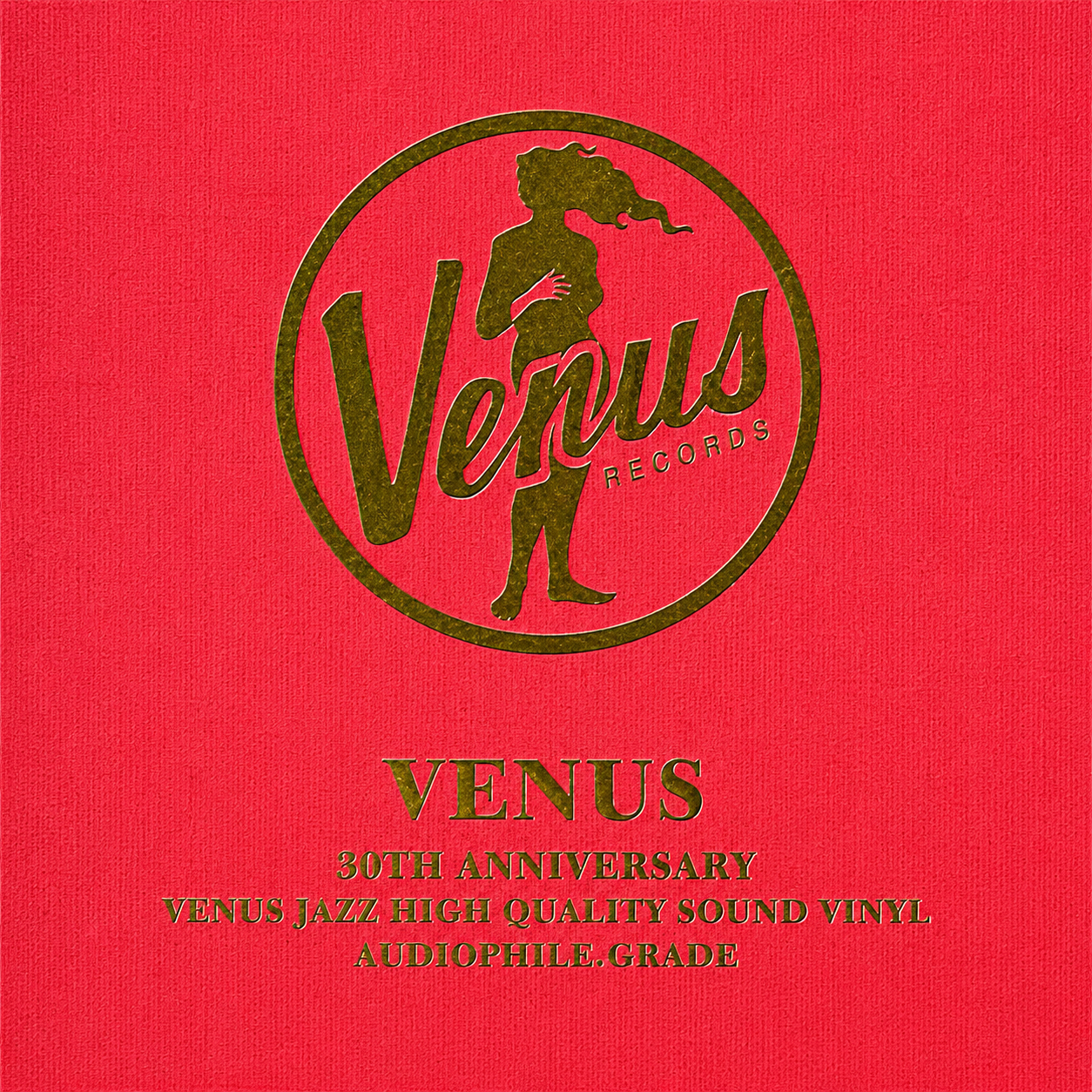
To mark the label’s 30th anniversary in 2022, Venus Records worked with Analog magazine on a monumental limited-edition vinyl collection. The original box contained ten Japanese-pressed 180-gram LPs, each curated by a different Japanese jazz or audio critic. The records were housed in a red cloth-covered presentation box with gold stamping and accompanied by a 24-page full-colour booklet. The edition was reportedly limited to 700 copies, turning it immediately into both an audiophile reference set and a serious Venus Records collectible.
The physical presentation sends a clear message before the stylus reaches the first groove. This is not a casual sampler. It is a carefully constructed archive of the Venus Records sound, presented with the weight, scale and ceremony traditionally associated with major classical box sets. Yet the music inside remains direct and human. Piano, bass, drums, saxophones and voices fill the ten records with melodies that feel familiar enough to welcome the listener and personal enough to remain surprising.
The first LP, selected by Yoshiyuki Ishida, begins with the Sir Roland Hanna Trio playing “So in Love.” It is an ideal opening because the performance contains many of the elements that define the label: a timeless composition, a commanding piano sound and a rhythm section presented with unusual physical presence. Cole Porter’s melody enters not as a museum piece but as living material, capable of carrying romance, tension and rhythmic freedom.
Ishida’s sequence continues through the New York Trio, Ted Rosenthal, Rob Agerbeek, Anna Kolchina and the Eddie Higgins Quintet with Scott Hamilton and Ken Peplowski. It moves from piano-trio intimacy to vocal darkness and richly textured horn arrangements before closing with the Vladimir Shafranov Trio swinging through “It Don’t Mean a Thing.” In one record, the listener encounters the breadth of the Venus catalogue without losing its central character.
Hiroko Otsuka takes control of the second LP and changes the atmosphere immediately. Alexis Cole and guitarist Bucky Pizzarelli bring relaxed elegance to “On the Sunny Side of the Street,” while Hiram Bullock adds electric energy with “I Got a Rite.” Simone’s Hawaiian jazz setting introduces warmth and colour before Eric Alexander, Phil Woods and Pharoah Sanders lead the music into deeper territory.
The presence of Sanders is especially significant. Venus Records is frequently associated with romance, polished standards and luxurious piano recordings, but “Tina” reminds the listener that the label’s history also contains spiritual weight and uncompromising saxophone voices. Otsuka’s record refuses to present one definition of accessible jazz. It travels from sunlight to intensity without treating either as less authentic.
Masamichi Okazaki’s third LP begins with Charles McPherson and Steve Kuhn performing “Be My Love,” then moves into the orchestral force of Brian Lynch’s Afro-Cuban jazz, the refinement of Eddie Higgins and the reflective depth of Steve Kuhn’s “Django.” Three Tenors, Nicki Parrott and Joel Frahm complete a programme that feels almost cinematic in its movement between brass, piano, voice and saxophone.
Nicki Parrott’s performance of “Dos Gardenias” represents another important strand of the Venus Records legacy. As both singer and bassist, Parrott became one of the label’s most recognizable artists, bringing clarity, intimacy and understated swing to songs drawn from American standards, Latin repertoire and popular music. Her recurring presence throughout the anniversary box is not repetition but continuity. She becomes one of the voices linking its ten different curatorial perspectives.
Tatsuo Sunaga’s fourth LP enters through the “Magic of Love” and quickly reveals a taste for arrangements that carry both rhythmic style and sonic impact. The Moffett Family Jazz Band, the Super Quintet and Ken Peplowski occupy the first side, while Danilo Rea, Dan Nimmer and Archie Shepp shape the second.
Shepp’s “Violets for Your Furs” is the kind of selection that explains why this box set cannot be reduced to elegant background jazz. His saxophone brings history into the room: blues, ballad tradition, emotional roughness and the memory of jazz as an art of testimony. The recording may possess audiophile clarity, but clarity does not smooth away the grain of the musician’s voice. It brings that grain closer.
The fifth record, selected by Seiichi Takeda, opens with the New York Trio performing “Always” and then expands into vocal jazz, orchestral colour and familiar standards. Claudia Zannoni appears with strings, Massimo Faraò leads both his Jazz Magicians Orchestra and a trio supported by the Accademia Arrigoni string ensemble, while Vladimir Shafranov, Champian Fulton, Harry Allen and Konrad Paszkudzki complete the journey.
Takeda’s choices illuminate the label’s international character. Venus Records may be Japanese, but its musical map stretches from New York to Italy, Finland and the wider European jazz scene. American standards move freely across borders, interpreted by musicians whose accents are musical rather than geographical. The result is a catalogue that feels cosmopolitan without becoming anonymous.
Yasukuni Terashima curates the sixth LP with the sharp instincts of a critic who has spent decades listening not only to performances but to the way recordings behave through a serious audio system. Harry Allen’s “The Summer Knows” opens the sequence with warmth and melodic ease, followed by Dan Nimmer’s “The Fall of Love,” Anna Kolchina’s “Beautiful Love” and drummer Joe Farnsworth’s tribute to Max Roach, “George’s Dilemma.”
The second side moves through Konrad Paszkudzki, Luca Mannutza, Nicki Parrott and Massimo Faraò, ending beneath the Parisian sky of “Sous le Ciel de Paris.” Terashima’s record is romantic, but it is not passive. Bass definition, piano weight, rhythmic attack and saxophone tone remain essential. The melodies invite the listener inward while the recordings test whether an audio system can reproduce intimacy without turning it into softness.
Masanori Hayashi’s seventh LP shifts attention toward singers before returning to the piano trio. Nicki Parrott opens with “Tango,” followed by Claudia Zannoni, Simone Kopmajer and Champian Fulton. The second side brings Bill Charlap, Vladimir Shafranov, Eddie Higgins and Emil Viklický, whose interpretation of “Eleanor Rigby” demonstrates how naturally the Beatles catalogue can enter the language of acoustic jazz.
This movement from voice to piano creates one of the box set’s most accessible chapters. The songs are recognizable, the arrangements are inviting, and the performances immediately establish atmosphere. Yet beneath that accessibility lies careful musicianship. The singers control phrasing and tone without theatrical excess, while the pianists reveal four different approaches to touch, swing and harmonic colour.
Masamitsu Fukuda’s eighth LP places sound quality firmly at the centre of the experience. As an audio critic, Fukuda has long approached recordings as musical performances and as evidence of what high-fidelity playback can achieve. His selections begin with Three Tenors and continue through vocalist Alexandra Shakina, Nicki Parrott, Eric Alexander, Steve Nelson and Claudio Chiara.
“Like the Brightest Star” creates a broad saxophone image, while Shakina’s “Comes Love” and “Take Love Easy” test the natural presence of the human voice. Parrott’s “Laughter in the Rain” adds popular familiarity, and the second side turns toward instrumental depth through Eric Alexander’s “Bright Moments” and “Estate,” the Steve Nelson Jazz Quartet’s “The Dream’s on Me” and Claudio Chiara’s “You Taught My Heart to Sing.”
Fukuda’s record demonstrates that audiophile jazz is not defined by one spectacular frequency or a sudden percussion effect. Its real challenge lies in balance. A tenor saxophone must sound powerful without becoming inflated. A singer must appear present without becoming unnaturally large. A vibraphone needs brightness, body and a believable decay. A bass line must extend downward while retaining the texture of strings and fingers.
Takashi Yamaguchi’s ninth LP is the shortest programme in the vinyl box, but it carries considerable weight. Nicki Parrott and Ken Peplowski begin with “Blue Moon,” followed by trumpeter Enrico Rava and guitarist Joe Beck. The second side brings Richie Beirach’s interpretation of “Nardis,” Nicolas Montier and Saxomania performing “Lullaby of the Leaves,” and Archie Shepp closing with “Cry Me a River.”
The sequence moves from moonlit sophistication to abstraction and emotional exposure. Beirach’s “Nardis” brings harmonic mystery, while Shepp turns a familiar torch song into something rawer and more lived-in. The contrast captures the unusual strength of the Venus catalogue: polished production does not require emotional politeness.
The tenth and final vinyl record is selected by Takashi Yamamoto. Massimo Faraò’s “Luiza” opens with Brazilian lyricism, followed by Nicki Parrott’s “The Look of Love,” John Di Martino’s Romantic Jazz Trio performing “Amapola” and Vladimir Shafranov approaching “Glad to Be Unhappy.”
The last side moves toward a fittingly reflective conclusion. Steve Kuhn transforms Ravel’s “Pavane for a Dead Princess,” Eric Alexander enters John Coltrane’s world through “Wise One,” and the Tsuyoshi Yamamoto Trio closes the original box with “Black Is the Color.” The final selection does not end the anniversary with a loud celebration. It leaves the listener with darkness, space and a piano trio disappearing slowly into silence.
Across the ten LPs, the curators repeatedly return to piano trios, voices, saxophone quartets and classic melodies. Yet no two records tell exactly the same story. One selector favours rhythmic impact, another searches for vocal intimacy, and another is drawn toward the tonal beauty of the piano. Together, their choices create a portrait of Venus Records that no single producer’s “best of” compilation could have achieved.
The box also reveals the importance of Tetsuo Hara’s production philosophy. Venus recordings are known for a direct and full-bodied presentation in which instruments often stand close to the listener. The piano possesses weight, acoustic bass arrives with considerable depth, and saxophones can appear almost physically present between the loudspeakers. The anniversary collection does not hide that house sound. It celebrates it.
For some listeners, the Venus approach is dramatic. It does not always attempt to recreate the distant perspective of a concert-hall seat. Instead, it brings jazz into the listening room, placing the listener near the piano, close to the singer and within reach of the drummer’s cymbals. That immediacy helped make Venus Records a favourite among collectors of audiophile jazz vinyl and high-resolution recordings.
The success of the 2022 vinyl edition later led to an expanded hybrid SACD version. Released in 2023, the digital box retained the ten critic-curated programmes and added an eleventh bonus disc selected by Tetsuo Hara himself. The hybrid SACDs include a high-resolution stereo layer as well as a conventional CD layer, while the edition also carries the label’s Venus Hyper Magnum Sound Direct Mix Stereo designation and a 24-page colour booklet.
Hara’s bonus disc functions like the producer entering the room after the critics have finished speaking. His programme begins with the Joe Beck Trio’s “Manhã de Carnaval” and moves through Eddie Higgins, Steve Kuhn, Cyrus Chestnut, Richie Beirach, Vladimir Shafranov, Alexis Cole, Nicki Parrott, Tessa Souter and Phil Woods. George Garzone, Francesco Cafiso and Pharoah Sanders complete a thirteen-track survey that feels like a personal signature placed beneath the larger anniversary statement.
The existence of both versions gives the Venus Records 30th Anniversary Box Set two distinct identities. The ten-LP edition is a physical ritual: removing a heavy Japanese pressing, lowering the stylus, listening to one curated side and then turning the record by hand. The eleven-disc SACD edition expands the archive, offers longer uninterrupted programmes and makes the material playable on both SACD and conventional CD equipment.
Neither format changes the essential story. This is a celebration of a label that spent thirty years treating jazz repertoire, recording quality and visual presentation as parts of the same artistic experience. It is filled with songs listeners already know, but recognition is only the beginning. Each musician reshapes those songs through tone, timing and personality.
By the time “Black Is the Color” closes the vinyl box, the anniversary has become more than a count of years. The ten curators have traced a path through piano-trio jazz, hard bop, vocal standards, Latin rhythms, European romanticism, classical adaptations and late-night ballads. They have shown that the Venus Records catalogue is not defined by one performer or one period but by a consistent belief in musical beauty delivered with unapologetically vivid sound.
The Venus Records 30th Anniversary Box Set is therefore both a luxury audiophile collection and a historical document. It preserves the voices of Eddie Higgins, Steve Kuhn, Archie Shepp, Pharoah Sanders, Nicki Parrott, Eric Alexander, Vladimir Shafranov, Massimo Faraò and many others inside a presentation worthy of the music.
Thirty years after Venus Records began, the label did not celebrate by simply looking at its past. It placed that past on ten heavy records, invited ten critics to argue for their favourites and allowed the musicians to tell the final story. The result is a box set built not around nostalgia, but around the enduring thrill of hearing jazz reproduced with weight, colour and life.
