
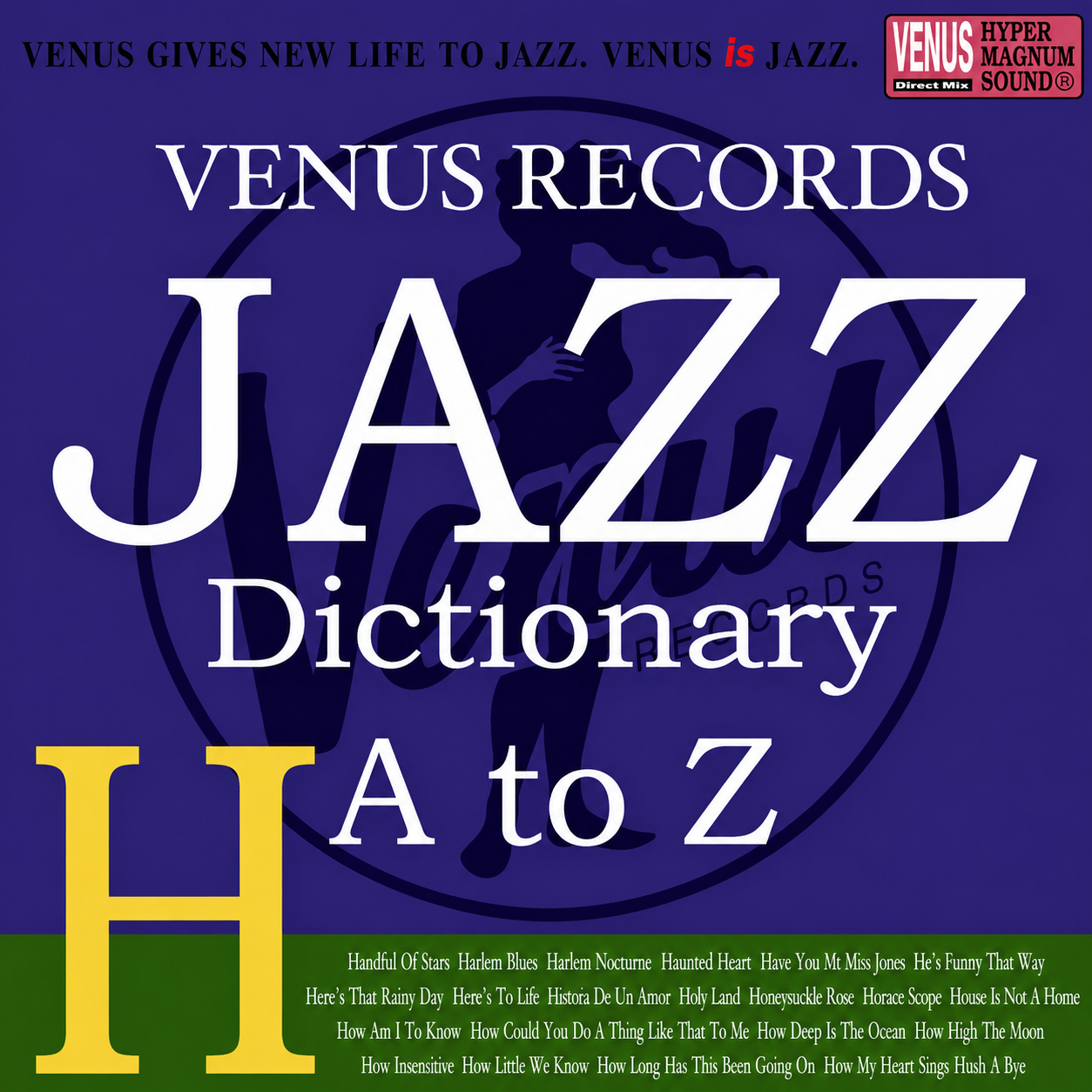
Venus Records
Jazz Dictionary H
Venus Records – Jazz Dictionary H: Heart, Harmony and the Human Voice of Jazz
With Venus Records – Jazz Dictionary H, the celebrated alphabetical series moves into another chapter of the jazz songbook, but the journey remains guided by something deeper than letters. This is a collection shaped by history, harmony, and human expression, bringing together compositions beginning with the letter H and presenting them through the warm, immediate sound that has made Venus Records one of the most recognizable names in Japanese audiophile jazz.
The idea behind the Jazz Dictionary series is deceptively simple. Each album gathers standards under a single letter, creating an A-to-Z portrait of jazz repertoire. Yet the music never feels catalogued or confined. On Jazz Dictionary H, familiar titles become starting points for fresh interpretations, allowing the musicians to move freely between melody, improvisation, and rhythmic conversation.
From the first performance, the sound carries the close, full-bodied character associated with Venus Records audiophile recordings. The piano enters with weight and definition, its chords filling the room without losing clarity. The double bass sits firmly beneath the arrangement, warm and resonant, while the drums create movement through carefully judged accents, natural cymbal decay, and subtle changes in pressure.
The effect is intimate. Rather than presenting the musicians from a distant concert-hall perspective, the recording brings the listener close to the ensemble. It creates the feeling of a private jazz session where every breath, touch, and pause becomes part of the performance. That sense of proximity has long been central to the Venus Records identity, and it gives Jazz Dictionary H both emotional warmth and audiophile appeal.
The album’s real story begins when the melodies start to change. Jazz standards survive because they are never performed exactly the same way twice. A pianist can shift the emotional direction of a composition through phrasing alone. A bassist may answer with a line that opens a new harmonic path, while the drummer changes the atmosphere with a brushstroke, a cymbal accent, or a moment of carefully placed silence.
These small decisions reveal the human character of jazz. The written melody may provide the structure, but the personality of the musicians gives each piece its identity. On Jazz Dictionary H, the songs are treated with respect without becoming overly cautious. The arrangements remain connected to tradition, yet the performances leave enough space for risk, surprise, and individual expression.
Some tracks move with a graceful sense of swing, creating the atmosphere of a sophisticated late-night club. Others slow the pace and allow the musicians to explore the emotional depth of the ballad tradition. In these quieter performances, every note seems to carry greater weight. The silence between phrases becomes as important as the melody itself, and the listener is drawn into the tension between restraint and release.
That balance makes the album especially attractive to listeners discovering classic jazz standards for the first time. The compositions are accessible, the sound is inviting, and the performances are polished without feeling mechanical. At the same time, experienced jazz collectors will hear the deeper details: the harmonic substitutions, the rhythmic adjustments, and the subtle exchanges that occur between the players.
For audiophiles, Venus Records – Jazz Dictionary H also works as an impressive reference album. The natural textures of the instruments can reveal the strengths and weaknesses of loudspeakers, headphones, amplifiers, and digital-to-analog converters. The piano tests tonal balance and transient clarity, the bass reveals control and low-frequency definition, and the cymbals show whether a system can reproduce detail without becoming bright or aggressive.
Yet the recording never loses sight of the music. The finest high-end jazz recordings are not memorable simply because they sound precise. They are memorable because the sound quality creates a stronger connection with the performers. On Jazz Dictionary H, the clarity of the recording allows the listener to hear the physical action behind the music: fingers moving across keys, strings vibrating against wood, and drum brushes tracing quiet patterns across the snare.
The album belongs naturally within the wider Jazz Dictionary A to Z collection, a project that gradually builds a musical map of the jazz standard repertoire. Each volume has its own atmosphere, but together they reveal the extraordinary range of the genre. The alphabet provides the framework, while improvisation prevents the series from becoming predictable.
In the modern streaming era, where tracks are often heard briefly and out of sequence, Jazz Dictionary H encourages a different kind of attention. It invites the listener to follow the development of each performance, hear how the ensemble responds to changing ideas, and experience the album as a complete narrative rather than a collection of isolated songs.
For collectors searching for Venus Records jazz albums, best audiophile jazz CDs, Japanese jazz compilations, classic jazz standards, and reference music for high-end stereo systems, Jazz Dictionary H offers another rewarding chapter in this distinctive series. It combines familiar repertoire, expressive musicianship, and a rich recording style that gives acoustic jazz a vivid physical presence.
More than an alphabetical compilation, Venus Records – Jazz Dictionary H is a portrait of jazz built from heart, harmony, and human interaction. The songs may begin with the same letter, but each performance speaks in a different voice, proving once again that the true dictionary of jazz is written not only in titles, but in timing, touch, and emotion.
