
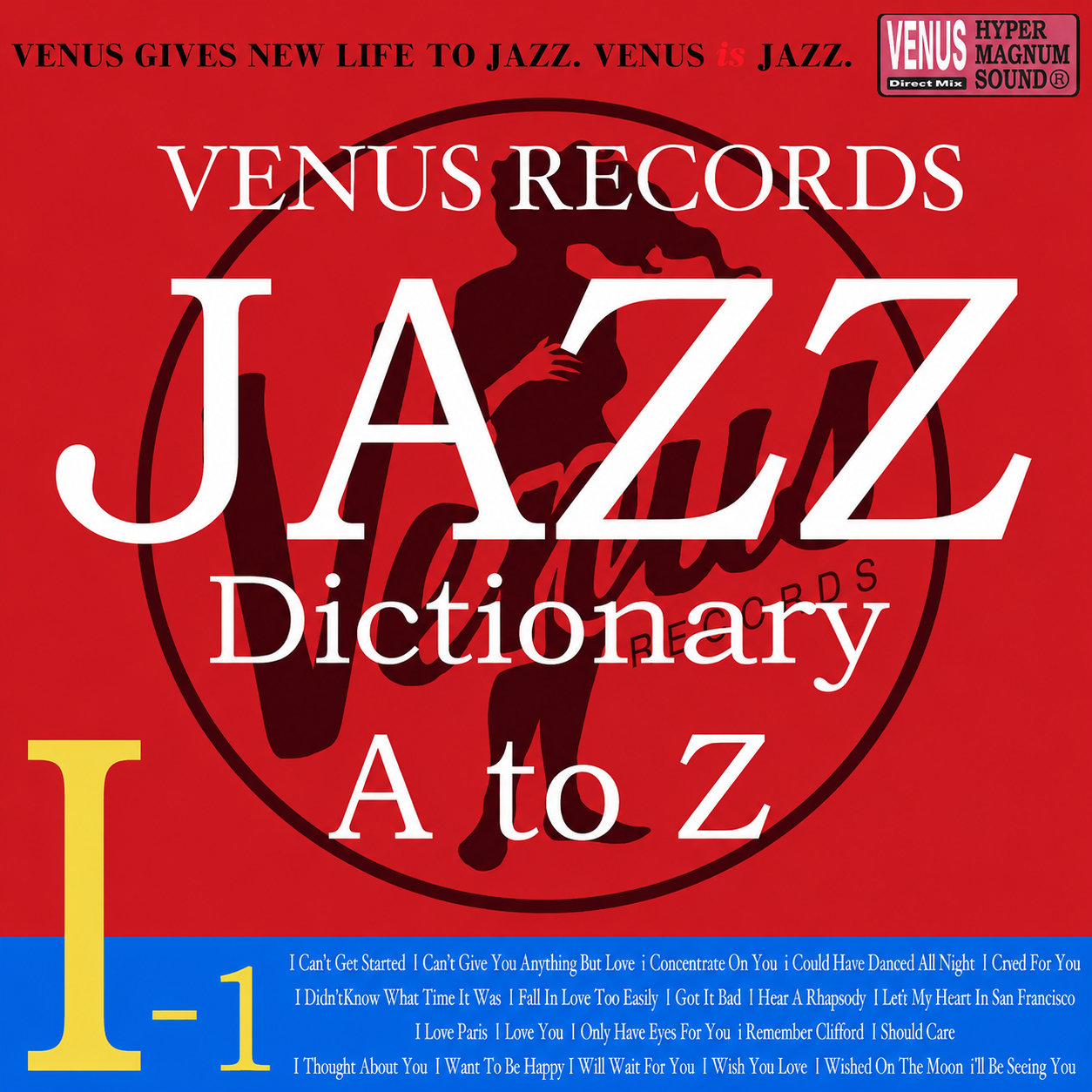
Venus Records
Jazz Dictionary I -1
Venus Records – Jazz Dictionary I-1: Intimacy, Improvisation and the Inner Language of Jazz
With Venus Records – Jazz Dictionary I-1, the alphabetical voyage through jazz enters one of its most intriguing chapters. The letter I opens the door to a repertoire filled with intimacy, imagination, and emotional contrast, while the “I-1” designation suggests a collection broad enough to require more than a single volume. What begins as another installment in the Jazz Dictionary A to Z series quickly develops into a deeper portrait of how jazz musicians transform established songs into personal statements.
The concept behind the series remains brilliantly direct. Venus Records organizes classic jazz compositions alphabetically, creating a musical reference library that is both accessible and artistically engaging. Yet Jazz Dictionary I-1 never feels like an archive arranged for convenience. The tracks unfold with their own rhythm and emotional logic, moving between lyrical ballads, sophisticated standards, and performances shaped by spontaneous interaction.
This is where the identity of Venus Records audiophile jazz becomes immediately recognizable. The label’s production style is close, vivid, and richly textured. The piano has weight without losing transparency, the double bass sounds rounded and physical, and the drums carry both energy and detail. Cymbals shimmer with a natural decay, while quieter passages retain enough space for every instrument to breathe.
Rather than presenting jazz from a distant seat in a large hall, Jazz Dictionary I-1 creates the impression of being inside the room with the musicians. The listener can sense the pressure behind a chord, the movement of fingers across bass strings, and the subtle changes in touch that shape the drummer’s response. This intimate perspective gives the album its emotional power and explains why Venus Records releases are so often valued as high-end jazz recordings.
The performances reveal jazz as a language built from interpretation. A familiar melody may appear in its recognizable form for only a few moments before the musicians begin to reshape it. A pianist stretches the timing of a phrase, the bassist introduces a line that changes the harmonic direction, and the drummer answers with a shift in texture rather than volume. The result is music that feels alive, responsive, and impossible to repeat exactly.
That sense of unpredictability is central to Jazz Dictionary I-1. The standards provide a foundation, but the musicians decide how the story will unfold. Some tracks move patiently, allowing the melody to emerge through silence and restraint. Others carry a stronger pulse, using swing and rhythmic momentum to push the ensemble forward. Across both approaches, the emphasis remains on communication rather than display.
The album’s quieter moments are particularly revealing. Jazz ballads can expose every weakness in a performance because there is nowhere to hide behind speed or density. On Jazz Dictionary I-1, the slower pieces are handled with confidence. Notes are given room to resonate, pauses are allowed to carry meaning, and emotional tension develops without unnecessary exaggeration.
The more energetic performances bring another side of the album into focus. Here, the rhythm section becomes more assertive, and the interplay grows sharper. The piano may move from melody into angular improvisation, while the bass and drums respond with increasing urgency. Even in these faster passages, the recording preserves separation and balance, allowing the listener to follow each musician without losing the unity of the group.
For listeners discovering jazz, Venus Records – Jazz Dictionary I-1 offers a welcoming introduction to the classic repertoire. The alphabetical structure gives the project clarity, while the polished sound and recognizable song forms make the music easy to approach. For experienced collectors, the album offers a different pleasure: the chance to hear how skilled musicians reinterpret established material through phrasing, harmony, tone, and timing.
The album is also a strong choice for anyone searching for reference jazz music for audiophile systems. Its natural instrument textures can reveal whether a stereo setup reproduces piano tone with proper body, bass notes with definition, and cymbals with detail rather than harshness. The soundstage is compact but layered, making the recording useful for evaluating speakers, headphones, amplifiers, and digital-to-analog converters.
Yet the technical quality never overwhelms the music. Venus Records understands that audiophile sound matters only when it strengthens the sense of performance. On Jazz Dictionary I-1, clarity brings the listener closer to the human gestures behind the notes. The smallest details become emotionally significant because they reveal how the musicians listen and respond to one another.
Within the larger Jazz Dictionary A to Z series, this volume feels like another chapter in an unfolding musical history. The alphabet supplies the structure, but the true organization comes from mood, interaction, and interpretation. Each track belongs to a familiar tradition, yet each performance proves that jazz standards remain open to reinvention.
In an age shaped by short playlists and distracted listening, Jazz Dictionary I-1 rewards patience. It invites the listener to stay with a solo, follow a harmonic shift, and notice the way an ensemble changes direction through subtle musical signals. The album works as background music only in the most superficial sense; its real value emerges when it is given full attention.
For collectors searching for Venus Records jazz albums, Japanese audiophile CDs, best jazz standards collections, high-resolution jazz recordings, and reference albums for high-end stereo systems, Jazz Dictionary I-1 stands as another compelling entry in the catalogue.
More than a compilation of titles beginning with the letter I, Venus Records – Jazz Dictionary I-1 is a study in intimacy and improvisation. It shows that the inner language of jazz is not found only in melodies or chord changes, but in the moments when musicians listen, react, and turn familiar songs into something newly personal.
