
The Absolute Sound
Very Best of TAS
GREAT CHOICE: The Absolute Sound Very Best of TAS!
Great music deserves to be discovered, enjoyed and shared.
CAN YOU SPARE A CUP OF COFFEE?
Audiophile-Streaming is a personal passion project, built with countless hours of discovering, selecting and sharing exceptional music.
I personally cover, without sponsors, the ongoing costs of hosting, software and subscriptions to keep the music discoveries coming. If you enjoy my work, your support is always appreciated.
A LITTLE THANK YOU IN RETURN
Just one coffee gives you lifetime access to the Coffee Club and all its playlists.
No subscriptions. No recurring fees.
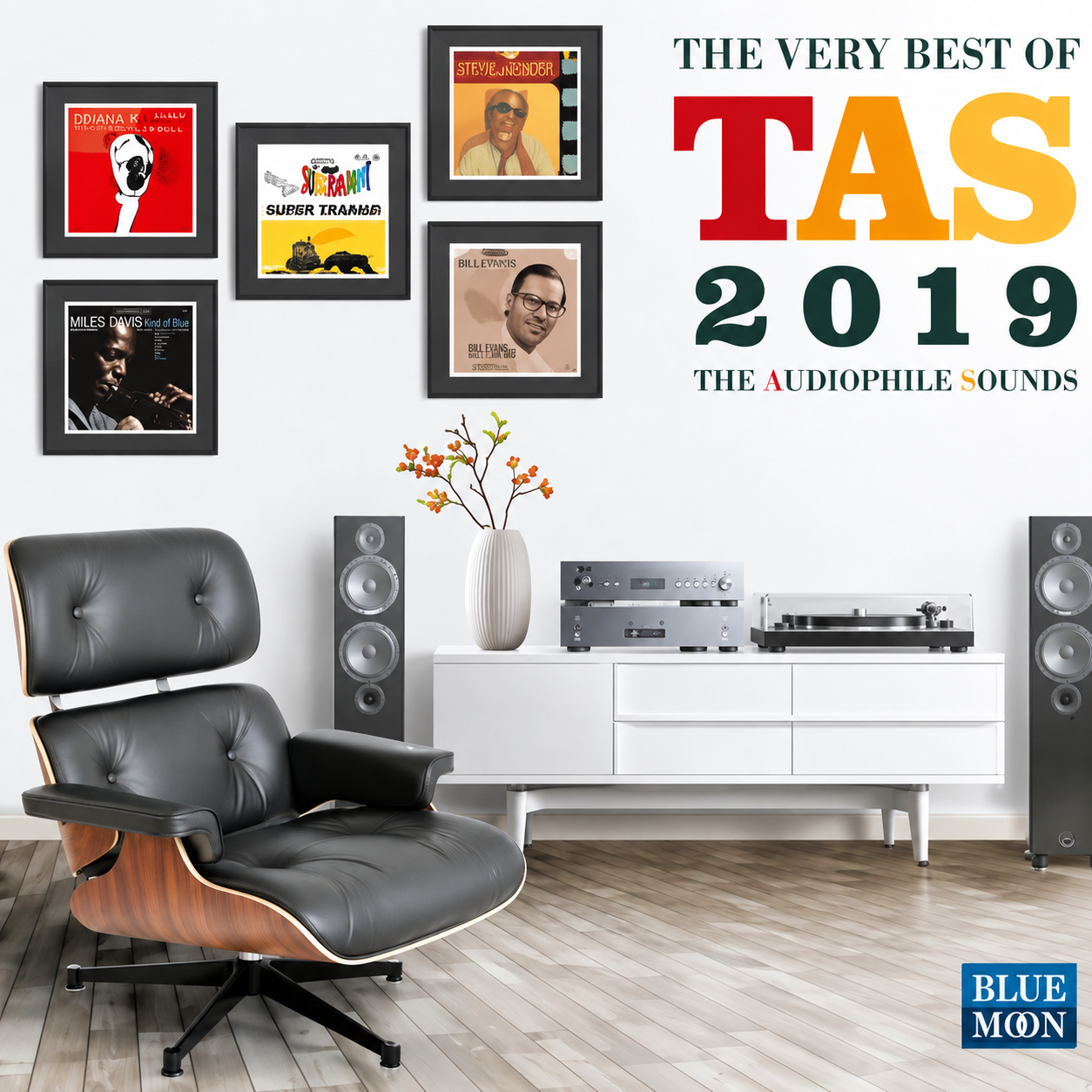
The Absolute Sound: Very Best of TAS is exactly the kind of compilation that makes me appreciate the variety of music available to audiophile listeners. Aurora Music’s 2019 collection brings together fourteen recordings covering jazz, folk, classical music and intimate vocal performances. Artists such as Allan Taylor, Nicki Parrott, Inger Marie Gundersen and Ketil Bjørnstad share the album with established classical performers and orchestras. It is an interesting combination because these musicians have very different approaches to recording and performance. I particularly like the idea of hearing familiar audiophile favourites alongside music I might otherwise have overlooked.
Different Artists, Different Musical Worlds
Allan Taylor’s interpretation of “Save the Last Dance for Me” is one of the selections that immediately appeals to my musical taste. Taylor is a British singer-songwriter whose warm, expressive voice and acoustic guitar have made him a familiar name among audiophile listeners. He approaches the song quite differently from the more familiar upbeat versions, allowing its emotional content to become more important than its dance rhythm. His relaxed delivery gives the lyrics room to breathe, while the acoustic accompaniment provides an intimate musical setting. For me, this is precisely the kind of recording that demonstrates why a simple arrangement can sometimes communicate more than a complicated production.
Another attractive selection is “Perfidia” by Australian bassist and vocalist Nicki Parrott. Originally written by Mexican composer Alberto Domínguez, the song has been performed by numerous jazz and popular musicians. Parrott brings her own personality to this familiar melody, combining her gentle vocal delivery with the rhythmic understanding of an experienced jazz bassist. I enjoy the relaxed character of her interpretation and the way the melody remains the centre of attention. There is something particularly satisfying about musicians who can make a well-known composition sound fresh without feeling the need to reinvent it completely.
The inclusion of “Last First Kiss” by Norwegian singer Inger Marie Gundersen brings another distinctive voice to the collection. Her understated approach to jazz and popular music has earned her a following among listeners who appreciate intimate vocal recordings. What interests me about her singing is the slightly husky character of her voice and her ability to communicate emotion without unnecessary vocal decoration. Her performance provides an enjoyable contrast with Parrott’s lighter delivery and Taylor’s deeper voice. Together, these selections demonstrate how differently singers can approach intimacy and emotional expression.
From Intimate Performances to Classical Music
I appreciate that Aurora Music did not restrict this compilation to the familiar combination of female vocals, acoustic guitars and small jazz ensembles. Edvard Grieg’s “Wedding Day at Troldhaugen,” performed by Norwegian pianist Sigurd Slåttebrekk, introduces a completely different musical character. The composition moves between energetic, rhythmically confident passages and quieter, more reflective moments. It offers an excellent opportunity to concentrate on the piano as a complete instrument rather than simply listening for impressive bass notes or sparkling high frequencies. The relationship between the melody, accompaniment and changing dynamics is what makes this performance interesting to me.
The classical selections also include Bach’s Goldberg Variations, represented by the Aria in a performance involving violinist Henning Kraggerud and the Arctic Philharmonic. This is a very different interpretation from the familiar solo piano or harpsichord versions. Hearing Bach’s music in an orchestral setting changes the relationship between the musical lines and introduces instrumental colours that are absent from the original keyboard version. I find arrangements like this particularly interesting because they encourage me to listen to familiar compositions from another perspective. They also provide a welcome change of pace within a compilation containing several intimate vocal performances.
The collection reaches a much larger musical scale with the third movement of Mahler’s First Symphony, performed by Mariss Jansons and the Oslo Philharmonic Orchestra. The movement is built around an unusual funeral march based on the familiar melody of “Frère Jacques,” transformed into a minor key. Mahler combines this material with contrasting passages that draw on different musical traditions, creating an atmosphere that moves between melancholy, irony and unexpected warmth. It is certainly not conventional demonstration music, but it offers considerably more musical substance than a short orchestral spectacular chosen simply to impress listeners. I like that Aurora Music includes a substantial classical work alongside the more accessible vocal recordings.
The Recording Quality and My Final Thoughts
From an audiophile perspective, the attraction of this collection lies in the differences between its recordings. Allan Taylor’s acoustic presentation invites attention to the relationship between voice and guitar, while Nicki Parrott and Inger Marie Gundersen offer opportunities to appreciate the individual character of two very different female voices. The piano performance introduces another set of musical demands, particularly the relationship between individual notes, their decay and the instrument’s dynamic range. Mahler’s orchestral writing provides a much larger musical setting, with several instrumental sections contributing to the overall arrangement. These contrasts make the compilation useful for exploring what a stereo system can communicate without reducing the listening experience to a technical exercise.
There is, however, an important distinction between a compilation of excellent recordings and an album conceived as a complete musical statement. The Very Best of TAS is clearly designed around variety rather than a continuous musical atmosphere. Moving from an intimate jazz performance to a substantial orchestral composition can be quite a change, and I can understand why some listeners might prefer to select individual tracks rather than play the collection from beginning to end. Personally, I consider that variety part of its appeal. It gives me an opportunity to enjoy different musicians, arrangements and recording styles without committing an entire evening to one particular genre.
What I value most about The Absolute Sound: Very Best of TAS is its combination of accessible songs and more demanding classical performances. Aurora Music’s 2019 selection introduces familiar audiophile artists while also making room for musicians and compositions that deserve attention for reasons beyond their recording quality. Allan Taylor’s expressive singing, Nicki Parrott’s relaxed jazz interpretation and the contrasting musical world of Mahler illustrate just how varied this collection is. For me, its greatest strength is the opportunity to discover music outside my usual listening habits while enjoying performances that have something worthwhile to say.
HiFi’ve, Ronald – Your EarFluencer
