
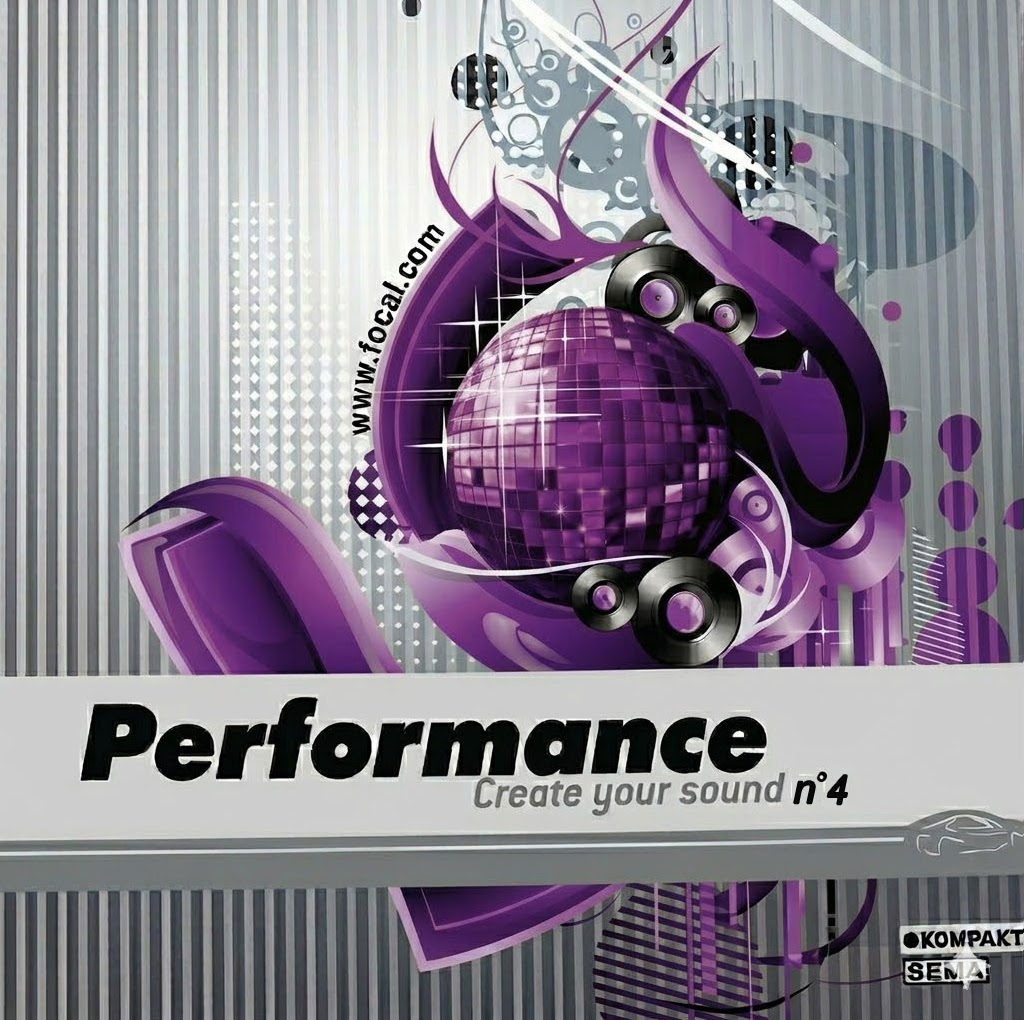
Focal Performance
Create your Sound 4
GREAT CHOICE: Focal Performance Create your Sound 4!
Great music deserves to be discovered, enjoyed and shared.
CAN YOU SPARE A CUP OF COFFEE?
Audiophile-Streaming is a personal passion project, built with countless hours of discovering, selecting and sharing exceptional music.
I personally cover, without sponsors, the ongoing costs of hosting, software and subscriptions to keep the music discoveries coming. If you enjoy my work, your support is always appreciated.
A LITTLE THANK YOU IN RETURN
Just one coffee gives you lifetime access to the Coffee Club and all its playlists.
No subscriptions. No recurring fees.
Focal Performance Create Your Sound 4: Music Mixed with a Purpose
Drake, John Legend, AWOLNATION and Adrian Quesada are not artists I would normally expect to find together on an audiophile playlist. Yet that unusual combination is exactly what makes Focal Performance Create Your Sound 4 interesting to me. Officially released as Mixed on Focal #4 in 2022, this 23-track collection was curated by Focal Naim America to showcase music mixed using Focal professional studio monitors. Rather than selecting recordings simply because they sound impressive, Focal has brought together songs that share a connection to the equipment used during production. I like that approach because it gives the playlist a clear purpose while introducing me to music I might not otherwise select for a listening session.
The project began in 2021 when Focal Naim America introduced its Mixed on Focal programme. The idea was to connect the professional recording environment with the experience of listening at home. Focal, the French loudspeaker manufacturer founded by Jacques Mahul in 1979, has long been involved in both consumer hi-fi and professional studio monitoring. Its professional speakers are used by recording and mixing engineers who need to make decisions about tonal balance, dynamics and the relationship between instruments. The fourth playlist brings together work by engineers including Luca Pretolesi, Eric Stenman, Adrian Quesada, Will Yip and Thomas “Tillie” Mann. For me, knowing who worked on these recordings makes the collection more interesting than an ordinary selection of demonstration tracks.
Different Artists, Different Approaches to Sound
One of the most recognizable contributions comes from Drake’s 2022 album Honestly, Nevermind, released through OVO and Republic Records. Three songs from that album appear in the playlist: “Jimmy Cooks”, “Flight’s Booked” and “Down Hill”. The album was mixed by Luca Pretolesi using Focal Trio11 Be monitors at Studio DMI in Las Vegas. What interests me about these selections is their emphasis on electronic rhythm, bass and vocal production rather than traditional acoustic instruments. Drake’s delivery often sits within arrangements built around programmed percussion, synthesizers and carefully controlled low frequencies. That makes these tracks useful for appreciating how a modern mix creates movement and atmosphere with relatively few musical elements.
“Flight’s Booked” is particularly interesting because of its understated electronic arrangement and relaxed vocal delivery. I like the way the rhythm supports the song without constantly demanding attention. The bass and percussion have their own roles, while Drake’s voice remains the main point of contact with the listener. In a well-balanced presentation, I want to hear the individual rhythmic elements clearly without the bass overwhelming the vocal. The production has a smooth, controlled character, but the musical attraction is the way its repetition creates a consistent mood. It is not my usual choice for evaluating vocal realism, yet it offers a useful example of how contemporary electronic production can create intimacy through carefully arranged sounds.
A completely different musical personality appears in AWOLNATION’s interpretation of “Eye in the Sky”, featuring Beck. The song originally appeared on the Alan Parsons Project’s 1982 album of the same name, and this version brings a familiar composition into a more contemporary alternative-rock setting. Eric Stenman mixed the recording using Focal Trio6 Be monitors. I find the combination of AWOLNATION and Beck interesting because both artists have a history of experimenting with electronic textures, guitars and unconventional production choices. The song gives me something very different to concentrate on compared with Drake’s recordings. Here, the relationship between the vocal, instrumental layers and rhythmic foundation is more important to me than the amount of bass or the apparent width of the stereo image.
Adrian Quesada provides another welcome change of direction with “Mentiras Con Cariño” and “Eso No Lo He Dicho”, from his 2022 project Boleros Psicodélicos. Quesada, also known for his work with Black Pumas, draws on the romantic Latin American bolero tradition while incorporating psychedelic arrangements and modern production. He mixed these recordings using Focal Shape Twin monitors. I particularly appreciate the musical contrast they bring to the collection. Where much of the contemporary pop material relies on programmed rhythm and electronic textures, Quesada’s music places greater emphasis on melody, vocal expression and the character of the arrangement. For my taste, these selections give the playlist an important sense of variety and make it more enjoyable as a musical collection rather than simply a demonstration of studio technology.
The Engineers Behind the Music
One aspect I appreciate about Mixed on Focal #4 is the attention given to the engineers. We often discuss singers, musicians and producers, but the person responsible for the final mix has an enormous influence on what eventually reaches our speakers. A mixing engineer decides how prominently a voice appears, how different instruments share the available space and how the bass relates to everything above it. These choices are musical decisions as much as technical ones. Focal’s programme makes that connection more visible by identifying both the engineers and the monitoring systems they used.
The selection includes City Girls with Usher on “Good Love” and Jor’Dan Armstrong’s “In”, both mixed by Thomas “Tillie” Mann using Focal Twin6 Be monitors. There is also John Legend’s “Tomorrow”, mixed by Bobby Campbell and Gerry “The Gov” Brown, alongside music involving engineers such as Mike Pepe, Ryan West and Rob Tavaglione. Will Yip’s work on L.S. Dunes’ “Permanent Rebellion” adds another musical direction, introducing a more aggressive rock sound to the programme. I appreciate this range because it demonstrates that professional monitoring is not limited to one recording style. The same basic requirements of balance, clarity and reliable judgment apply whether an engineer is working with rock guitars, electronic bass or a carefully produced soul vocal.
There is an important distinction I always make with projects like this. A song mixed on Focal monitors does not automatically become a better recording than one mixed on another manufacturer’s speakers. The quality of the musicians, the arrangement, the original recording and the decisions made by the engineer remain essential. Nor does listening through Focal loudspeakers guarantee that I hear exactly what the engineer heard in the studio. Room acoustics, playback levels, mastering and the equipment used at home all influence the result. What makes this series worthwhile is the opportunity to explore a group of recordings with a documented connection to the professional monitoring process.
Listening Beyond the Technical Details
As an audiophile, I enjoy recordings that reveal differences in musical arrangement and production without requiring me to concentrate entirely on technical measurements. With this playlist, I would pay particular attention to how the bass behaves in Drake’s recordings, how the vocal and instrumental layers interact in AWOLNATION’s “Eye in the Sky”, and how Quesada builds his arrangements around melody and atmosphere. These are three different approaches to making music, and they ask different things of a playback system. Good stereo imaging should help distinguish the separate parts of a mix, but it should never become more important than the performance itself. I am interested in whether the music remains engaging when I stop analyzing the sound.
The playlist also illustrates why I do not believe every audiophile recording needs to feature a female jazz vocalist, a double bass or a carefully recorded acoustic guitar. Those recordings can be wonderful, but contemporary pop, hip-hop and alternative rock deserve attention too. Modern production often involves deliberately manipulated voices, powerful low frequencies and instruments that have no natural acoustic equivalent. In those cases, accuracy means reproducing the intended mix rather than trying to make everything sound like an acoustic performance in a concert hall. I find this distinction particularly useful when comparing recordings that have been created in very different ways.
My main reservation is also part of the playlist’s character. With 23 tracks covering several genres and production styles, it does not offer the continuity of an album created by one artist. The shift from Drake to alternative rock, Latin-influenced music or heavier guitar arrangements will not suit every listening mood. I see that as a reasonable trade-off rather than a serious weakness. The collection was designed to demonstrate different professional recordings, and its variety is essential to that purpose. Personally, I find the selections involving Adrian Quesada particularly attractive because they offer the strongest connection to the melodic and expressive qualities I enjoy in music.
Focal Performance Create Your Sound 4 succeeds because it gives me a broader view of what carefully produced contemporary music can be. Released in 2022 as the fourth Mixed on Focal playlist, it brings together 23 tracks connected by the work of professional engineers using Focal studio monitors, rather than by genre or record label. Drake demonstrates the importance of rhythm and electronic production, AWOLNATION and Beck provide an alternative approach to a familiar song, and Adrian Quesada contributes the melodic character I enjoy most. I would recommend this collection to listeners who are curious about the relationship between music production and home listening, particularly those who want to explore beyond traditional audiophile favourites. What I value most is the musical diversity and the insight it gives me into how different engineers shape recordings, each with their own artistic priorities.