
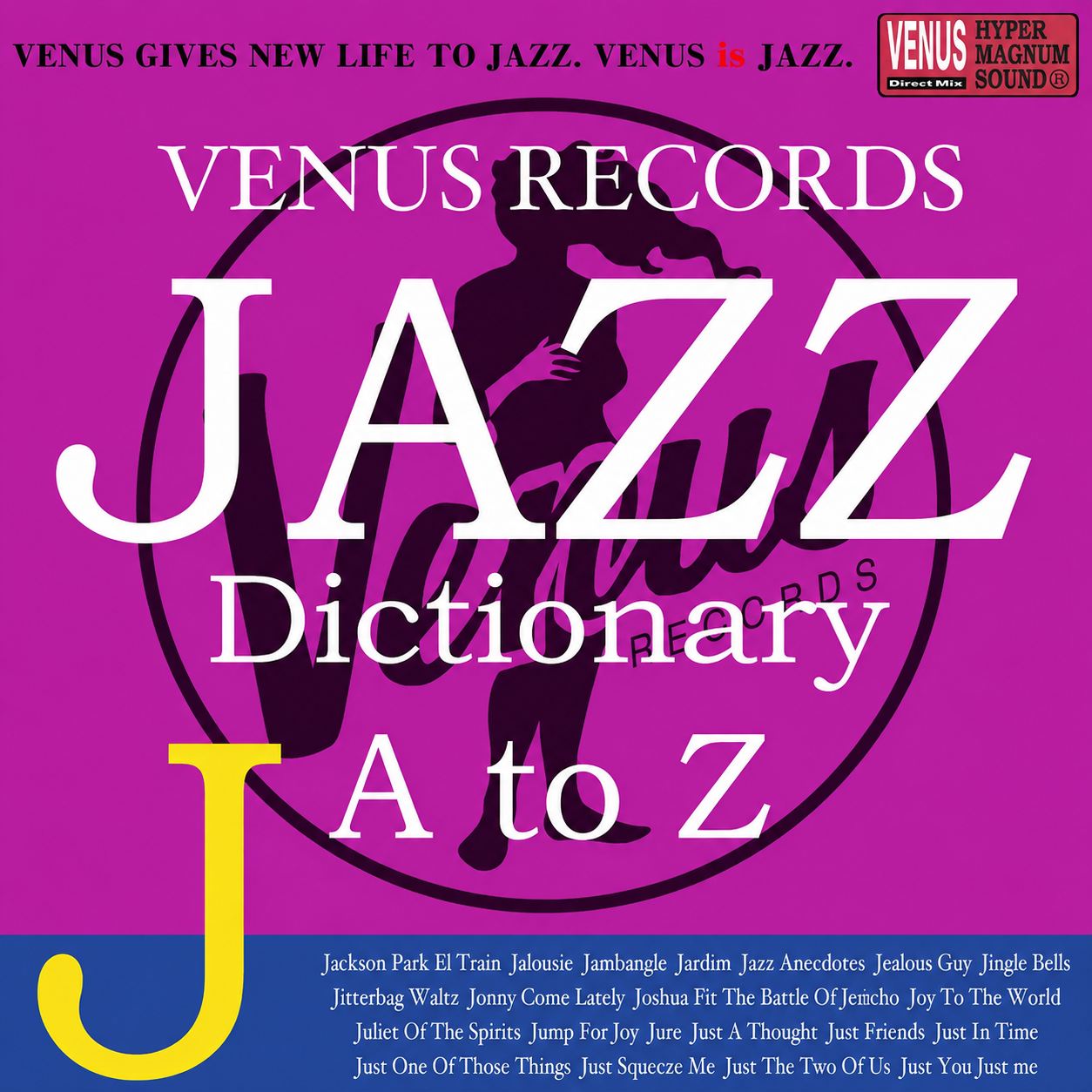
Venus Records
Jazz Dictionary J
Venus Records – Jazz Dictionary J: Joy, Journey and the Living Language of Jazz
With Venus Records – Jazz Dictionary J, the alphabetical exploration of the jazz songbook arrives at a letter that seems almost destined for the genre itself. J stands for jazz, but within this album it also suggests joy, journey, and the restless creative impulse that keeps familiar standards alive. As another chapter in the ambitious Jazz Dictionary A to Z series, the album gathers compositions beginning with the letter J and transforms them into a flowing portrait of melody, improvisation, and audiophile sound.
The concept behind the Venus Records Jazz Dictionary series remains elegantly simple. Each volume is organized around one letter, creating a musical archive that leads listeners through decades of jazz repertoire. Yet Jazz Dictionary J never feels like a catalogue assembled for reference. The performances are shaped as a complete listening experience, moving between romantic ballads, swinging standards, and more reflective pieces with a natural sense of progression.
From the opening moments, the album carries the recognizable sonic character that has made Venus Records audiophile jazz recordings so popular among collectors. The sound is close, rich, and immediate. Piano chords arrive with weight and clarity, the double bass has warmth and physical presence, and the drums add movement through crisp cymbals, subtle brushwork, and carefully controlled dynamics. Every instrument appears clearly defined, yet the ensemble retains the cohesion of a real performance.
That balance between detail and musical unity is essential to the album’s appeal. Venus Records has always aimed to bring the listener near the musicians without turning the recording into a clinical demonstration. On Jazz Dictionary J, the production reveals the texture of the performance while preserving its emotional flow. The listener can hear the attack of a piano key, the vibration of a bass string, and the fading resonance of a cymbal, but those details matter because they make the musicians feel present.
The real story of the album unfolds through interpretation. Jazz standards are never finished works. They are frameworks that invite musicians to reshape melody, harmony, and rhythm according to their own instincts. A familiar theme may begin in a recognizable form, then gradually change through altered phrasing, unexpected pauses, or a solo that redirects the mood of the entire piece.
On Jazz Dictionary J, these transformations happen with confidence. The musicians respect the original compositions, but they do not treat them as untouchable monuments. Instead, each song becomes material for conversation. The pianist may introduce the main theme with restraint, the bassist answers with a line that shifts the harmonic center, and the drummer responds through texture rather than volume. In these exchanges, the ensemble sounds alert, flexible, and deeply connected.
The ballads provide some of the album’s most intimate moments. Slow tempos leave space around every note, allowing the emotional character of the melody to emerge gradually. The musicians avoid unnecessary decoration, using silence and restraint to build tension. In these quieter performances, small changes in touch become especially important, and the listener is drawn into the subtle relationship between sound and space.
The faster selections reveal a different side of the collection. Here, the rhythm section moves with greater urgency, and the music takes on a stronger sense of swing. Piano lines become more percussive, the bass drives the pulse forward, and the drums add energy through precise accents. Even during the most animated passages, the recording maintains the clarity and balance associated with high-end Japanese jazz albums.
For newcomers, Venus Records – Jazz Dictionary J offers an accessible introduction to the classic jazz repertoire. The melodies are inviting, the arrangements are polished, and the alphabetical structure makes the series easy to explore. For experienced listeners, the deeper appeal lies in the interpretation: the harmonic choices, the rhythmic flexibility, and the way each musician brings a personal voice to familiar material.
The album is also well suited to listeners searching for reference jazz music for audiophile systems. Its natural acoustic textures can reveal the tonal balance of loudspeakers, the resolution of headphones, the control of amplifiers, and the transparency of digital-to-analog converters. A well-matched system should reproduce the piano with body, the bass with definition, and the percussion with detail rather than harshness.
Yet Jazz Dictionary J never feels designed only for equipment testing. The recording quality serves the music rather than competing with it. Venus Records understands that the purpose of fidelity is not simply to expose detail, but to strengthen the illusion that the performance is happening in the room. That illusion is especially convincing here, where every pause, accent, and exchange between musicians contributes to the album’s atmosphere.
Within the wider Jazz Dictionary A to Z collection, this volume feels particularly symbolic. The letter J belongs naturally to the identity of the project, but the album also demonstrates why jazz cannot be reduced to a definition. It is a language built from tradition and freedom, structure and spontaneity, discipline and risk.
In an age dominated by short playlists and distracted listening, Jazz Dictionary J rewards patience. It invites the audience to follow the shape of a solo, notice the changing relationship between melody and rhythm, and hear how an ensemble can transform a familiar composition without losing its essence. The more closely the listener follows, the more the album reveals.
For collectors searching for Venus Records jazz albums, best audiophile jazz CDs, Japanese jazz compilations, classic jazz standards collections, high-resolution jazz recordings, and reference music for stereo systems, Jazz Dictionary J stands as another rewarding entry in the series.
More than a collection of titles beginning with J, Venus Records – Jazz Dictionary J is a celebration of jazz as a living, changing art form. It captures the joy of discovery, the journey of interpretation, and the enduring ability of great musicians to make well-known songs sound personal, immediate, and new.
