
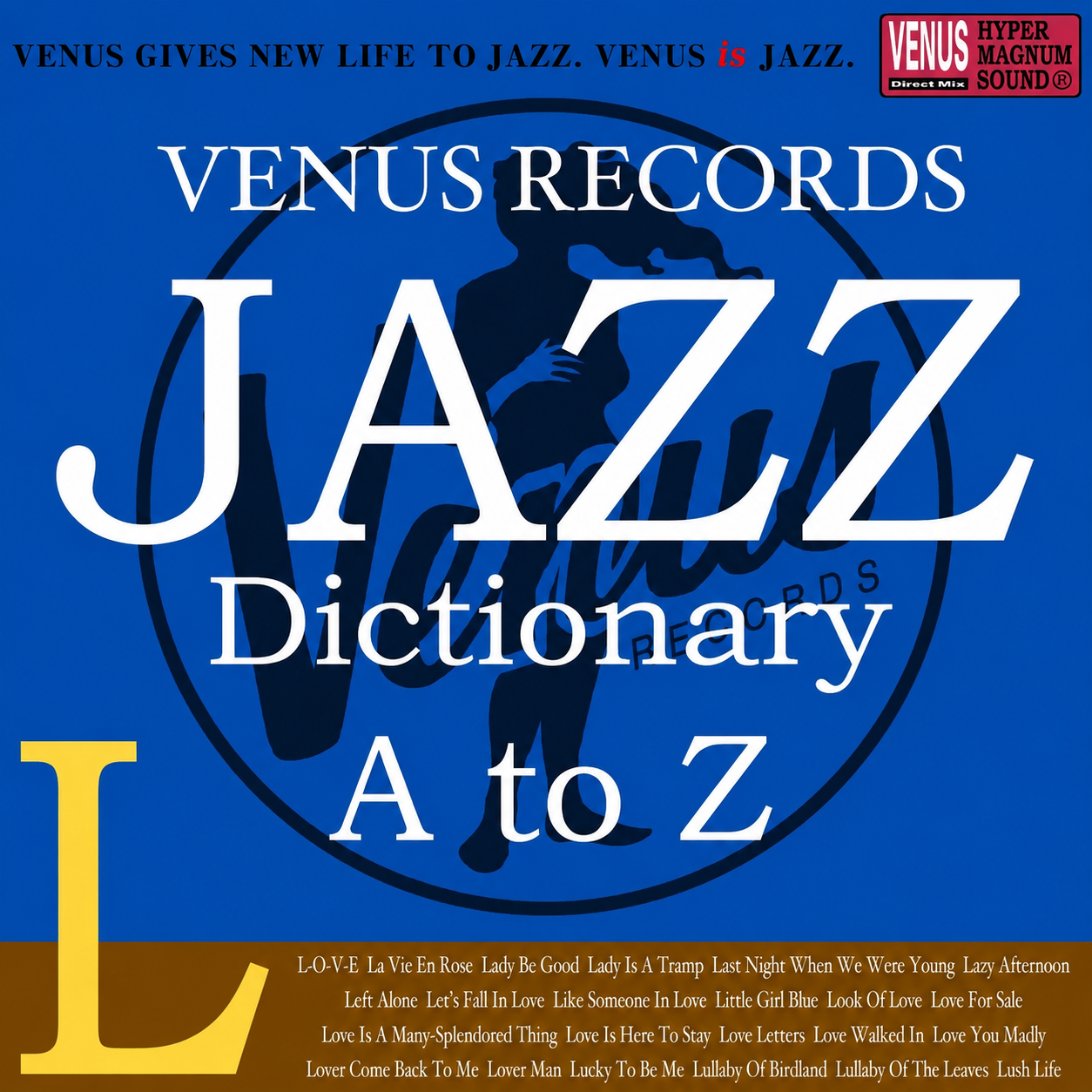
Venus Records
Jazz Dictionary L
Venus Records – Jazz Dictionary L: Love, Lyricism and the Lasting Language of Jazz
With Venus Records – Jazz Dictionary L, the alphabetical journey through the jazz songbook reaches a letter naturally associated with some of the genre’s most enduring themes. Love, loneliness, longing, and late-night reflection have always occupied a central place in jazz, and this volume brings those emotional shades together through familiar standards, elegant interpretations, and the intimate recording style for which Venus Records is known.
The idea behind the Venus Records Jazz Dictionary series remains as clear as it is ambitious. Each album gathers compositions beginning with a single letter, gradually building an A-to-Z portrait of the jazz repertoire. Yet Jazz Dictionary L does not feel like a reference book set to music. It unfolds as a story, moving through romantic ballads, sophisticated standards, and rhythmically alert performances that reveal how much variety can exist within one letter.
From the opening notes, the album carries the recognizable character of Venus Records audiophile jazz recordings. The presentation is close, warm, and full-bodied. Piano chords arrive with authority but retain their natural texture, the double bass has depth without losing definition, and the drums bring motion through crisp cymbals, carefully controlled accents, and subtle brushwork. The listener is placed near the ensemble, with enough detail to hear the physical character of every instrument.
That sense of proximity has long been part of the label’s appeal. Venus Records does not treat sound quality as a separate technical achievement. Its best recordings use clarity to strengthen the emotional connection between the musicians and the listener. On Jazz Dictionary L, a soft piano entrance, the resonance of a bass note, or the fading shimmer of a cymbal becomes part of the album’s atmosphere.
The emotional center of the album lies in interpretation. Jazz standards survive because they are never fixed. A melody associated with romance can become more reflective through slower phrasing, while a song of longing can gain unexpected energy through a stronger rhythmic approach. The musicians work within familiar structures, but they continually reshape mood, harmony, and timing.
This is where Jazz Dictionary L becomes more than a collection of titles. The pianist may introduce a theme with restraint, allowing the melody to settle before moving into a more personal improvisation. The bassist answers with lines that alter the harmonic balance, while the drummer changes the emotional temperature through texture rather than volume. These exchanges create the feeling of a conversation unfolding in real time.
The slower performances are especially revealing. Ballads leave every note exposed, demanding control, patience, and emotional honesty. On this album, silence is treated as part of the music. Phrases are given room to breathe, and the musicians resist the temptation to fill every space. That restraint gives the performances depth and allows small changes in touch to carry greater meaning.
The more rhythmically driven pieces provide contrast. Here, the ensemble moves with sharper definition, and the music takes on a stronger sense of swing. The piano becomes more percussive, the bass pushes the pulse forward, and the drums add energy without overpowering the melodic structure. Even in these livelier passages, the album maintains the balance and clarity associated with high-end Japanese jazz recordings.
For newcomers, Venus Records – Jazz Dictionary L offers an accessible route into the classic jazz repertoire. The melodies are memorable, the arrangements are polished, and the alphabetical structure gives the wider series a clear identity. For experienced listeners, the deeper attraction lies in the details of phrasing, harmonic substitutions, rhythmic flexibility, and ensemble interaction.
The recording also makes an excellent choice for listeners seeking reference jazz music for audiophile systems. The piano can reveal tonal hardness or lack of body, the double bass tests low-frequency control, and the cymbals show whether a system reproduces detail naturally or turns it into brightness. Through quality loudspeakers, headphones, amplifiers, and DACs, the album presents a compact but layered soundstage with strong instrumental presence.
Still, Jazz Dictionary L never feels designed merely to test equipment. Its technical strengths serve the music. The purpose of the detailed recording is to bring the listener closer to the human gestures behind the notes: the pressure of fingers on keys, the movement of strings, and the quiet communication between players.
Within the larger Jazz Dictionary A to Z collection, this volume adds another important chapter to Venus Records’ portrait of the jazz standard tradition. The alphabet provides the order, but the music remains fluid. Each performance proves that songs rooted in history can continue to change when approached with imagination and sensitivity.
In an era dominated by short playlists and distracted listening, Jazz Dictionary L rewards patience. It invites the audience to remain with a melody, follow the development of a solo, and notice how the rhythm section shapes the emotional direction of a performance. The album reveals more with repeated listening because many of its strongest moments are found in the smallest details.
For collectors searching for Venus Records jazz albums, best audiophile jazz CDs, Japanese jazz compilations, classic jazz standards collections, high-resolution jazz recordings, and reference albums for stereo systems, Jazz Dictionary L stands as another rewarding entry in this distinctive series.
More than a collection of songs beginning with L, Venus Records – Jazz Dictionary L is a study in love, lyricism, and the lasting flexibility of jazz. It shows how familiar melodies can remain alive through touch, timing, and the freedom of musicians willing to tell the story again in their own voices.
