
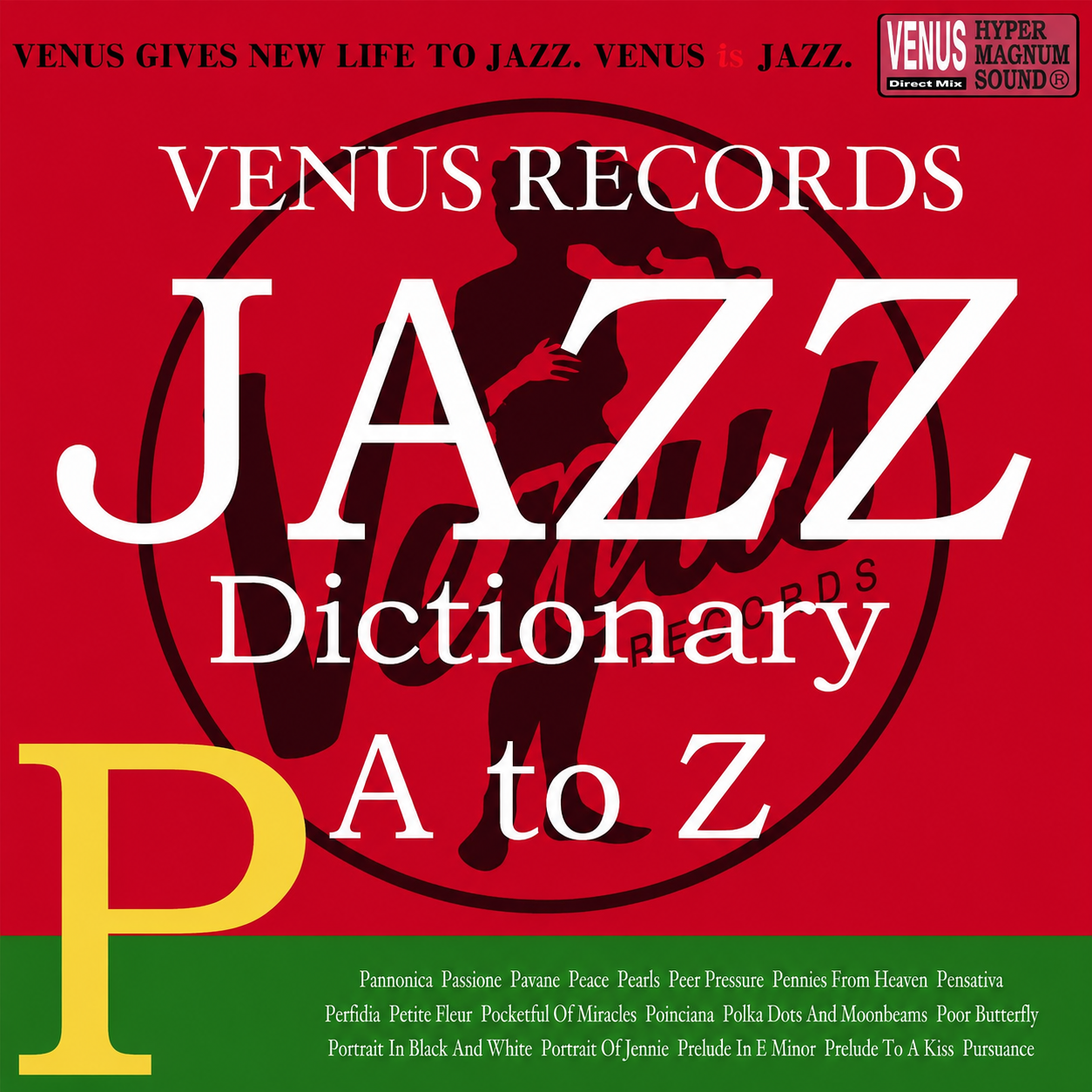
Venus Records
Jazz Dictionary P
Venus Records – Jazz Dictionary P: Poetry, Pulse and the Persistent Spirit of Jazz
With Venus Records – Jazz Dictionary P, the alphabetical journey through the jazz songbook moves into a chapter shaped by poetry, pulse, passion, and performance. As part of the wider Jazz Dictionary A to Z series, the album gathers compositions beginning with the letter P and presents them not as a dry catalogue of standards, but as a flowing musical story built from melody, improvisation, and the intimate sound that has become synonymous with Venus Records.
The idea behind the Venus Records Jazz Dictionary series is simple, but its scope is ambitious. Each volume uses one letter of the alphabet to explore a different section of the jazz repertoire. That structure gives the collection a clear identity, yet the music never feels restricted by it. On Jazz Dictionary P, the songs may share an initial, but they move through very different emotional landscapes, from romantic ballads and reflective late-night pieces to performances driven by swing and rhythmic momentum.
From the first notes, the album carries the recognizable character of Venus Records audiophile jazz recordings. The sound is close, warm, and immediate. Piano chords have weight and texture, the double bass is deep and clearly defined, and the drums bring movement through controlled accents, natural cymbal decay, and subtle brushwork. The listener is placed near the ensemble, close enough to hear the physical details of the performance without losing the unity of the group.
This intimate presentation has long been one of the defining qualities of the Japanese label. Venus Records built its reputation by making acoustic jazz feel vivid and present. On Jazz Dictionary P, the listener can hear the attack of the piano keys, the vibration of bass strings, and the fine changes in a drummer’s touch. These details add realism, but more importantly, they strengthen the emotional connection with the musicians.
The real story of the album begins when familiar melodies start to change. Jazz standards survive because they are never completely fixed. A song can become more tender through slower phrasing, more dramatic through harmonic tension, or more energetic when the rhythm section applies greater pressure. On Jazz Dictionary P, each composition becomes a framework for interpretation rather than a finished object.
The musicians approach the material with confidence and restraint. The pianist may begin with a simple statement of the melody before gradually opening it into a more personal solo. The bassist responds with lines that subtly shift the harmonic direction, while the drummer shapes the atmosphere through rhythm, texture, and space. These exchanges give the album its narrative flow and create the sense that the music is being built in real time.
The slower performances reveal the expressive depth of the ensemble. Ballads leave every note exposed and require patience rather than display. On Jazz Dictionary P, the quieter moments are allowed to breathe. The musicians resist the temptation to fill every space, allowing silence to become part of the arrangement. A delayed chord, a soft bass response, or a fading cymbal can carry as much emotional weight as a complete solo.
The faster selections bring contrast and energy. Here, the pulse becomes stronger, the piano takes on a more percussive role, and the bass drives the performance forward. The drums add swing without overwhelming the melody, maintaining the clarity and balance associated with high-end Japanese jazz recordings. Even at its most animated, the music remains controlled and cohesive.
That balance between reflection and momentum gives Jazz Dictionary P its character. The album can move from quiet intimacy to lively ensemble interaction without losing its sense of continuity. What connects the tracks is the attention to touch, timing, and communication.
For newcomers, Venus Records – Jazz Dictionary P offers an accessible route into classic jazz standards. The melodies are inviting, the performances are polished, and the alphabetical concept makes the wider series easy to follow. For experienced listeners, the deeper appeal lies in the details of interpretation: altered phrasing, harmonic substitutions, rhythmic flexibility, and the subtle dialogue between the musicians.
The album also works well as reference jazz music for audiophile systems. Piano tone can reveal hardness or lack of body, the double bass tests low-frequency control, and the cymbals show whether a system preserves fine detail without becoming bright or aggressive. Through quality loudspeakers, headphones, amplifiers, and DACs, Jazz Dictionary P presents a compact but layered soundstage with convincing instrumental presence.
Yet the recording never feels like a technical demonstration. Its sonic strengths remain in service of the music. Venus Records understands that fidelity matters because it makes the performance feel more human. On this album, clarity allows the listener to hear not only the notes, but also the decisions, reactions, and physical gestures behind them.
Within the larger Jazz Dictionary A to Z collection, the P volume continues to demonstrate the richness of the jazz tradition. The alphabet provides order, but improvisation keeps the project alive. Each standard belongs to a shared history, yet every performance carries a different emotional identity.
In an era dominated by short playlists and distracted listening, Jazz Dictionary P rewards patience. It invites the listener to stay with a solo, follow the movement of the harmony, and notice how the ensemble changes direction through small, spontaneous choices. The album becomes more revealing with repeated listening because many of its strongest moments are found in details that initially pass quietly.
For collectors searching for Venus Records jazz albums, best audiophile jazz CDs, Japanese jazz compilations, classic jazz standards, high-resolution jazz recordings, and reference albums for stereo systems, Jazz Dictionary P stands as another strong entry in this distinctive series.
More than a collection of songs beginning with P, Venus Records – Jazz Dictionary P is a study in poetry, pulse, and the persistent ability of jazz to reinvent itself. It shows how familiar melodies can continue to feel fresh when musicians approach them with sensitivity, imagination, and the freedom to tell the story in their own way.
