
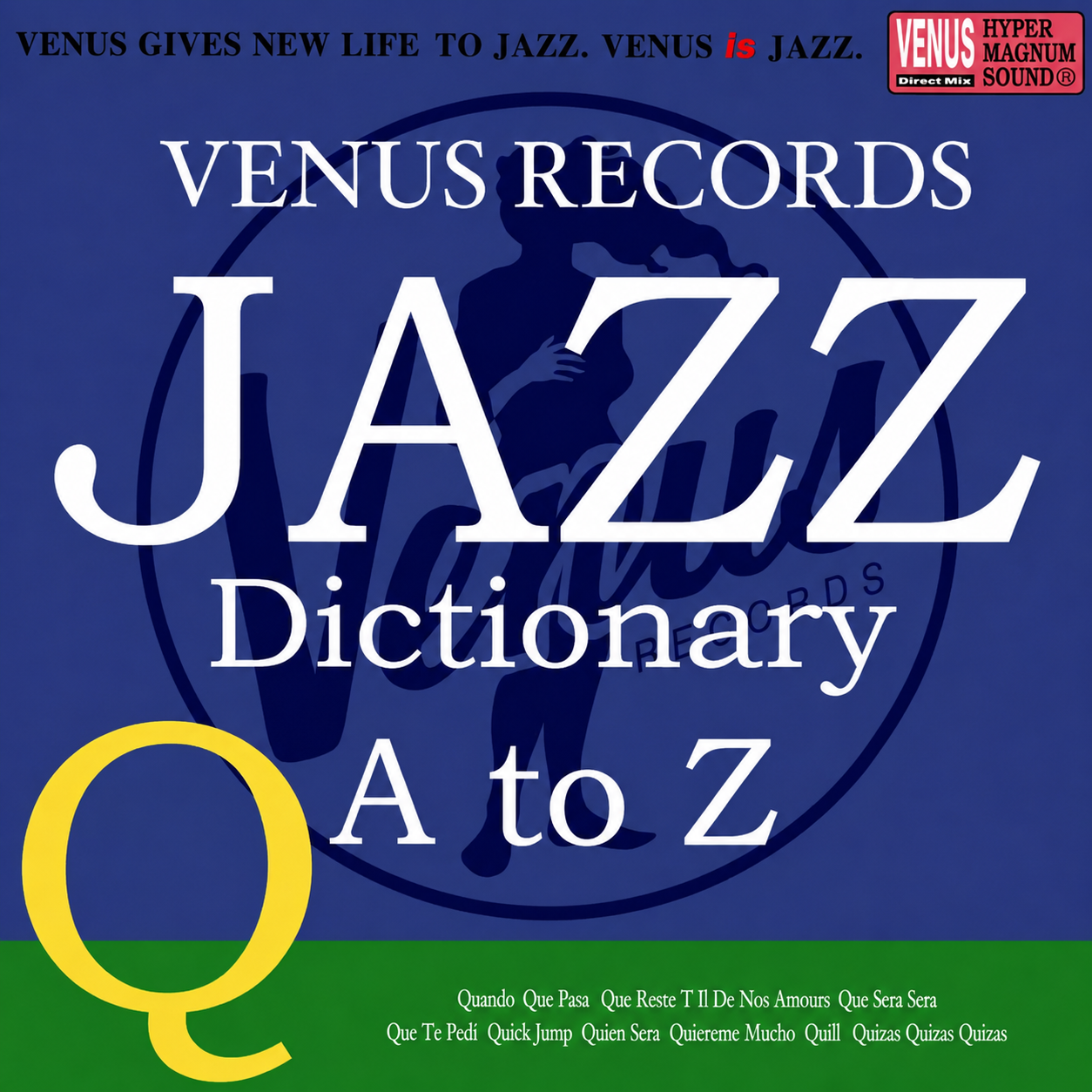
Venus Records
Jazz Dictionary Q
Venus Records – Jazz Dictionary Q: Quiet Fire, Rare Standards and the Quest for Audiophile Jazz
With Venus Records – Jazz Dictionary Q, the alphabetical journey through the jazz songbook arrives at one of its most intriguing and difficult letters. Compared with the abundance of standards beginning with A, B, or M, the letter Q occupies a quieter corner of the repertoire. That rarity gives this volume a distinctive character. Rather than feeling like another broad survey, Jazz Dictionary Q becomes a search for overlooked melodies, unusual titles, and performances that reveal how much musical possibility can exist beyond the most familiar standards.
The concept behind the Venus Records Jazz Dictionary series has always been simple in structure and ambitious in execution. Each album focuses on one letter of the alphabet, gradually constructing an A-to-Z portrait of jazz history. Yet the series works because it never treats the songs as entries in a reference book. The tracks are presented as living material, ready to be reshaped through improvisation, ensemble communication, and the individual personalities of the musicians.
That principle becomes especially important on Jazz Dictionary Q. The limited number of widely known jazz compositions beginning with Q encourages a more adventurous form of curation. Familiarity is no longer the album’s only attraction. Discovery becomes part of the experience, inviting the listener to move beyond standard repertoire and enter a less frequently explored section of the jazz tradition.
From the opening notes, the album carries the recognizable sonic identity associated with Venus Records audiophile jazz recordings. The sound is intimate, warm, and immediate. Piano chords arrive with weight and definition, the double bass provides a rich but controlled foundation, and the drums add movement through natural cymbal decay, precise accents, and delicate brushwork. The instruments appear close to the listener, creating the atmosphere of a small studio session or an after-hours jazz club.
This sense of proximity has helped make Venus Records a respected name among collectors of Japanese audiophile jazz CDs. The label’s recordings emphasize the physical reality of acoustic instruments. The listener can hear the attack of the piano keys, the resonance of the bass body, and the changing texture of the drummer’s touch. These details do more than demonstrate recording quality. They make the performance feel human and present.
The real story of Jazz Dictionary Q begins when the musicians move away from the written themes. A composition may provide the melody and harmonic structure, but jazz finds its identity in what happens next. The pianist alters the timing of a phrase, the bassist introduces a line that shifts the emotional direction, and the drummer responds through space, dynamics, or a subtle change in pulse.
These interactions create the album’s quiet fire. The performances do not always need dramatic solos or explosive climaxes to hold attention. Much of the tension comes from restraint. A delayed chord, a soft bass answer, or a carefully placed cymbal accent can transform the mood of an entire passage. The music feels conversational, with each player listening as closely as they perform.
The slower selections allow that dialogue to unfold with particular clarity. Ballads leave every note exposed, demanding patience and emotional discipline. On Jazz Dictionary Q, silence becomes an essential part of the arrangement. The musicians give phrases room to breathe, allowing the natural resonance of the instruments to remain audible after the notes have ended.
The more rhythmically active tracks provide contrast. Here, the piano takes on a sharper percussive quality, the bass pushes the pulse forward, and the drums introduce a stronger sense of swing. Even during the livelier performances, the ensemble remains balanced and controlled, preserving the clarity associated with high-end jazz recordings.
Because the repertoire is less obvious, Jazz Dictionary Q encourages a different kind of listening. The audience is less likely to approach every track with fixed expectations. Instead of comparing each interpretation with a famous earlier version, the listener can focus on the present performance: its tone, pacing, improvisation, and emotional development.
For newcomers, Venus Records – Jazz Dictionary Q offers a route into jazz that feels more exploratory than conventional. It shows that the genre is much broader than its most frequently recorded standards. For experienced collectors, the album offers the pleasure of encountering less familiar compositions presented with the polished musicianship and vivid production associated with Venus Records.
The recording also makes a strong choice for anyone searching for reference music for audiophile systems. Piano tone can reveal whether a pair of speakers sounds natural or overly hard, the double bass tests low-frequency control, and the cymbals show whether a system reproduces detail without harshness. Through quality headphones, amplifiers, DACs, and loudspeakers, the album presents a compact but layered soundstage with realistic instrumental textures.
Yet Jazz Dictionary Q never feels like a technical test disc. Its sonic quality remains connected to the musical experience. Venus Records understands that fidelity has value because it strengthens the illusion that the musicians are performing in the room. The recording allows the listener to hear not only the notes, but also the decisions and physical gestures behind them.
Within the larger Jazz Dictionary A to Z collection, this volume occupies a special place. The letter Q may offer fewer obvious choices, but that limitation becomes a creative advantage. It pushes the series beyond the predictable and reminds the listener that jazz history contains many valuable compositions outside the most familiar canon.
In an age dominated by automated playlists and repeated favorites, Jazz Dictionary Q rewards curiosity. It asks the audience to listen without preconceptions, follow the development of each performance, and appreciate the subtle ways musicians transform unfamiliar material into an immediate emotional experience.
For collectors searching for Venus Records jazz albums, best audiophile jazz CDs, rare jazz standards, Japanese jazz compilations, high-resolution jazz recordings, and reference albums for stereo systems, Jazz Dictionary Q represents one of the most distinctive entries in the series.
More than a collection of songs beginning with Q, Venus Records – Jazz Dictionary Q is a quest into the quieter regions of the jazz repertoire. Through careful curation, expressive improvisation, and richly detailed sound, the album proves that rarity can become discovery and that even the least common letter can open an unforgettable chapter in the language of jazz.
