
Venus Records
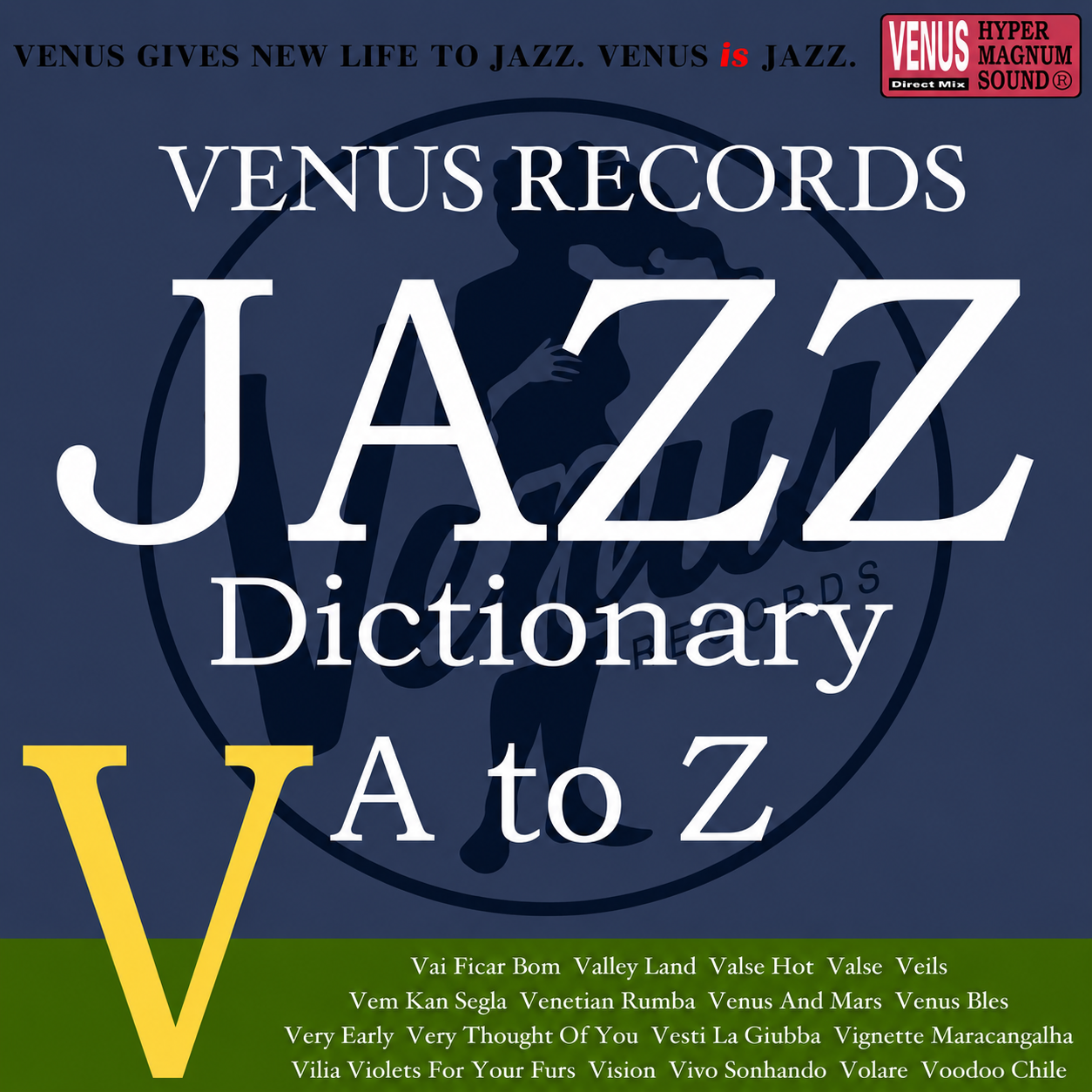
Jazz Dictionary V
Venus Records – Jazz Dictionary V: Velvet Tones, Vital Standards and the Vivid Language of Jazz
With Venus Records – Jazz Dictionary V, the alphabetical journey through jazz reaches a letter that naturally evokes velvet, vitality, virtuosity, and voice. As part of the wider Jazz Dictionary A to Z series, the album gathers compositions beginning with the letter V and turns them into a refined musical narrative shaped by classic standards, expressive improvisation, and the intimate audiophile sound for which Venus Records is widely admired.
The idea behind the Venus Records Jazz Dictionary series is simple in structure but ambitious in scope. Each volume focuses on one letter of the alphabet, gradually building a musical portrait of the jazz repertoire. Yet Jazz Dictionary V never feels like a catalogue. It unfolds as a complete listening experience, moving between tender ballads, lyrical interpretations, and performances driven by a firmer rhythmic pulse.
From the opening notes, the album reveals the familiar character of Venus Records audiophile jazz recordings. The sound is warm, close, and full-bodied. Piano chords arrive with weight and clarity, the double bass provides a deep and controlled foundation, and the drums shape the music through natural cymbal decay, delicate brushwork, and carefully judged accents. The listener is placed close to the musicians, creating the atmosphere of a private studio session or a small late-night jazz club.
That sense of presence has long defined the Venus Records catalogue. The Japanese label is known for recordings that reveal the physical character of acoustic instruments without losing the emotional flow of the performance. On Jazz Dictionary V, the listener can hear the attack of the piano keys, the resonance of the bass body, and the changing texture of a drummer’s touch.
The album’s real story begins when the musicians move beyond the written themes. Jazz standards survive because they are never truly finished. Every performance offers another possibility. A familiar melody can become more romantic through slower phrasing, more dramatic through harmonic tension, or more urgent when the rhythm section applies greater pressure.
On Jazz Dictionary V, the musicians approach the repertoire with respect but not caution. The pianist may introduce a theme in a clear and restrained form before gradually opening it into a more personal improvisation. The bassist responds with lines that subtly redirect the harmony, while the drummer shapes the emotional temperature through rhythm, dynamics, and space.
These interactions give the album its narrative movement. The music develops through a series of choices made in real time. A delayed chord can create tension, a softly placed bass note can change the mood, and a single cymbal accent can signal a new direction. The performers sound connected, attentive, and willing to let the music evolve naturally.
The slower selections reveal the album’s most intimate side. Ballads leave every note exposed and demand patience from both the musicians and the listener. On Jazz Dictionary V, silence becomes part of the arrangement. Phrases are allowed to breathe, and the natural resonance of each instrument remains audible after the notes have ended.
The more energetic tracks provide contrast. Here, the piano becomes more percussive, the bass drives the pulse forward, and the drums introduce a stronger sense of swing. Even during the livelier passages, the recording preserves the clarity and balance associated with high-end Japanese jazz albums.
That contrast between softness and momentum gives Jazz Dictionary V its identity. The album can move from quiet reflection to confident ensemble interplay without losing coherence. What connects the performances is the musicians’ attention to tone, timing, and communication.
For newcomers, Venus Records – Jazz Dictionary V offers an inviting introduction to classic jazz standards. The melodies are accessible, the performances are polished, and the alphabetical structure makes the wider series easy to explore. For experienced listeners, the deeper attraction lies in the details of interpretation: altered phrasing, harmonic substitutions, rhythmic flexibility, and the subtle dialogue between the players.
The recording also works well as reference jazz music for audiophile systems. Piano tone can reveal whether loudspeakers sound natural or overly hard, the double bass tests low-frequency control, and the cymbals show whether a system preserves detail without becoming bright. Through quality headphones, amplifiers, DACs, and loudspeakers, Jazz Dictionary V presents a compact but layered soundstage with convincing instrumental presence.
Yet the album never feels like a technical demonstration. Its sonic strengths remain in service of the music. Venus Records understands that fidelity matters because it strengthens the illusion that the musicians are present in the room. On this album, clarity allows the listener to hear not only the notes, but also the decisions, reactions, and physical gestures behind them.
Within the larger Jazz Dictionary A to Z collection, the V volume continues the series’ portrait of jazz as both tradition and freedom. The alphabet provides structure, but improvisation keeps the music alive. Each standard belongs to a shared history, yet every performance speaks with an individual voice.
In an era dominated by short playlists and distracted listening, Jazz Dictionary V rewards patience. It invites the audience to follow the development of a solo, notice the changing relationship between melody and rhythm, and hear how the ensemble reshapes familiar material through subtle musical choices.
For collectors searching for Venus Records jazz albums, best audiophile jazz CDs, Japanese jazz compilations, classic jazz standards, high-resolution jazz recordings, and reference albums for stereo systems, Jazz Dictionary V stands as another polished entry in this distinctive series.
More than a collection of songs beginning with V, Venus Records – Jazz Dictionary V is a study in velvet tone, vital rhythm, and vivid musical communication. It shows how familiar standards can continue to feel fresh when musicians approach them with sensitivity, imagination, and the freedom to tell the story again.
