
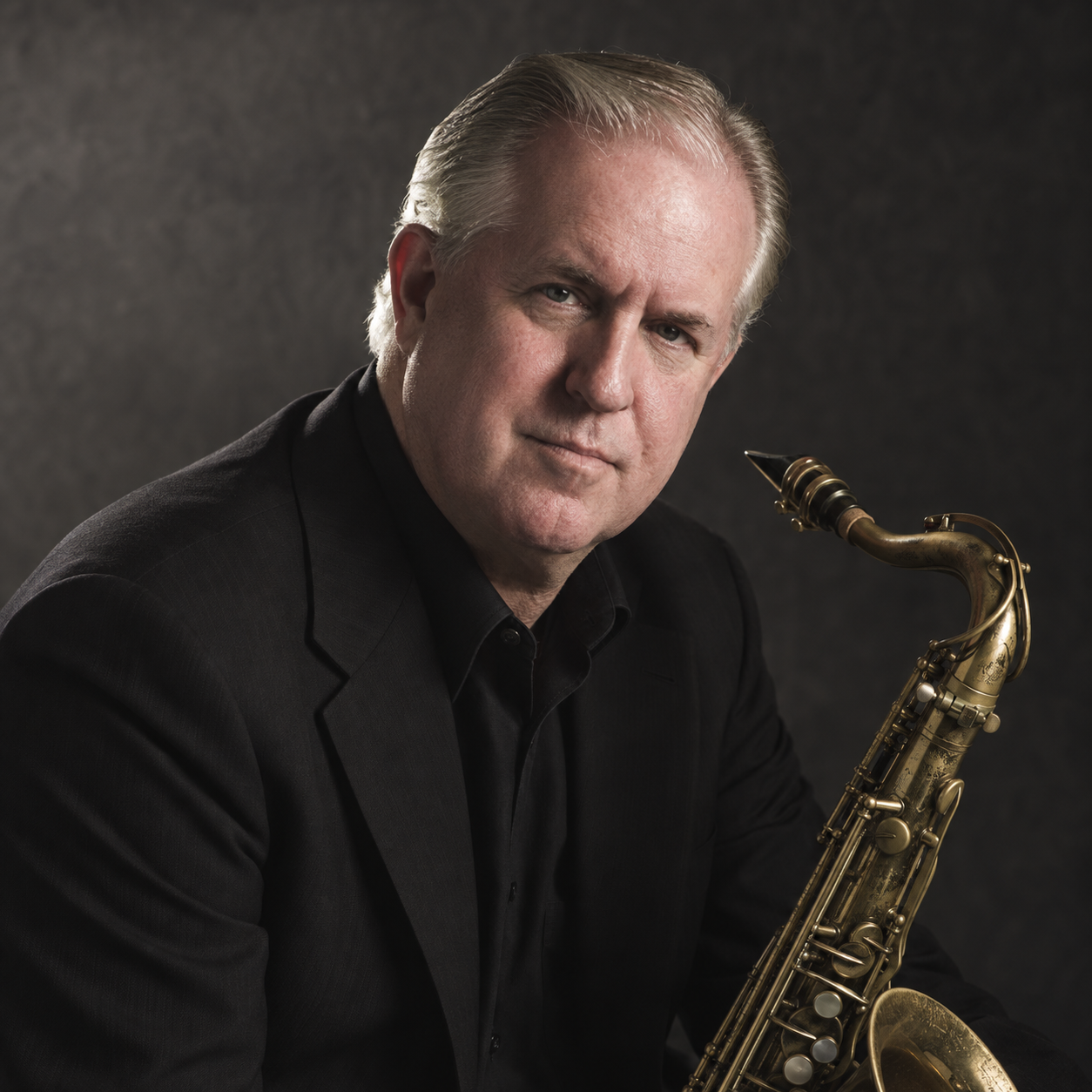
Scott Hamilton
GREAT CHOICE: Scott Hamilton!
Great music deserves to be discovered, enjoyed and shared.
CAN YOU SPARE A CUP OF COFFEE?
Audiophile-Streaming is a personal passion project, built with countless hours of discovering, selecting and sharing exceptional music.
I personally cover, without sponsors, the ongoing costs of hosting, software and subscriptions to keep the music discoveries coming. If you enjoy my work, your support is always appreciated.
A LITTLE THANK YOU IN RETURN
Just one coffee gives you lifetime access to the Coffee Club and all its playlists.
No subscriptions. No recurring fees.
In 1977, Scott Hamilton made an unusual impression on the jazz world. While many younger musicians were exploring fusion and increasingly complex forms of improvisation, he arrived with a tenor saxophone sound firmly connected to the great swing players of an earlier generation. His playing was warm, melodic and wonderfully relaxed, with little interest in following the latest musical fashion. Some listeners initially considered his approach old-fashioned, but I think that description misses something important. Hamilton wasn’t simply recreating the past. He understood why this music worked in the first place, and he knew how to make it sound natural and convincing in his own hands.
Born on September 12, 1954, in Providence, Rhode Island, Scott Hamilton grew up surrounded by jazz through his father’s record collection. He experimented with several instruments as a child, including drums, piano, harmonica and clarinet, before becoming serious about the tenor saxophone in his teens. His influences included Coleman Hawkins, Ben Webster, Lester Young and Zoot Sims, musicians who understood that a memorable phrase could be more powerful than a display of technical ability. In 1976, Hamilton moved to New York, where trumpeter Roy Eldridge helped introduce him to established jazz musicians. He soon found opportunities to work with respected performers, including Benny Goodman, and began a recording relationship with Concord Jazz that would become central to his career. I find that early development fascinating because Hamilton established a recognisable musical identity at an age when many players are still searching for one.
His 1977 debut album, Scott Hamilton Is a Good Wind Who Is Blowing Us No Ill, remains an excellent introduction to his original sound. Recorded for Concord Jazz with trumpeter Bill Berry, pianist Nat Pierce, bassist Monty Budwig and drummer Jake Hanna, the album presents a young musician who already sounds remarkably comfortable with his material. On pieces such as “That’s All” and Coleman Hawkins’ “Stuffy,” Hamilton combines a substantial tenor sound with an easy rhythmic confidence. I particularly enjoy the way his phrases develop without becoming crowded. The saxophone has body and character, but he never seems interested in making the instrument sound bigger than the music requires. The accompaniment contributes just as much to the pleasure, giving the arrangements a natural swing that makes the recording enjoyable beyond its historical importance.
That first album also helps explain why Hamilton attracted attention at a time when mainstream swing jazz was receiving relatively little interest from younger musicians. He demonstrated that the traditions of Hawkins and Webster still offered plenty of opportunities for individual expression. Through the following decades, his recording career expanded to include collaborations with Ruby Braff, Warren Vaché, Dave McKenna, Gene Harris, Gerry Mulligan and Rosemary Clooney. These musical relationships placed him alongside both established veterans and musicians who shared his affection for melodic, acoustic jazz. His playing gradually became more personal and less obviously dependent on his influences. I hear that development most clearly in the way he handles slower material, where his phrasing becomes increasingly patient and his control of tone matters more than the number of notes he plays.
One recording that shows another side of Hamilton is The Red Door: Remember Zoot Sims, released in 1998. This Concord Jazz album brings him together with guitarist Bucky Pizzarelli for a tribute to one of his important influences. Rather than using a conventional rhythm section, the recording relies entirely on the musical relationship between tenor saxophone and guitar. Pizzarelli’s seven-string guitar allows him to provide bass movement, harmony and rhythmic support while leaving plenty of space for Hamilton’s melodic lines. On “The Red Door” and “Two Funky People,” I enjoy the relaxed communication between the musicians, particularly the way the guitar responds to the saxophone without interrupting its flow. The absence of drums gives the music a different sense of movement, allowing small changes in timing and emphasis to become more noticeable.
For anyone interested in audiophile recordings, The Red Door is particularly rewarding because its relatively simple instrumentation makes it easy to concentrate on the individual sounds. The woody character of the guitar and the fuller midrange of Hamilton’s tenor create an attractive contrast. With good speakers or headphones, I pay attention to the attack and decay of the guitar notes, the breath within the saxophone sound and the spaces between the two instruments. These details contribute more to my enjoyment than exaggerated stereo effects or spectacular dynamics. I also appreciate that Hamilton doesn’t attempt to imitate Zoot Sims exactly. His interpretation is generally more relaxed, and that difference gives the tribute its own musical personality.
Another album I would recommend is Nocturnes & Serenades, released by Concord Jazz in 2006. Here Hamilton works with pianist John Pearce, bassist Dave Green and drummer Steve Brown in a collection dominated by ballads and gentle, medium-tempo performances. This is music that places considerable demands on tone, phrasing and control because there is very little to hide behind. “Chelsea Bridge,” written by Billy Strayhorn, is particularly revealing. Hamilton shapes the melody with a rounded sound and a restrained sense of expression, allowing the composition to develop without unnecessary decoration. I also enjoy “You Go to My Head,” where his handling of longer phrases demonstrates how effectively he can sustain musical interest at a slower pace.
From an audiophile perspective, Nocturnes & Serenades offers a different listening experience from his earlier recordings. The piano, double bass and drums provide a supportive acoustic setting, while Hamilton’s saxophone remains the clear focus. I like listening for the small changes in his tone, especially where a note begins gently before becoming fuller or where the end of a phrase is allowed to fade naturally. Dave Green’s bass provides a satisfying rhythmic foundation, while John Pearce’s piano adds harmonic detail without overcrowding the arrangement. This isn’t the kind of recording I would select to demonstrate extreme dynamics or impressive sound effects. Its value lies in the natural interaction between the musicians and the subtle information that a transparent audio system can reveal.
Hamilton’s career has also developed well beyond the American jazz scene where he first became established. After spending time based in London, he settled in Italy and continued working extensively with European musicians. His recordings for labels including Arbors and Challenge demonstrate his willingness to explore different musical partnerships while remaining faithful to his preferred style. In May 2026, he released In the Still of the Night on GLM Music, featuring Tizian Jost on vibraphone alongside pianist Bernhard Pichl, bassist Rudi Engel and drummer Michael Keul. The addition of vibraphone brings another instrumental colour to his familiar acoustic jazz setting. I appreciate that Hamilton continues to explore these combinations without feeling the need to abandon the musical character that made him recognisable.
There is, of course, a certain consistency to his playing that will not appeal equally to everyone. Listeners looking for dramatic changes of direction, aggressive improvisation or challenging harmonic experiments may find his approach rather restrained. His recordings often occupy a similar musical territory, and I wouldn’t pretend that every album offers a completely new experience. But I see that consistency as an important part of his identity rather than a lack of imagination. Hamilton concentrates on melody, tone, swing and communication, and the differences between his performances often reveal themselves through repeated listening. A slightly delayed phrase, a change in emphasis or a particularly well-judged pause can make a familiar standard feel surprisingly fresh.
Scott Hamilton’s importance to jazz goes beyond his substantial discography. He helped renew interest in mainstream swing at a time when many musicians of his generation were looking elsewhere, and his career has demonstrated that traditional jazz can remain relevant without being artificially modernised. For someone discovering his music, I would begin with Nocturnes & Serenades for its accessible melodies and intimate acoustic sound, then explore his 1977 debut to understand where his recording career began. The Red Door adds another perspective by revealing how naturally he works in a smaller, more exposed musical setting. Across these recordings, I hear an artist who respects his influences but has developed a clear voice of his own. For me, his finest quality is his unhurried phrasing, the ability to give every note exactly the time it needs.