
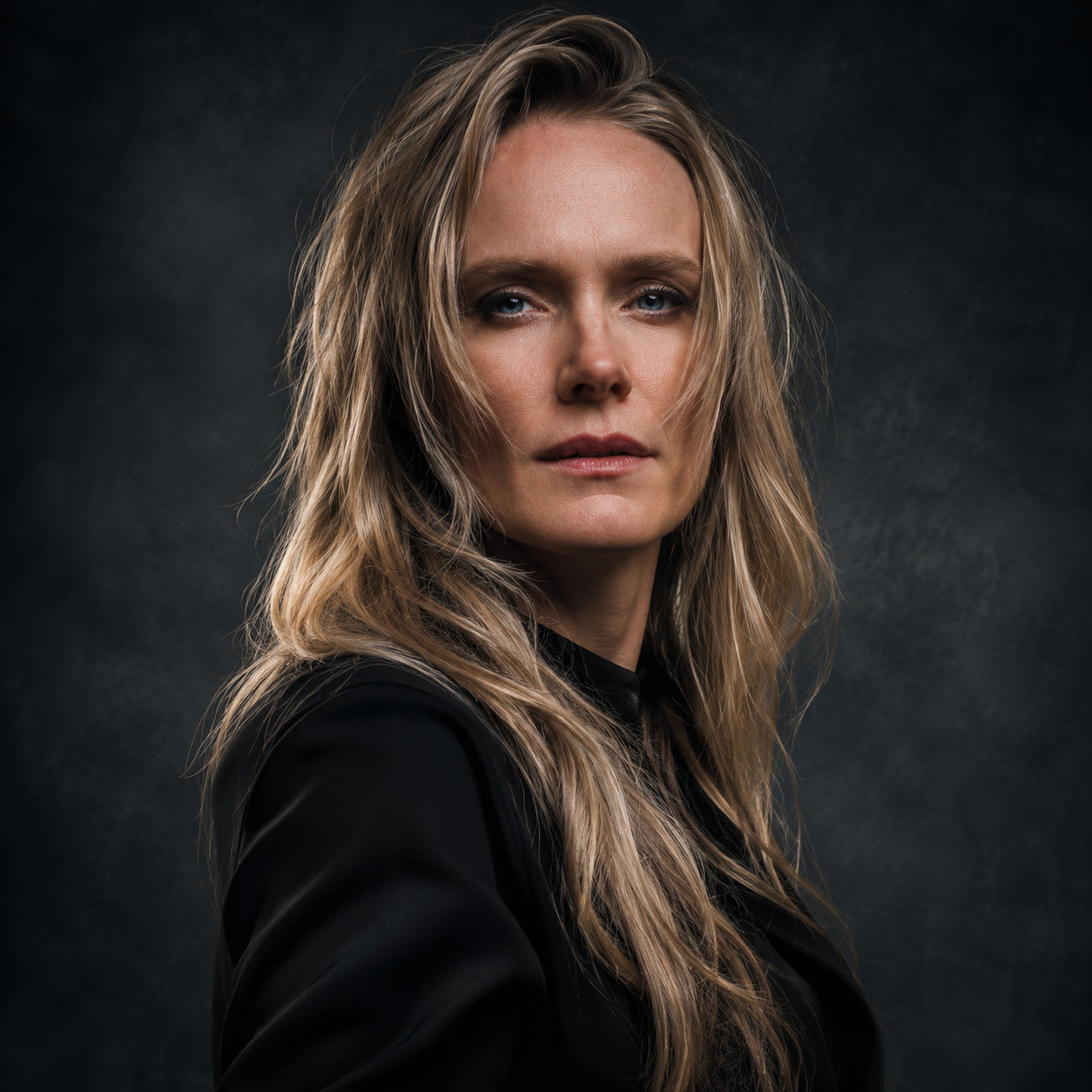
Ane Brun
GREAT CHOICE: Ane Brun!
Great music deserves to be discovered, enjoyed and shared.
CAN YOU SPARE A CUP OF COFFEE?
Audiophile-Streaming is a personal passion project, built with countless hours of discovering, selecting and sharing exceptional music.
I personally cover, without sponsors, the ongoing costs of hosting, software and subscriptions to keep the music discoveries coming. If you enjoy my work, your support is always appreciated.
A LITTLE THANK YOU IN RETURN
Just one coffee gives you lifetime access to the Coffee Club and all its playlists.
No subscriptions. No recurring fees.
Ane Brun has a voice that I would recognise almost immediately, even in a song I have never heard before. Her slightly trembling vibrato, the way she stretches certain words and the small changes in intensity within a single phrase give her singing a very individual character. She doesn’t have to sing loudly to hold my attention, and I particularly enjoy the contrast between the apparent fragility of her voice and the confidence with which she delivers a song. There is also a certain unpredictability in her phrasing that makes familiar melodies interesting again. For me, she is one of those artists whose musical personality is just as important as the songs themselves.
Born Ane Brunvoll on 10 March 1976 in Molde, Norway, she grew up in a musical environment. Her mother, Inger Johanne Brunvoll, is a jazz singer and pianist, and Ane eventually developed her own musical identity as a singer, songwriter and guitarist. She moved to Sweden around the beginning of the new millennium and gradually established herself through live performances and independent recordings. Her debut album, Spending Time with Morgan, appeared in 2003, introducing a singer-songwriter whose music was largely built around acoustic instruments and personal lyrics. Artists such as Ani DiFranco and Peter Gabriel were important musical influences, although Brun developed a style that was distinctly her own. Her independent approach to music, continued through her own label Balloon Ranger Recordings, has allowed her considerable freedom to explore different musical directions.
An important step in her international career came in 2010 when Peter Gabriel invited her to join his New Blood tour. She also contributed to his 2011 album New Blood, performing alongside Gabriel on his orchestral reinterpretation of “Don’t Give Up”. I find their voices particularly complementary because Gabriel has a darker, heavier vocal character, while Brun brings a lighter and more vulnerable quality to the performance. She understands that a duet is as much about listening to the other singer as it is about singing yourself.
From acoustic folk to adventurous arrangements
For me, It All Starts With One, released in 2011 and produced by Tobias Fröberg, represents one of the most interesting developments in her career. The acoustic simplicity of her earlier recordings made room for more adventurous arrangements, stronger percussion and greater contrasts in dynamics. “Do You Remember”, featuring backing vocals by Swedish folk duo First Aid Kit, has a rhythmic energy that might surprise anyone familiar only with Brun’s quieter recordings. I particularly enjoy the physical impact of the drums and the way her voice remains clearly defined despite the increasingly busy arrangement. “Worship”, featuring José González, offers a completely different experience, combining understated singing with strings, guitar and subtle percussion. It is an excellent album for appreciating how much atmosphere can be created without filling every available space in a recording.
A remarkable interpreter of other people’s music
One album I would particularly recommend to audiophile music lovers is Leave Me Breathless, released on 6 October 2017. It contains fourteen interpretations of songs by other artists, including Foreigner, Radiohead, Sade, Bob Dylan and Nick Cave. Some of the initial recordings were made at home using a guitar and a single microphone before additional musicians and arrangements became involved. That uncomplicated approach is something I appreciate, especially when the performance is strong enough to sustain such an intimate recording. Her interpretation of Foreigner’s “I Want to Know What Love Is” demonstrates how effectively a familiar song can communicate without its original large-scale production. Removing that musical weight brings much more attention to the words and the small variations in her vocal delivery.
Her version of Sade’s “By Your Side”, accompanied by pianist Klas-Henrik Hörngren, is another beautiful example of musical restraint. On a revealing pair of speakers or headphones, the relationship between the piano and her voice is particularly rewarding. I like hearing the gradual decay of the piano notes, the slight changes in her breathing and the way she allows a phrase to finish naturally before beginning the next. A recording like this is also useful for evaluating midrange transparency, particularly whether a system reproduces the natural texture of a female voice without introducing excessive brightness. But above all, it is a performance I would happily recommend to someone who has no particular interest in audio equipment.
Brun continued to explore different musical directions with two albums released in 2020, After the Great Storm and How Beauty Holds the Hand of Sorrow. The former embraces more elaborate production and electronic textures, while the latter concentrates on quieter, more intimate arrangements. Her willingness to experiment has continued with I Thought We Were the Same, released on 6 November 2026, which takes her electronic pop sound further. I appreciate that she has never allowed the success of her acoustic recordings to determine the limits of her musical identity. Although my personal preference tends towards her more restrained performances, her broader catalogue demonstrates that rhythmic complexity and electronic instrumentation can be equally valid parts of her musical expression.
Over the course of more than two decades, Ane Brun has established herself as a distinctive figure in Scandinavian independent music, combining thoughtful songwriting with an exceptional ability to reinterpret existing material. Her career has earned her multiple Norwegian music awards and the opportunity to collaborate with musicians from very different musical backgrounds. For anyone discovering her music, I would start with Leave Me Breathless before exploring It All Starts With One. Together, they provide a good understanding of both her interpretive abilities and her imagination as a songwriter. What I ultimately value most about Ane Brun is her ability to express so much through the smallest variations in vocal timing, tone and intensity.