
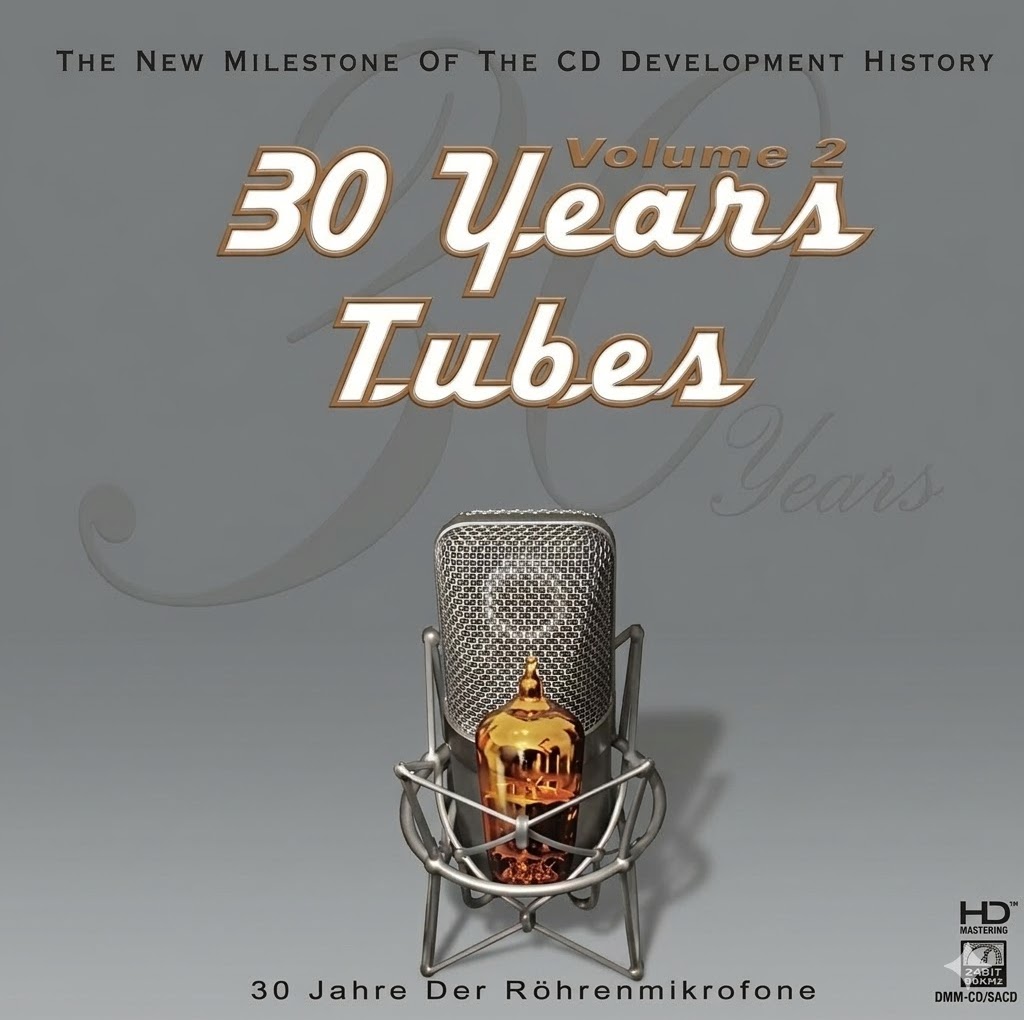
30 Years Tubes
Vol. 2
GREAT CHOICE: 30 Years Tubes Vol. 2!
Great music deserves to be discovered, enjoyed and shared.
CAN YOU SPARE A CUP OF COFFEE?
Audiophile-Streaming is a personal passion project, built with countless hours of discovering, selecting and sharing exceptional music.
I personally cover, without sponsors, the ongoing costs of hosting, software and subscriptions to keep the music discoveries coming. If you enjoy my work, your support is always appreciated.
A LITTLE THANK YOU IN RETURN
Just one coffee gives you lifetime access to the Coffee Club and all its playlists.
No subscriptions. No recurring fees.
The combination of Natalie Cole, Nat King Cole, Louis Armstrong and Don Williams immediately tells me that 30 Years Tubes Vol. 2 is not a compilation built around one musical style. Released by ABC Records, this collection brings together classic jazz, traditional pop, country and familiar vocal standards, with a strong emphasis on singers who know how to communicate a song. That variety is exactly what interests me. I enjoy an audiophile compilation that offers more than a series of technically impressive recordings, and here the different voices give me plenty to concentrate on. The music ranges from quiet, intimate performances to fuller arrangements, making this second volume an enjoyable selection for listening as well as comparing recordings.
ABC Records is known for its audiophile releases and carefully prepared compilations, including titles aimed at listeners who appreciate the character of traditional tube amplification. The 30 Years Tubes series follows that idea, combining established recordings with an emphasis on natural voices, musical warmth and a comfortable listening balance. The label has marketed editions of this collection with HD mastering, although the music itself comes from different artists, recording periods and original productions. I think that distinction is important. This is not a collection of performances recorded together under identical studio conditions, and I would not expect every track to have the same tonal balance or stereo presentation. Instead, I approach it as a selection of well-known performances that demonstrates how differently voices and instruments can be captured.
Familiar Voices, Different Musical Characters
One of the most attractive selections for me is Natalie Cole singing “Mona Lisa.” The song is closely associated with her father, Nat King Cole, whose original recording became a major success in 1950. Natalie included her own interpretation on Unforgettable… with Love, the 1991 album that celebrated the standards associated with her father’s career. I appreciate the way her performance respects the original song without simply copying his delivery. Her voice has a smooth, expressive quality, and the arrangement gives the melody enough space to develop naturally. For me, this is the kind of recording where the phrasing matters more than vocal power, and that makes it particularly rewarding to hear.
Nat King Cole himself appears with “The Very Thought of You,” another song that fits the atmosphere of this compilation. Written by Ray Noble in 1934, it became one of the great standards of traditional popular music. Cole’s interpretation is a fine example of his relaxed singing style, where every word seems carefully placed without sounding calculated. I particularly enjoy the relationship between his voice and the orchestral accompaniment. The instruments support the melody rather than competing with it, allowing his distinctive tone and timing to carry the performance. It is also a useful reminder that musical expression does not require dramatic changes in volume or complicated arrangements.
Louis Armstrong brings a completely different personality with “Blueberry Hill.” His famous 1949 recording transformed a song that had already been recorded by several other artists into something unmistakably his own. Armstrong’s rough, expressive voice contrasts beautifully with the smooth vocal styles heard elsewhere in the collection. I enjoy the relaxed rhythm and the way he gives familiar words his characteristic timing. There is a directness to his performance that makes the recording appealing despite its age. For me, Armstrong is a perfect example of why an older recording can remain musically convincing without having the technical polish of a modern studio production.
More Than a Collection of Standards
The wider selection is another reason I find this volume interesting. Don Williams contributes “Another Place, Another Time,” bringing the understated approach that made him such a respected country singer. His voice has a calm authority, and he rarely needs to push a phrase to make it meaningful. Barbra Streisand, Dinah Washington, Stacey Kent, Kenny Rogers and Josh Turner bring their own vocal personalities and musical traditions to the programme. I like this mixture because it prevents the compilation from becoming too predictable. A listener who normally concentrates on jazz standards may discover an appreciation for country music, while someone attracted by familiar pop songs may find the older jazz performances especially rewarding.
I also appreciate that the collection does not limit itself to one generation of recording artists. The difference between Armstrong’s historic performance and the more contemporary recordings is part of the experience. Recording techniques, arrangements and production preferences changed considerably over those decades, and those differences are not necessarily disadvantages. Sometimes I prefer the directness of an older performance, even when it offers less detail or a narrower sense of space. At other times, a more recent recording provides greater separation between the instruments and a cleaner presentation of the singer. I think a good compilation should make those differences interesting rather than trying to hide them.
Listening Beyond the Technical Details
The title naturally suggests tube amplifiers, but I do not believe that a particular amplifier technology is necessary to appreciate this music. What interests me is how clearly the personality of each singer comes through. On “Mona Lisa,” I pay attention to the smooth transitions between Natalie Cole’s phrases and the way her voice sits against the accompaniment. With Nat King Cole, I concentrate on the consistency of his tone and the balance between the vocal and orchestra. Armstrong presents a different challenge because his voice has much more pronounced texture, and I want to hear that character without making the older recording sound unnecessarily harsh.
This is where a revealing stereo system can add something meaningful. Good midrange transparency helps distinguish the different vocal textures, while controlled bass keeps fuller arrangements from becoming heavy. Stereo imaging and soundstage depth are interesting, but I would not judge the whole collection by those qualities alone. Some of the older recordings have a different sense of space from modern productions, and that is part of their history. I am more interested in whether the singer remains convincing, whether the accompaniment is properly balanced and whether the rhythm feels natural. Those qualities tell me much more about the enjoyment of the music than a spectacular demonstration of stereo separation.
I would also be careful about treating this compilation as a definitive reference for the original recordings. ABC Records presents the material in an audiophile context, but the individual performances were originally produced for different labels and audiences. Mastering can influence the tonal balance, perceived detail and overall presentation, but it cannot change the fundamental character of the source recordings. For that reason, I regard 30 Years Tubes Vol. 2 primarily as an enjoyable collection of vocal music rather than a technical measurement tool. It can certainly reveal differences in a system’s handling of voices and instruments, but I think its musical variety is the stronger reason to listen.
What I value most about 30 Years Tubes Vol. 2 is the opportunity to hear so many distinctive singers within one collection. Natalie Cole offers elegance and controlled expression, Nat King Cole demonstrates exceptional phrasing, and Louis Armstrong brings warmth, character and an unmistakable personal style. The country and contemporary vocal selections provide enough contrast to keep the programme interesting beyond those familiar classics. ABC Records has brought these performances together around an audiophile listening concept, but the real attraction for me is much simpler. These are songs carried by singers with recognisable personalities, and I enjoy hearing how each one approaches melody, rhythm and emotion in a different way.