
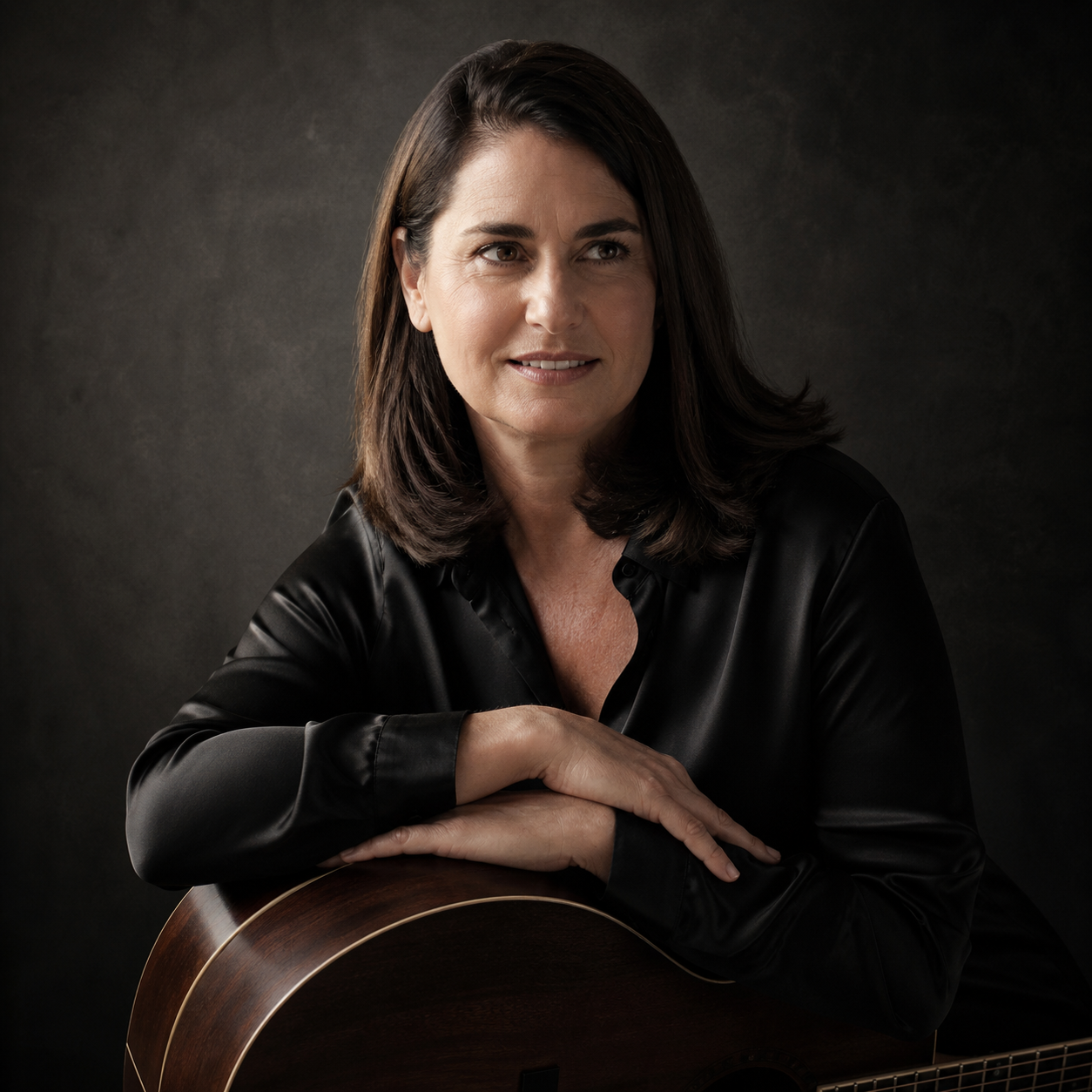
Ana Caram
GREAT CHOICE: Ana Caram!
Great music deserves to be discovered, enjoyed and shared.
CAN YOU SPARE A CUP OF COFFEE?
Audiophile-Streaming is a personal passion project, built with countless hours of discovering, selecting and sharing exceptional music.
I personally cover, without sponsors, the ongoing costs of hosting, software and subscriptions to keep the music discoveries coming. If you enjoy my work, your support is always appreciated.
A LITTLE THANK YOU IN RETURN
Just one coffee gives you lifetime access to the Coffee Club and all its playlists.
No subscriptions. No recurring fees.
Ana Caram has a wonderful ability to make Brazilian music sound relaxed without losing its musical detail. Her voice is light, her guitar playing is rhythmic and precise, and her interpretations of bossa nova and jazz have a natural warmth that I find very appealing. She belongs to a generation of Brazilian musicians who grew up with the music of Antônio Carlos Jobim but developed their own approach to it. For me, her recordings are especially interesting because they combine genuine musical character with the excellent sound quality associated with Chesky Records. Ana Caram is not a singer who tries to impress with vocal power or dramatic effects. Her strength lies in the way she handles a melody, the space she leaves between phrases, and the easy relationship between her voice and the musicians around her.
Born Ana Lucia Ribeiro Caram on October 1, 1958, in Presidente Prudente, in the Brazilian state of São Paulo, she grew up in a musical family. Music became part of her life at an early age, and by thirteen she was already recording advertising jingles and performing her own compositions at music festivals. She later studied composition and conducting at the University of Campinas, known as Unicamp, giving her a formal musical education alongside her practical experience. Around 1982, she began performing professionally in nightclubs in São Paulo, gradually building a career that would take her to Japan, the United States, Europe and Africa. Those early years helped establish her as more than a singer of familiar Brazilian standards. She was also a guitarist and composer with a clear understanding of rhythm, harmony and arrangement.
From Brazil to Chesky Records
An important influence on Ana Caram was Antônio Carlos Jobim, one of the central figures in the development of bossa nova. Jobim encouraged her musical development, and his influence can be heard in her preference for elegant melodies, subtle harmonic changes and restrained performances. Yet I would not describe Caram as simply another interpreter of Jobim’s music. She brings her own phrasing and rhythmic personality to the material, occasionally allowing a phrase to arrive slightly later than expected or changing the emphasis of a familiar melody. These small choices make her performances interesting, particularly when I listen beyond the obvious beauty of the songs.
Her first album, Ana Caram, appeared in Brazil in 1987 on the CID label. It included her own compositions alongside songs associated with important Brazilian writers such as Djavan, Ivan Lins and Ary Barroso. The recording reflected her connection with música popular brasileira, often abbreviated as MPB, a broad musical tradition that extends well beyond bossa nova. I think this background is important because it explains why her later albums contain such a comfortable mixture of styles. She approaches Brazilian music as a living musical language rather than a collection of classic songs that must always be performed in the same way.
A major international breakthrough followed in 1988 when Cuban saxophonist and clarinetist Paquito D’Rivera invited her to perform at jazz festivals in Finland and New York. Her appearance at the JVC Jazz Festival at Carnegie Hall attracted attention, including interest from the American audiophile label Chesky Records. That connection would become particularly important for listeners who appreciate natural, carefully recorded acoustic music. Chesky offered her a recording contract, opening the door to a series of albums that introduced her to an international jazz and audiophile audience. I find this an interesting turning point because the label’s approach to recording suited her musical personality remarkably well. Her voice did not need heavy production to communicate, and her guitar benefited from arrangements that allowed individual instruments to be heard clearly.
The Recordings That Define Her Sound
Her 1989 album Rio After Dark is where I would recommend beginning. Produced by David Chesky and engineered by Bob Katz, it was her first release for Chesky Records and remains an important introduction to her musical style. The album features Paquito D’Rivera, pianist David Chesky, bassist David Finck and other accomplished musicians. Antônio Carlos Jobim also appears on two tracks, contributing piano and background vocals to Meditation and Anos Dourados. Having Jobim participate in these recordings gave the project a direct connection to the music that had helped shape Caram’s career.
Musically, Rio After Dark combines Brazilian rhythms with jazz arrangements that feel open and unforced. I particularly enjoy Meditation because it demonstrates how little Caram needs to do to make a familiar melody her own. Her singing is soft but clearly articulated, with very little vibrato, and she allows the rhythm to move naturally beneath the vocal line. On La Cumbia, D’Rivera adds another character to the arrangement, creating an interesting contrast with her lighter delivery. The album also includes Rainbow and Renovação, examples of Caram’s own songwriting. They help show that her musical identity extends beyond interpreting established composers.
From an audiophile perspective, Rio After Dark offers plenty to appreciate. The guitar has a delicate attack, the percussion contributes rhythmic detail without overwhelming the melody, and the bass provides a firm foundation. I like the way the individual instruments remain easy to follow without making the performance sound disconnected. On a revealing pair of speakers or good headphones, the interaction between Caram’s voice and the acoustic instruments becomes particularly enjoyable. The recording also reminds me that excellent sound quality is not simply about impressive bass or a very wide soundstage. Vocal realism, believable instrumental textures and natural dynamics are equally important.
In 1992, Caram released The Other Side of Jobim, an album dedicated to the music of her mentor. Recorded in New York on March 26 and 27, it brought together an interesting acoustic ensemble including guitarist Sergio Assad, bassist David Finck, cellist Erik Friedlander, percussionist Jamey Haddad and multi-instrumentalist Steve Sacks. David Chesky again handled production, while Bob Katz was responsible for recording. The presence of instruments such as cello, oboe and soprano saxophone gives the arrangements a different character from the more familiar small-group bossa nova sound. I appreciate how these instrumental colours expand the music without taking attention away from Caram’s singing.
What makes The Other Side of Jobim successful for me is its respect for the original compositions without treating them as untouchable. Jobim’s music contains beautiful harmonic details that can easily disappear when an arrangement becomes too busy. Caram generally avoids that problem by keeping her delivery controlled and allowing the accompanying musicians room to contribute. Her voice works particularly well with the acoustic guitar because both have a gentle, clearly defined character. Listening to the way notes begin and fade gives me a better appreciation of her phrasing. It is an album I would recommend to anyone who enjoys intimate vocal recordings and wants to hear familiar Brazilian songwriting presented through a slightly different instrumental combination.
Her relationship with Chesky continued through albums such as Maracanã in 1993 and Bossa Nova in 1995. These recordings demonstrate her willingness to explore different arrangements while remaining connected to Brazilian musical traditions. Maracanã, produced by Nelson Motta, moves beyond a strictly bossa nova approach and draws on a broader range of Brazilian styles. Caram later recorded Sunflower Time in 1996 for the Japanese PolyGram market, with arrangements involving Bluey Maunick of the British jazz-funk group Incognito. This brought another dimension to her work, incorporating a more contemporary pop-jazz sound. I prefer the intimacy of her smaller acoustic recordings, but these projects demonstrate that she was never limited to one musical formula.
Another important album is Blue Bossa, released by Chesky Records in 2001. Here, Caram revisits Brazilian classics alongside international jazz standards, supported by musicians including drummer Paulo Braga and saxophonist Paulo Levi. The programme includes Jobim compositions such as Desafinado, Corcovado and Triste, together with The Telephone Song and the jazz standard Fly Me to the Moon. For listeners unfamiliar with her music, this is probably the easiest album to approach after Rio After Dark. The repertoire is immediately recognisable, but the performances still reveal the distinctive qualities of her voice.
I especially like the way she approaches Corcovado. The melody is so well known that it can become predictable, yet her gentle timing gives it a personal character. She does not add unnecessary vocal decoration or try to transform the song into something completely different. Instead, she concentrates on the relationship between the words, the melody and the rhythm. Desafinado offers another good opportunity to appreciate her controlled singing, while Fly Me to the Moon demonstrates how comfortably she moves between Brazilian music and American jazz standards. The contrast between these songs makes Blue Bossa an accessible introduction to her range.
A Voice That Rewards Careful Listening
Ana Caram’s voice is distinctive because of what she chooses not to do. She rarely pushes a melody harder than necessary, and she generally avoids the large dynamic changes associated with more theatrical vocal styles. Her relatively straight tone, restrained vibrato and gentle pronunciation give the impression of someone singing naturally rather than demonstrating a technique. This can initially seem almost too understated, especially if you are accustomed to powerful jazz singers. I understand why some listeners might prefer a stronger vocal presence, but I think her restraint is central to her appeal. The more attention I give to her timing and articulation, the more musical detail I discover.
Her guitar playing is equally important, even when it does not attract much attention. Bossa nova relies on a delicate relationship between the bass movement, rhythmic chords and vocal phrasing. Caram understands that relationship from the perspective of both singer and guitarist, which helps explain the relaxed coordination of her performances. I particularly enjoy recordings where the guitar remains clearly audible beneath her voice, allowing me to follow the rhythmic pattern without losing the vocal melody. Good midrange transparency makes this relationship easier to appreciate, whether I am listening through high-end speakers or a carefully matched headphone system. It is the kind of musical detail that helps me judge the naturalness of a recording.
Her connection with Chesky Records also makes her work especially relevant to audiophile music lovers. The label became known for its emphasis on realistic acoustic recordings, and Caram’s material provides an excellent opportunity to hear how that approach serves a relatively quiet, intimate performance. On the better recordings, the individual sounds have convincing body and definition, while the stereo presentation allows the accompanying musicians to remain distinguishable. I listen for the texture of the guitar strings, the weight of the bass notes and the way the percussion supports the rhythm without sounding exaggerated. These qualities are more useful to me than a recording that simply tries to impress with spectacular effects.
Beyond her best-known Chesky albums, Caram continued exploring different musical directions. Hollywood Rio, released in 2004, brought her Brazilian approach to music associated with the cinema, while later projects included recordings of Christian music. Her career also includes the 1998 compilation Postcards from Rio, which offers a convenient overview of her earlier Chesky recordings. She may not have the international name recognition of Jobim or some of Brazil’s most commercially successful singers, but her contribution is clear. She helped bring Brazilian vocal music to a wider international audience while showing that sophisticated arrangements and audiophile recording quality can work together without sacrificing musical warmth.
For me, Ana Caram represents a particularly attractive side of Brazilian music. Her upbringing, formal education, early performances and association with Jobim provided a strong musical foundation, while her partnership with Chesky Records gave that foundation an international platform. Rio After Dark captures the freshness of her early international career, The Other Side of Jobim shows her understanding of one of Brazil’s greatest composers, and Blue Bossa demonstrates her confidence with familiar jazz and bossa nova standards. I admire her ability to make complicated rhythms and harmonies sound completely comfortable, although I find her most convincing when the arrangements remain acoustic and relatively simple. She does not need a powerful voice, elaborate arrangements or dramatic performances to hold my attention. What defines Ana Caram for me is her exceptionally natural sense of timing.