
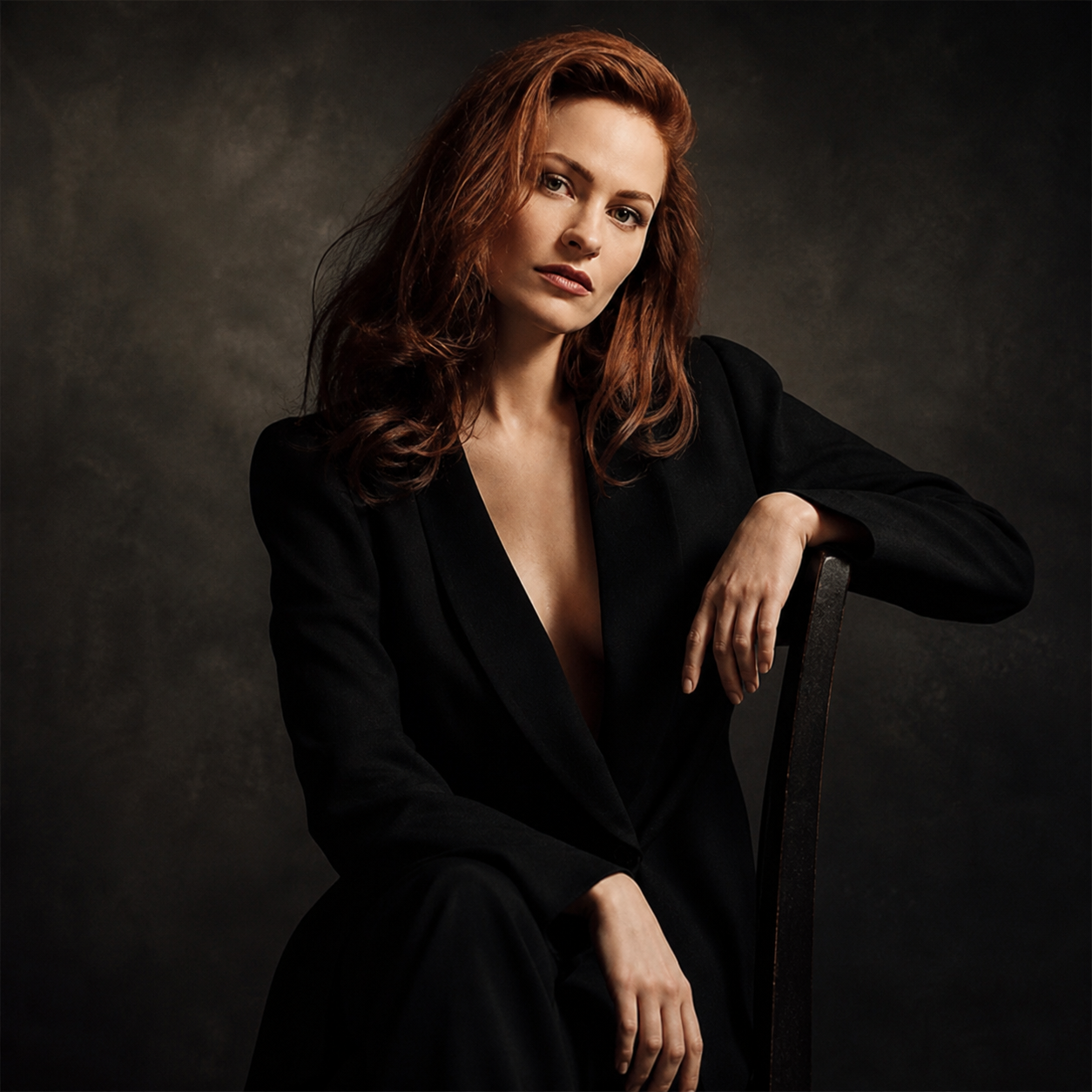
Christy Baron
GREAT CHOICE: Christy Baron!
Great music deserves to be discovered, enjoyed and shared.
CAN YOU SPARE A CUP OF COFFEE?
Audiophile-Streaming is a personal passion project, built with countless hours of discovering, selecting and sharing exceptional music.
I personally cover, without sponsors, the ongoing costs of hosting, software and subscriptions to keep the music discoveries coming. If you enjoy my work, your support is always appreciated.
A LITTLE THANK YOU IN RETURN
Just one coffee gives you lifetime access to the Coffee Club and all its playlists.
No subscriptions. No recurring fees.
Christy Baron is one of those singers who reminds me why I enjoy exploring the Chesky Records catalogue. She has a natural way of combining jazz, pop and soul without making the music sound complicated or overly polished. What interests me most is her approach to familiar songs. Rather than trying to impress with vocal power or elaborate arrangements, she concentrates on the melody, the words and the musicians playing around her. I particularly appreciate how she can give a well-known song a different character while keeping its original appeal. For me, that makes her an interesting artist for anyone who enjoys expressive vocals, thoughtful arrangements and recordings that allow the musicians to sound like real people playing together.
Christy grew up in Pittsburgh, Pennsylvania, where she studied music at Carnegie Mellon University and began performing as a cabaret singer and pianist. After moving to New York in 1984, she worked in piano bars before becoming increasingly involved in acting and recording commercial jingles. Her career also brought her into contact with artists including Natalie Cole, Phoebe Snow, Carly Simon, Dr. John and David Sanborn. I find that background interesting because her singing reflects a broader musical experience than traditional jazz alone. She understands popular music, but she also knows how to leave space for improvisation and interaction. That combination became an important part of her recordings for Chesky Records.
Three Albums, Three Different Approaches
Her first Chesky album, I Thought About You, was recorded in August 1996 and released in January 1997. It introduced her as a vocalist who could move comfortably between jazz standards and popular songs. Pianist Clifford Korman, acoustic bassist David Finck and drummer Payton Crossley provide the main instrumental foundation, while William Galison contributes chromatic harmonica and George Young plays saxophone. David Chesky and Clifford Korman produced the album, with Bob Katz responsible for the recording engineering. I like the relatively small ensemble because the arrangements give Christy plenty of room to develop her own interpretation. There is no need to fill every moment with sound, and the musicians know when a simple accompaniment is more effective than a complicated one.
One of my favourite examples from this album is Bill Withers’ “Ain’t No Sunshine”. The original is already such a strong song that changing it too much would be a mistake. Christy’s interpretation takes a more jazz-oriented approach, with the acoustic instruments giving the music a different character. I particularly enjoy the relationship between her voice and David Finck’s bass. The bass provides a melodic foundation rather than simply marking the rhythm, and that gives the performance a relaxed, conversational quality. It is a good example of how a familiar song can become interesting again through the arrangement rather than through dramatic vocal effects.
“Summer Soft”, written by Stevie Wonder, offers another perspective on her singing. Wonder’s music often combines sophisticated melodies with strong rhythmic ideas, and I think Christy’s jazz background suits that material particularly well. The interaction between voice, piano and bass is what makes this interpretation worth exploring. I enjoy hearing how the musicians support the melody without treating it as something that must be followed rigidly. Her phrasing feels comfortable, and there is a sense that the arrangement has been built around the song rather than around technical displays. For me, that is one of the strengths of her debut album.
With Steppin’, released on June 27, 2000, Christy moved in a somewhat different direction. The repertoire includes songs associated with Peter Gabriel, Prince and other popular artists, while the instrumentation introduces additional colours and rhythmic influences. The album was recorded between February 28 and March 2, 2000, at St. Peter’s Episcopal Church in New York. Produced by Didier Rachou and David Chesky, it features musicians including pianist Dan Zank, bassist John Hebert, saxophonist and flautist Andy Middleton, trumpeter Chris Rogers and harmonica player William Galison. There are also percussion instruments, programmed elements and backing vocals, making this a more varied production than her debut. I appreciate that she was willing to explore a broader musical direction rather than simply repeat the successful formula of her first recording.
Peter Gabriel’s “Mercy Street” is an especially interesting choice. The original has a restrained and thoughtful character, and it demands a singer who understands that emotional expression does not always require a powerful delivery. I think this kind of material suits Christy’s approach because she pays attention to the meaning and movement of the melody. The different instrumental textures on Steppin’ also make it an interesting album for comparing how acoustic and produced sounds fit together. Personally, I prefer the intimacy of her smaller ensembles, but I appreciate the variety and ambition of this recording. It demonstrates that her musical interests extend well beyond conventional vocal jazz.
Her third Chesky album, Take This Journey, followed on October 22, 2002. Recorded at St. Peter’s Church in Chelsea, New York, between June 17 and June 20 of that year, it features David Mann on saxophone and flute, Paul Bollenback on guitar, David Finck on bass and Graham Hawthorne on drums. David Chesky and David Finck produced the recording, with Barry Wolifson as recording engineer and Nicholas Prout handling editing and mastering. Compared with the broader production of Steppin’, I find this instrumental combination particularly appealing. Guitar, bass, drums and woodwinds provide a flexible setting for Christy’s voice, allowing the arrangements to develop without becoming crowded.
Stevie Wonder’s “Overjoyed” is one of the songs that makes Take This Journey worth hearing. It is a beautiful composition, but also one that can easily become sentimental when a singer pushes the emotion too far. Christy’s understated style is a good match for its melody and lyrical message. I like the way her approach places the song itself at the centre of the performance. This is also where her experience as an interpreter of both jazz and popular music becomes particularly valuable. She does not have to turn every song into a traditional jazz standard to make it work in her own musical setting.
The Chesky Records Connection
An important reason I selected Christy Baron for Audiophile-Streaming.com is her association with Chesky Records. Founded by David and Norman Chesky, the label has built its reputation around recording real musicians in acoustic spaces, with particular attention to natural instrumental timbres and the relationships between performers. The company places considerable emphasis on microphone technique and preserving the impression of musicians playing together. I appreciate that philosophy because it makes the recording process serve the performance rather than the other way around. With Christy’s music, the results are especially relevant because her voice is usually supported by relatively small ensembles.
On I Thought About You, I am particularly interested in the relationship between the voice, acoustic bass and piano. These instruments occupy overlapping areas of the frequency range, so a recording needs good separation and midrange transparency if their individual character is to remain clear. Christy’s relatively restrained singing style makes small changes in phrasing and vocal expression important. The piano accompaniment and bass lines also deserve attention in their own right rather than being treated as background. On a revealing pair of speakers or headphones, this is the kind of recording where I would concentrate on the individual parts and how naturally they work together. Good stereo imaging and a convincing sense of space are valuable here because they help preserve the musical relationship between the performers.
I also think it is important not to confuse an audiophile recording with a technically impressive demonstration. A beautifully recorded voice does not automatically make a song interesting, and exceptional sound quality cannot compensate for an uninspired interpretation. What I appreciate about Christy is that the musical decisions come first. Her arrangements offer enough freedom to make familiar material interesting, while the recording quality helps reveal the smaller details of those performances. That is a much more satisfying combination for me than a recording designed mainly to demonstrate the capabilities of expensive equipment.
Why Christy Baron Belongs in My Collection
Christy’s three main Chesky albums offer a useful introduction to the different sides of her musical personality. I Thought About You is my natural starting point because I particularly enjoy its intimate piano-trio setting and the balance between jazz standards and popular songs. Steppin’ is the more adventurous choice, especially for listeners who enjoy contemporary arrangements and influences from outside traditional jazz. Take This Journey brings the focus back to a flexible acoustic ensemble while continuing her interest in carefully chosen songs. Her 2004 compilation Retrospective also provides an opportunity to explore recordings from this period of her career.
I would not describe Christy Baron as a singer who tries to dominate every performance, and that is precisely what I value about her. Her strength lies in interpretation, musical sensitivity and her ability to work with excellent instrumentalists without losing her own identity. The Chesky recordings give those qualities the space they deserve, but it is the choice of songs and the arrangements that make the music worthwhile. For listeners discovering her work, I recommend beginning with I Thought About You, especially “Ain’t No Sunshine” and “Summer Soft”, before exploring the different direction of Steppin’ and Take This Journey. What I value most about Christy Baron is her ability to make familiar songs feel personal without forgetting what made them good songs in the first place.
HiFi’ve, Ronald – Your EarFluencer