
Dynaudio
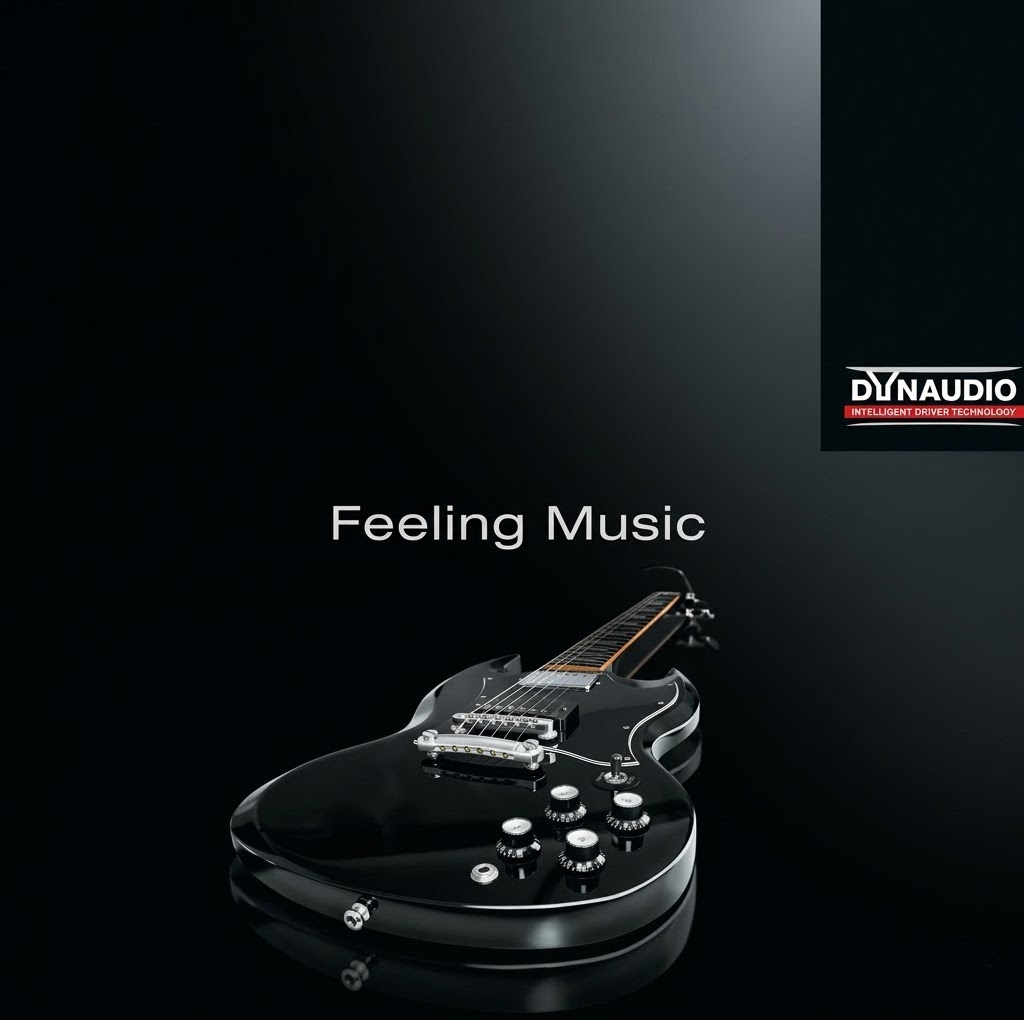
Feeling Music
GREAT CHOICE: Dynaudio Feeling Music!
Great music deserves to be discovered, enjoyed and shared.
CAN YOU SPARE A CUP OF COFFEE?
Audiophile-Streaming is a personal passion project, built with countless hours of discovering, selecting and sharing exceptional music.
I personally cover, without sponsors, the ongoing costs of hosting, software and subscriptions to keep the music discoveries coming. If you enjoy my work, your support is always appreciated.
A LITTLE THANK YOU IN RETURN
Just one coffee gives you lifetime access to the Coffee Club and all its playlists.
No subscriptions. No recurring fees.
A good demonstration CD should tell me more than whether a loudspeaker can produce impressive bass or reveal tiny recording details. It should also contain music I genuinely want to hear. Dynaudio Feeling Music, released in 2005, gets that balance right with twelve recordings covering folk, jazz, blues, acoustic music and a few less predictable styles. The compilation was produced by Zounds GmbH in cooperation with Danish loudspeaker manufacturer Dynaudio, and it was issued as a promotional CD rather than a regular commercial album. What makes it interesting to me is the choice of artists, including Allan Taylor, Sara K., Steve Strauss, Jocelyn B. Smith, Quadro Nuevo and Rebecca Pidgeon. These are musicians with distinct personalities, and that gives the collection considerably more character than a typical selection of audio demonstration tracks.
The connection with Dynaudio is worth explaining because it tells us something about the purpose of this release. The company has a long history of designing loudspeakers for both domestic listening and professional applications, with a strong emphasis on accurate musical reproduction. Feeling Music was created exclusively for Dynaudio International GmbH, with the 2005 CD carrying the Zounds Music label and catalogue number 27000 60050. Even the original booklet reflects its intended audience, combining information about the recordings with material about Dynaudio and its Confidence C2 loudspeaker. I like that the music comes from established artists and existing recordings rather than being a collection of artificial test signals. It allows me to concentrate on the performances while still hearing the qualities that matter when evaluating a serious audio system.
The Voices Give This Compilation Its Character
One of my favourite selections here is Allan Taylor’s “Beat Hotel”, a song that demonstrates why his recordings are so popular among listeners who appreciate acoustic music. Taylor is a British singer-songwriter with a distinctive, low voice and a style built around careful storytelling. The recording brings together acoustic guitar, electric guitar, fretless bass, steel guitar and percussion, with contributions from musicians including Chris Jones, Hans-Jörg Maucksch, Martin Huch, Thomas Körber and Beo Brockhausen. What interests me most is the relationship between Taylor’s voice and the instruments supporting him. His singing has weight and character, while the instrumental arrangement provides enough detail to reward close listening without distracting from the song. For me, this is exactly the kind of recording where natural midrange reproduction matters more than spectacular effects.
“Beat Hotel” also has a useful sense of space. I want to hear the guitar parts as separate musical contributions, not as one large collection of strings filling the speakers. The fretless bass deserves particular attention because its rounded tone and subtle movement are important to the atmosphere of the arrangement. On a balanced system, the lower frequencies should support Taylor’s voice without making it sound unnaturally heavy. The different instruments also give me a useful impression of stereo placement and how clearly the recording separates individual performances. But I would never reduce this song to a technical test. Its strength is Taylor’s ability to make a relatively restrained arrangement feel complete and personal.
Sara K.’s “Blind Hearted” offers a different kind of vocal performance. Her music has a strong connection with acoustic blues and singer-songwriter traditions, and her distinctive vocal delivery gives this selection an intimate quality. What I appreciate is how much musical information can be carried by a voice without needing a large arrangement. The natural texture of the singing, the articulation of the words and the rhythmic relationship with the accompaniment are more important to me than simply hearing every small detail. This is also where a recording can reveal whether a system makes voices sound convincing or pushes them too far forward. I prefer a presentation in which Sara K. sounds like a musician performing a song rather than a demonstration of exaggerated vocal clarity.
The compilation also includes Jocelyn B. Smith performing “You Gotta Know” in a live recording. This is an interesting contrast because Smith’s powerful vocal style is quite different from the controlled intimacy of Allan Taylor or Sara K. Her performance has a directness and expressive energy that gives the collection another dimension. I particularly like hearing how a strong voice changes its intensity and phrasing through a performance. A good recording should allow those changes to remain natural instead of making every passage sound equally loud or forceful. Including a live performance is a sensible choice because it brings a different atmosphere into a compilation otherwise strongly associated with carefully produced studio recordings.
More Than a Collection of Vocal Recordings
Although the singers make a strong impression, Feeling Music becomes more interesting because it does not restrict itself to vocal material. Quadro Nuevo’s “Luna Rossa” introduces a completely different musical atmosphere, drawing on the group’s interest in European acoustic traditions. The German ensemble is known for combining influences from tango, Mediterranean music, jazz and other acoustic styles. Its instrumental arrangements place a strong emphasis on melody, interaction and rhythmic detail. “Luna Rossa” is a useful contrast to the singer-songwriter recordings because there is no lead singer to hold the listener’s attention. Instead, the instruments have to communicate the musical ideas themselves.
The recording comes from Quadro Nuevo’s early period, with sessions held at Tonstudio Schlag in August 1997. The credited musicians include guitarist Robert Wolf, reed player Mulo Francel and accordionist Heinz-Ludger Jeromin. I find this kind of ensemble particularly interesting because the individual instrumental timbres are so different. The accordion produces a sustained, breathing quality, while the plucked guitar notes and reed instruments bring their own distinctive textures. Listening to their interaction is more rewarding than concentrating on stereo imaging alone. I want to follow the melody, hear the individual contributions and understand how the musicians build the arrangement together.
Elsewhere, the compilation makes room for Steve Strauss with “Mr. Bones”, Hardpan with “Accidents” and Friedemann & Goun with “Tango Tageur”. These selections help explain why I consider Feeling Music more varied than many conventional audiophile samplers. They introduce different playing styles, rhythms and instrumental combinations, keeping the collection from becoming a sequence of similar acoustic ballads. The changes in musical character also make it useful for evaluating how a playback system handles different recordings. A sound that seems perfectly balanced with a quiet singer-songwriter track may reveal quite different qualities when presented with a stronger rhythm or a more complex arrangement. I appreciate this variety because real music collections rarely consist of one recording style.
Another notable inclusion is Rebecca Pidgeon’s “The Four Marys”. Pidgeon is well known among audiophile listeners, particularly through her work with Chesky Records, but the song itself deserves attention independently of that reputation. It is a traditional Scottish ballad, and the recording features an ensemble that includes fiddle, cello, guitar, accordion, banjo and other acoustic instruments. Johnny Cunningham contributes fiddle and mandolin, while additional musicians include Tomas Ulrich, Charles Giordano and Jerry O’Sullivan. Recorded at Master Sound Astoria in New York in November 1997, the performance combines traditional material with a carefully arranged acoustic accompaniment. For me, its appeal lies in the contrast between Pidgeon’s clear vocal delivery and the instrumental colours surrounding her.
A Demonstration Disc I Can Enjoy as Music
There is an obvious advantage to a compilation like Feeling Music. I can move from one recording style to another without changing albums, and the differences in vocal character, instrumental balance and recording atmosphere are easy to appreciate. The collection gives me opportunities to listen for midrange transparency, dynamics, bass definition and soundstage depth, but none of those qualities has much meaning unless the musical performance is convincing. I also like that the recordings retain their individual identities. A compilation does not need every track to have exactly the same tonal balance or production style. In fact, those differences are part of what makes it valuable.
At the same time, I would not treat Feeling Music as a complete guide to loudspeaker performance. Its emphasis is largely on voices, acoustic instruments and relatively accessible musical arrangements. That makes it especially useful for evaluating tonal balance, instrumental realism and the relationship between performers, but less comprehensive for listeners interested in large orchestral works, aggressive electronic music or extreme low-frequency material. I do not see that as a serious weakness because the compilation was clearly assembled around a particular listening experience. It offers a range of convincing musical performances rather than trying to include every possible recording challenge.
What I also appreciate is the connection between the material and the period in which it was released. In 2005, physical demonstration CDs were still an important part of the hi-fi world. Manufacturers and dealers used carefully selected music to introduce listeners to new loudspeakers and demonstrate the strengths of their systems. Dynaudio Feeling Music belongs to that tradition, and its selection of established audiophile artists makes it a useful example of how manufacturers presented their products through music. Today, when almost any recording is available within seconds through a streaming service, a deliberately assembled collection like this still has its own appeal. Someone has made a selection, established a sequence and brought together performances that work well in the same listening session.
For me, Dynaudio Feeling Music succeeds because it respects both the musician and the listener. Allan Taylor provides the thoughtful songwriting and natural instrumental balance I appreciate, Sara K. brings intimacy and a distinctive voice, and Quadro Nuevo adds a welcome change of rhythm and musical colour. The 2005 Zounds and Dynaudio collaboration certainly has value as an audiophile demonstration CD, but I think its musical selection is the stronger reason to explore it. I especially value the contrast between its understated vocal recordings and its livelier instrumental performances. That variety makes the collection enjoyable as an album in its own right, rather than something I would use only when comparing loudspeakers.