
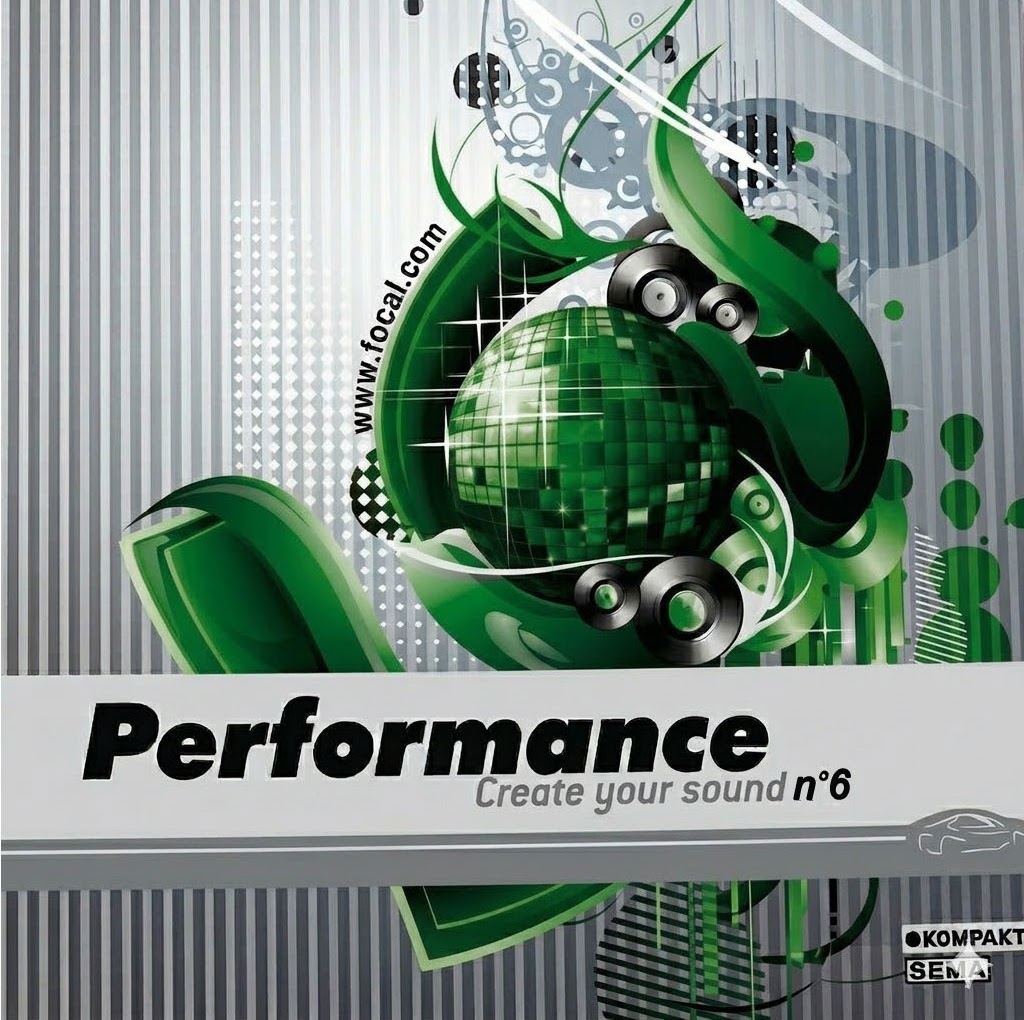
Focal Performance
Create your Sound 6
GREAT CHOICE: Focal Performance Create your Sound 6!
Great music deserves to be discovered, enjoyed and shared.
CAN YOU SPARE A CUP OF COFFEE?
Audiophile-Streaming is a personal passion project, built with countless hours of discovering, selecting and sharing exceptional music.
I personally cover, without sponsors, the ongoing costs of hosting, software and subscriptions to keep the music discoveries coming. If you enjoy my work, your support is always appreciated.
A LITTLE THANK YOU IN RETURN
Just one coffee gives you lifetime access to the Coffee Club and all its playlists.
No subscriptions. No recurring fees.
Focal Performance Create your Sound 6 is exactly the kind of music collection that interests me as an audiophile. It brings together different musical styles with one simple purpose: to demonstrate how much character, emotion and detail a good recording can contain. What appeals to me most about the Focal concept is that it does not concentrate on one particular genre. Jazz, soul, acoustic music and electronic productions can all tell us something different about the way we listen. For me, that variety is much more interesting than a demonstration album filled with impressive sounds but very little musical substance.
The name behind this collection is Focal-JMlab, the French loudspeaker manufacturer founded by Jacques Mahul in Saint-Étienne in 1979. Over the years, Focal has developed loudspeakers for home listening, professional recording studios, headphones and automotive audio systems. Its connection with Naim Audio has also made the Focal and Naim names familiar to many enthusiasts of high-end audio. The Create Your Sound philosophy fits naturally into that background, encouraging listeners to pay attention to the relationship between musical performance and sound reproduction. I appreciate that approach because I believe the music should always be the reason we invest in a better listening system.
Different Music, Different Listening Experiences
The earlier Focal-JMlab demonstration collections provide a useful picture of the musical variety behind the series. Focal-JMlab No. 6, documented as a 2005 compilation, includes recordings by Feist, J.J. Cale, Marvin Gaye, Roy Hargrove, Oscar Peterson and several other artists. That particular selection is separate from the later descriptions of Create Your Sound 6, whose complete track sequence and release details are less clearly documented. I think this distinction matters, especially when discussing a collection that exists in different physical and streaming presentations. What connects the Focal selections is their interest in contrasting musical arrangements, production styles and listening experiences.
One recording associated with the earlier sixth Focal collection is Feist’s “One Evening,” from her 2004 album Let It Die. Leslie Feist has a wonderfully relaxed way of singing, and the arrangement combines a gentle rhythmic pulse with carefully placed instrumental details. I like how the song works musically without needing a large arrangement or dramatic changes in volume. The vocal phrasing gives the performance its personality, while the rhythm keeps everything moving naturally. For me, this is a good example of why vocal realism involves much more than simply hearing every detail in a singer’s voice. The relationship between the voice, bass and accompanying instruments is what makes the performance convincing.
J.J. Cale’s “Hold On” offers a very different kind of musical experience. Cale was known for his understated singing, economical guitar playing and relaxed approach to rhythm, qualities that helped establish his distinctive style of blues, country and rock. I have always appreciated musicians who can communicate so much without making every instrument compete for attention. His recordings encourage me to listen to the small rhythmic decisions that give a performance its character. A guitar phrase does not have to be loud to be important, and a bass line can provide movement without dominating the arrangement. This kind of music is particularly useful when listening for natural instrumental balance.
Another interesting contrast comes from the Oscar Peterson Trio’s “You Look Good to Me,” originally released on the 1964 album We Get Requests by Verve Records. Peterson plays piano alongside Ray Brown on double bass and Ed Thigpen on drums, three musicians whose musical understanding is immediately apparent. The recording is famous among jazz listeners for its delicate opening, the distinctive sound of Brown’s bass and the way the trio gradually develops the rhythm. What I enjoy most is the interaction between the musicians rather than the individual instruments in isolation. Peterson’s piano has tremendous energy, but Brown and Thigpen contribute just as much to the musical conversation. It is a recording that makes me pay attention to timing, dynamics and the space around each instrument.
Listening Beyond the Technical Details
What interests me about the wider Focal Performance Create your Sound concept is the opportunity to compare very different approaches to recording and production. An intimate acoustic performance asks different questions of a playback system than a heavily produced electronic track. With acoustic music, I listen for the relationship between the musicians, the natural character of the instruments and the small changes in playing intensity. With electronic music, I pay more attention to rhythmic precision, bass definition and the way individual sounds are positioned within the stereo image. Neither approach is automatically better, and I would never judge a recording simply by how wide or spectacular its soundstage appears.
Good stereo imaging can certainly make a difference, especially when an arrangement contains several instruments playing simultaneously. I want to hear a convincing separation between those instruments without losing the impression that they belong to the same musical performance. Voices should have a natural presence, with enough midrange transparency to reveal changes in phrasing and expression. Bass should contribute weight and rhythm without covering the details in the lower midrange. These are the qualities I listen for when evaluating reference music, whether I am using loudspeakers or headphones. Still, I find that the most valuable recordings are the ones that make me concentrate on the performance rather than the equipment.
There is also an important difference between a carefully recorded acoustic performance and a carefully constructed studio production. In jazz, the interaction between musicians can create a sense of movement that is difficult to reproduce convincingly when timing and dynamics are not handled well. In electronic music, individual sounds may be deliberately placed and processed to create an entirely different listening experience. I enjoy both approaches, but for different reasons. A compilation that moves between these styles can help reveal how differently recordings use space, frequency balance and dynamics. That variety is one of the strongest arguments for including more than one musical genre in an audiophile listening collection.
Why Musical Variety Matters
I see Focal Performance Create your Sound 6 primarily as a listening collection rather than a conventional album with one artist and a continuous musical story. That distinction is important because a compilation does not necessarily have the emotional consistency of a carefully planned studio album. The changes in musical style can make the listening experience less cohesive, particularly when moving between intimate vocals, acoustic instruments and more heavily produced material. On the other hand, those contrasts can make the collection especially useful for discovering what I enjoy about different recordings. I prefer that kind of variety when I want to explore music rather than listen to an album from beginning to end.
I also think it is important not to confuse musical detail with musical quality. A recording can reveal every breath, string vibration and percussion strike without being particularly interesting to me. Equally, an older recording with technical limitations can communicate tremendous energy and emotion. That is why I never use technical performance as the only measure of success. The recording must first give me a reason to care about the singer, the instrumentalists or the composition. Once that connection is there, improvements in clarity, dynamics and spatial presentation become genuinely meaningful.
The Focal name naturally creates certain expectations about sound reproduction, but I would not limit this material to Focal loudspeakers or headphones. The musical differences are relevant to any properly balanced listening system. I would rather hear a natural vocal and a convincing rhythmic foundation through a modest, well-matched system than an exaggerated presentation through expensive equipment. Recordings with clear instrumental relationships can be particularly revealing because they make it easier to identify when something sounds unnatural. For me, that is a far more useful listening exercise than simply looking for the deepest bass or the most impressive treble.
Focal Performance Create your Sound 6 represents an appealing idea: using musical variety to encourage more attentive listening. The Focal-JMlab heritage gives the collection an understandable connection with loudspeaker development and sound reproduction, while the broader demonstration series shows how different musical styles can reveal different aspects of a recording. I particularly value the contrast between intimate vocals, relaxed acoustic performances and the energy of rhythm-driven music. These differences give me a reason to listen carefully without turning every track into a technical examination. Ultimately, what matters most to me is that a collection like this encourages curiosity about the musicians, their performances and the choices that make each recording sound different.