
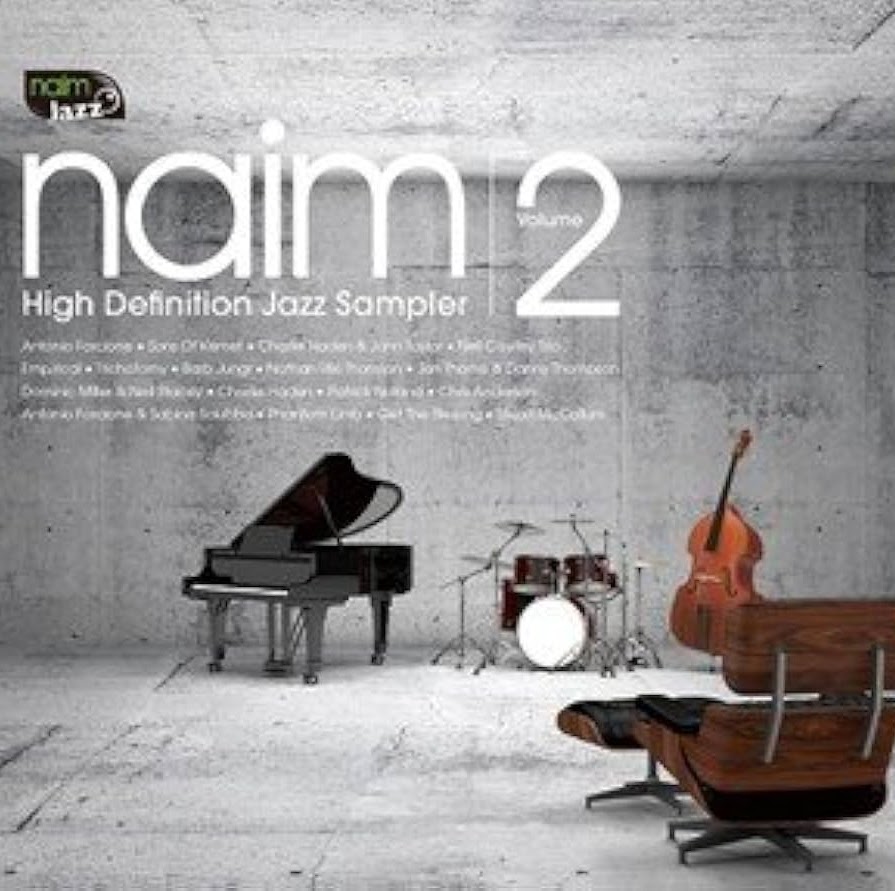
Naim
High Definition
Jazz Sampler Vol. 2
GREAT CHOICE: Naim High Definition Jazz Sampler Vol. 2!
Great music deserves to be discovered, enjoyed and shared.
CAN YOU SPARE A CUP OF COFFEE?
Audiophile-Streaming is a personal passion project, built with countless hours of discovering, selecting and sharing exceptional music.
I personally cover, without sponsors, the ongoing costs of hosting, software and subscriptions to keep the music discoveries coming. If you enjoy my work, your support is always appreciated.
A LITTLE THANK YOU IN RETURN
Just one coffee gives you lifetime access to the Coffee Club and all its playlists.
No subscriptions. No recurring fees.
Naim High Definition Jazz Sampler Vol. 2 is a 2014 compilation that shows just how varied the music catalogue of Naim Records can be. The British company is well known for its high-end audio equipment, but its record label has also built an interesting collection of jazz, acoustic music and distinctive vocal recordings. What I particularly like about this second High Definition Jazz Sampler is the contrast between its artists. Antonio Forcione, Charlie Haden, Sons of Kemet, Barb Jungr and the Neil Cowley Trio have very different musical approaches, yet they all have something worth listening to. For me, this is much more interesting than a compilation that simply puts together a selection of pleasant jazz recordings to demonstrate an expensive sound system.
The album was released through Naim and Ales Music, with a Korean release dated November 2014. It contains thirteen tracks on the main audio CD, selected from recordings by artists associated with the Naim catalogue. There is also a bonus data disc containing seven tracks in high-resolution FLAC, with resolutions ranging from 24-bit/44.1 kHz to 24-bit/192 kHz. That second disc is an interesting addition, although it is important to understand that these files are intended for computer or compatible digital audio playback rather than a conventional CD player. I appreciate the idea behind this release because it gives listeners both a varied musical introduction to the label and an opportunity to explore some of its recordings in higher resolution.
From Acoustic Guitar to Modern Jazz
Antonio Forcione opens the compilation with “Heart Beat”, taken from his album In Concert. His guitar playing is a good introduction because it immediately puts the musician at the centre of the listening experience. Forcione has a very physical way of playing the instrument, using rhythm, articulation and changes in intensity as important parts of his musical expression. I enjoy how the guitar can sound delicate one moment and become much more energetic the next. The appeal is not simply that individual notes can be heard clearly, but that his timing and control give the performance its personality. It is the kind of track where I pay attention to the small details of the playing rather than concentrating on the recording itself.
The change that follows is quite substantial. “Going Home” by Sons of Kemet, taken from Burn, introduces a different kind of energy. Led by saxophonist Shabaka Hutchings, Sons of Kemet developed a sound that brings jazz together with powerful rhythmic influences. Instead of the intimate character of Forcione’s guitar, the music becomes more collective, rhythmically active and physically engaging. I like this contrast because it prevents the compilation from becoming too predictable. It also makes clear that Naim’s selection was not limited to gentle acoustic jazz and familiar audiophile favourites. There is room here for music that challenges the listener and asks for a little more attention.
Another highlight for me is “Touch Her Soft Lips”, performed by bassist Charlie Haden and pianist John Taylor, from their album Nightfall. This recording takes the atmosphere in a completely different direction. Haden was a musician who could communicate a great deal with relatively few notes, and his playing with Taylor is an excellent example of the musical importance of restraint. The relationship between the piano and double bass is what makes this piece so appealing. Neither musician needs to dominate the performance, and I enjoy the way their musical ideas have space to develop. After the intensity of Sons of Kemet, this quieter performance feels particularly well placed.
That contrast is one of the strongest qualities of the compilation. I do not hear thirteen recordings trying to create exactly the same atmosphere. Instead, I hear musicians with individual approaches to melody, rhythm and improvisation. The Neil Cowley Trio contributes “Skies Are Rare” from The Face of Mount Molehill, while Empirical appears with “Scoffie” from Tabula Rasa. Trichotomy, Nathan Riki Thomson and the combination of Jon Thorne and Danny Thompson introduce additional musical perspectives. Some selections are immediately accessible, while others need more concentration to appreciate fully. Personally, I consider that a strength rather than a weakness, because a sampler should introduce me to music I might not otherwise have chosen.
The Human Voice and the Sound of the Recording
Although instrumental jazz has a prominent place here, I am pleased that Naim also included Barb Jungr. Her recording of “Change Is Gonna Come”, from Stockport to Memphis, brings a strong vocal element into the collection. Jungr has a recognisable approach to interpreting songs, paying close attention to the meaning of the words rather than relying on vocal power alone. That is something I value in a singer. A convincing vocal performance needs expression, phrasing and the ability to communicate a story, and those qualities interest me much more than simply demonstrating how impressive a voice can sound.
For audiophile listening, this mixture of performances provides several useful points of attention. With acoustic guitar, I listen for the difference between the initial attack of a note and the way it develops afterwards. With piano and double bass, I am interested in the balance between the instruments, the natural weight of the lower notes and whether the quieter musical details remain easy to follow. The more rhythmically complex selections ask something different of a system, particularly when several instruments are active at the same time. I want the sound to remain organised without losing the excitement of the performance.
The bonus data disc is particularly interesting for listeners who enjoy exploring high-resolution audio. It includes “Visions” by Antonio Forcione and Sabina Sciubba in 24-bit/192 kHz, “Going Home” by Sons of Kemet in 24-bit/96 kHz, and “La Porte” by the Neil Cowley Trio in 24-bit/88.2 kHz. Other selections include Phantom Limb, Get the Blessing, Stuart McCallum and Empirical. I appreciate that Naim provides information about the actual resolutions rather than treating every file as though it has identical technical characteristics. At the same time, I would never assume that a higher sampling rate automatically makes a recording more enjoyable. The performance, original recording and mastering are far more important to my musical experience than the numbers alone.
There is another reason I find this compilation useful for serious listening. The individual recordings come from different projects, with different musicians, instruments and production choices. That means the stereo image, sense of space and overall tonal balance are not necessarily identical from one track to another. I prefer that honesty to a compilation where everything seems designed to create one artificial impression of perfect sound. A good audio system should reveal the character of each recording without making every performance sound the same. Whether I am listening through speakers or headphones, I want to hear the musicians and their interaction before I start thinking about soundstage depth or midrange transparency.
A Compilation Worth Exploring Beyond the Familiar Names
One of the things that makes Naim High Definition Jazz Sampler Vol. 2 successful is the combination of familiar musicians and less obvious discoveries. Charlie Haden is a major name in jazz, and Antonio Forcione has a strong reputation among listeners who appreciate expressive acoustic guitar. But a collection featuring only those established names would be less adventurous. The inclusion of artists such as Empirical, Trichotomy and Nathan Riki Thomson gives the album a broader musical identity. I find that particularly valuable on a website devoted to discovering recordings rather than simply collecting well-known demonstration tracks.
The compilation also includes “Dylan” by guitarists Dominic Miller and Neil Stacey, “Farmer’s Trust” by Charlie Haden, “Passage to Thought” by Patrick Noland and “Come Sunday” by pianist Chris Anderson. These selections add to the range of quieter, more reflective music represented on the album. I enjoy having that variety, especially when listening to the collection from beginning to end rather than selecting only the tracks I already know. The changes in musical character encourage me to listen more carefully and to judge each performance on its own terms.
Of course, the nature of a sampler means that the album does not have the continuous musical development of a carefully conceived studio recording. Every few minutes, the musicians and musical direction change. Some listeners may prefer to spend an entire evening with one artist, and I understand that completely. I often find that a full album reveals more about a musician’s intentions than a single selected track can. But that is not really the purpose of this collection. Its strength is introducing different artists and giving me enough of their musical personalities to decide which recordings deserve further attention.
For me, Naim High Definition Jazz Sampler Vol. 2 succeeds because the musical selection has more substance than its technical presentation might initially suggest. The thoughtful interaction between Charlie Haden and John Taylor, the rhythmic energy of Sons of Kemet and the expressive guitar playing of Antonio Forcione demonstrate three very different reasons to enjoy jazz. Barb Jungr and the other musicians extend that variety without making the collection feel limited to one style. The additional high-resolution recordings are a welcome bonus, but they are not the main reason I recommend exploring this release. What I value most is the opportunity to discover musicians with different ideas about rhythm, melody and expression, brought together in one carefully selected collection.