
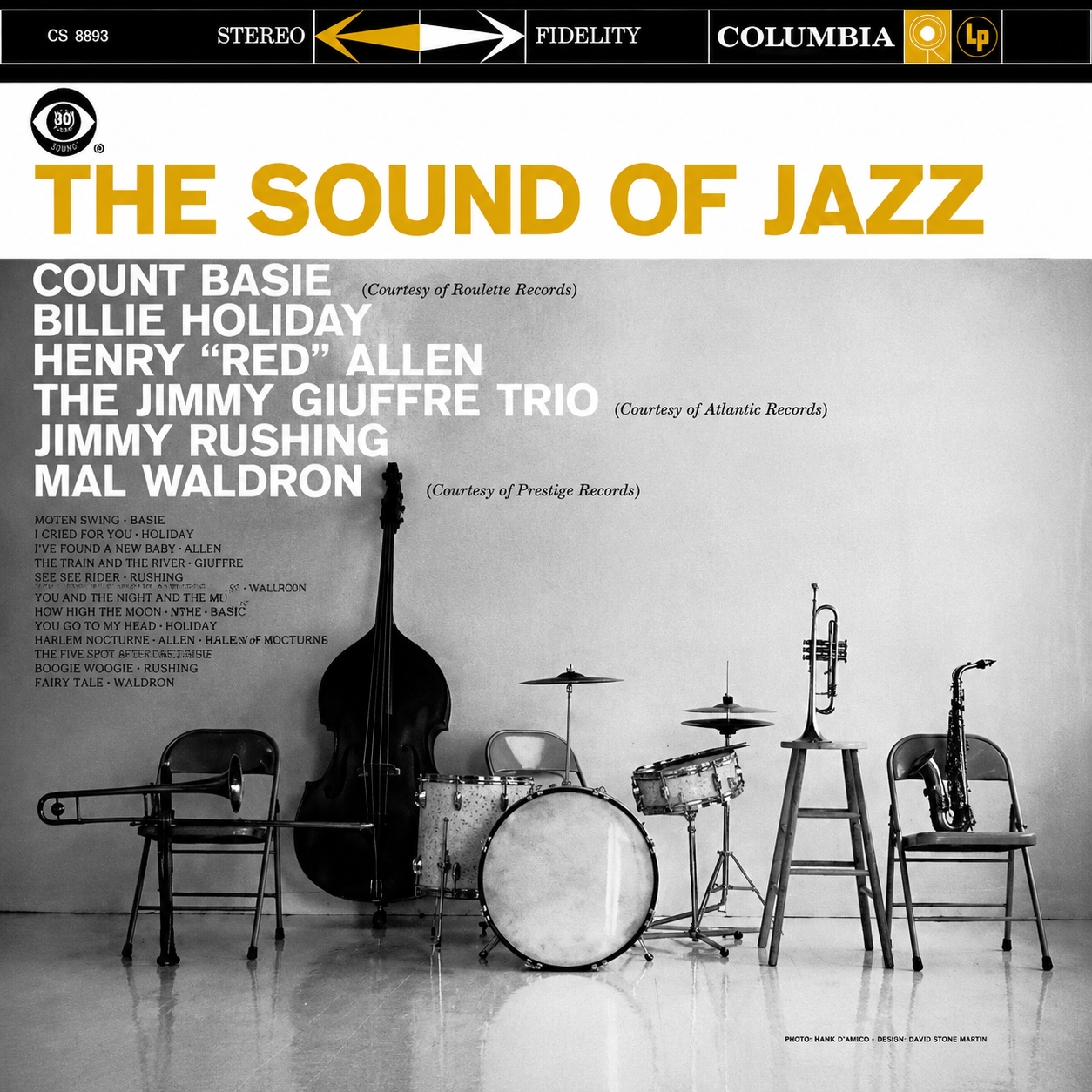
The Sound of Jazz
The Sound of Jazz: A Historic Columbia Recording Reborn for Audiophile Listeners
SEO title: The Sound of Jazz, Columbia’s Classic Jazz Album and Analogue Productions Audiophile Reissue
Meta description: The Sound of Jazz captures a legendary meeting of Count Basie, Billie Holiday, Jimmy Giuffre, Mal Waldron and other jazz giants in a timeless Columbia Records release.
The Sound of Jazz is more than a vintage jazz album. It is a document of a rare moment when American television, Columbia Records and some of the most important musicians of the swing and modern jazz eras came together around one powerful idea: to show jazz as a living, breathing art form.
The music is connected to the famous CBS television program The Sound of Jazz, broadcast on December 8, 1957, as part of The Seven Lively Arts. The program is widely remembered as one of the first major jazz broadcasts on American network television, bringing together artists such as Count Basie, Billie Holiday, Lester Young, Coleman Hawkins, Ben Webster, Henry “Red” Allen, Jimmy Giuffre, Mal Waldron and Jimmy Rushing. (Wikipedia)
The Columbia album, released in 1958, became its own essential listening experience. Rather than functioning only as a soundtrack, the LP presented a focused set of performances that captured the atmosphere of a historic jazz gathering. The original album included tracks such as “Wild Man Blues,” “Rosetta,” “Fine and Mellow,” “Blues,” “I Left My Baby,” “The Train and the River,” “Nervous” and “Dickie’s Dream.” (Wikipedia)
For many listeners, the emotional center of The Sound of Jazz is Billie Holiday’s “Fine and Mellow.” Her voice carries the weight of experience, while the surrounding musicians give the performance a fragile, intimate power. It is not polished in the modern sense. It is better than that: human, direct and impossible to fake.
The album also shows how wide jazz could be in the late 1950s. Henry “Red” Allen’s “Wild Man Blues” and “Rosetta” bring an older, blues-rooted swing language. The Jimmy Giuffre Trio’s “The Train and the River” points toward a cooler, more spacious modern sound. Count Basie’s “I Left My Baby” and “Dickie’s Dream” restore the easy authority of big-band swing without turning the record into nostalgia.
That balance is what makes The Sound of Jazz still important. It is not only a classic jazz album. It is a bridge between generations: New Orleans influence, Kansas City swing, vocal jazz, blues, early modern jazz and chamber-like improvisation all appear within one compact program.
For audiophile collectors, the Analogue Productions reissue gave the album a second life. The 2018 edition was mastered by Ryan K. Smith at Sterling Sound from the original 3-track tape, with the SACD edition presented in 5-channel sound. (Audiophile Music) Acoustic Sounds also describes its audiophile vinyl edition as a reissue of a historic television event, pressed as a high-quality record for serious jazz and hi-fi listeners. (Acoustic Sounds)
That makes The Sound of Jazz especially attractive for fans of audiophile jazz, Columbia jazz recordings, Analogue Productions SACD, high-resolution jazz, classic jazz vinyl, Billie Holiday audiophile recordings and Count Basie remastered albums. The music has historical importance, but the sound quality also gives it real value for modern systems.
What stands out today is the honesty of the performances. There is no studio trickery, no artificial drama and no attempt to make jazz more commercial than it needed to be. The album trusts the musicians. It lets tone, timing, phrasing and conversation do the work.
More than six decades later, The Sound of Jazz remains one of the most meaningful jazz documents of its era. It is a meeting place for legends, a snapshot of American music at a turning point and, in its best reissues, a rewarding audiophile experience. For anyone building a serious jazz collection, this is not just another compilation. It is a piece of jazz history that still breathes through the speakers.
