
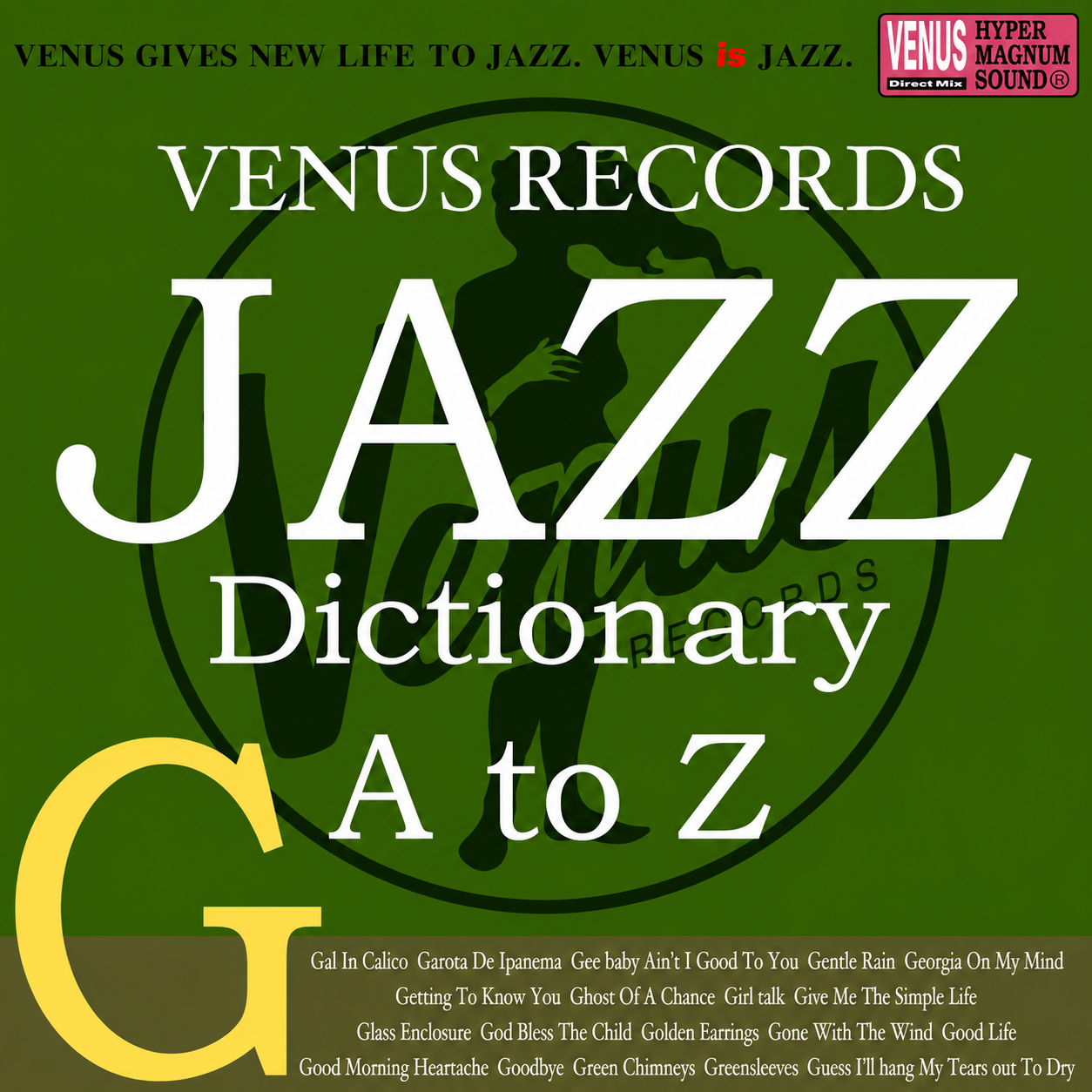
Venus Records
Jazz Dictionary G
Venus Records – Jazz Dictionary G: Great Standards, Glowing Sound and the Grammar of Jazz
With Venus Records – Jazz Dictionary G, the alphabetical journey through jazz reaches another chapter, but the series continues to feel less like a filing system and more like a living history of the genre. Built around standards and compositions beginning with the letter G, the album brings together familiar melodies, elegant arrangements, and the rich, close-up sound that has made Venus Records a favorite among audiophile jazz collectors.
The strength of the Jazz Dictionary concept has always been its ability to turn organization into discovery. Each volume uses a single letter as a doorway into the wider jazz repertoire, allowing listeners to move from songbook classics to modern interpretations without losing a sense of continuity. On Jazz Dictionary G, that idea works especially well because the selected material naturally carries a broad emotional range. Graceful ballads sit beside more rhythmically driven pieces, while lyrical themes give way to improvisations that reveal the individual character of each performer.
From the first notes, the album has the unmistakable sonic signature associated with Venus Records audiophile jazz recordings. The piano is presented with body and weight, the double bass sounds deep without becoming blurred, and the drums retain the texture of wood, skin, and metal. Cymbals decay naturally into the room, while the instruments occupy clear positions within a compact but convincing soundstage. The result is a recording that feels intimate rather than distant, as though the listener has been placed only a few meters from the musicians.
That physical sense of presence is central to the appeal of Jazz Dictionary G. Venus Records has long understood that high-quality sound should not exist as a separate technical achievement. It should increase the emotional force of the performance. Here, the clarity of the recording makes small gestures more meaningful: the pressure behind a piano chord, the soft scrape of a brush across a drumhead, or the resonance of a bass note after the player has released the string.
The album’s story unfolds through interpretation. Jazz standards may arrive with recognizable melodies, but they rarely remain fixed for long. A pianist can reshape a phrase through timing alone, holding one note slightly longer or entering a beat later than expected. The bassist may answer with a line that changes the harmonic direction, while the drummer adjusts the pulse in response. These exchanges give the music its sense of movement and remind the listener that jazz is created in the space between written structure and spontaneous decision.
This balance between tradition and freedom is what makes Venus Records – Jazz Dictionary G more than another jazz compilation. The songs belong to a shared musical heritage, but the performances are personal. Familiar themes become vehicles for new moods, and arrangements that initially seem straightforward gradually reveal greater depth. A gentle opening may develop into a more urgent solo, while an energetic performance may suddenly create space for a quieter, more reflective passage.
For listeners who are new to jazz, the album offers an inviting introduction to the classic repertoire. The melodies are accessible, the production is polished, and the alphabetical structure gives the series a clear identity. For experienced listeners, the reward lies in the details of phrasing, ensemble interaction, and tonal character. The album encourages comparison, not only between different tracks but also between different ways of approaching the same musical tradition.
Jazz Dictionary G also has clear value as reference music for high-end audio systems. Its acoustic textures can reveal whether a pair of speakers reproduces piano tone naturally, whether an amplifier controls bass with precision, and whether headphones preserve the separation between instruments without making the presentation feel artificial. The recording’s combination of warmth, detail, and dynamic contrast makes it useful for evaluating DACs, amplifiers, loudspeakers, and premium headphones.
Yet the album never feels like a sterile demonstration disc. Its technical qualities remain connected to the atmosphere of the music. The performances have warmth, personality, and a relaxed confidence that invites repeat listening. The album can reward serious attention, but it can also create the mood of a private late-night jazz session, making it equally suitable for critical listening and quiet enjoyment.
The wider Jazz Dictionary A to Z project gives this volume an additional sense of purpose. Each release contributes another section to a growing portrait of jazz standards, presenting the repertoire as a vast language shaped by melody, harmony, rhythm, and improvisation. The alphabet provides the order, but the musicians provide the meaning.
In an era dominated by short playlists and distracted listening, Jazz Dictionary G asks the audience to stay with the music. It rewards the listener who follows the development of a solo, notices the exchange between piano and bass, or hears how the drummer shifts the emotional temperature of a performance with only a few carefully placed accents.
For collectors searching for Venus Records jazz albums, best audiophile jazz CDs, Japanese audiophile recordings, classic jazz standards collections, or high-end reference music, Jazz Dictionary G stands as another strong entry in this distinctive series. It combines great compositions, graceful musicianship, and glowing sound in a way that reflects the enduring philosophy of Venus Records.
More than a collection of titles beginning with G, Venus Records – Jazz Dictionary G is a lesson in the grammar of jazz. Its vocabulary comes from the standards, but its true language is found in the interaction, emotion, and freedom of the musicians who bring those songs back to life.
